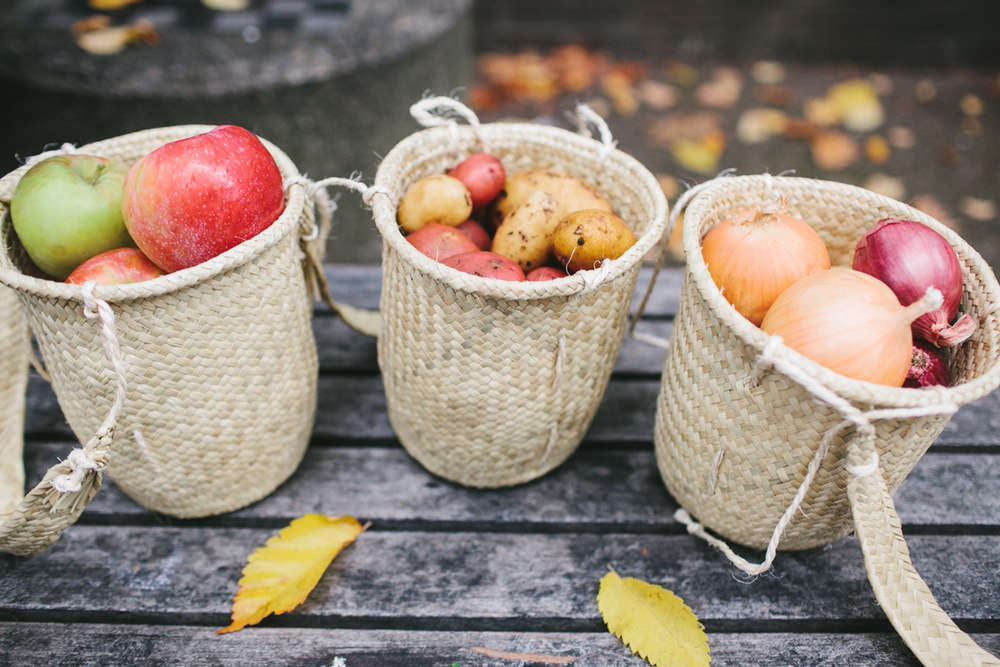
Some storage products merely hide clutter. The Gathered Goods Traditional Oaxacan Palm Basket With Head Strap in the Chiquita size does something more interesting: it turns everyday odds and ends into a small, textured still life. Handwoven from natural palm, compact enough for shelves and hooks, and finished with a traditional carrying strap, this basket combines practical organization with the unmistakable character of handmade work.
The Chiquita was presented as the smallest member of a collection that also included small, medium, and large baskets. Archived product coverage described the collection as handmade in Oaxaca by Juan Garcia and members of his multigenerational family. The baskets were designed for carrying, hanging, and household storage, with each size suited to a different job. In other words, this is not a decorative basket desperately pretending it has a career. It was created to work.
What Is the Gathered Goods Chiquita Oaxacan Palm Basket?
The Chiquita is a compact, open-top palm basket with a flexible woven body and an attached head strap. Remodelista’s archived coverage listed it at $32 when published and showed several Chiquita baskets being used to separate smaller goods. Because the listing is historical, current pricing and availability may be different or the original item may no longer be in regular production.
Its appeal comes from a combination of simple ingredients: natural fiber, a practical shape, visible handwork, and a strap that can serve as a carrying aid or hanging loop. The palm develops slight variations in tone and texture, while the weave gives the basket structure without making it look stiff or industrial.
Exact measurements for the Chiquita version are not consistently preserved in archived product descriptions. Buyers considering a vintage example or remaining retail stock should confirm the dimensions directly rather than assuming that “Chiquita” corresponds to a standardized basket size.
Product details synthesized from archived Remodelista and Organized Home coverage.
Why the Chiquita Size Is So Useful
Large baskets receive plenty of attention because they can swallow blankets, laundry, and approximately half the contents of a teenager’s bedroom. Small baskets, however, often solve the more annoying problems. The Chiquita is suited to objects that are too loose for a drawer but too frequently used to be packed away.
Entryway Organization
Hang the basket from a sturdy wall hook near the door and use it for gloves, sunglasses, reusable shopping bags, dog leashes, or outgoing mail. Its open top makes items easy to retrieve, while the woven palm softens the appearance of a utility area.
Kitchen and Pantry Storage
A small Oaxacan palm basket can hold garlic, wrapped snacks, tea towels, cloth napkins, or lightweight produce that benefits from airflow. Avoid filling it with wet vegetables, oily packages, or anything likely to leak. Natural palm is charming, but it is not a waterproof lunchbox wearing a rustic disguise.
Craft and Desk Supplies
Yarn scraps, measuring tapes, pens, charging cables, embroidery thread, and notebooks all fit naturally into a compact woven container. The basket can move from shelf to table without looking like office equipment, making it especially useful in multipurpose rooms.
Children’s Small Toys
Archived coverage of the larger small-size basket suggested using it for children’s toys, and the Chiquita can perform the same role on a smaller scale. It works well for wooden blocks, doll accessories, toy animals, or art supplies. Check the weave periodically for loose fibers before using it in a young child’s room.
Wall Display
The strap allows the Chiquita basket to hang neatly when empty or lightly filled. A grouping of two or three woven baskets can add dimension to a plain wall while keeping practical items close at hand. The effect is warmer than plastic bins and less predictable than another framed print announcing that your kitchen is, indeed, a kitchen.
The Oaxacan Basket-Weaving Tradition Behind the Design
Basketry in Mexico stretches back to the pre-Hispanic period and developed long before modern packaging, shopping totes, or storage systems arrived. Plant fibers were formed into mats, containers, hats, fans, and carriers used in daily agricultural and market life.
Oaxaca contains many distinct Indigenous communities and craft traditions rather than one uniform “Oaxacan style.” Basketmaking is associated with communities in the Central Valleys, the Isthmus of Tehuantepec, and the Mixteca, among other areas. Depending on the location, artisans may work with palm, reeds, rushes, bamboo, or additional regional plant materials.
Palm weaving is particularly important in parts of the Mixtec region. Traditional palm goods have included tenates, mats, hats, fans, cords, and containers for transporting merchandise. These objects were not originally conceived as fashionable décor. Their beauty grew directly from material knowledge, repeated use, and designs refined over generations.
The archived Gathered Goods description connected its basket collection to Zapotec tradition and credited Juan Garcia’s family with continuing inherited weaving methods. Broader documentation of Oaxacan basketry also demonstrates the important roles of Mixtec artisans and numerous other communities. Recognizing this diversity is more accurate than treating every palm basket from Oaxaca as culturally interchangeable.
Historical and regional context synthesized from Friends of Oaxacan Folk Art, Mexican basketry references, SIL Mexico, and Oaxacan craft reporting.
How a Traditional Palm Basket Takes Shape
A finished palm basket can look effortless, but the process begins well before the first strip is woven. Artisan accounts describe collecting suitable palm, drying it in the sun for several days, cleaning and sorting it, preparing the fibers, and finally weaving the material into shape.
Consistency matters. The palm must be divided into strips appropriate for the intended pattern, and the artisan must control tension so the sides rise evenly. A loose section may weaken the form, while excessive tension can distort it. Corners, rims, bases, and strap attachments demand particular attention because these areas absorb repeated handling.
The basket’s irregularities are part of the evidence that it was made by hand. Slight differences in width, color, curvature, or weave density should not automatically be treated as defects. They are often the natural result of working with plant fibers rather than factory-cut synthetic strips.
That does not mean quality is irrelevant. A well-made palm basket should have a stable base, a reasonably even rim, secure strap connections, and no major gaps that compromise its intended use. Handmade character and sloppy construction are not the same thing, despite what certain suspiciously wobbly craft-fair tables may suggest.
Palm preparation and weaving process informed by artisan documentation from Cultural Survival and regional weaving organizations.
Understanding the Traditional Head Strap
The head strap is the feature that most clearly distinguishes this Oaxacan palm basket from an ordinary storage bin. Traditional Mexican carrying systems include the mecapal, a band connected to cords that secure a load carried behind the body. Depending on local practice and the object being transported, the band may rest across the forehead while the load is positioned on the back.
This carrying method developed in response to real transportation needs. It allowed people to move agricultural products, market goods, firewood, and household materials across terrain where wheeled transport was unavailable or impractical.
Modern owners should view the Chiquita strap as both a cultural design element and a useful handle or hanging loop. Carrying substantial weight with a forehead strap requires experience, correct positioning, and an understanding of physical limits. Do not overload the basket or experiment with heavy head-supported carrying simply because the strap appears sturdy.
For typical household use, the strap works beautifully over a hand, forearm, wall peg, or broad hook. When hanging the basket, keep the contents light and make sure the mounting hardware is appropriate for the wall.
Head-strap history informed by Arqueología Mexicana and documented Mexican basket-carrying traditions.
Design Qualities That Work in American Homes
The Chiquita basket fits easily into interiors because its design is visually quiet. Natural palm tones coordinate with white walls, warm woods, terracotta, linen, leather, and painted cabinetry. The woven surface adds texture without introducing a loud pattern.
In a minimalist room, it prevents the space from feeling sterile. In a farmhouse or cottage interior, it looks comfortably at home without becoming overly themed. In a colorful room, the neutral fiber offers a place for the eye to rest. It can even work in a modern office, where its handmade surface provides relief from the parade of rectangles known as monitors, phones, tablets, and filing cabinets.
Woven baskets are frequently used to store textiles, toys, magazines, firewood, and bedside necessities. The Chiquita’s smaller scale makes it more suitable for accessories and daily essentials than bulky items. It is best when given a defined job instead of being treated as a miniature catchall for every object currently wandering around the house.
Home styling applications informed by The Spruce and Oaxacan Cultural Navigator basket-use examples.
How to Care for an Oaxacan Palm Basket
Remove Dust Gently
Use a soft brush, microfiber cloth, or vacuum with a low-suction brush attachment. Support the basket while cleaning so the nozzle does not pull or distort the weave.
Limit Water Exposure
Palm is a natural plant material that can absorb moisture. Do not soak the basket, place it under running water, or leave it outdoors in rain. For a small mark, use a barely damp cloth and allow the basket to dry completely in a well-ventilated area away from intense direct heat.
Avoid Harsh Chemicals
Bleach, aggressive cleaners, heavy oils, and strongly scented sprays may discolor the fibers, weaken the weave, or leave residue. Test any cleaning method in an inconspicuous area first.
Protect Its Shape
Do not crush the basket under heavier storage containers. If the sides become slightly misshapen, gently guide them back into position rather than forcing the dry fibers. Never yank the strap to reshape the body.
Watch for Humidity and Mold
Store the basket in a dry interior location with reasonable airflow. If it develops persistent mold, a strong musty odor, or deep staining within the fibers, replacement may be safer than aggressive cleaningespecially if the basket is used around food, babies, or people with respiratory sensitivities.
Natural-fiber care guidance informed by palm-basket maintenance recommendations and general woven-storage practices.
How to Evaluate a Chiquita Basket Before Buying
Because the original Gathered Goods listing dates back several years, shoppers may encounter the basket through vintage dealers, resale marketplaces, old retail inventory, or visually similar products. Examine the seller’s description carefully rather than relying on the product title alone.
- Ask for exact height, width, opening size, and strap length.
- Request clear photographs of the base, rim, interior, and strap attachments.
- Check for broken fibers, dark moisture stains, mildew, or significant unraveling.
- Confirm whether the basket is an original Gathered Goods item or a similar Oaxacan design.
- Ask whether the maker, community, and production location are documented.
- Determine whether the basket has been stored near smoke, pets, dampness, or strong fragrances.
Ethical sourcing also matters. Look for sellers who name artisan partners, explain where the basket was made, and recognize the labor involved. A suspiciously low price can indicate that the person who performed the most skilled work received the smallest share of the sale.
Living With the Chiquita Basket: A Practical Experience
A realistic experience with the Chiquita basket begins with deciding what it should do. Place it on an entryway table without a plan, and it will collect three expired coupons, a mystery key, and enough loose receipts to reconstruct your spending habits. Give it a specific purpose, however, and the basket becomes surprisingly efficient.
Imagine using it as a dog-walking station. The leash coils neatly inside, waste-bag rolls sit at the bottom, and a small towel fits along one side. The strap slips over a hook by the door. Nothing is buried in a cabinet, and the basket’s natural palm looks more intentional than a plastic tub. Before leaving, you lift it down, take what you need, and return it to the hook afterward.
In the kitchen, the Chiquita works well as a napkin basket. Fold six or eight cloth napkins loosely and stand them upright so their colors remain visible. The basket adds texture to open shelving and can be carried directly to the table. After dinner, crumbs are shaken out with a soft brush rather than chased through a complicated fabric lining.
At a desk, the experience is different but equally useful. Charging cords and headphones disappear inside without becoming inaccessible. The open weave makes the basket feel light, even when the desk is small. Unlike a rigid organizer with twelve tiny compartments, it does not demand that every cable apply for permanent residency in a designated slot.
The head strap becomes especially practical when the basket is moved between rooms. It functions as a flexible handle for lightweight contents and allows the basket to hang when floor or shelf space is limited. The key word is “lightweight.” A basket filled with sewing supplies is reasonable; a basket filled with hardback dictionaries is an unexpected neck-training program.
Over time, the palm may soften slightly and develop a warmer tone. Small variations become more noticeable as the basket is handled. One side may curve differently from the other, or the weave may reveal a tiny change in tension. These details make the object feel less anonymous. They also encourage gentler habits: lifting rather than dragging, brushing rather than soaking, and storing the basket away from damp areas.
The most satisfying experience may be visual rather than functional. A handmade palm basket makes ordinary belongings look considered. A stack of dish towels becomes a display. Children’s toy animals look like a tiny expedition team. Garden gloves and seed packets suddenly appear organized enough to suggest that someone in the household has a master plan.
There are limitations. The Chiquita is not ideal for wet laundry, heavy produce, sharp tools, uncovered food, or anything that could stain the fibers. The open top does not conceal messy contents, and the flexible body will not protect fragile objects from impact. It is storage, not armor.
Used thoughtfully, though, the basket settles into daily life with very little fuss. It offers enough capacity to be helpful, enough character to remain visible, and enough historical context to inspire curiosity about the people and methods behind it. That combination is why a small palm basket can feel more valuable than a much larger factory-made container.
Final Thoughts
The Gathered Goods Traditional Oaxacan Palm Basket With Head Strap in the Chiquita size represents a compelling meeting of utility, craft, and understated design. Its compact scale is suited to small household necessities, while its woven palm and distinctive strap connect it to long-standing Mexican basket-carrying traditions.
The best reason to choose a basket like this is not simply that it looks rustic. It is that the object demonstrates how thoughtful design can emerge from daily life. Flexible natural materials, inherited weaving knowledge, and a practical carrying system come together in a form that remains useful far beyond its original setting.
Treat it gently, keep it dry, avoid overloading the strap, and give it a clear purpose. In return, the Chiquita can organize a corner of the home while adding something mass-produced storage rarely provides: evidence of human hands, regional knowledge, and a little personality.