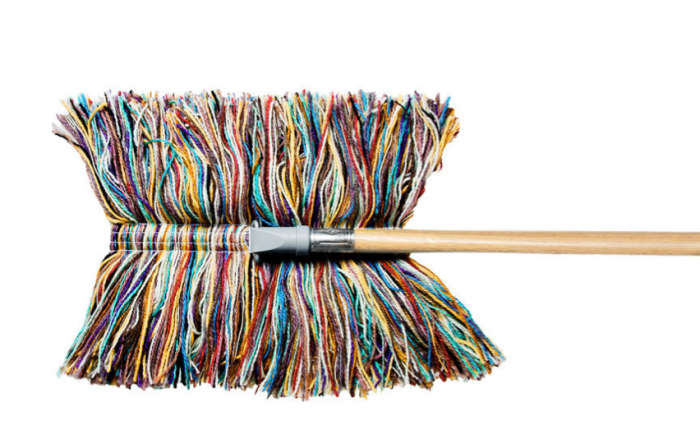
Some household tools spend their lives hiding behind a utility-room door, apologizing for being practical. A colorful wool dust mop does the opposite. With a polished wooden handle, a broad swiveling head, and a shaggy patchwork of bright wool fibers, it looks less like anonymous cleaning equipment and more like a cheerful piece of American domestic design.
The best-known example comes from Sladust, the modern name associated with Vermont’s long-running Slack Dust Mop tradition. The company’s roots reach back to 1909, when Alexander P. Slack reportedly built an early mop from coiled copper wire and layers of cotton cloth. More than a century later, the basic idea remains refreshingly simple: use a wide, flexible head to gather dust efficiently, make the working surface removable, and build the tool to be used repeatedly rather than tossed after a few laps around the kitchen.
That simplicity is precisely why this classic mop still makes sense. It does not spray, steam, beep, recharge, connect to Wi-Fi, or demand a subscription for replacement pads. It simply glides across hard floors and collects the daily parade of lint, crumbs, hair, and mysterious fluff that appears five minutes after you swear you cleaned.
What Makes This Classic Wool Dust Mop Different?
A traditional wool dust mop is a dry-cleaning tool, not a wet mop wearing a colorful disguise. Its job is to remove loose debris before that debris gets ground into a floor finish or turns into muddy streaks during wet cleaning. This distinction matters because many hard floors benefit from frequent dry maintenance and only occasional damp cleaning.
A Naturally Varied Wool Head
The colorful appearance is more than decoration. Sladust has historically used wool remnants sourced from American carpet manufacturing, allowing useful leftover fibers to become part of the mop rather than waste. Because the available remnants vary, every mop head can feature a slightly different mix of shades.
One may lean toward berry red and deep blue, while another includes green, gold, gray, cream, or purple. The result feels handmade because it is not pretending to be digitally identical to every other product rolling off an assembly line.
Wool is soft, springy, and densely textured. As the fibers move across a floor, they surround and hold lightweight particles such as dust, pet hair, lint, and tiny crumbs. The mop is often described as attracting dust “like a magnet,” although no microscopic magnet factory is operating inside the fibers. Its effectiveness comes largely from the structure of the wool and the way the strands hold debris. Naturally occurring lanolin may also help retain dust until the head is shaken or combed out.
A Wide Head That Swivels
A broad dusting surface covers more floor with each pass, while a pivoting connection helps the mop turn around chair legs, follow baseboards, and flatten beneath furniture. Current models are offered with several head sizes and handle styles, including traditional wood, fixed metal, and telescoping handles.
The exact dimensions depend on the model, but the principle remains the same: clean a generous area while reducing the amount of bending, reaching, and furniture-related gymnastics required.
A Removable, Washable Working Surface
The wool head can be detached from its frame for maintenance. Most routine care involves taking the mop outdoors and shaking or combing away the captured debris. When the head eventually needs a deeper refresh, it can be hand washed in cold water with mild wool-safe soap and left to air-dry completely.
This washable design is a significant advantage over disposable dry-mopping sheets. Instead of buying a new pad after every cleaning session, the user maintains the same working head and replaces it only when it is genuinely worn out.
Why Dry Mopping Still Matters in a High-Tech Home
Modern floor care offers robotic vacuums, vacuum-mop combinations, steam machines, spray systems, and disposable electrostatic pads. All can be useful in the right setting. Yet dry mopping continues to solve a basic problem with very little effort: loose dirt should usually come off the floor before moisture enters the picture.
Professional wood-floor guidance commonly recommends routine sweeping, dust mopping, or vacuuming with a bare-floor setting. This removes dust and grit before shoes, chair legs, or pet paws grind those particles against the finish. Tiny pieces of sand and soil may look harmless, but under pressure they can behave like very fine sandpaper.
Dry dust removal also supports a cleaner indoor environment. Household dust can include soil, textile fibers, pollen, pet dander, skin flakes, hair, and particles tracked indoors from streets, yards, and garages. Cleaning methods that capture dust are preferable to techniques that simply stir it into the air and relocate it to another room.
Where a Wool Dry Mop Works Best
Hardwood and Engineered Wood
Wood floors are an ideal setting for gentle, frequent dry cleaning. A soft wool head collects grit without using water and without relying on the aggressive rotating brush found on some vacuums.
That low-moisture approach is valuable because excessive water and steam can damage certain wood floors, seams, finishes, or adhesives. When stuck-on grime needs attention, follow the flooring manufacturer’s instructions and use a cleaner specifically approved for that surface.
Tile, Laminate, Vinyl, and Linoleum
On smooth resilient floors, a wool dust mop is excellent for gathering dry soil, flour, hair, lint, and crumbs before occasional washing. It is especially convenient in open kitchens, hallways, and living areas where a quick pass can restore order without dragging out a bucket.
It will not remove dried syrup, grease, or muddy footprints. What it does accomplish is preventing loose debris from joining the wet mess and becoming an exciting new variety of floor paste.
Marble and Other Delicate Hard Surfaces
Stone surfaces can be vulnerable to abrasive grit and unsuitable cleaning chemicals. A clean, soft dry mop provides a low-moisture way to remove loose particles before they scratch or dull the surface.
For deeper cleaning, use a product compatible with the particular stone and its sealer. The wool mop handles Act One; specialized chemistry enters only when the floor genuinely requires Act Two.
Homes With Pets
Pet hair is where the colorful wool head earns its keep. Its dense fibers collect drifting fur from open floors and pull strands away from edges and furniture legs. A swivel head can also reach beneath beds and sofas, where pets apparently maintain secret backup coats.
Long hair may become tangled through the wool. Shaking removes loose debris, while a cleaning comb helps free hair wrapped around the fibers.
How to Use a Wool Dust Mop Correctly
- Begin with a clean, completely dry head. A damp wool head can smear soil and may take considerable time to dry.
- Remove small obstacles. Pick up cords, toys, and lightweight objects so the mop can move in long, uninterrupted passes.
- Push instead of flicking. Keep the head in contact with the floor and move smoothly. Aggressive snapping can scatter the dust you are trying to capture.
- Overlap every path. Treat the floor like a lawn you are mowing, minus the gasoline, noise, and neighborly judgment.
- Work toward one collection point. Finish by picking up the concentrated pile with a dustpan or vacuum.
- Empty the mop outdoors. Shake it away from doors and open windows so yesterday’s dust does not immediately move back into the house.
In a large room, stop and clean the head when it becomes visibly loaded. A dust mop works by retaining particles. Once the fibers are packed, the mop becomes less effective and more likely to release debris behind you.
How to Care for the Colorful Wool Head
Most of the time, wool mop maintenance is pleasantly low drama. Shake the head outdoors after each substantial cleaning session. Use a comb to remove stubborn pet hair, threads, and lint. Store the mop in a dry location where the head will not be crushed beneath buckets, boxes, or heavier cleaning tools.
For occasional washing, remove the wool section from the frame. Place it in cold water with a small amount of mild wool-safe soap. Handle the fibers gently instead of twisting, scrubbing, or aggressively wringing them.
Rinse thoroughly, press out excess water, reshape the head, and let it air-dry completely before reattaching it. Thick wool may require a day or longer to dry, especially in humid weather.
Avoid spraying the head with furniture polish, floor oil, artificial fragrance, or general-purpose cleaning chemicals. Added residue may transfer to the floor, attract additional grime, or create a slippery surface. The appeal of this mop is that routine dry cleaning does not require a chemical treatment.
Sustainability: Better Than Disposable Pads, but Not Magic
A reusable wool dust mop can reduce reliance on single-use sweeping sheets and plastic refill packages. Its removable head can be washed, replacement heads are available, and a durable handle may remain useful for many years. Using wool remnants also gives existing material a practical second purpose.
However, the word “natural” should not be treated as a free environmental pass stamped by Mother Nature herself. Wool is an animal-derived material, transportation has an impact, and every manufactured product consumes resources.
The strongest sustainability argument is durability. Buy a suitable tool, maintain it properly, replace only the part that wears out, and use it long enough to prevent a revolving door of short-lived alternatives.
For households that avoid animal fibers, washable microfiber or cotton dust-mop covers are reasonable reusable choices. The important habit is selecting a system that captures debris effectively and can be cleaned many times.
Wool Dust Mop vs. Other Floor-Cleaning Tools
Compared With a Broom
A broom is useful for larger crumbs, entryway grit, textured tile, and uneven surfaces. A wool dust mop is generally faster on broad, smooth floors and better at gathering fine dust and hair into a controlled mass. Many households benefit from owning both.
Compared With a Vacuum
A vacuum removes debris completely and handles rugs, floor cracks, and heavier particles. A dust mop is quieter, lighter, faster to deploy, and requires no electricity. It works particularly well for daily maintenance between vacuuming sessions.
Compared With Disposable Sweeping Pads
Disposable pads are thin, convenient, and easy to throw away. A wool head is bulkier and requires outdoor shaking or occasional washing, but it avoids constant refills and can be more satisfying when collecting pet hair across larger rooms.
Compared With a Wet or Spray Mop
These tools perform different jobs. A dry mop removes loose particles, while a wet or spray mop tackles adhered dirt and spills with moisture and a floor-safe cleaner. Using the dry mop first generally makes the wet-cleaning stage more efficient and less streaky.
Who Will Appreciate This Mop Most?
A classic colorful wool dust mop is a particularly good match for people with large areas of hardwood or other smooth flooring, shedding pets, sensitivity to heavily scented cleaners, or a preference for durable household tools.
It also appeals to anyone who enjoys objects that are functional without looking institutional. A cheerful wool head and lacquered wooden handle are far easier on the eyes than the average hunk of molded cleaning plastic.
The mop may be less practical in a small apartment covered mostly in carpet, a home without a convenient place to shake out dust, or a household seeking one powered machine for every surface. Anyone with a confirmed wool allergy should select another material and seek appropriate medical guidance regarding exposure concerns.
Real-World Experience: What Living With a Colorful Wool Mop Is Like
The first surprise is visual. Most cleaning tools arrive in shades best described as “landlord gray” or “urgent plastic turquoise.” A multicolored wool mop looks warmer and more domestic. Left on a wall hook in a pantry or mudroom, it resembles a useful craft object rather than something that escaped from a janitor’s cart.
In everyday use, its greatest strength is immediacy. Imagine breakfast has ended, sunlight is cutting across the hardwood, and suddenly every crumb appears to have hired its own spotlight. Pulling out a vacuum feels excessive, while ignoring the scene guarantees that somebody will grind cereal dust across the room.
The wool mop can cross the kitchen in a minute, gather the debris, slide beneath cabinet toe kicks, and return to its hook with minimal ceremony. No cord needs to be untangled, no battery needs charging, and no dust bag begins flashing a tiny electronic cry for help.
The swivel head takes a few passes to understand. At first, it may rotate more freely than expected, especially when changing direction near a table leg. Once the motion becomes familiar, that looseness becomes an advantage. The head can turn sideways to follow a baseboard, flatten beneath a cabinet, and pivot around furniture without requiring a small domestic wrestling match.
Pet hair delivers the most visible payoff. On a smooth floor, loose fur gathers into soft ropes along the leading edge of the wool. Unlike a broom, which can send lightweight hair drifting away in protest, the mop tends to keep the bundle moving toward the chosen collection point.
Long human hair and pet hair may become tangled in the fibers, so a quick comb-out is more effective than endlessly shaking the head like a disappointed maraca.
There are limitations. The mop does not capture every pebble, remove sticky residue, or disinfect a surface. In a busy kitchen, the ideal sequence is often to dry mop first, spot-clean spills second, and use a floor-approved damp mop only when necessary. Expecting the wool head to erase dried pasta sauce would be like asking a cardigan to pressure-wash the driveway.
Emptying the mop is also part of the experience. The easiest method is to step outside, hold the handle securely, and shake the head away from your body. On a windy day, choose your direction wisely unless you want to wear the household’s complete dust history.
In apartments without outdoor access, combing debris directly into a large trash bag may be more practical, although admittedly less breezy and cinematic.
Washing requires planning because thick wool does not dry instantly. The head may need a day or more in a well-ventilated location, depending on humidity and how much water remains in the fibers. Frequent washing is therefore unnecessary and inconvenient. Routine shaking and combing are the better habits, while washing serves as an occasional reset.
Over time, the pleasure comes from using a tool with a clear purpose. It performs one ordinary job efficiently, requires little storage space, makes no noise, and brings color to a task nobody has ever placed on a vacation itinerary.
The experience is not revolutionary. It is better than that: reliably useful, pleasantly tactile, and completely free of software updates.