Timing is everything in Washington, late-night television, and satire. For FCC Chair Brendan Carr, the calendar created one oddly convenient detail in December 2025: South Park’s season finale aired on December 10, and Carr’s Senate Commerce Committee oversight hearing arrived a week later, on December 17.
That is the “lucked out” premise. It does not mean the hearing was easy, or that the controversy vanished. It means South Park’s writers had already reached the end of their run, so they could not turn fresh testimony, a sharp Senate exchange, or a surprise website change into a same-week animated encore. Given the show’s ability to transform current events into cultural shorthand at warp speed, that timing was at least a small mercy.
The real issue was much bigger than a comedy show. Carr’s role in the Jimmy Kimmel controversy had raised difficult questions about FCC authority, the public-interest obligation of broadcast licensees, the independence of federal agencies, and the line between regulatory scrutiny and pressure on speech. Carr said he was enforcing the law. Critics said his public comments risked chilling speech. South Park supplied the wild punchline; the Senate hearing supplied the serious cross-examination.
The Timeline Behind the Joke
The dispute accelerated in September 2025 after Jimmy Kimmel made controversial remarks during his late-night show following the killing of conservative activist Charlie Kirk. Carr publicly criticized the comments, argued that broadcasters have special public-interest obligations, and suggested the FCC could take additional action if the companies did not respond.
ABC temporarily suspended Jimmy Kimmel Live!, while large station groups also declined to air the program for a period. Carr’s critics interpreted his remarks as pressure directed at a network and its affiliates. Carr and his supporters described the situation differently: local broadcasters, they argued, have their own responsibility to decide whether national programming reflects their community standards.
That disagreement was never merely about one monologue. It became a test of what it means when a powerful federal regulator speaks about a broadcaster’s content. A network may be enormous, but the FCC’s authority over broadcast licenses is not a casual bit of background scenery. When an official mentions possible enforcement, corporate lawyers do not hear it like a viewer hears a hot take. They hear it like a weather alert.
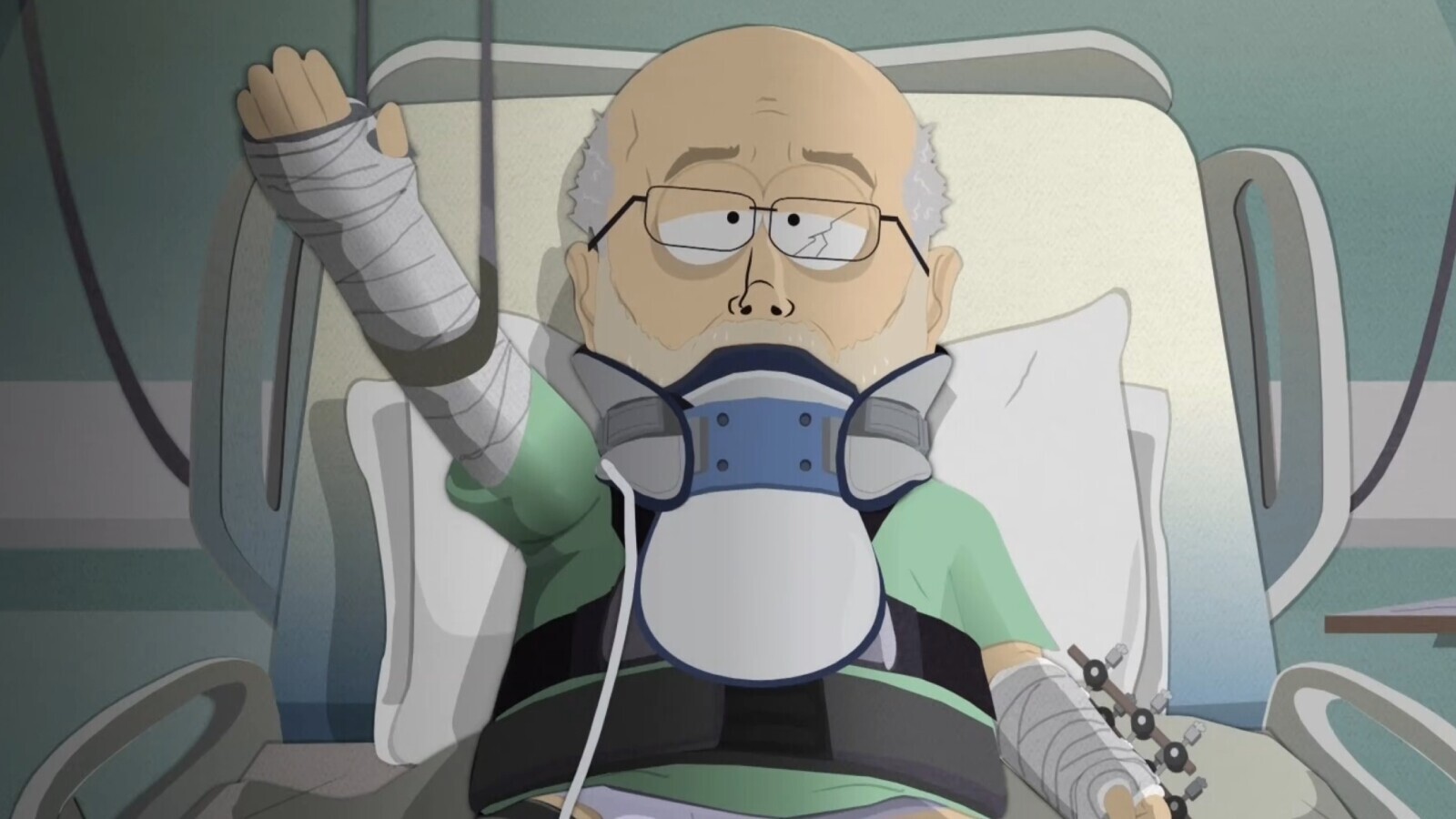
South Park joined the story in September with “Conflict of Interest,” an episode that incorporated Carr into a broad, intentionally extreme parody of political power, media anxiety, and speech regulation. The program was not offering a legal opinion. It was doing something more efficient and less gentle: turning a complicated regulatory dispute into a memorable comic image.
The 2025 season ended on December 10. The Senate hearing came December 17. So while Carr still had to answer questions from senators, he did not face a newly produced South Park finale that could package the hearing for millions of viewers before the next news cycle had even cooled down.
What FCC Authority Really Means
The FCC is not a national content police force for every joke, pundit panel, or unpopular opinion. It regulates communications industries, including broadcast television and radio, telecommunications, spectrum, and broadband matters. Broadcast stations use public airwaves and hold FCC licenses, which is why the public-interest standard remains a central part of communications policy.
That authority is real, but it has boundaries. Network television, local affiliates, cable programming, streaming services, and social-media platforms do not all face identical rules. Broadcasters operate under a licensing framework that cable and online platforms generally do not. Yet that distinction does not erase constitutional protections or give officials a blank check to punish a viewpoint they dislike.
This is why tone matters as much as technical power. A regulator can open a lawful inquiry, explain an obligation, or criticize an industry practice. But public remarks may still influence private decisions when the speaker oversees a license, merger review, or another matter with major financial consequences. The concern is often called a chilling effect: companies may steer away from speech not because it is unlawful, but because avoiding a potential fight looks safer.
That does not mean every FCC inquiry equals censorship. Broadcasters do have responsibilities, and regulators are entitled to investigate credible issues. The harder question is whether the enforcement rationale is applied consistently and communicated carefully. Precision matters when an agency’s words can move a network’s risk assessment faster than an executive meeting invite.
Why South Park Became a Pressure Gauge
Satire does not decide cases, revoke licenses, or define the public-interest standard. What it can do is compress a messy public argument into something viewers remember. A Senate transcript can explain the difference between a network and an affiliate. A South Park episode can turn the debate into a single unforgettable reference.
That cultural force is why the parody mattered. It reflected a public fear already present in news coverage and political debate: that official power over broadcasters might be used to pressure disfavored speech. The show did not invent the concern. It made the concern louder, stranger, and much easier to share.
There is an obvious irony here. The debate involved a federal official discussing broadcaster obligations and the boundaries of media behavior. South Park responded with one of America’s oldest political traditions: ridicule. The point was not that broadcasters should be immune from criticism. It was that government officials who weigh in on media content should expect media to answer back, sometimes with careful reporting and sometimes with a cartoon that treats subtlety as an optional subscription tier.
If the hearing had preceded the finale, the writers might have had a ready-made new plot point. Instead, the season ended first. Carr still entered the hearing with the earlier episode in the cultural background, but he avoided a final-week amplification of the hearing itself.
What Senators Actually Asked
The Senate oversight hearing was not a cartoon sequel. It covered FCC priorities, spectrum policy, regulation, and agency oversight. Still, the Kimmel controversy kept returning because it had become a symbol of a wider fear: whether the FCC was exercising its authority in a politically neutral way.
Democratic senators challenged Carr over his statements about Kimmel and accused him of politicizing an agency long regarded as independent. Carr rejected the accusation and argued that the FCC had failed to enforce elements of the public-interest standard. He also said he was aligned with President Donald Trump on policy, a normal political sentiment that took on greater significance in a debate about agency independence.
The hearing became even more dramatic when the FCC’s website removed language describing the agency as “independent” during the proceeding. Carr said that the FCC was not formally an independent agency and that the president could remove commissioners. Commissioner Anna Gomez and several senators disagreed, emphasizing Congress’s historical intent to create a multi-party regulator accountable to Congress and the public rather than to the White House.
That was not just a website-editing dispute. It went to the heart of how the FCC should operate. An agency that views itself primarily as an arm of presidential power may approach broadcast oversight differently from one that treats independence as a safeguard against partisan pressure. The distinction can sound procedural until it affects a station license, a newsroom decision, or a comedian’s opening monologue.
Carr’s Defense Deserves to Be Heard
A fair analysis has to include Carr’s argument. He has said that broadcasters receive special benefits through access to public spectrum and therefore must meet public-interest obligations. In his view, asking questions about broadcaster conduct is not intimidation; it is the enforcement work Congress expects from the FCC.
Carr also maintained that he did not order ABC to suspend Kimmel or instruct stations to stop carrying the show. ABC and major station groups made their own decisions. That distinction matters. Private corporate decisions and government action are not automatically the same thing.
But the criticism does not disappear simply because no written order commanded a suspension. A powerful official’s words can influence private behavior when businesses understand that the official has authority over valuable licenses and other regulatory matters. That is why the controversy was so consequential: it tested whether legal authority can create informal pressure even when formal enforcement is not completed.
The most durable lesson is not that the FCC should never speak about broadcasters. It is that officials should be exceptionally exact when they do. Clear standards, transparent procedures, and evenhanded enforcement protect the public, licensees, and the agency itself. They also reduce the odds that a communications policy debate becomes television fodder involving a cartoon version of the regulator.
Did Carr Really Luck Out?
Only in the narrow satirical sense. The December hearing was still contentious, and the broader dispute did not disappear after South Park’s finale. Senators asked direct questions, reporters covered the clash, and the FCC’s independence became a headline of its own.
But timing removed one potential accelerant. South Park can turn a Wednesday hearing into a next-Wednesday cultural event. Had the hearing happened first, the finale could have used fresh testimony or the agency website change as its final comic target. Instead, the sequence ran the other way around.
That was not a legal win or a policy win. It was more like avoiding one extra banana peel on a sidewalk already crowded with lawyers. The absence of a new episode did not answer any Senate question. It simply prevented the debate from receiving an immediate animated echo.
Experience: What the Episode-and-Hearing Sequence Teaches Audiences
The most useful experience readers can take from this episode is not “watch more cartoons” or “believe every viral clip.” It is to slow down when entertainment and government collide. South Park can capture the emotional temperature of a dispute, but it cannot replace the hearing record. A Senate hearing can show a regulator’s legal theory, but it may not fully convey how a local station manager reacts to a warning from Washington. Both forms of information illuminate part of the picture.
Start with the sequence. A late-night monologue became a national controversy. A federal official criticized the network. Companies made programming decisions. A satire show parodied the moment. Senators later questioned the official. That chain shows how quickly a modern media dispute moves from a studio to a boardroom, from a boardroom to a cartoon, and from a cartoon to Congress. The pace is itself a lesson: news organizations now make editorial choices in an environment where a few hours can reshape their perceived regulatory risk.
For journalists and creators, the experience highlights the importance of understanding rules without becoming frozen by them. Broadcasters should know their licensing duties, political-programming requirements, and the difference between content that is risky and content that is simply unpopular. Officials, meanwhile, should recognize that criticism from journalists, comedians, and viewers is not a regulatory malfunction. It is a basic feature of a free society.
For audiences, the key is to avoid turning everything into a team sport. You do not have to enjoy Kimmel’s humor to worry about government pressure on a broadcaster. You do not have to agree with every FCC decision to accept that broadcast stations have legal responsibilities. A thoughtful response can hold both ideas at once: companies make their own decisions, and official signals can affect the conditions in which those decisions are made.
The finale’s timing adds one more lesson about attention. News cycles reward what is new, loud, and easily clipped. Because South Park had already ended its season, the hearing lacked a fresh pop-culture amplifier. But the policy questions remained. That is the cue to keep watching after the joke has moved on. The lasting effects of media regulation usually appear laterin license renewals, newsroom meetings, affiliate negotiations, public filings, and the quiet choices about stories that never reach the air.
In that sense, Carr may have avoided one more animated headache, but the larger argument did not end when the credits rolled. The struggle over FCC power, speech, and political influence continued in real institutions, where the consequences are less funny and far more durable.
Conclusion
FCC Chair Brendan Carr may have been spared a same-week South Park finale response before his Senate oversight hearing, but the timing did not erase the controversy. His role in the Jimmy Kimmel dispute, the FCC’s public-interest authority, the agency’s independence, and the possibility of a chilling effect all deserved serious examination.
The lasting takeaway is simple: satire can sharpen public attention, but institutions must still answer to law, Congress, and the Constitution. A regulator’s language matters when broadcast licenses are in the background. So do the public’s questionseven when a cartoon asks them more loudly than a Senate committee ever could.