You sent a thoughtful Bumble message. It was friendly, funny, and carefully edited to remove the sentence that sounded suspiciously like a job interview question. Then you waited. Ten minutes became two hours, two hours became a day, and suddenly you were wondering: Does Bumble have read receipts?
The answer is no. Bumble does not show whether another person has opened or read your message. Your matches cannot see when you read their messages either. Bumble also does not display a traditional online or “last active” status.
That simple answer, however, creates several follow-up questions. Does Bumble Premium unlock read receipts? Does the typing indicator mean someone read your message? Can you tell whether a person is ignoring you? And what should you do when a promising conversation suddenly becomes quieter than a library during finals week?
This guide explains how Bumble messaging works, what its conversation clues actually mean, and how to handle delayed replies without turning your phone into a tiny anxiety machine.
Does Bumble Have Read Receipts in 2026?
As of June 2026, Bumble does not offer read receipts for messages. There is no “Read,” “Seen,” or timestamp under a message showing when your match opened the conversation.
This applies in both directions:
- You cannot see whether a match has read your message.
- Your match cannot see whether you have read their message.
- There is no setting for enabling or disabling Bumble read receipts.
- Upgrading to a paid subscription does not add read receipts.
Unlike messaging platforms that use blue checkmarks, profile icons, or “Seen at 8:42 PM” labels, Bumble deliberately keeps message-reading activity private. You can open a conversation, think about your response, put your phone down, make a sandwich, forget about the sandwich, and return later without triggering a visible read notification.
Why Does Bumble Not Show Read Receipts?
Bumble describes its conversations as intentionally comfortable and low-pressure. Removing read receipts supports that approach by allowing people to respond when they are ready rather than feeling immediately accountable for opening a message.
Read receipts can create unnecessary pressure
A read receipt provides information, but it does not provide context. It tells you that a message was opened. It does not tell you whether the recipient was:
- Waiting in line at a grocery store
- About to begin a work meeting
- Trying to think of a meaningful response
- Distracted by another notification
- Accidentally opening the conversation
- Unsure how to answer a complicated question
Without that context, people often fill the silence with their own explanations. Unfortunately, the brain rarely chooses the comforting explanation. It usually skips directly to, “They read it, hated every word, and have moved to another country.”
Privacy works both ways
The absence of Bumble read receipts may be frustrating when you want certainty, but it also protects your own privacy. You are free to open a message without creating an expectation that you must reply immediately.
This can be especially useful on a dating app, where users may be communicating with new people while managing work, school, family responsibilities, safety concerns, and ordinary social fatigue.
Less data can reduce overanalysis
Online dating already provides plenty of material for amateur detective work. Users may analyze punctuation, response length, emoji choice, profile changes, and the emotional significance of receiving “haha” instead of “hahaha.” Adding exact read times could encourage even more speculation.
Bumble’s system does not eliminate uncertainty, but it avoids supplying another metric that could be mistaken for a complete explanation of someone’s interest.
Does Bumble Premium Show Read Receipts?
No. Bumble Premium, Premium+, and Boost do not unlock read receipts.
Bumble’s paid plans include features intended to improve profile visibility, matching flexibility, and discovery. Depending on the plan, these may include options such as seeing people who already liked you, using advanced filters, extending matches, using Travel Mode, entering Incognito Mode, rematching with expired connections, or receiving additional visibility tools.
Read receipts are not included among the listed subscription benefits. Therefore, paying for Bumble does not reveal whether a match has opened your message.
This is an important distinction because some dating platforms sell read receipts or include them in selected membership levels. Bumble takes a different approach: message-reading information remains private for free and paid users alike.
Can You Turn Bumble Read Receipts On or Off?
There is no Bumble read receipt switch because the feature is not available. You will not find it under privacy settings, chat settings, notifications, or subscription controls.
You also do not need to disable anything to prevent matches from seeing when you read their messages. Bumble already hides that information automatically.
Be cautious with websites, browser extensions, or third-party apps claiming they can reveal who read your Bumble messages. A legitimate read status would require access to information Bumble does not display to users. Unofficial tools may be inaccurate, may request sensitive login details, or may put your account and personal information at risk.
Does Bumble Show When You Are Online?
Bumble does not provide a standard online indicator or public activity status. Your matches generally cannot see a green dot announcing that you are currently using the app, nor can they view a “last active” timestamp.
This means a person cannot reliably determine that you were online but chose not to answer. Similarly, you cannot confirm that a quiet match has recently used the app.
A user could be checking profiles, updating account details, responding to another notification, or not using Bumble at all. Without an activity status, those possibilities remain private.
Does the Bumble Typing Indicator Mean Your Message Was Read?
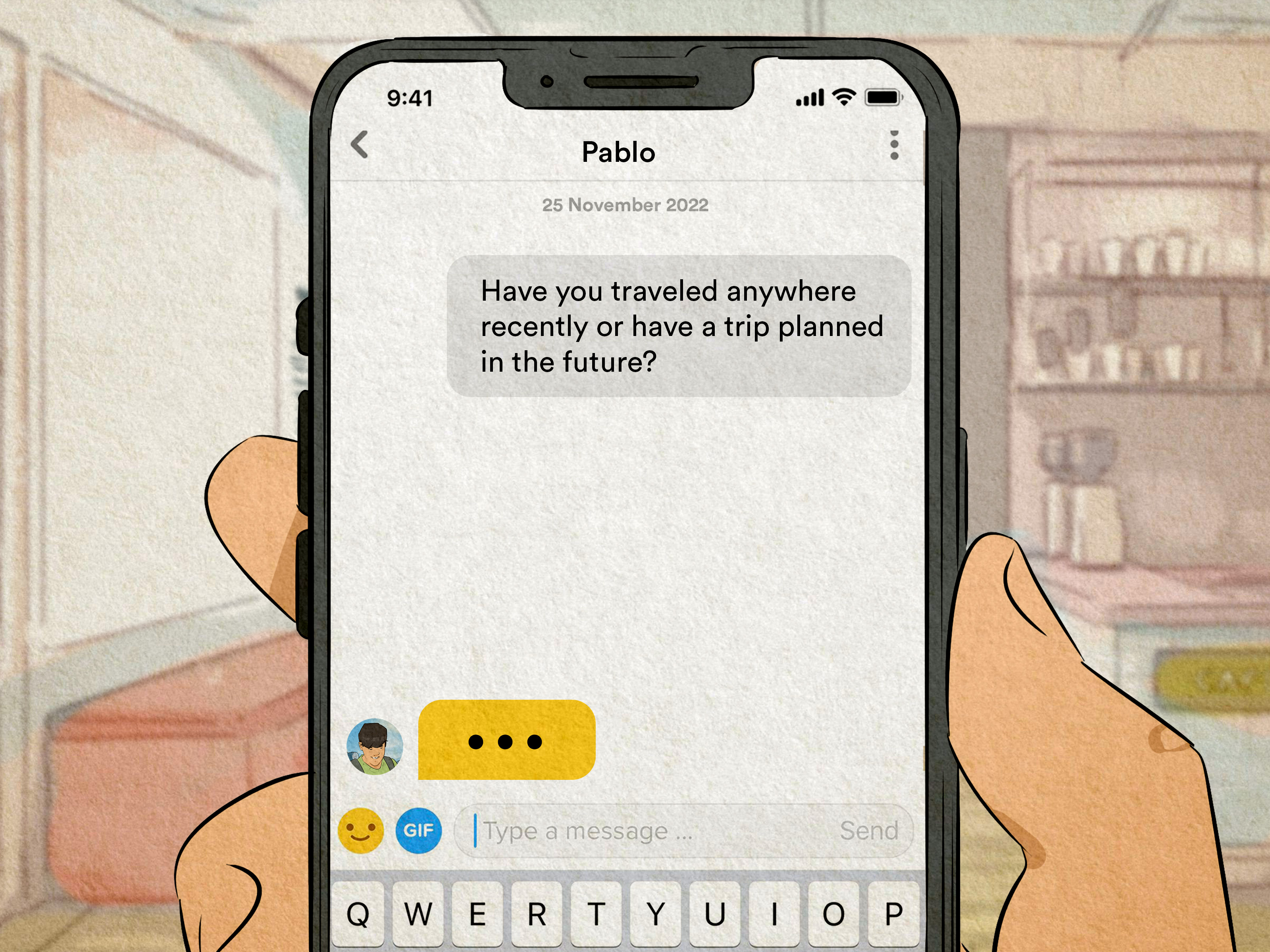
A typing indicator may appear in certain versions or chat situations when someone is actively composing a response. If you see it, it is reasonable to assume the person has entered the conversation and is interacting with the message box.
However, a typing indicator is not the same as a read receipt. It can disappear for several reasons:
- The person stopped to rewrite the message.
- They became distracted.
- They decided to respond later.
- The app or internet connection briefly lagged.
- They typed something and chose not to send it.
Typing indicators are temporary technical signals, not legally binding declarations of romantic intent. Seeing three animated dots and then nothing may be confusing, but it does not explain why the message was abandoned.
How Can You Tell Whether Someone Read Your Bumble Message?
There is no guaranteed method. Without read receipts, you cannot confirm that a message was opened unless the person responds in a way that clearly refers to it.
For example, suppose you write:
“You mentioned loving live music. What was the best concert you have attended?”
If your match replies, “The Foo Fighters in Chicago,” you can safely conclude that the question was read. Before a response appears, however, Bumble provides no definitive proof.
Even notification previews are not reliable evidence. A person might read part of a message from a phone notification without opening the app. Whether the full text appears depends on the device, operating system, message length, and notification settings.
Does No Reply Mean Your Match Is Ignoring You?
Possibly, but not necessarily. A delayed Bumble response can have many explanations, and most of them are less dramatic than intentional rejection.
They may be busy
People open dating apps around work schedules, classes, family commitments, travel, exercise, and social plans. Someone may enjoy talking with you while still taking several hours or days to respond.
They may be deciding what to say
A thoughtful question often takes longer to answer than a quick joke. Someone might postpone replying because they want to give a proper response rather than sending a rushed sentence.
They may feel overwhelmed by messaging
Online conversations require attention and emotional energy. A person can genuinely like a match and still struggle to keep up with notifications or maintain several developing conversations.
The conversation may have lost momentum
Sometimes interest fades. This is common on dating apps and does not automatically mean you did something wrong. People change their minds, begin dating someone else, pause their accounts, or realize that the connection is not what they are seeking.
Because Bumble has no read receipts, you cannot separate these possibilities by studying the chat screen. The clearest signal is the person’s overall pattern of communication, not the response time to one isolated message.
Should You Send a Second Message?
A polite follow-up can be reasonable, particularly when the earlier conversation was enthusiastic. The key is to avoid making the second message sound like an overdue payment notice.
A good follow-up is light, specific, and easy to answer:
“I just saw that the food festival opens Saturday. Have you ever been?”
Another option is to return to a shared topic:
“Your hiking recommendation was excellent. I looked up that trail, and the views look amazing.”
Avoid messages that demand an explanation:
“Why are you ignoring me?”
That kind of message creates pressure and assumes facts you do not know. The person may not have read the original message at all.
One respectful follow-up is generally enough. If there is still no response, continuing to send messages is unlikely to improve the connection. Letting the conversation go protects both your dignity and your time.
How Long Should You Wait for a Bumble Reply?
There is no universal response-time rule. Dating app messaging is asynchronous, meaning people participate at different times rather than holding a continuous live conversation.
A few hours is completely ordinary. A day or two may also be normal, depending on the person’s habits and schedule. Longer gaps can suggest low availability or declining interest, but they still do not provide certainty.
Instead of measuring every pause with a stopwatch, look for broader consistency:
- Do they regularly ask questions?
- Do their replies show attention to what you said?
- Do they contribute new topics?
- Do they make an effort to continue the conversation?
- Are they willing to discuss a safe, low-pressure date when appropriate?
A match who takes several hours to reply but sends warm, engaged messages may be more interested than someone who responds instantly with one-word answers.
How to Reduce Anxiety While Waiting for a Reply
Avoid repeatedly checking the conversation
Opening Bumble every five minutes will not produce a reply faster. It may simply keep your attention trapped in an uncertainty loop. Check the app at reasonable intervals instead of treating it like an emergency monitoring station.
Do not treat silence as a verdict on your value
A match knows only a small portion of who you are. Their communication choices can reflect timing, compatibility, personal circumstances, or preferences. A delayed response is not an objective review of your appearance, personality, or worth.
Keep your routine moving
Continue with hobbies, friendships, exercise, school, work, and other responsibilities. Dating apps should occupy one part of life, not become the control room for your entire mood.
Focus on mutual effort
You should not have to decode endless silence to maintain a connection. Healthy early communication does not require constant availability, but it usually includes some degree of reciprocal effort.
Frequently Asked Questions About Bumble Read Receipts
Can a Bumble match see that I opened the chat?
No. Bumble does not notify a match when you open or read the conversation.
Does Bumble show “Seen” under a message?
No. Bumble does not place a “Seen” label or reading timestamp under messages.
Do Bumble Boost users receive read receipts?
No. Boost offers matching and visibility benefits, but it does not include read receipts.
Does Bumble Premium+ reveal who read a message?
No. Premium+ provides additional discovery and profile benefits, not private message-reading data.
Can someone see when I was last active?
Bumble does not display a conventional last-active status to your matches.
Can I hide that I read a message?
You do not need to hide it. Bumble does not show read activity in the first place.
Does a typing indicator prove someone is interested?
No. It only suggests that someone interacted with the message field. Interest is better judged through consistent, respectful communication over time.
Conclusion
So, does Bumble have read receipts? No. Bumble does not tell users when a message has been read, and paid subscriptions do not unlock that information. The app also keeps online and recent activity status private.
Although the lack of Bumble read receipts can make waiting feel uncertain, it provides breathing room for both people. You can read a message without being pushed into an immediate response, and your matches receive the same freedom.
The best way to judge interest is not through hidden technical clues. Look for consistent engagement, thoughtful answers, reciprocal questions, and a willingness to move the connection forward. Communication patterns reveal much more than a tiny “Seen” label ever could.
Real-World Experiences With Bumble Messages and Slow Replies
“`
Consider a common experience: two people match on a Monday evening and immediately exchange several lively messages. One person asks a question before going to bed. By lunchtime Tuesday, there is still no response. Without read receipts, the sender starts wondering whether the message was too personal, too boring, or somehow damaged by an unfortunate comma.
The match finally replies Tuesday night and explains that work became chaotic. The new message is detailed, answers the earlier question, and includes another question to continue the conversation. In this situation, the long pause was not a sign of disinterest. The quality of the response mattered more than its speed.
In another scenario, someone sends a funny comment about a match’s profile. Three days pass with no answer. They send one friendly follow-up connected to a shared interest. Nothing arrives. Rather than sending a third or fourth message, they leave the conversation alone. That decision saves emotional energy and respects the other person’s silence, whether the cause is lost interest, app fatigue, or something unrelated.
A third experience involves the mysterious typing indicator. A user sees the dots appear, waits for a response, and then watches them disappear. No message arrives. It is tempting to imagine that the match wrote a devastating paragraph and deleted it after a dramatic internal debate. The reality may be much less cinematic. The person might have received a phone call, switched apps, reconsidered a joke, or decided the response needed more thought.
Another frequent experience occurs when communication styles differ. One person checks Bumble several times a day and answers quickly. Their match opens the app only every evening or two. The faster texter initially interprets the slower rhythm as low interest. After they discuss their habits, it becomes clear that the second person simply dislikes constant notifications. Once expectations are understood, the slower response pattern feels less personal.
Finally, imagine a conversation in which replies arrive quickly but contain almost no effort. One person writes paragraphs, asks open-ended questions, and remembers details from the profile. The match responds with “cool,” “lol,” and the emotionally ambitious “yeah.” Technically, the responses are fast. Practically, the conversation is being carried by one exhausted participant.
Compare that with a match who responds once a day but writes something thoughtful, asks follow-up questions, and suggests meeting for coffee in a public place after both people feel comfortable. The second conversation has slower messaging but far greater reciprocity.
These examples show why read receipts would not solve every dating-app mystery. Knowing that a message was opened cannot reveal someone’s schedule, communication style, emotional readiness, or level of compatibility. It can provide a timestamp, but users still have to interpret what that timestamp means.
A healthier Bumble experience comes from watching behavior over time. Notice whether the person returns to the conversation, contributes genuine effort, respects boundaries, and communicates clearly. Send messages because you have something worthwhile to say, not because you are trying to trigger a particular response time.
Most importantly, remember that early dating conversations are an exploration, not an exam. Some matches will develop naturally, some will fade, and a few will produce stories your friends hear repeatedly for the next five years. The absence of read receipts may leave a little uncertainty, but it also creates room to communicate without every opened message becoming evidence in a digital courtroom.
“`