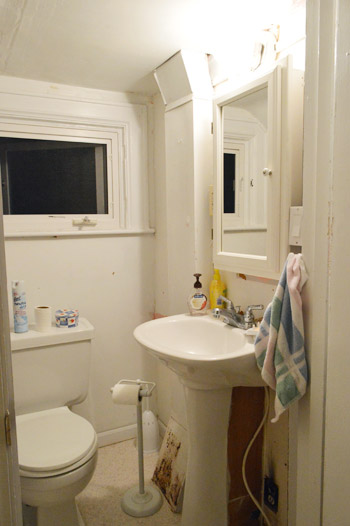
Every family has that one room that quietly waves a red flag for months before anyone finally says it out loud. For us, it was Granny’s bathroom. It looked innocent enough from the hallway: pale walls, a loyal old vanity, towels folded with military precision, and a tub that had clearly seen things. But step inside and the room started telling a different story. The floor got slick when wet. The lighting made everything look like a witness protection program. The fan hummed like it was busy, yet somehow the mirror still fogged up with Olympic enthusiasm. And the tub? Let’s just say climbing into it felt less like bathing and more like auditioning for a low-budget action movie.
So Day One of our big bathroom makeover for Granny was not just about making things prettier. It was about making the room safer, easier to use, and far more comfortable for someone we love. Sure, we wanted a bathroom that looked fresh and welcoming. But the real goal was bigger than tile and paint. We wanted a space that supported aging in place, reduced fall risks, improved comfort, and gave Granny back that small but mighty luxury called confidence.
Why This Bathroom Makeover Matters More Than a Pretty Tile Pattern
Bathroom remodel stories often start with “we hated the color” or “the grout was judging us.” Ours started with practicality. Bathrooms are one of the hardest-working rooms in any house, and for older adults, they can also be one of the trickiest. A high tub wall, slippery surfaces, weak lighting, awkward storage, and hard-to-turn knobs can turn a routine shower into a full-contact sport.
That is why our makeover plan focused on universal design ideas that work for everybody, not just Granny. A walk-in shower makes life easier now and later. A handheld showerhead is helpful whether you are seated, standing, cleaning the shower, or rinsing the dog after he rolls in something suspicious. A bench is useful for shaving legs, setting down products, or catching your breath. Grab bars, when chosen well, do not have to scream “hospital.” They can blend into a stylish bathroom while still doing the very important job of being there when needed.
In other words, this was not a pity remodel. It was a smart remodel. The kind that says comfort, independence, and good design should absolutely share a room.
What We Saw the Minute We Started Planning
Before demo day, we spent time noticing what was actually not working. That sounds obvious, but many remodels go sideways because people jump straight to finishes and skip the boring detective work. We asked simple questions. Where does Granny steady herself? What does she avoid using? What feels too low, too high, too dark, or too awkward? Where does water collect after a shower? Which cabinet doors are annoying? Which light switch feels like it is hiding on purpose?
That little walkthrough told us more than any mood board ever could. We realized the old tub was the biggest issue, followed closely by poor ventilation and bad lighting. The storage was also working against her. Everyday items were tucked too low or too far back, which meant extra bending and reaching. Even the rug, which looked harmless and cozy, had “trip hazard with great intentions” written all over it.
So our Day One checklist became clear: remove what is unsafe, keep what still works, protect the house during demolition, and start building a bathroom that helps Granny move through her day with less effort and more ease.
Day One Begins: Dust, Decisions, and One Very Emotional Toilet
No one tells you this, but the first day of a bathroom remodel is emotionally weird. You walk in knowing a lot is about to change. Then someone shuts off the water, pulls out the vanity, and suddenly the room looks like it forgot how to be a room. Pipes are exposed. Tile comes loose. Old caulk reveals its crimes. The toilet leaves the building. Everyone pretends this is normal.
We started carefully. That mattered because this was not a random flip house or a guest bath nobody used. This was Granny’s bathroom, attached to habits she had built over years. So even while the tools came out, we made a point to include her. We showed her samples. We talked through where the future shower seat might go. We explained why brighter lighting would help. We asked whether she preferred a shower niche or a shelf she could reach more easily. That made the day feel less like something being done to her and more like something being built for her.
And yes, there was dust. So much dust. We sealed off the area, ran ventilation, and kept traffic in and out of the work zone under control. A bathroom remodel can stir up all kinds of grime, and good airflow matters not just for comfort but for air quality too. Day One may not be glamorous, but it is where smart projects quietly win.
The Features We Knew Granny’s New Bathroom Needed
1. A safer shower entry
The biggest upgrade on our list was swapping the old tub setup for a shower that would be easier to enter and exit. A low-threshold or curbless shower can make a huge difference in day-to-day comfort. It removes that awkward step over the tub wall and makes the bathroom feel more open at the same time. We also planned for a built-in or fold-down seat, because standing for the whole shower should not be the only option available.
2. Slip-resistant flooring
If a bathroom floor turns into a skating rink the second water appears, it has failed the assignment. We wanted flooring with traction, a surface that looked good but also respected the laws of gravity. Tiny glossy tiles may photograph beautifully, but this was not the room for dramatic entrances. Safety got the final vote.
3. Real grab bars, not decorative impostors
We planned for properly anchored grab bars in the shower and near the toilet. That “properly anchored” part matters. A towel bar is not a grab bar, just like a folding chair is not a ladder. We also liked the idea of reinforcing the walls during the remodel, even in places where bars might be added later. Future-proofing is not flashy, but it is incredibly wise.
4. Better lighting everywhere
Older eyes generally need more light, and bathrooms are no place for shadowy corners. We wanted layered lighting: brighter overhead light, better vanity light, and a gentle night-light option for late-night trips. The aim was simple: no squinting, no guessing, no suspicious dim corners where shampoo bottles go to disappear.
5. Easier-to-use fixtures
Lever handles beat stubborn knobs every day of the week. A handheld showerhead adds flexibility. A comfort-height toilet can make sitting down and standing up easier. A vanity with smarter storage keeps daily essentials within easier reach. Good design is not just about what looks nice in a photo. It is about how many little frustrations it quietly removes from ordinary life.
6. Ventilation that actually earns its paycheck
The old fan made noise but seemed to do very little besides provide background drama. In a bathroom, ventilation matters. It helps push out moisture, protects finishes, supports indoor air quality, and reduces the kind of damp environment mold loves. We wanted a fan that was properly sized for the space and vented correctly, because a pretty bathroom that stays damp is basically a future headache with grout lines.
Designing for Granny Without Making It Look Clinical
One of the biggest myths in accessible bathroom design is that it has to look cold, institutional, or painfully practical. Not true. Day One helped us commit to a better approach: warm, welcoming, and quietly functional. Think soft neutrals, easy-clean surfaces, good contrast between walls and fixtures, and hardware that looks intentional rather than medical.
We leaned toward timeless finishes instead of ultra-trendy ones. Trends can be fun, but Granny did not need a bathroom designed around whatever social media was obsessed with for six weeks. She needed a room that would still feel calm, useful, and attractive years from now. That meant choosing finishes that played nicely together, a shower layout that did not waste space, and storage that prioritized daily routines over showroom styling.
That is another lesson Day One taught us: beauty and function are not enemies. The best bathroom makeovers for older adults do both. They solve practical problems while still feeling like home.
Budget Talk: Where We Refused to Cut Corners
Every remodel has a moment when the budget stares back at you and asks whether you are serious. We were. But we also knew some items deserved priority. Waterproofing, quality installation, proper ventilation, secure support for grab bars, and slip-resistant materials were not optional “nice-to-haves.” They were the backbone of the project.
Where were we more flexible? Decorative extras. Fancy wall treatments. The kind of mirror that costs more than a refrigerator for reasons known only to the mirror industry. We were happy to save on a few cosmetic splurges so we could spend where performance mattered most.
That is a useful rule for anyone planning a bathroom makeover for an older family member: invest in the bones of the room first. Waterproofing and layout will outlast trend pieces every time. A safe, dry, easy-to-clean bathroom is a much better long-term win than one expensive light fixture pretending to carry the whole remodel on its back.
What Day One Taught Us Right Away
First, old bathrooms love surprises. Once demolition starts, hidden problems sometimes introduce themselves like uninvited relatives. There may be moisture damage, outdated plumbing, odd wiring decisions, or previous repairs done with optimism instead of skill. This is exactly why rushing a bathroom remodel is a bad idea.
Second, involving the person who will actually use the bathroom is non-negotiable. Granny’s comfort mattered more than our assumptions. Her preferences about shower controls, shelf height, seat placement, and lighting tone were not side notes. They were central to the design.
Third, a bathroom makeover is never just about fixtures. It is about routine. Can she reach the towel easily? Can she move without feeling cramped? Can she shower without feeling nervous? Can she use the room at night without waking the whole house or risking a stumble? Good remodeling answers those questions before anyone starts arguing about grout color.
The Real Goal: Independence With Dignity
There is something deeply meaningful about remodeling a bathroom for a grandparent. It is not flashy like a full kitchen renovation or as publicly admired as a front porch makeover. But it may be more personal. Bathrooms are private spaces. When that space becomes difficult to use, it can quietly chip away at independence. When it becomes safer and easier again, it can restore a lot more than convenience.
That was the heartbeat of Day One for us. We were not just tearing out an old tub or replacing tired finishes. We were making room for longer independence, better comfort, and less daily stress. We were trying to create a bathroom that supported Granny rather than challenged her. That is not small. That is huge.
And honestly, even through the dust and demo chaos, that purpose made the whole thing feel good. Exhausting, messy, occasionally hilarious, but good.
Extra Notes From Day One: The Human Side of the Makeover
Here is the part home improvement shows skip. Day One was not just tools, debris, and contractor talk. It was also memory lane in work boots. Granny stood in the doorway and laughed about how long that old wallpaper had survived. She remembered when the bathroom got its “big update” years ago, which turned out to mean one new mirror and a paint color that can only be described as “brave beige.” She told us where she used to keep our bath toys when we were little, and suddenly the room was not just a problem to solve. It was a tiny museum of family routines.
That changed the energy of the whole project. Instead of thinking only like remodelers, we started thinking like caretakers of a space that had held a lot of ordinary life. There was the mark on the cabinet where someone had bumped it with a laundry basket a hundred times. There was the corner shelf that somehow held every possible lotion known to modern civilization. There was the old bath mat Granny insisted was “still perfectly fine,” even though it had the gripping power of a banana peel.
We also learned that the emotional comfort of a remodel matters almost as much as the physical design. Change can be unsettling, especially when it affects a room someone uses every day. So we kept talking her through each step. We explained what was being removed, what would replace it, and why it would help. We showed her the showerhead options. We let her choose between two warm paint directions. We talked about where the soap should go, where the robe hook should sit, and how bright she wanted the vanity lights. These may sound like small details, but small details are often where dignity lives.
There was humor too, because there had to be. At one point, we all stared at the stripped-down room and agreed it looked less like a bathroom and more like a crime scene for ceramic tile. Someone found a hairpin behind the vanity that may have been older than half the people in the house. The old fan came out with such dramatic resistance that it deserved its own slow-motion exit music.
But beneath the jokes, there was relief. Relief that we had started. Relief that we were addressing the room before a bad fall, not after one. Relief that Granny would not have to keep pretending the tub was “not that bad.” Day One made the need for the remodel impossible to ignore, and weirdly, that felt comforting. Once the walls were open and the old materials were out, the path forward became easier to see.
If you are planning a bathroom makeover for a parent or grandparent, that may be the most important lesson from our first day: do not wait for a crisis to force good design. Start while there is time to make thoughtful choices. Start while the conversation can still be collaborative. Start while the person you love can still say, “Actually, I’d rather have the shelf over there.” A bathroom may be one room in the house, but when it works well, it can support independence in a way that reaches into every part of daily life.
That is why Day One mattered so much. It was noisy and dusty and a little chaotic, yes. But it was also hopeful. It felt like the first honest step toward making Granny’s home fit her life now, not just the life she had twenty years ago. And that is the kind of makeover worth making.
Conclusion
Day One of our big bathroom makeover for Granny was part demolition, part design reality check, and part family love letter disguised as a remodel. We began with the practical goals of better safety, easier access, stronger ventilation, and smarter storage, but the day quickly became about something deeper: helping Granny stay comfortable and independent in a home she knows by heart. The best bathroom remodel ideas for older adults are not only stylish. They are thoughtful, sturdy, and built around real routines. If Day One taught us anything, it is this: the smartest makeover is the one that makes everyday life feel easier, safer, and a whole lot less slippery.