Fall is the season when your home quietly starts auditioning for a supporting role in a cozy movie. Suddenly, there are boots by the door, throw blankets on every chair, school papers multiplying like enthusiastic rabbits, and holiday decorations waiting in the garage like they have an appointment. The good news? You do not need a mansion, a custom closet, or a suspiciously perfect pantry to get your home under control. You need smart systems, realistic storage, and a few pro organizer tricks that make daily life easier.
The best fall home storage hacks are not about hiding everything in matching bins and pretending your family has been replaced by catalog models. They are about making the things you use most often easier to grab, easier to return, and harder to abandon on the nearest horizontal surface. Professional organizers love fall because it naturally invites a reset: summer gear goes away, cold-weather essentials come forward, and the home prepares for busier routines, guests, cooking, holidays, and more time indoors.
Below are clever, practical, and refreshingly doable storage ideas that help every room work harder this fallwithout making your house feel like a warehouse with scented candles.
Why Fall Is the Perfect Time to Rethink Home Storage
Fall creates a storage traffic jam. Lightweight jackets become bulky coats. Flip-flops are replaced by boots. Outdoor toys, garden tools, patio cushions, sports gear, school supplies, and holiday decor all start competing for prime real estate. If you wait until winter, clutter usually wins by a landslide.
Pro organizers often treat fall as a “transition season,” which means the goal is not to organize every single item you own. The goal is to rotate your home so it supports the way you actually live right now. Sunscreen does not need the front-row seat in October. Beach towels can step aside. Gloves, umbrellas, backpacks, baking supplies, blankets, and guest linens deserve easier access.
A good fall storage reset asks three simple questions: What do I need daily? What do I need occasionally? What can move out of the way until next season? Answer those honestly, and you are already halfway to a more organized home.
1. Build a Fall Drop Zone That Actually Works
The entryway is the first battlefield of fall clutter. Wet shoes, jackets, tote bags, backpacks, mail, keys, dog leashes, and reusable shopping bags all arrive here first. If there is no clear place for them, they will form a tiny clutter village near the door.
Professional organizers love drop zones because they solve clutter before it travels deeper into the home. A smart fall drop zone includes hooks for coats and bags, a tray for muddy shoes, a small bowl or wall pocket for keys, and one basket per person for daily grab-and-go items.
Try the “One Basket Per Person” Rule
Give every family member a labeled basket or cubby. This is not just cuteit prevents mystery piles. Scarves, gloves, sports forms, sunglasses, library books, and tiny items that normally vanish into the household fog now have a place to land.
For small spaces, use vertical storage. Wall hooks, slim shoe racks, over-the-door organizers, and narrow benches with hidden storage can transform even a tiny hallway into a functioning command center. The secret is to keep it simple. If putting something away requires opening three doors and moving a plant, nobody is doing it. Not even the person who bought the plant.
2. Rotate Seasonal Clothing Like a Pro
Closets often feel too small because they are holding multiple seasons at once. Fall is the ideal time to move lightweight summer clothes out of the daily zone and bring sweaters, coats, boots, and cold-weather accessories forward.
Use clear bins, breathable fabric bags, or under-bed storage containers for out-of-season clothing. Label everything by category, such as “summer tops,” “swimwear,” “sandals,” or “vacation clothes.” This keeps you from opening six bins later while muttering things that would alarm your laundry basket.
Use the Top Shelf for Off-Season Items
The top shelf of a closet is usually inconvenient, which makes it perfect for items you do not need every day. Store seasonal clothing, extra bedding, travel bags, or rarely used accessories up high in labeled bins. Keep daily items between shoulder and knee height, where they are easy to see and reach.
For sweaters, skip overcrowded hangers that stretch the fabric. Fold sweaters upright in bins, drawers, or shelf dividers. Boots can stand in a row on a low rack or boot tray. If they flop over, use boot shapers, rolled magazines, or clean packing paper. Your boots get posture. You get floor space. Everybody wins.
3. Use Clear, Stackable Bins for Fall Decor
Fall decor is charming until it becomes five mystery boxes labeled “misc.” Pro organizers recommend separating decor by season and holiday. That means one container for general fall decor, one for Halloween, one for Thanksgiving, and another for winter holidays if needed.
Clear bins make it easier to see what you own, while stackable shapes save space in closets, basements, garages, and storage rooms. Add large labels on the front and side so you can identify containers even when they are stacked.
Create a Decor Inventory
Before buying another ceramic pumpkin with emotional authority, take a quick inventory. If something is broken, faded, sticky, or no longer fits your style, let it go. Decor should make the season feel special, not make you feel guilty for storing a scarecrow you secretly dislike.
For wreaths, garlands, and throw pillows, use zippered storage bags or hanging storage when possible. Soft items should be clean and fully dry before storing to prevent musty smells. A dryer sheet or cedar sachet can help keep storage bins fresh, but avoid anything heavily scented if you are sensitive to fragrance.
4. Turn Baskets Into Beautiful Clutter Catchers
Baskets are the sweatpants of home storage: comfortable, forgiving, and surprisingly stylish when chosen well. Pro organizers use baskets in nearly every room because they create boundaries. When items have a boundary, clutter looks contained instead of chaotic.
Place a woven basket near the sofa for throw blankets. Use a low basket by the fireplace for kindling or extra pillows. Add a basket at the bottom of the stairs for items that need to go up. Keep a small basket in the kitchen for reusable bags, lunch boxes, or water bottles.
Match the Basket to the Job
Not every basket should be decorative. Use sturdy baskets for heavy items, washable bins for kids’ gear, open baskets for frequently used pieces, and lidded baskets for visual clutter. If you cannot see into a basket, label it. Otherwise, it becomes a polite-looking black hole.
The key is not to buy baskets first. Edit the clutter, sort items by category, measure the space, then choose storage. Buying containers before decluttering is how people end up with a bin full of empty bins, which is deeply ironic and extremely common.
5. Make the Pantry Fall-Ready
Fall cooking tends to bring more baking supplies, soups, snacks, school lunch items, and holiday ingredients into the kitchen. A messy pantry can turn a simple dinner into a scavenger hunt with flour.
Start by removing expired food, stale snacks, duplicate spices, and ingredients you know you will not use. Then group items by category: breakfast, baking, pasta and grains, canned goods, snacks, lunch supplies, and dinner shortcuts.
Add Zones Instead of Just Containers
Containers help, but zones are what keep a pantry functional. Use clear bins for snacks, turntables for oils and sauces, risers for cans, and baskets for baking mixes. Store heavier items on lower shelves and lighter items up high. Keep weekday lunch supplies at kid-friendly height if children pack or help pack lunches.
For deep shelves, pull-out bins are a game changer. Without them, the back of the shelf becomes a retirement home for forgotten crackers. With them, you can slide everything forward and actually see what you own.
6. Claim the Back of Every Door
Doors are underrated storage real estate. Closet doors, pantry doors, laundry room doors, bathroom doors, and cabinet doors can all hold useful items without taking up floor space.
Use over-the-door organizers for shoes, hats, gloves, cleaning supplies, pantry packets, gift wrap, craft materials, or toiletries. Adhesive bins can work inside cabinet doors for sponges, dryer balls, small tools, hair accessories, or extra cords. Removable hooks are excellent for bags, umbrellas, towels, robes, and seasonal decorations.
Keep Door Storage Light and Logical
Do not overload doors with heavy items. The best door storage is shallow, lightweight, and easy to access. In fall, consider using a door organizer in the entry closet for gloves, hats, pet accessories, and compact umbrellas. This keeps small seasonal items from scattering through drawers like confetti at a parade nobody approved.
7. Use Furniture That Secretly Stores Things
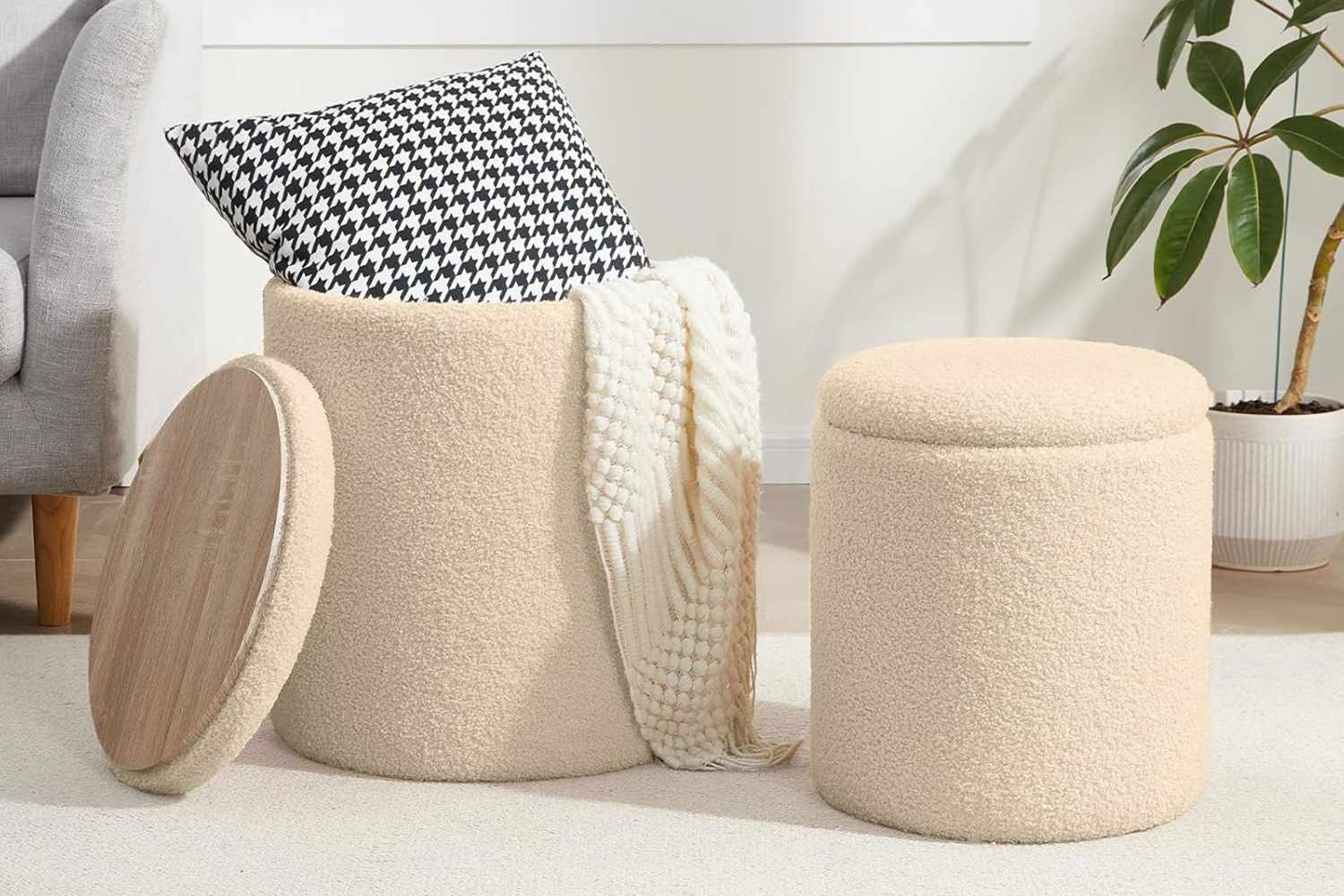
Storage furniture is a favorite pro organizer move because it solves clutter without shouting, “Look, I bought another bin!” Ottomans, benches, trunks, coffee tables with drawers, beds with built-in storage, and nightstands with deep drawers can all hide seasonal extras while keeping rooms comfortable.
In fall, storage ottomans are perfect for throw blankets, board games, extra pillows, and guest bedding. Entry benches can hold shoes, scarves, pet supplies, or sports gear. Bedroom storage benches can handle off-season bedding or bulky sweaters.
Choose Storage Furniture Based on Habits
If your family drops shoes by the door, choose an entry bench with shoe storage. If your living room collects blankets, choose an ottoman with a lift-top lid. If your bedroom lacks dresser space, use nightstands with drawers instead of tiny tables that hold one lamp and a dream.
The best storage furniture supports existing behavior. It does not require your household to become totally different people by Tuesday.
8. Create a Holiday Prep Station Before the Rush
Fall is the runway to the holiday season. Before guests, gifts, baking, wrapping, travel, and hosting plans arrive, create a small holiday prep zone. This can be a shelf, drawer, rolling cart, closet bin, or labeled tote.
Include gift wrap, tape, scissors, greeting cards, batteries, candles, serving pieces, extra napkins, and a running checklist. If you host, add a guest basket with travel-size toiletries, spare toothbrushes, fresh towels, and phone chargers.
Keep Entertaining Supplies Together
Serving platters, table linens, seasonal mugs, place cards, and extra utensils are easier to use when they live near each other. Store occasional entertaining pieces on higher shelves or in labeled bins, but keep frequently used items accessible during fall and winter.
This system prevents the classic holiday moment where someone asks for a serving spoon and you begin excavating the garage like an archaeologist in festive socks.
9. Reset the Linen Closet for Cozy Season
Fall brings cooler nights, weekend guests, and more blanket usage. A well-organized linen closet can make the whole home feel calmer. Start by removing worn-out towels, mismatched sheet sets you never use, and bedding that has lost its charm or elasticity.
Group linens by type or by room. For example, store all queen sheets together, all guest towels together, and all throw blankets together. Use shelf dividers to keep stacks upright. Bins can corral pillowcases, washcloths, and seasonal textiles.
Store Sheets as Sets
One reliable trick is to fold a sheet set and tuck it inside one matching pillowcase. This keeps the fitted sheet, flat sheet, and pillowcases together. No more hunting for the missing pillowcase while your guest stands nearby politely pretending not to notice.
10. Give the Garage and Mudroom a Seasonal Switch
The garage often becomes the place where clutter goes to “think about its future.” Fall is a smart time to reset it before winter weather and holiday storage make things more complicated.
Move summer gearpool toys, beach chairs, gardening supplies, and patio cushionsinto labeled bins or overhead storage. Bring forward rakes, snow tools if needed, outdoor extension cords, sports gear, and cold-weather supplies. Use wall-mounted racks for brooms, shovels, tools, and folding chairs.
Use Vertical Wall Storage
Garages and mudrooms benefit enormously from vertical storage. Pegboards, hooks, wall tracks, shelves, and hanging systems free up floor space and make tools easier to find. Store heavy items low, lightweight seasonal items high, and dangerous or sharp tools safely out of reach of children.
Clear floor space is not just prettier; it is safer and more functional. It also makes it easier to sweep out leaves, dirt, and the mysterious gravel that appears every fall like it pays rent.
11. Label Everything, But Keep Labels Flexible
Labels are not about being fancy. They are about reducing decision fatigue. When a bin says “winter hats,” nobody has to wonder where the hats go. When a pantry basket says “lunch snacks,” the household has fewer excuses for turning the kitchen into a snack avalanche.
Pro organizers often prefer simple, readable labels over decorative ones that require squinting. Use clip-on labels for baskets, adhesive labels for bins, chalk labels for containers that change often, and large labels for garage storage.
Update Labels as Your Routines Change
Your storage should evolve with your life. A bin that held sunscreen in July might hold gloves in November. A school paper tray might become a holiday card station. Flexible labeling keeps your system useful instead of frozen in last season’s chaos.
12. Follow the Two-Touch Rule
One smart organizing principle is the two-touch rule: if it takes more than two simple actions to get or return an item, the system is probably too complicated. For example, opening a closet, pulling out a bin, removing a lid, moving another box, and then grabbing gloves is too many steps for a busy morning.
Frequently used items should be visible, reachable, and easy to return. Store daily fall essentials in open bins, hooks, drawers, or trays. Save lidded boxes for things used occasionally or seasonally.
Make the Easy Choice the Organized Choice
The best storage hack is not the prettiest container. It is the system people will actually use when they are tired, late, carrying groceries, or wearing one shoe. If the organized option is easier than dropping something on the floor, the system will last.
Real-Life Experience: What Actually Works During a Fall Home Reset
Here is the honest truth about fall organizing: the first hour usually looks worse before it looks better. You pull out coats, discover three lonely gloves, find a beach towel that somehow made it into the hall closet, and briefly question every purchase you have made since 2019. That is normal. A reset is not a mess; it is a transition in progress.
One of the most useful experiences with fall storage is learning that small changes beat giant weekend projects. For example, changing the entryway from “one big basket for everyone” to “one small basket per person” can make mornings smoother almost immediately. When everyone has a specific place for hats, keys, badges, sunglasses, or gloves, fewer things disappear. The basket does not need to be beautiful enough for a magazine. It just needs to be obvious enough for a sleepy person to use before coffee.
Another lesson: clear bins are worth it for seasonal storage. Solid bins can look cleaner, but clear bins make it easier to find the plaid table runner, the pumpkin lights, or the good guest towels without opening every container. If you prefer opaque bins, large labels are nonnegotiable. Label the front and the top, because storage bins have a sneaky habit of facing the wrong direction when stacked.
Pantry resets also make a surprisingly big difference in fall. As soon as baking season starts, ingredients pile up quickly: flour, sugar, chocolate chips, canned pumpkin, spices, soup ingredients, school snacks, and tea. Grouping items by use is more effective than arranging them only by package size. A baking bin, a breakfast bin, a soup-and-dinner shelf, and a snack basket can save time every week. You do not need to decant everything into matching containers unless that genuinely helps you. Sometimes the most practical container is the original box, neatly placed in the right zone.
Closet rotation is another fall habit that pays off fast. Keeping every season in one crowded closet makes daily dressing harder. Move summer pieces to a higher shelf or under-bed bin, then give sweaters, jeans, jackets, and boots room to breathe. This is also the perfect moment to notice what you actually wear. If you skipped a sweater all last fall and still feel annoyed looking at it this year, that sweater may be asking for a new life somewhere else.
The biggest storage win is creating “return paths.” Every item needs a simple route back home. If blankets belong in a storage ottoman beside the sofa, they are more likely to get put away. If umbrellas live in a tall basket near the door, they stop migrating to closets, cars, and unknown dimensions. If school papers have one tray instead of five random landing spots, paper clutter becomes easier to control.
Finally, fall organizing works best when it is realistic. A home should support real life: muddy shoes, grocery runs, guests, homework, cozy movie nights, and rushed mornings. Pro-level storage is not about perfection. It is about reducing friction. When the right item is in the right place at the right time, your home feels calmerand you spend less time searching for gloves while standing in the doorway, dramatically blaming the universe.
Conclusion
Clever fall home storage is not about buying every organizer on the internet or turning your house into a showroom where no one is allowed to sit down. It is about rotating seasonal items, creating practical zones, using vertical space, labeling clearly, and making storage easy enough to maintain on a regular Tuesday.
Start with the areas that create the most daily friction: the entryway, closet, pantry, linen closet, and garage. Add baskets, hooks, bins, drawer dividers, storage furniture, and door organizers where they solve a real problem. Edit before you contain. Label before you forget. And remember, the best storage hack is the one your household will actually use.
Note: This article is designed for general home organization inspiration and practical seasonal planning. Adjust storage choices to fit your home layout, climate, family routines, and available space.