Note: This publish-ready HTML article is written in standard American English, with SEO tags placed at the end in JSON format as requested.
Why Classic Enamelware Still Belongs on the Outdoor Table
Outdowls can make even a beautiful grilled dinner feel like a school cafeteria field trip. That is where classic enamelware steps in, wearing its speckles proudly and saying, “Relax, I was built for this.”
Classic enamelware for outdoor dining is practical, nostalgic, and surprisingly stylish. It has the rare ability to look right at home on a picnic blanket, a campsite table, a farmhouse porch, a lake cabin counter, or a backyard barbecue spread loaded with corn, ribs, watermelon, and one uncle who insists he “knows the grill.” Enamel plates and bowls are lightweight enough to carry outside, sturdy enough for casual use, and attractive enough that nobody feels like they are eating from emergency supplies.
At its core, enamelware is usually made by fusing a glass-like enamel coating to metal, often steel. That combination gives it a smooth surface, a crisp vintage appearance, and a tough personality. It is not indestructibledrop it hard enough and it may chipbut compared with fragile ceramic dinnerware, it is a champion of relaxed living. It laughs at patio tables, tolerates camp kitchens, and survives the kind of meals where guests balance plates on their knees while pretending mosquitoes are not winning.
What Is Enamelware?
Enamelware is dinnerware or cookware made with a metal base coated in vitreous enamel, a glass-based finish fired at high temperatures. The result is a hard, glossy surface that resists many everyday stains, wipes clean easily, and gives each piece its familiar shine. In outdoor dining, the most common pieces include enamel plates, enamel bowls, enamel mugs, serving trays, coffee pots, colanders, and sometimes roasting pans.
The Classic Construction
Most outdoor enamelware begins with steel. Steel gives the piece structure, strength, and a reassuring feel in the hand. The enamel coating gives it color, smoothness, and that cheerful old-school look. Some designs include stainless steel rims to help protect the edges, which is useful because rims are often the first area to meet picnic tables, cooler lids, and enthusiastic dish-washing volunteers.
Why the Speckled Look Became Iconic
Speckled enamelware is more than decoration. It became popular because it hides small marks well, pairs naturally with rustic settings, and looks charming without trying too hard. Blue-speckled, red-speckled, black-and-white, cream, and solid white enamel pieces all carry that same visual message: food is about to be served, and nobody needs to iron a tablecloth.
Benefits of Enamelware for Outdoor Dining
1. It Is Lightweight but Feels Substantial
One reason enamelware works so well outdoors is that it strikes a useful balance. It is lighter than stoneware or ceramic, yet it feels sturdier than disposable plates or thin plastic. That matters when you are carrying a stack of plates from the kitchen to the patio or packing dinnerware for a camping weekend. Your arms do not feel punished, but your table still looks intentional.
2. It Is Durable Enough for Real Life
Outdoor meals are not gentle. Plates slide around in picnic baskets. Bowls get stacked in bins. Mugs get set on tree stumps, tailgates, dock railings, and occasionally the ground because someone “had it for just a second.” Classic enamelware handles this kind of casual abuse better than many fragile materials. It can chip if dropped on a hard surface, but it does not shatter into dangerous shards the way glass or ceramic can.
3. It Cleans Up Without Drama
After a backyard dinner, nobody wants to conduct a laboratory experiment at the sink. Enamelware is generally easy to clean with warm water, mild soap, and a soft sponge. Most food residue releases quickly from the smooth surface. For outdoor dining, that is a major advantage. Barbecue sauce, baked beans, grilled vegetables, fruit juice, and campfire chili can all make a plate look like a crime scene, but enamelware usually cleans up politely.
4. It Looks Good in Almost Any Outdoor Setting
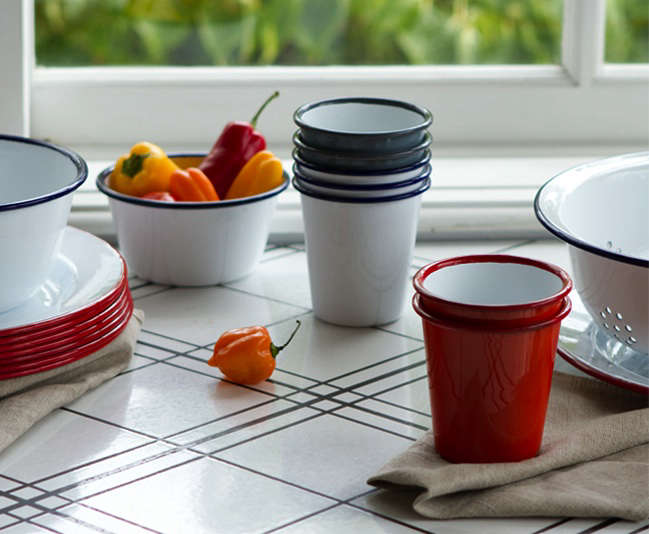
Classic enamelware has range. It can lean rustic, coastal, retro, minimalist, farmhouse, or camp-style depending on the color and table setting. A white enamel plate with a dark rim looks clean and simple. Red-speckled enamelware brings picnic nostalgia. Blue-speckled bowls say “cabin breakfast” before the coffee is even poured. Pair enamel pieces with linen napkins, wooden boards, galvanized trays, or woven placemats and suddenly your casual dinner looks curated rather than accidental.
5. It Reduces Single-Use Waste
Reusable outdoor dinnerware is a smart alternative to disposable plates and cups. Paper plates are convenient, but they can sag, leak, and create a trash bag that grows like a guilty conscience. Enamelware gives you a reusable option that still feels casual. It is especially useful for families, campers, hosts, and anyone who eats outside often enough to know that flimsy plates are not a lifestyle.
Best Uses for Classic Enamelware Outdoors
Backyard Barbecues
Enamel plates are ideal for grilled meals because they feel sturdy under heavier foods. Burgers, ribs, grilled corn, steak skewers, potato salad, and baked beans all sit comfortably on enamel dinner plates. Unlike paper plates, enamel does not collapse under a confident serving of coleslaw. That alone deserves applause.
Picnics in the Park
For picnics, enamelware adds charm without making the meal feel fussy. A few enamel plates, small bowls, and mugs can turn sandwiches and lemonade into something that looks like a lifestyle magazine shootassuming the ants cooperate. Because enamelware stacks well, it is easy to pack in a basket or tote with napkins, utensils, and a small cutting board.
Camping and Cabin Meals
Classic enamel camping dishes have been beloved for generations because they fit the rhythm of outdoor cooking. They work for oatmeal in the morning, soup at night, coffee by the fire, and snacks between hikes. Enamel mugs are especially popular because they look good, hold heat well, and make even instant coffee feel a little more heroic.
Patio Entertaining
If you host patio dinners, enamelware can help create a casual but polished table. Use dinner plates for grilled mains, small enamel bowls for dips and olives, and trays for burgers, fruit, or roasted vegetables. The table feels relaxed, but not lazy. That is the sweet spot: charming enough for guests, practical enough that you are not silently panicking every time someone reaches across the table.
Beach and Lake Days
At the beach or lake, enamelware works well because it is reusable, easy to rinse, and visually suited to breezy outdoor meals. It is not the lightest option for backpacking, but for car camping, lakeside cabins, beach houses, and dock lunches, it offers a pleasing mix of durability and style.
How to Choose the Right Enamelware Set
Consider the Number of People
A basic outdoor enamelware set for four usually includes dinner plates, bowls, and mugs. That is enough for most family meals, camping trips, and small gatherings. If you entertain often, consider buying extra plates and serving pieces. Outdoor meals have a way of attracting “just one more” guest, especially when grilled food is involved.
Look at Plate and Bowl Sizes
For dinner plates, 10-inch sizes are common and practical. They are large enough for main dishes but still easy to stack and store. Bowls around 5.75 to 6 inches are versatile for soup, cereal, chili, fruit, and snacks. Mugs around 12 ounces work for coffee, tea, cocoa, and the all-important emergency handful of trail mix.
Check the Rim and Finish
Enamelware with reinforced rims often holds up better to frequent stacking and outdoor use. Stainless steel rims can add edge protection and a polished look. Also examine the finish. A smooth, even coating is easier to clean and more pleasant to use. Minor variations are common in enamelware and can add character, but sharp edges, rough spots, or poorly finished rims are not welcome at the table.
Think About Storage
Outdoor dinnerware should be easy to store. Enamel plates and bowls usually nest neatly, making them great for cabinets, camp boxes, RV kitchens, and picnic bins. If space is limited, choose simple shapes that stack securely. Your future self will thank you when the cabinet does not avalanche every time you open it.
Match the Style to Your Outdoor Space
Color matters. White enamelware with a black rim feels timeless and clean. Blue speckle looks classic and outdoorsy. Red speckle has picnic energy. Cream and green can feel soft, vintage, or cabin-inspired. If your outdoor dining area already has wood furniture, striped cushions, or colorful linens, choose enamelware that complements the scene rather than fighting it like two squirrels over a sandwich crust.
Care Tips: How to Keep Enamelware Looking Good
Wash Gently
Use warm water, mild dish soap, and a non-abrasive sponge. While many enamelware pieces are labeled dishwasher-safe, handwashing can help preserve the glossy finish over time. Avoid steel wool, harsh scrubbers, and aggressive cleaners. Enamelware is tough, not invincible.
Do Not Use It in the Microwave
Because enamelware usually has a metal core, it should not be used in the microwave. This is one of the most important rules. Outdoor enamel mugs may look adorable with leftover cocoa in them, but the microwave is not their stage. Reheat food in a microwave-safe container, then serve it in enamelware afterward.
Avoid Hard Drops
Enamelware can chip when dropped on concrete, stone, tile, or other hard surfaces. A chip does not always mean the piece is useless, but it can expose the steel underneath and may eventually rust if not dried properly. For dining pieces, inspect chipped areas and use your judgment. If a surface becomes sharp or rough, retire it from food service and give it a new job holding napkins, packets, or small garden tools.
Dry Before Storing
After washing, dry enamelware thoroughly before stacking it away. This helps prevent moisture from sitting around rims or chipped areas. For camp kitchens, pack a small towel and let pieces air-dry when possible before storing them in a bin.
Use Utensils Wisely
Sharp metal utensils can leave marks on enamel surfaces. For everyday outdoor dining, stainless flatware is usually fine, but avoid scraping aggressively. If you are serving sticky desserts or baked-on foods, soak first instead of attacking the plate like it owes you money.
Enamelware vs. Other Outdoor Dinnerware Materials
Enamelware vs. Melamine
Melamine is lightweight, colorful, and widely used for outdoor dining. It often mimics ceramic patterns and is very convenient for patio meals. However, enamelware offers a more vintage, substantial feel and can be more heat-friendly in certain serving situations. Melamine may be better for poolside meals where weight and shatter resistance are the top priorities. Enamelware is better when you want durability with classic charm.
Enamelware vs. Stainless Steel
Stainless steel is extremely durable and excellent for rugged camping. It is hard to beat when pure toughness matters. Enamelware, however, wins on table appeal. It feels warmer, more decorative, and more inviting. Stainless steel says “expedition.” Enamelware says “expedition, but with pie.”
Enamelware vs. Ceramic
Ceramic dinnerware is beautiful, but it is heavy and breakable. For indoor dining, ceramic has elegance. For outdoor dining, it can become a stress test. Enamelware gives you a similar sense of real dinnerware without the same fragility. It is easier to carry outside, easier to pack, and much less dramatic when bumped.
Enamelware vs. Disposable Plates
Disposable plates are convenient, but they rarely improve the meal. They bend, soak through, and create waste. Enamelware requires washing, but it improves the dining experience and looks far better in photos. Also, your burger deserves structural support. It has been through enough.
Styling Ideas for an Outdoor Enamelware Table
Create a Campfire Breakfast Setup
Use blue-speckled enamel plates, enamel mugs, a wooden cutting board, and a checkered cloth. Serve pancakes, bacon, berries, and strong coffee. Add a small pitcher of maple syrup and you have a breakfast table that looks like it was personally approved by a friendly park ranger.
Build a Backyard Burger Bar
Stack enamel plates at one end of the table and arrange toppings in enamel bowls: lettuce, tomatoes, onions, pickles, sauces, and cheese. Use an enamel tray for buns or grilled vegetables. This setup keeps the table cohesive while letting guests build their plates without creating a traffic jam.
Use Enamel Mugs Beyond Coffee
Enamel mugs are not just for hot drinks. Use them for soup, chili, fruit, trail mix, popcorn, or even individual desserts. A brownie sundae in an enamel mug is casual, clever, and dangerously persuasive.
Mix Old and New Pieces
You do not need a perfectly matched set. In fact, enamelware often looks better when mixed. Combine white plates with speckled bowls, or pair vintage-style mugs with modern serving trays. The goal is relaxed coordination, not military precision.
Common Mistakes to Avoid
Buying Too Few Pieces
If you regularly host outdoor meals, buy more plates than your exact household count. Guests happen. Seconds happen. Someone will use a clean plate for dessert because the first plate has barbecue sauce on it, and honestly, that person is correct.
Ignoring Weight for Travel
Enamelware is lighter than ceramic but heavier than ultralight backpacking gear. For car camping, cabins, RVs, and backyard dining, it is excellent. For long backpacking trips, choose lighter specialized gear.
Using the Microwave
This deserves repeating because microwaves and metal are not friends. Do not microwave enamelware. Not for ten seconds. Not “just this once.” Not because the mug looks innocent. It knows what it did.
Scrubbing Too Hard
If food sticks, soak the piece before cleaning. Harsh scrubbers can dull or scratch the enamel surface. Gentle cleaning keeps enamelware shiny and ready for many seasons of outdoor meals.
Real Outdoor Dining Experiences with Classic Enamelware
My favorite enamelware moments are not fancy. They are the meals where everyone is slightly windblown, the napkins keep trying to escape, and the food tastes better because it was eaten outside. Classic enamelware has a way of making those meals feel more memorable without demanding attention. It is the quiet supporting actor that makes the whole scene work.
One experience that perfectly captures the appeal of enamelware is a simple backyard taco night. The table is not elegant in the traditional sense: there are bowls of salsa, chopped onions, grilled peppers, lime wedges, and tortillas wrapped in a towel. But when everything is served in enamel bowls and trays, the spread looks intentional. The colors pop against white or speckled enamel, the plates are strong enough for overloaded tacos, and cleanup does not feel like punishment. Someone will still drop shredded cheese on the patio. Enamelware cannot solve every human weakness.
Another great use is morning coffee outdoors. An enamel mug has a different personality from a regular ceramic mug. It feels like it belongs near fresh air, pine trees, porch steps, or a camp chair. The mug can get hot, so it is smart to hold it by the handle and avoid overfilling it. But there is something deeply satisfying about sipping coffee from an enamel mug while the day is still quiet. Even if the “wilderness” is your suburban deck and the wildest animal nearby is a squirrel with boundary issues, the mood still works.
Enamelware also shines during family-style outdoor dinners. Serving roasted vegetables, pasta salad, fruit, or grilled chicken on enamel trays makes the table feel casual and generous. Unlike disposable serving pieces, enamel trays have presence. They make people want to gather around. They also photograph beautifully, which matters because apparently no one can legally eat a summer meal until at least one person takes a picture.
For camping, enamelware can make basic meals feel more comforting. Chili in an enamel bowl, oatmeal in the morning, soup after a cold hike, or hot cocoa around a fire all feel more satisfying when the dishware has some weight and warmth to its appearance. Yes, you need to pack it carefully. Yes, it can chip if treated badly. But part of the appeal is that enamelware gains character over time. A tiny mark on a well-loved camp mug can feel like a souvenir from a weekend that went right.
At picnics, enamel plates solve the classic problem of flimsy dinnerware. A real plate makes even simple food feel better. Sandwiches, pasta salad, grapes, cookies, and lemonade suddenly look like a planned event rather than a snack emergency. If you wrap enamel pieces in cloth napkins while packing, the napkins protect the plates and then become part of the table setting. That is efficiency with manners.
The biggest lesson from using classic enamelware outdoors is this: good outdoor dining gear should make meals easier and more enjoyable, not more delicate. Enamelware does that beautifully. It is sturdy without being ugly, stylish without being precious, and nostalgic without feeling outdated. It invites people to eat outside more often, which may be its best feature. A Tuesday dinner on the patio can feel like a small vacation when the table is set with cheerful enamel plates, a bowl of salad, something sizzling from the grill, and enough napkins to handle reality.
In the end, classic enamelware for outdoor dining is not just about plates and mugs. It is about building a table that welcomes real life: kids reaching for seconds, friends laughing too loudly, sauce landing where sauce should not land, and dessert appearing even though everyone claimed to be full. Enamelware handles the scene with style. It does not ask for perfection. It simply shows up, looks good, gets washed, and comes back for the next meal.
Conclusion: A Timeless Choice for Meals Under the Sky
Classic enamelware remains one of the best choices for outdoor dining because it blends beauty, durability, and practicality in a way few materials can. It is light enough to carry, strong enough for frequent use, easy to clean, and stylish enough for everything from camp breakfasts to patio dinner parties. Its vintage look brings warmth to the table, while its sturdy construction makes it ready for real outdoor life.
Whether you are planning backyard barbecues, lakeside lunches, camping trips, porch breakfasts, or picnic dinners, enamelware gives you a reliable foundation. Choose pieces that stack well, wash them gently, keep them out of the microwave, and let them earn a little character over time. The best outdoor meals are not perfect. They are comfortable, flavorful, slightly messy, and shared with people who know that seconds are a love language. Classic enamelware fits that mood perfectly.