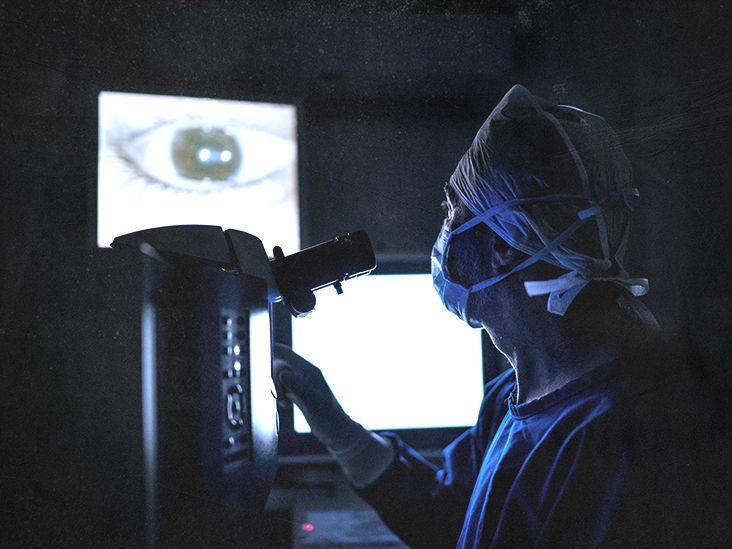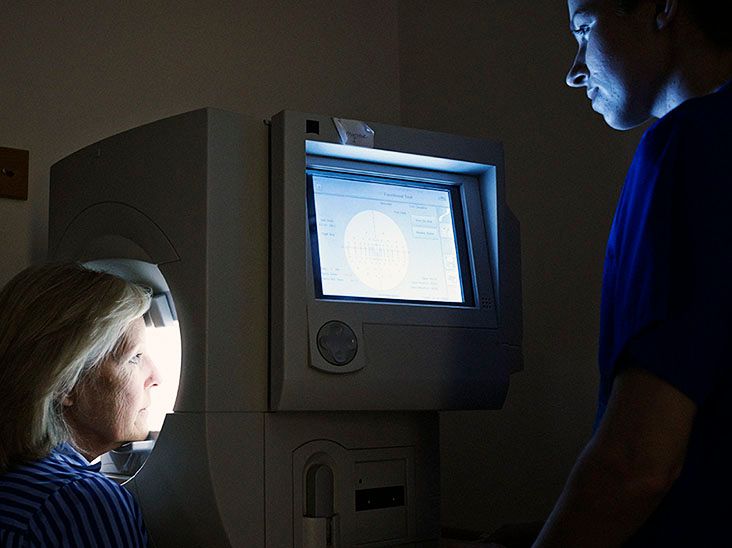
Central serous retinopathy (CSR) sounds like one of those diagnoses invented purely to make patients say, “Could you please repeat that, but with fewer syllables?” The shorter name is easier, but the question behind it is the real headline: Can central serous retinopathy lead to macular degeneration?
The smart, medically honest answer is this: usually no, not in the classic age-related macular degeneration sense. Central serous retinopathy, also called central serous chorioretinopathy (CSC or CSCR), is generally considered a different retinal disease with a different mechanism. But that does not mean it is harmless, interchangeable with a minor eye annoyance, or something your retina can just “walk off.” Chronic or recurrent CSR can damage the macula, cause lasting visual distortion, and in some cases create complications that can resemble or overlap with serious macular disease.
That is why this topic causes so much confusion online. People hear “macula,” “central vision,” “fluid under the retina,” and suddenly every eye disorder sounds like a cousin at the same family reunion. Some are related. Some only look alike in bad lighting. This article breaks down what central serous retinopathy is, how it differs from age-related macular degeneration (AMD), where the overlap happens, and why a retina specialist may take a very close look before giving a final answer.
What is central serous retinopathy, exactly?
Central serous retinopathy is a retinal condition in which fluid leaks under the retina, usually beneath the macula, the part of the retina responsible for detailed central vision. That fluid can create a small detachment and distort what a person sees. Instead of crisp text, straight lines, and normal color contrast, people may notice a blurry central spot, bent lines, washed-out colors, or the strange feeling that objects look smaller or farther away than they really are.
CSR often shows up in adults who are younger than the typical age group for AMD, and it has been linked with corticosteroid use, high stress levels, and several other risk factors. Many cases improve on their own over weeks or months, which is the good news. The less cheerful news is that some cases recur, linger, or become chronic. When that happens, the retina can stop being politely inconvenienced and start showing real structural damage.
Common symptoms of CSR
- Blurry central vision
- A dark or dim spot in the center of vision
- Straight lines that look bent, crooked, or wavy
- Colors that seem duller or washed out
- Objects that appear smaller than normal
- Vision changes in one eye more than the other
Because some people have only mild symptoms at first, CSR can sneak in like an uninvited guest who rearranges the furniture and hopes nobody notices. Unfortunately, your ability to read, drive, work at a computer, or recognize faces may notice very quickly.
So, can CSR lead to macular degeneration?
The short answer
CSR is not usually considered a direct cause of age-related macular degeneration. These are different diseases. AMD is primarily associated with aging changes in the macula, while CSR is defined by leakage of fluid under the retina, often involving choroidal vascular changes and retinal pigment epithelium dysfunction.
The more useful answer
Here is where nuance matters. Chronic or recurrent CSR can damage the macula. Over time, persistent subretinal fluid may lead to changes in the retinal pigment epithelium, retinal thinning, atrophy, scarring, or reduced visual quality that does not completely bounce back. In plain English: even if CSR does not “turn into” classic AMD, it can still leave the macula worse for wear.
Some medical sources use the phrase macular degeneration in a broader descriptive sense to refer to degeneration or damage in the macular region. That wording can alarm patients who immediately think of age-related macular degeneration. But those are not always the same thing. A better way to say it is this: chronic CSR may cause degenerative damage in the macula, but it is usually not the same disease process as AMD.
Why the confusion happens
The confusion usually comes from three places. First, both CSR and AMD affect central vision. Second, both can involve fluid under or around the macula. Third, chronic CSR can sometimes be associated with choroidal neovascularization, meaning abnormal blood vessel growth. That abnormal vessel growth is also a major feature of wet AMD. Once imaging starts showing fluid, leakage, or new vessels, the diagnostic line can get blurry even when the patient does not want it to.
That is especially true in older adults. If someone is diagnosed with apparent CSR later in life, retina specialists may look carefully for neovascular AMD or another macular disease masquerading as CSR. So the better question is not only, “Can CSR lead to macular degeneration?” but also, “Could this actually be another macular condition, or a complication that looks like one?”
CSR vs. age-related macular degeneration: same neighborhood, different houses
| Feature | Central Serous Retinopathy | Age-Related Macular Degeneration |
|---|---|---|
| Main problem | Fluid leaks under the retina | Age-related damage to the macula; in wet AMD, abnormal blood vessels grow and leak |
| Typical age group | Often younger or middle-aged adults | Usually older adults |
| Course | Often self-limited, but may recur or become chronic | Usually progressive over time |
| Common symptoms | Blurred central vision, distortion, dimness, objects looking smaller | Blurry or wavy central vision, blank spots, trouble reading or recognizing faces |
| Imaging clues | Subretinal fluid, leakage patterns, pachychoroid features | Drusen, macular thinning, geographic atrophy, or neovascular changes |
| Key risk factors | Steroid exposure, stress, recurrence history | Age, smoking, genetics, cardiovascular risk factors |
That table may look neat and tidy, but real eyes do not always read the chart. Chronic CSR can create retinal pigment epithelium changes, and some eyes develop secondary neovascularization. Meanwhile, some forms of wet AMD can present with fluid and distorted central vision that initially seem similar. That is why OCT, fluorescein angiography, and sometimes additional imaging matter so much.
How doctors tell the difference
A retina specialist does not diagnose CSR or AMD with wishful thinking and strong opinions. They rely on a dilated eye exam plus imaging that shows where the fluid is, how the retina is shaped, and whether abnormal blood vessels are involved.
Tests commonly used
- Optical coherence tomography (OCT): creates detailed cross-sectional images of the retina and reveals pockets of fluid, swelling, detachment, thinning, or scarring.
- Fluorescein angiography: uses dye and specialized photography to show leakage patterns in the retina.
- Sometimes OCT angiography or indocyanine green angiography: may help look for choroidal neovascularization or related choroidal changes in complex cases.
Imaging is particularly important in chronic CSR, because persistent or recurrent fluid can create a messier picture than a first-time, straightforward case. If a patient is older, has atypical symptoms, or shows suspicious vascular changes, doctors may specifically investigate for wet AMD, polypoidal disease, or other disorders in the same broad pachychoroid spectrum.
What chronic CSR can do to the macula
This is the section where “it usually gets better” stops being the whole story. Acute CSR often improves, but chronic CSR can be much more stubborn. Repeated leakage or fluid that hangs around too long may lead to:
- Persistent visual distortion
- Reduced contrast sensitivity
- Retinal pigment epithelium changes
- Retinal thinning or atrophy
- Scarring and permanent central vision loss
- Secondary choroidal neovascularization in some cases
That last point matters. When abnormal blood vessels develop, the conversation shifts. Secondary neovascularization is not the same thing as saying every case has become wet AMD, but it does mean the eye may now have a serious sight-threatening complication that requires targeted treatment. This is one reason chronic CSR should not be brushed off as “just stress” or “just a temporary blur.”
In other words, CSR does not deserve panic, but it does deserve respect. Your macula is not being dramatic. It is literally the part of your retina that lets you read tiny print, see faces clearly, and avoid turning every stop sign into modern art.
Treatment and prognosis
For many people with a first episode of CSR, treatment starts with observation. If the fluid clears on its own and vision improves, fantastic. That is the retina equivalent of a situation resolving itself before everyone starts sending urgent group texts.
Common management strategies
- Watchful waiting: often appropriate in early cases because many improve within weeks to months.
- Reviewing steroid use: oral, inhaled, topical, injected, or nasal steroids may trigger or worsen CSR. Any medication changes should be supervised by the prescribing clinician.
- Photodynamic therapy (PDT): commonly used for chronic or persistent cases and often considered one of the more established options.
- Laser treatments: may be used in selected cases.
- Anti-VEGF injections: may play a role when choroidal neovascularization is present, though they are not uniformly beneficial for uncomplicated CSR itself.
Prognosis depends on whether the case is acute, recurrent, or chronic. Many patients recover useful vision, but vision may not return to exactly the way it was before the episode. Some people are left with mild distortion, reduced sharpness, altered color perception, or a “ghost” of the original blur. Recurrence is also possible, which is why follow-up matters even after symptoms improve.
When should you worry?
You should not wait around casually if you notice a new central blur, bent lines, a dark spot, or rapidly worsening vision. Those symptoms can occur with CSR, but they can also appear with wet AMD, retinal detachment, vascular problems, and other urgent retinal conditions. The eye does not give bonus points for patience when the retina is leaking fluid.
Get prompt eye care if you notice:
- A sudden blurry or dim central spot
- Straight lines turning wavy
- Rapid change in one eye
- New distortion while reading or driving
- Symptoms that keep recurring
- Vision changes while taking steroids
If you are older and have symptoms that sound like CSR, a full retinal evaluation is especially important because the problem may actually be AMD or another macular disorder rather than classic CSR.
Bottom line: can central serous retinopathy lead to macular degeneration?
Usually, central serous retinopathy does not directly become age-related macular degeneration. They are separate retinal diseases. However, CSR can definitely affect the macula, and chronic or recurrent cases can cause lasting macular damage. In some patients, chronic CSR may also be complicated by abnormal blood vessel growth or changes that make the picture resemble wet AMD or other macular disease.
So the most accurate takeaway is this: CSR and AMD are different, but chronic CSR can still harm the macula and sometimes create diagnostic or clinical overlap with macular degeneration. That is why the right imaging, the right specialist, and the right follow-up plan matter so much.
If your symptoms seem mild, do not self-diagnose from the internet and then declare victory. A retina specialist has better tools than your browser history.
Experiences related to central serous retinopathy and macular damage
Many people first experience central serous retinopathy in a strangely ordinary moment. They are reading an email, driving home, checking a receipt, or looking at their phone when a patch of the world stops behaving normally. A word in the middle of the screen looks smudged. A straight window frame seems bent. White backgrounds turn slightly dull, almost beige. Because the change may happen in only one eye, some patients do not notice it until they close the stronger eye and realize the image is warped. That first discovery often brings a mix of confusion and panic, especially because the symptoms sound dramatic but may not be painful at all.
Another common experience is the emotional whiplash of hearing that the condition may improve on its own. On one hand, that sounds reassuring. On the other hand, “watch and wait” can feel maddening when your job depends on reading, design work, spreadsheets, or driving. Patients often describe the waiting period as mentally exhausting. They are told the fluid may resolve, but every day they still test one eye against the other, stare at text, and wonder whether the blur is smaller, larger, or just equally annoying. For people who are already under stress, that monitoring period can feel like irony with excellent timing.
People with recurrent or chronic CSR often describe a different kind of frustration. The first episode may have seemed temporary, but the next one lingers longer, and then another follows months later. Some begin to notice that even after the fluid improves, the vision does not fully return to normal. Contrast seems off. Fine print is less crisp. Faces across a room look a little less sharp. This is where the diagnosis becomes more serious emotionally, because the person is no longer asking, “When will this go away?” but “Is this how my vision is going to stay?”
There is also the experience of diagnostic uncertainty, especially in older adults. A patient may hear one doctor mention CSR and another mention the possibility of wet macular degeneration or abnormal new vessels. That can be frightening because the vocabulary shifts from a sometimes self-limited condition to one associated with injections, long-term follow-up, and the word “degeneration,” which nobody enjoys hearing about any body part. In these situations, patients often say that the most helpful part of care is not just the scan itself, but the explanation. Seeing the OCT image, understanding where the fluid is, and hearing exactly why the doctor thinks it is CSR, AMD, or an overlap complication can reduce a lot of fear.
Finally, many patients describe the practical side of adapting. They change screen brightness, enlarge font size, rely more on the unaffected eye, and become surprisingly aware of how much daily life depends on central vision. Reading menus, threading a needle, applying makeup, shaving, recognizing a face across a parking lot, or following tiny navigation labels on a phone suddenly become harder. That lived experience is a reminder that even when a condition is called “mild to moderate” in medical language, it may still feel deeply disruptive in real life. CSR may not always be permanent, and it is not the same thing as age-related macular degeneration, but for the person living through it, the experience is very real, very visual, and very personal.
Conclusion
Central serous retinopathy and age-related macular degeneration are not interchangeable diagnoses, even though both can disrupt the same precious real estate in the eye: the macula. CSR usually involves fluid leakage and often improves, while AMD is a progressive age-related disorder. Still, chronic or recurrent CSR can damage the macula and occasionally overlap with complications that resemble wet AMD. The key is accurate diagnosis, timely imaging, and follow-up that matches the severity of the case. When central vision changes, getting it checked early is not overreacting. It is common sense with excellent eyesight priorities.