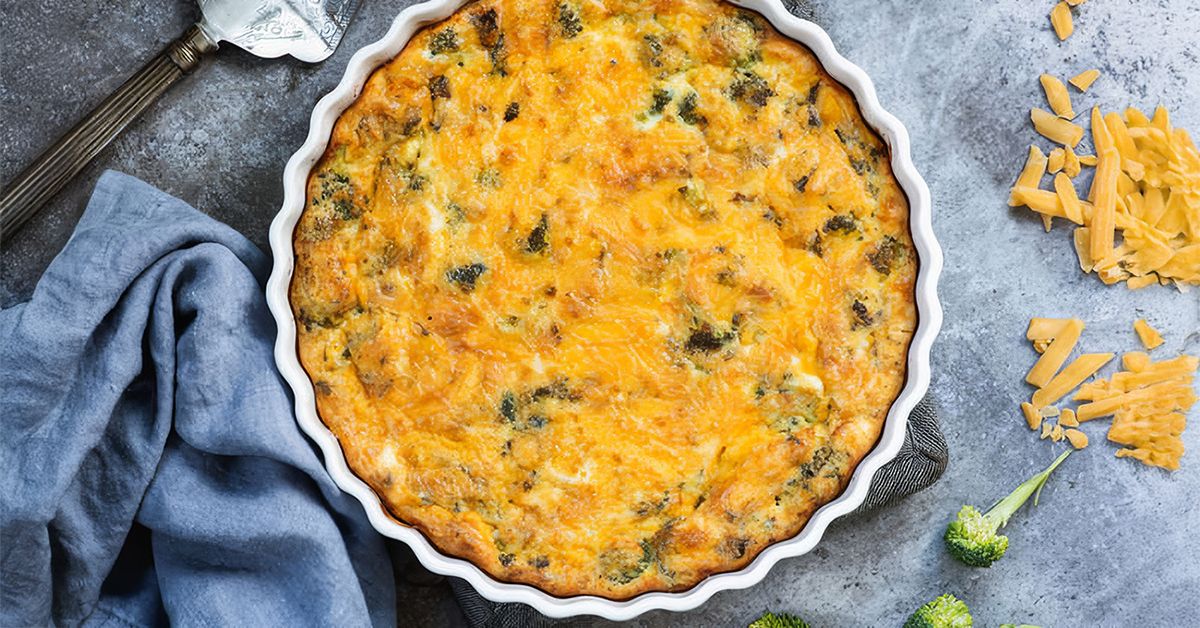
Broccoli and cheddar crustless quiche is what happens when comfort food decides to wear sensible shoes. It is rich but not fussy, cheesy but not chaotic, and satisfying enough for breakfast, brunch, lunch, dinner, or that mysterious “standing in front of the fridge with a fork” meal that happens sometime after 9 p.m.
Unlike traditional quiche, this version skips the pastry crust entirely. That means less prep, fewer carbs, no rolling pin drama, and no moment where you discover your pie dough has glued itself to the counter like a tiny edible protest sign. Instead, the star of the show is a tender egg custard filled with bright broccoli, sharp cheddar cheese, and simple seasonings that make the whole dish taste cozy, familiar, and just a little bit fancy.
This broccoli cheddar crustless quiche is especially useful for busy households because it reheats beautifully, travels well, and works with fresh or frozen broccoli. It is naturally gluten-free when prepared with gluten-free ingredients, easy to customize, and elegant enough for a brunch table without requiring you to behave like a professional caterer at 8 a.m.
Why Broccoli and Cheddar Work So Well Together
Broccoli and cheddar are one of those classic pairings that feel almost suspiciously reliable. The broccoli brings freshness, color, and a mild earthy flavor. Cheddar brings saltiness, richness, and that glorious golden melt that makes people suddenly interested in vegetables. Together, they balance each other like a culinary buddy comedy: one responsible, one delightfully indulgent.
In a crustless quiche, that balance matters even more because there is no buttery crust to hide behind. Every ingredient has a job. Eggs create structure, dairy makes the filling creamy, cheese adds flavor and body, and broccoli provides texture so the dish does not become a plain baked egg situation. Nobody came here for bland breakfast pudding.
What Is a Crustless Quiche?
A crustless quiche is a savory egg bake made with eggs, dairy, cheese, vegetables, herbs, and sometimes meat. It has the creamy, sliceable texture of classic quiche but skips the pastry shell. Think of it as quiche’s relaxed cousin: same delicious personality, fewer steps, and much less concern about flaky layers.
Crustless quiche is often compared to a frittata, but the two are slightly different. A frittata is usually started on the stovetop and finished in the oven, while a crustless quiche is typically baked from start to finish in a pie dish. A quiche also tends to use more dairy, which gives it a softer, more custardy texture.
Ingredients for Broccoli and Cheddar Crustless Quiche
The beauty of this recipe is that it uses familiar ingredients. No rare cheese from a mountain village. No herb you must whisper to under moonlight. Just practical kitchen staples that come together in a dependable, delicious way.
Main Ingredients
- Broccoli: Fresh broccoli florets work beautifully, but frozen broccoli is convenient and reliable when drained well.
- Sharp cheddar cheese: Sharp cheddar gives the quiche a stronger flavor than mild cheddar, so you can use a reasonable amount and still taste it.
- Eggs: Eggs create the structure of the quiche and help it slice cleanly.
- Milk or half-and-half: Milk makes the quiche lighter, while half-and-half makes it richer and creamier.
- Onion or scallions: These add gentle sweetness and savory depth.
- Garlic: A little garlic helps the filling taste more complete.
- Salt, pepper, and nutmeg: Nutmeg is optional, but just a pinch adds warmth without making the quiche taste sweet.
Best Recipe: Broccoli and Cheddar Crustless Quiche
This version is designed to be creamy without being heavy, cheesy without becoming greasy, and firm enough to slice without turning rubbery. It serves six people as a main dish or eight people as part of a brunch spread.
Ingredients
- 2 cups broccoli florets, chopped into small bite-size pieces
- 1 tablespoon olive oil or butter
- 1/2 cup finely chopped yellow onion
- 1 clove garlic, minced
- 6 large eggs
- 3/4 cup whole milk
- 1/2 cup half-and-half
- 1 cup shredded sharp cheddar cheese
- 1/2 teaspoon kosher salt
- 1/4 teaspoon black pepper
- 1/8 teaspoon ground nutmeg, optional
- Cooking spray or butter for greasing the pie dish
Instructions
- Preheat the oven: Heat the oven to 350°F. Grease a 9-inch pie dish with butter or cooking spray.
- Prepare the broccoli: Steam, blanch, or microwave the broccoli until it is just tender, not mushy. Drain it very well and pat it dry with paper towels.
- Sauté the aromatics: In a skillet, heat olive oil or butter over medium heat. Add onion and cook for 3 to 4 minutes, until softened. Add garlic and cook for 30 seconds.
- Make the custard: In a large bowl, whisk eggs, milk, half-and-half, salt, pepper, and nutmeg until smooth.
- Assemble: Spread broccoli, onion, garlic, and shredded cheddar evenly in the prepared pie dish. Pour the egg mixture over the top.
- Bake: Bake for 35 to 45 minutes, or until the center is set and the top is lightly golden.
- Rest before slicing: Let the quiche rest for 10 minutes before cutting. This helps the custard settle and makes cleaner slices.
The Secret to a Creamy, Not Rubbery, Crustless Quiche
The biggest mistake with crustless quiche is treating it like a race. High heat and overbaking can turn a delicate egg custard into something that tastes like a conference-room breakfast buffet from 2007. Gentle baking is the answer. A moderate oven lets the eggs set slowly, keeping the texture soft and creamy.
The quiche is done when the edges look set and the center has a slight wobble. It should not slosh, but it should not be stiff either. Residual heat continues cooking the center after the dish leaves the oven, which is why resting time is not optional. It is the difference between a neat slice and a cheesy landslide.
Fresh Broccoli vs. Frozen Broccoli
Fresh broccoli gives the quiche a slightly firmer bite and brighter flavor. Frozen broccoli is faster and often more affordable, especially when broccoli is out of season. Both work well, but frozen broccoli needs extra attention because it releases more moisture.
If using frozen broccoli, thaw it first, squeeze or press out excess water, and chop it into small pieces. Large wet florets can make the quiche watery. The goal is tender broccoli that blends into the custard, not tiny green umbrellas floating in an egg pool.
Cheese Choices and Flavor Upgrades
Sharp cheddar is the classic choice because it stands up to the mild flavor of eggs and broccoli. Mild cheddar melts well but can disappear flavor-wise. Extra-sharp cheddar gives a bolder taste, though it may melt a little less smoothly.
You can also mix cheeses. Try cheddar with Monterey Jack for extra meltiness, cheddar with Parmesan for salty depth, or cheddar with Gruyère for a brunch version that sounds like it owns linen napkins. Pepper Jack adds gentle heat, while smoked cheddar gives the quiche a savory campfire note without requiring bacon.
Easy Variations
Broccoli Cheddar Bacon Crustless Quiche
Add 1/3 cup cooked, crumbled bacon to the filling. Reduce the salt slightly because bacon brings its own salty personality and does not need backup singers.
Broccoli Cheddar Ham Quiche
Add 1/2 cup diced cooked ham. This variation is excellent for using leftover holiday ham or deli ham that is approaching its “please choose me” moment in the refrigerator.
Vegetarian Garden Quiche
Add sautéed mushrooms, spinach, bell peppers, or zucchini. Cook watery vegetables before adding them so the final quiche stays creamy instead of soggy.
Higher-Protein Cottage Cheese Version
Blend 1/2 cup cottage cheese into the egg mixture for a creamy texture and a protein boost. The flavor stays mild, and the texture becomes slightly more substantial.
How to Serve Broccoli and Cheddar Crustless Quiche
This crustless quiche is flexible enough to serve warm, room temperature, or chilled. For breakfast, pair it with toast, fruit, or roasted potatoes. For brunch, add a green salad, muffins, and coffee. For dinner, serve it with tomato soup, a crisp Caesar salad, or roasted carrots.
Because the quiche already contains eggs, dairy, cheese, and vegetables, it does not need much help. A simple side dish is usually best. If your plate starts looking like a buffet audition, step away from the serving spoons.
Make-Ahead, Storage, and Reheating Tips
Broccoli and cheddar crustless quiche is a meal-prep hero. Bake it once and you have breakfast or lunch ready for several days. Store leftovers in an airtight container in the refrigerator for up to 3 to 4 days.
To reheat, warm individual slices in the microwave for 30 to 60 seconds, or place slices in a 325°F oven until heated through. The oven gives the best texture, but the microwave wins when your morning schedule looks like a raccoon packed your backpack.
You can also freeze crustless quiche. Let it cool completely, slice it, wrap individual pieces tightly, and freeze for up to 2 months. Thaw overnight in the refrigerator before reheating. The texture may be slightly softer after freezing, but the flavor remains comforting and practical.
Common Mistakes to Avoid
Using Wet Broccoli
Moisture is the enemy of a clean slice. Drain and dry broccoli before adding it to the dish. This is especially important with frozen broccoli.
Adding Too Much Cheese
More cheese sounds like a good idea until the quiche turns oily and heavy. One cup of shredded cheddar gives plenty of flavor without overwhelming the custard.
Overbaking
A crustless quiche should be set but still tender. If the top cracks dramatically or the texture feels spongy, it likely baked too long.
Skipping the Resting Time
Resting allows the custard to finish setting. Cutting too soon can make the filling collapse, which is tragic but still edible.
Nutrition Perspective
Broccoli and cheddar crustless quiche can fit into many eating patterns because it is high in protein, naturally lower in carbohydrates than a traditional quiche, and full of vegetables. Broccoli contributes fiber, vitamin C, vitamin K, and plant compounds, while eggs provide protein and important nutrients. Cheddar adds calcium and flavor, though it also adds saturated fat and sodium, so balance matters.
For a lighter version, use reduced-fat milk instead of half-and-half and slightly reduce the cheese. For a richer brunch version, use more half-and-half and a bolder cheese. The best version depends on whether you are feeding weekday-you or company-is-coming-you. Those are two very different chefs.
Experience Notes: What Real Life Teaches You About This Quiche
The first thing experience teaches you about broccoli and cheddar crustless quiche is that the recipe is much more forgiving than it looks. The finished dish feels elegant, but the process is very home-cook friendly. You can be a little imprecise with the broccoli, swap the onion for scallions, use milk instead of half-and-half, or throw in a small handful of leftover vegetables, and the quiche will usually reward you anyway. It is not a soufflé. It does not need emotional support.
One of the most useful lessons is to chop the broccoli smaller than you think you need to. Large florets look pretty before baking, but they can make slicing awkward. Smaller pieces distribute better, so every bite has broccoli, cheddar, and custard together. That is the whole point. You want harmony, not one bite of plain egg followed by one bite that feels like eating a tiny tree.
Another real-life discovery: sharp cheddar is worth it. Mild cheddar melts nicely, but it can become too quiet once mixed with eggs and dairy. Sharp cheddar keeps its flavor and gives the quiche that classic broccoli-cheddar comfort. If you shred the cheese yourself, the texture is usually smoother because freshly shredded cheese melts more evenly than many pre-shredded options.
Timing also matters. Pulling the quiche from the oven at the right moment takes practice, but the visual clues are simple. The edges should be firm, the top should be lightly golden, and the center should have a gentle jiggle. If the center looks completely solid in the oven, it may be overdone by the time it cools. A slightly soft center is not a problem; it will continue to firm up as it rests.
This quiche is also one of those dishes that somehow becomes more useful after the first serving. A fresh slice at brunch is lovely, but a leftover slice on a busy morning might be even better. It can be eaten cold, quickly reheated, tucked beside a salad, or placed between two slices of toast for a very unofficial but very satisfying breakfast sandwich. No brunch committee has approved that last move, but your stomach probably will.
For hosting, broccoli and cheddar crustless quiche is a smart choice because it does not demand last-minute attention. You can bake it before guests arrive, let it rest, and serve it warm or at room temperature. That means you are not trapped at the stove while everyone else is drinking coffee and discussing whether daylight saving time has personally wronged them.
The final experience-based tip is simple: season with confidence. Eggs need salt. Broccoli likes pepper. Cheddar loves a little onion and garlic. A pinch of nutmeg may sound old-fashioned, but it quietly improves the creamy flavor. When seasoned well, this quiche tastes complete, cozy, and balanced. When under-seasoned, it tastes like breakfast forgot to set an alarm.
Conclusion
Broccoli and cheddar crustless quiche is simple, practical, and deeply satisfying. It brings together tender broccoli, creamy eggs, and sharp cheddar in a dish that feels comforting without being complicated. By skipping the crust, you save time and create a flexible recipe that works for brunch, meal prep, weeknight dinners, and easy leftovers.
The keys are straightforward: drain the broccoli well, use flavorful cheese, bake gently, and let the quiche rest before slicing. Once you master those basics, this recipe becomes a reliable kitchen favorite. It is the kind of dish that makes vegetables feel cozy, eggs feel special, and breakfast-for-dinner feel like a completely reasonable life decision.
Note: This article is written in original language for web publishing and is based on widely used cooking practices for crustless quiche, broccoli preparation, cheddar pairing, meal prep, and egg-dish safety.