New York is not known for whispering. It honks, hurries, elbows, flexes, and occasionally behaves like a city that drank three espressos and forgot lunch. So it says something important that one of the defining architects of the moment is not a showboat, not a marble-thundering ego machine, and not the sort of designer who wants every building to shout, “Look at me, I am architecture!” Annabelle Selldorf has built a career doing almost the opposite. Her work is calm where others are noisy, precise where others are theatrical, and deeply modern without acting like it needs a drumroll.
That quiet authority may be one reason the phrase Annabelle Selldorf carries so much weight in conversations about museums, galleries, and cultural buildings. A German-born architect who built her practice in Manhattan, Selldorf represents a compelling blend of European discipline and New York practicality. She has become famous not for leaving giant fingerprints on every room, but for creating spaces that feel better the longer you occupy them. In an era when architecture can sometimes resemble performance art in a hard hat, Selldorf has become the patron saint of restraint.
This is what makes the idea of a German in New York such a fitting lens for her story. It is not just a matter of birthplace versus address. It is about sensibility. It is about how someone shaped by Cologne, design-minded parents, rigorous training, and a European respect for proportion could arrive in New York and become one of the city’s most trusted interpreters of cultural space. Her success says as much about New York as it does about Selldorf herself: the city still has room for people who do not scream to be heard.
From Cologne to Manhattan: The Making of an Architectural Voice
Annabelle Selldorf was born and raised in Cologne, Germany, in a family where design was not some rarefied topic discussed only under flattering gallery lighting. It was part of daily life. Her father was an architect, her mother an interior designer, and the family’s atmosphere appears to have made aesthetics feel practical rather than precious. Design, in that world, was not decoration added at the end. It was how you thought about living.
That early immersion matters. Many architects talk about form, but Selldorf has always seemed interested in behavior as much as appearance. How does a room support attention? How does a stair invite movement? How does a facade belong to a street without dressing up as a costume? Those questions feel rooted in a European tradition that values continuity, craft, and urban context. She later studied architecture at Pratt Institute and continued at Syracuse University, then made New York her professional home. By 1988, she had founded Selldorf Architects, beginning what would become a remarkably influential New York practice.
There is a tempting cliché here about German precision landing in Manhattan and straightening the place out with a ruler. Real life is more interesting than that. Selldorf did not arrive as a stern ambassador of minimalist discipline. What she developed instead was a humane modernism: clear lines, yes; rigorous proportions, absolutely; but also softness, tact, and an understanding that buildings are not trophies. They are places where people get lost, look at paintings, whisper to each other, sit down, stand up, and occasionally pretend they understand contemporary art.
Why Annabelle Selldorf Matters in New York
New York has always been a city where architecture doubles as biography. Towers announce ambition. Townhouses preserve old money’s poker face. Museums perform cultural power while trying to appear generous about it. Selldorf’s genius is that she can work inside those loaded conditions without making things feel heavy-handed. Her architecture has a way of calming institutions down. It reminds them that they are there to serve visitors, art, collections, and civic life, not merely their own publicity departments.
Her breakthrough reputation was tied in part to her work for the Neue Galerie in Manhattan, a commission that helped establish her as a designer with an unusually deft touch for historic structures and art-focused interiors. That project announced a key Selldorf trait that would become central to her career: the ability to intervene without showing off. She could modernize, reconfigure, clarify, and improve a place while allowing the original character to stay legible. In architecture, that kind of confidence is rarer than it sounds. It is much easier to be loud than wise.
From there, Selldorf became deeply associated with the art world. Her firm designed or reimagined spaces for major galleries including David Zwirner and Hauser & Wirth, helping define a contemporary gallery aesthetic that is crisp, elegant, flexible, and surprisingly un-neurotic. That matters because gallery design is often a balancing act between invisibility and identity. Too much personality from the architect, and the art has to fight for oxygen. Too little, and the space feels like a luxury storage locker. Selldorf found the sweet spot.
German Restraint, New York Energy
To understand Selldorf’s appeal, it helps to think about what she did not become. She never fully joined the cult of the star architect whose primary material is spectacle. She did not build a public identity around eccentricity, visual shock, or shape-making for its own sake. Instead, she became known for clarity, proportion, light, and circulation. Those words may sound modest, but in architecture they are everything. They determine whether a place feels effortless or exhausting.
That is where her German background becomes more than a biographical detail. In Selldorf’s work, discipline is not coldness. Precision is not stiffness. Order is not boredom. She brings a kind of exactitude that allows experience to feel free rather than forced. You notice this in the way her spaces unfold. They do not smack you in the face with concept. They invite you to keep looking. They create a confidence that the architect has already thought through the things you do not want to think about: sightlines, acoustics, thresholds, daylight, materials, and the subtle choreography of movement.
New York, meanwhile, sharpened the other side of her sensibility. This city does not reward dreamy abstraction for long. It asks harder questions. Can the building work? Can people find the entrance? Can the museum serve more visitors? Can the addition respect the landmark? Can the institution evolve without alienating everyone who has ever loved it? Selldorf thrives in exactly that zone, where beauty must also solve problems.
The Architect of the Art World
If Selldorf has become the architect of our museum-and-gallery age, it is because she understands something fundamental: art spaces succeed when they feel inevitable. The rooms should not bully the artwork, but they should make looking more intense, more comfortable, and more memorable. That idea runs through her portfolio.
At the Museum of Contemporary Art San Diego, for example, her expansion and renovation dramatically increased the museum’s exhibition capacity while preserving a calm, civic quality. The project did not chase spectacle for spectacle’s sake. It used light, views, and spatial organization to make the museum feel both larger and more approachable. That is classic Selldorf: expansion without bombast, generosity without chaos.
Her work at the Frick Collection, however, pushed her reputation into a different league. The Frick is one of those institutions that inspires intense devotion, which is a polite way of saying people are ready to panic if you move a vase too aggressively. Selldorf, working with Beyer Blinder Belle, oversaw the most comprehensive upgrade in the museum’s modern history. When the Frick reopened in April 2025, the changes included improved visitor circulation, upgraded public amenities, and newly accessible upper-level rooms that had once been private family spaces. The project expanded what the museum could do while preserving the intimate, residential atmosphere that makes the Frick beloved in the first place.
That balancing act is exactly why Selldorf is trusted with culturally sensitive work. Institutions call her when they want transformation without vandalism, modernization without amnesia, and accessibility without gimmicks. She also led the redesign of the National Gallery’s Sainsbury Wing in London, another high-profile example of her talent for making major cultural buildings feel more welcoming and legible. The common thread is obvious: Selldorf is not in the business of imposing herself on masterpieces. She is in the business of making the encounter with them better.
Understatement as a Form of Confidence
One reason Annabelle Selldorf in New York makes such a strong SEO phrase, and frankly such a strong cultural phrase, is that it captures a wider shift in taste. After years of highly branded architecture, many critics, institutions, and clients are rediscovering the value of understatement. Restraint now reads not as timidity but as sophistication. A building that behaves well in its context can feel more radical than one doing acrobatics across the skyline.
Selldorf’s reputation has grown alongside that shift. In 2025, she was named to the TIME100 list, a sign that her influence had moved beyond architecture circles into broader public recognition. But her importance is not just about awards. It is about timing. She feels like the right architect for a moment when cultural institutions want to be more accessible, more humane, and less interested in grand self-mythology.
That posture also explains why artists and collectors have long trusted her with homes and private spaces. Her work does not merely photograph well; it lives well. She understands that a room needs enough discipline to hold art, enough warmth to hold people, and enough humility to keep from becoming exhausting. In this sense, Selldorf’s design language is not cold modernism at all. It is edited modernism. Civilized modernism. The kind of modernism that knows a human being may want beauty, functionality, and a decent place to sit, all before lunch.
More Than Buildings: Taste, Furniture, and a Family Thread
Selldorf’s sensibility extends beyond architecture into furniture and objects, most notably through Vica, the family-rooted design line she revived. That thread is revealing. It shows that her interest in scale has always moved fluidly from the city to the room to the object. She does not think of architecture as separate from interiors, or interiors as separate from use. The door handle matters. The chair matters. The way a shelf meets a wall matters. Not in a fussy way, but in the cumulative way that makes a place feel complete.
This also helps explain why her buildings often feel so composed. They are not built from one heroic move. They are built from many disciplined decisions that reinforce one another. In a culture addicted to the big reveal, Selldorf is committed to the slow reward. The room may not try to seduce you in five seconds. Give it twenty minutes and it starts to seem indispensable.
The Experience of Annabelle Selldorf: What Her Spaces Actually Feel Like
To talk about Annabelle Selldorf only through career milestones would miss the point, because her true achievement is experiential. Her architecture is not best understood as a list of projects. It is best understood as a sensation. Walk into one of her spaces and the first thing you often notice is not drama but relief. There is less friction than you expected. The entrance makes sense. The light feels considered. The walls do not bully you. The room has enough discipline to hold your attention but not so much that it feels like a design lecture.
That experience is especially powerful in art spaces. In a badly designed museum, you become aware of your own logistics almost immediately. Where do I go next? Why is this hallway weirdly narrow? Why is the label impossible to read? Why does this room make a masterpiece feel like it is waiting at the DMV? Selldorf seems obsessed with removing that kind of irritation. Her architecture clears the path between the visitor and the work. It is not blank, but it is generous. It says: you came here to look, think, and stay a while, so let me help.
There is also a subtle emotional intelligence in her spaces. They rarely feel overeager. They do not beg for approval. They are not doing visual stand-up comedy, throwing out material and praying the audience claps. Instead, they offer steadiness. In New York, that can feel almost luxurious. A Selldorf interior often feels like someone lowered the city’s volume without killing its energy. You still feel alert, but not assaulted.
Visitors often respond to that quality without necessarily having the vocabulary for it. They may say a gallery feels elegant, or that a museum seems easier to navigate, or that a room is somehow calm without being plain. Those reactions are not accidental. They are the result of an architect who takes atmosphere seriously. Light lands where it should. Materials have texture without fuss. Circulation gives you options without confusion. The architecture never seems desperate to be the only thing you remember, which paradoxically makes it more memorable.
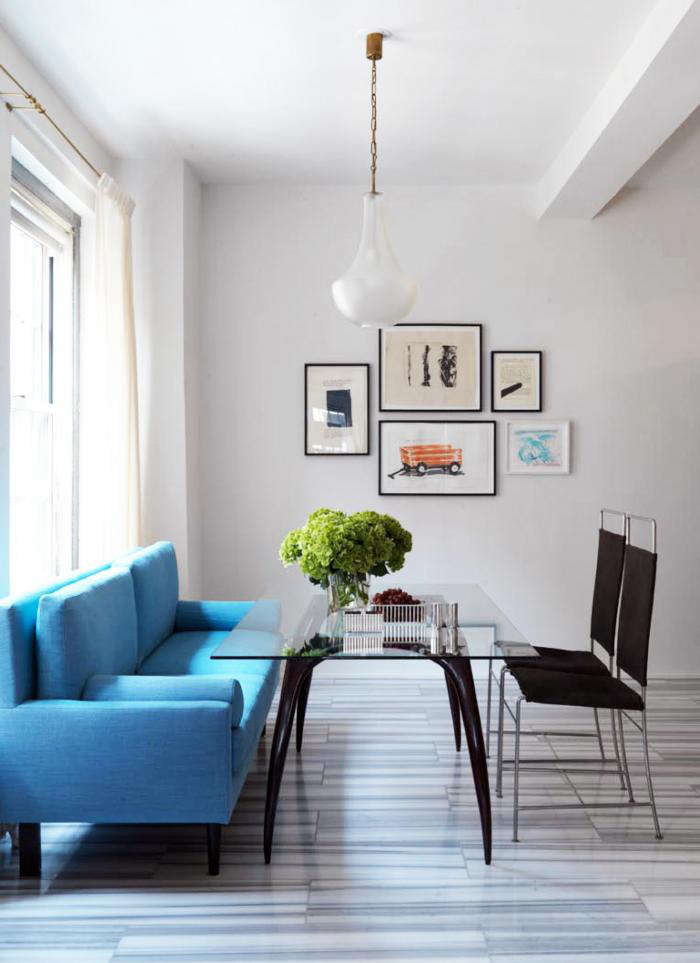
Even in private residential work, the same logic applies. Selldorf understands how to make a home feel orderly without becoming sterile, refined without becoming uptight. There is usually a sense that life can unfold there: books can accumulate, people can gather, art can coexist with daily routine, and nobody has to whisper as if the sofa were on loan from a duchess. That livability is one of her great underrated achievements.
So what does it mean, in lived terms, to call her a German in New York? It means inhabiting a cultural tension and turning it into design intelligence. From Germany comes an allegiance to rigor, proportion, and substance. From New York comes adaptability, ambition, and the ability to work inside complexity. In Selldorf’s hands, those influences do not cancel each other out. They create spaces that are measured but not stiff, elegant but not fragile, modern but not smug. And in a world full of buildings that desperately want to trend, that may be the most refreshing experience of all.
Conclusion
Annabelle Selldorf’s career tells a larger story about architecture today. The old idea that influence belongs to the loudest designer in the room looks less convincing every year. Selldorf has built her authority through tact, intelligence, and an unusually refined understanding of how people move through cultural space. As a German architect in New York, she brought rigor to a city that values reinvention; as a New York architect with European roots, she gave institutions a way to evolve without losing their soul.
That is why her work matters beyond architecture gossip and museum circles. She reminds us that design can be ambitious without being arrogant. It can be modern without feeling alien. It can honor history without embalming it. In the end, Selldorf’s greatest trick may be that she makes care look effortless. And anyone who has ever tried to make anything beautiful knows that effortless is usually just another word for masterful.