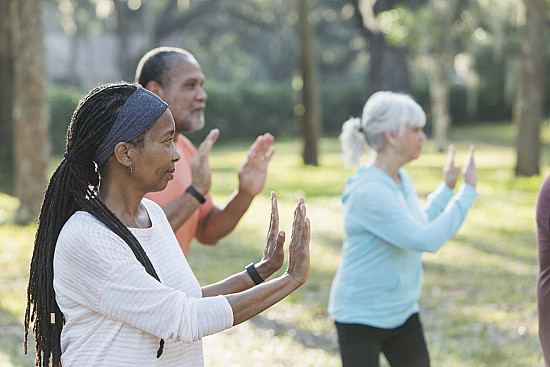
Tai chi looks almost suspiciously calm. There is no pounding music, no sprinting, and no instructor yelling that pain is “just weakness leaving the body.” Instead, participants shift their weight, coordinate their arms and legs, breathe steadily, and move through carefully ordered patterns. Beneath that peaceful exterior, however, the brain is handling a surprisingly demanding assignment.
Research suggests that tai chi may support several aspects of cognitive function, particularly executive function, attention, working memory, and the ability to manage more than one task at a time. The strongest evidence involves middle-aged and older adults, including some people with mild cognitive impairment.
Tai chi is not a cure for dementia, nor can it guarantee that memory problems will never develop. It may, however, offer a practical and low-impact way to challenge the mind while improving balance, mobility, and physical confidence.
Why Tai Chi Is More Than Slow Exercise
Tai chi originated as a Chinese martial art, but modern health-focused classes generally emphasize gentle movement, posture, controlled breathing, balance, and concentration. A sequence may ask you to shift your weight onto one leg, rotate your trunk, guide one hand forward, keep your shoulders relaxed, and remember which movement comes next.
That is a surprising amount of coordination packed into something that looks as peaceful as waiting for tea to steep.
This combination matters because cognition is not one single ability. It includes memory, attention, language, visual-spatial processing, problem-solving, planning, and mental flexibility. Tai chi appears to engage several of these systems at the same time.
Executive Function Gets a Real Workout
Executive function is the brain’s management department. It helps you organize information, switch between tasks, resist distractions, solve problems, and make decisions. Daily life depends on it when you follow a recipe, pay bills, plan a trip, drive through traffic, or remember why you entered a room before the refrigerator distracts you.
During tai chi, practitioners monitor posture, adjust balance, recall a sequence, coordinate breathing, and respond to an instructor’s cues. This continual self-correction may help explain why studies frequently report improvements in executive function rather than only simple memory.
Tai Chi Combines Movement With Mental Practice
A walk is excellent exercise, but its movement pattern is usually familiar and largely automatic. Tai chi is different. Beginners must learn new positions, transitions, directions, and rhythms. The brain must encode each sequence, retrieve it later, detect errors, and refine performance through repetition.
Some programs add an extra cognitive layer. Participants may move while naming categories, responding to verbal cues, changing direction, or performing familiar movements in a different order. This approach is sometimes called cognitively enhanced tai chi or physical-cognitive dual-task training.
What Research Says About Tai Chi and Cognitive Function
Systematic reviews and clinical trials generally suggest that tai chi can produce small to moderate improvements in cognitive performance among older adults. Reported benefits include improvements in global cognition, executive function, episodic memory, working memory, verbal fluency, attention, and visual-spatial ability.
The results are not identical across every study. Researchers have used different tai chi styles, class lengths, testing methods, and participant groups. Nevertheless, the overall evidence is encouraging enough to consider tai chi a promising mind-body exercise for healthy brain aging.
A Major Trial of Cognitively Enhanced Tai Chi
One notable randomized trial enrolled 318 community-dwelling older adults with mild cognitive impairment or self-reported memory concerns. Participants were assigned to one of three groups: stretching, standard tai chi, or cognitively enhanced tai chi.
Each group trained for one hour twice a week over 24 weeks through live online instruction. The enhanced program combined tai chi movements with additional tasks that required participants to think, listen, speak, remember instructions, or respond to changing cues while moving.
At the end of the intervention, the cognitively enhanced group improved more on a widely used global cognitive screening test than either the standard tai chi or stretching group. Participants also performed better when walking and completing a mental task at the same time. The benefits remained detectable at a later follow-up.
Standard tai chi helped as well, but the version that deliberately integrated physical movement with additional cognitive challenges produced the strongest results.
What Earlier Studies Have Found
Other studies have compared tai chi with walking, stretching, social activities, fitness programs, or no structured intervention. Several have found better cognitive scores among tai chi participants. Some research has also identified improvements in balance, mood, confidence, sleep quality, and the ability to perform daily activities.
However, positive results should not be translated into exaggerated promises. Some studies have been small, short, or limited by differences in how tai chi and cognition were measured. The responsible conclusion is not that tai chi prevents every case of dementia. It is that regular tai chi may improve specific thinking skills and deserves a place among evidence-based activities that support healthy aging.
How Tai Chi May Help the Brain
1. It Encourages Neuroplasticity
The adult brain can adapt throughout life by strengthening existing neural networks and forming new connections. This ability is known as neuroplasticity.
Learning unfamiliar movement sequences gives the brain a reason to adapt. Each repetition is more than exercise for the arms and legs. It is practice for memory, timing, spatial awareness, attention, and error correction.
A beginner may initially struggle to remember three connected movements. After several weeks, the sequence begins to feel smoother. That change reflects learning: the brain is organizing information and improving communication between mental and physical systems.
2. It Supports Circulation and Cardiovascular Health
The brain depends on a reliable supply of oxygen and nutrients. Regular physical activity supports circulation and helps manage health conditions linked to cognitive decline, including high blood pressure, diabetes, and physical inactivity.
Tai chi is usually less intense than jogging or cycling, but continuous practice still involves controlled weight shifting, muscle activation, and sustained movement. It can contribute to an active lifestyle, especially for people who find high-impact exercise uncomfortable or intimidating.
Because cardiovascular health and brain health are closely connected, an activity that encourages consistent movement may support cognitive function both directly and indirectly.
3. It Trains Dual-Task Ability
Walking while talking, carrying groceries while planning dinner, or stepping around an obstacle while listening to someone all require dual-task ability. This skill may become less efficient with age and can be especially challenging for people with mild cognitive impairment.
Tai chi repeatedly asks the brain to combine mental and physical tasks. The practitioner must remember a movement, control the body, monitor the surroundings, and prepare for the next transition. With appropriate instruction, this practice may improve coordination between thinking and moving.
4. It May Reduce Stress
Chronic stress can interfere with concentration, sleep, and memory. Tai chi combines slow movement with controlled breathing and focused attention, potentially helping the nervous system shift away from a constant state of alertness.
Many participants report feeling calmer after practice. Reduced stress does not automatically create a photographic memory, but it may remove some of the mental noise that makes concentration difficult.
5. It May Support Better Sleep and Mood
Sleep is essential for memory processing and mental recovery. Anxiety, depression, pain, and inactivity can all interfere with sleep quality. Research suggests that tai chi may improve mood and sleep in some groups, although results vary.
A person who sleeps better and feels less anxious may find it easier to pay attention, remember information, and complete everyday tasks. Better mood may also increase the likelihood of continuing an exercise program. Consistency is where most benefits live; they rarely arrive wearing a cape after one class.
6. Group Classes Provide Social Stimulation
Social engagement is another important element of cognitive health. A community tai chi class creates routine, conversation, shared learning, and accountability.
Remembering classmates, following group cues, and practicing a sequence together provide mental stimulation beyond the exercise itself. A friendly class may also be easier to maintain than a lonely appointment with exercise equipment in the basement.
Who May Benefit From Tai Chi?
Tai chi can benefit healthy adults who want to remain mentally and physically active. It may be particularly appealing to older adults who dislike high-impact workouts or have concerns about flexibility, coordination, or balance.
The movements can often be adapted for people with limited stamina, joint discomfort, or mobility restrictions. Chair-supported and seated versions are available when prolonged standing is not safe or comfortable.
People With Mild Cognitive Impairment
People with mild cognitive impairment may also benefit. Mild cognitive impairment involves more noticeable changes than ordinary age-related forgetfulness, but it does not necessarily prevent someone from living independently.
Anyone experiencing persistent changes in memory, language, reasoning, personality, or everyday function should seek a medical evaluation rather than attempting to self-diagnose. Cognitive symptoms can have many causes, including medication side effects, depression, poor sleep, thyroid disorders, vitamin deficiencies, hearing loss, infections, and neurological disease.
Tai chi may complement medical treatment, physical therapy, and other lifestyle changes. It should not replace a professional assessment or prescribed care.
How to Begin Tai Chi for Brain Health
Choose Instruction Over Guesswork
A qualified instructor can correct posture, adjust movements, and recommend safer variations. Good instruction is especially important for anyone with a history of falls, dizziness, significant joint pain, severe osteoporosis, recent surgery, or a neurological condition.
Online classes may be convenient, but beginners with balance problems may be safer starting in person, where an instructor can observe their movements and provide immediate feedback.
Start With a Manageable Schedule
Many studies have used sessions lasting 30 to 60 minutes, two or three times per week, for at least three months. Beginners do not need to start with a full hour on the first day.
Ten to 20 minutes of focused practice is more valuable than an ambitious workout followed by a dramatic relationship breakup with exercise.
A practical beginning schedule might include two guided sessions per week and brief home practice on two additional days. Duration can gradually increase as balance, confidence, and familiarity improve.
Focus on Attention Rather Than Perfect Poses
The goal is not to imitate a statue with flawless angles. Pay attention to weight shifts, breathing, foot placement, hand position, and the order of the sequence.
Mentally naming movements or quietly describing what the body is doing can turn passive copying into active learning. The cognitive challenge should remain noticeable without becoming frustrating or unsafe.
Add Mental Challenges Carefully
Once the basic movements feel stable, an instructor may introduce tasks such as responding to changing cues, recalling short combinations, or practicing a familiar sequence without a demonstration.
People with balance difficulties should not add distracting tasks while standing without professional guidance. Cognitive difficulty can be productive; falling into a coffee table is not.
Combine Tai Chi With Other Healthy Activities
Tai chi works best as one part of a broader brain-health routine. Adults should also include appropriate aerobic activity, muscle-strengthening exercise, sufficient sleep, social connection, and treatment of cardiovascular risk factors.
Older adults are generally encouraged to perform aerobic, strength, and balance activities each week, adjusted for their medical conditions and physical abilities. Tai chi can help cover the balance and mindful-movement portions of that plan, but it may not fully replace aerobic or resistance exercise.
What Tai Chi Cannot Promise
It is tempting to transform a positive study into a miracle headline, but cognitive aging is complicated. Genetics, cardiovascular health, education, sleep, hearing, mood, medications, social conditions, and numerous other factors influence brain function.
Tai chi cannot erase all of them with one graceful hand movement.
Researchers still need larger and longer trials to determine which styles, intensity levels, session lengths, and training schedules provide the greatest cognitive benefits. They must also establish whether better cognitive test results translate into a meaningfully lower risk of dementia over many years.
The realistic promise remains valuable. Tai chi is accessible, generally low impact, mentally engaging, and useful for balance. Even when cognitive improvements are modest, greater confidence, better mobility, lower stress, and fewer falls can help people remain active and independent.
A Beginner’s Experience: What the First Six Weeks May Feel Like
The following is a composite experience based on common beginner reports rather than the story of a specific patient.
Week one often begins with a small surprise: moving slowly is not the same as moving easily. A beginner may watch an instructor glide through a sequence and think, “Excellent, I can do slow.” Thirty seconds later, the left hand has joined the wrong movement, the right foot is negotiating a separate contract, and breathing has apparently left the meeting.
The first classes can feel mentally crowded. There are instructions about posture, relaxed knees, weight distribution, eye direction, hand position, and breathing. This is normal. The challenge is part of the point. The brain is building a new map, and new maps are rarely tidy on the first draft.
By the second week, several movements usually begin to feel familiar. The starting position may be easier to remember, although transitions still require concentration. This is when tai chi reveals its cognitive character. A person cannot mentally wander very far without missing the next step. The practice gently pulls attention back to the present.
Around weeks three and four, everyday physical changes may appear before obvious memory improvements do. A beginner may feel steadier when turning, become more aware of posture while waiting in line, or notice less tension after class. Sleep may feel better on practice days.
None of these changes proves that the brain has become dramatically younger. They can, however, make thinking feel clearer because stress, fatigue, and physical discomfort are no longer competing quite as loudly for attention.
Sequence recall also becomes rewarding. At first, remembering three movements may feel like memorizing the operating manual for a submarine. With repetition, the body begins to anticipate what comes next.
This is not mindless automation. It is the result of attention, memory retrieval, error correction, and repeated practice. A movement that required constant prompting during the first class may eventually appear with little assistance.
By week five, confidence sometimes creates a predictable mistake: rushing. The learner tries to keep up, makes the movements unnecessarily large, or adds difficult mental tasks too soon. A good instructor brings the focus back to stability, breathing, and control. Tai chi rewards patience more than enthusiasm with poor steering.
At six weeks, the most noticeable benefit may be a different relationship with concentration. The practitioner has practiced recognizing distraction and returning attention to the task hundreds of times. That skill can carry into reading, cooking, conversations, or other activities requiring sustained focus.
The experience is not identical for everyone. Some people enjoy the meditative rhythm immediately, while others need time to tolerate the slower pace. Some remember visual demonstrations more easily than verbal instructions. Some prefer a quiet class, while others enjoy the social energy of a larger group.
The best program is one that feels safe, mentally challenging, and pleasant enough to continue. Progress should be measured by more than perfect choreography. Showing up consistently, remembering a little more, moving with greater control, and finishing class feeling engaged are meaningful achievements.
The brain does not require a gold medal. It responds to repeated, purposeful practice.
Conclusion: A Calm Practice With Serious Mental Work
Tai chi offers an unusual combination of gentle physical activity, balance training, memory practice, focused attention, controlled breathing, and social engagement. Evidence suggests that it may improve cognitive function, particularly executive function and dual-task performance, in older adults. Cognitively enhanced versions may provide additional benefits for people with memory concerns.
The science is encouraging but not magical. Tai chi is not a guaranteed shield against dementia, and persistent cognitive symptoms deserve medical attention. Still, as part of a broader healthy lifestyle, it is a sensible way to keep both the body and brain involved.
The movements may be slow, but the mind is definitely not napping.
Note: This article is for educational purposes and does not replace personalized medical advice. People with significant balance problems, recent injuries, severe osteoporosis, or other medical concerns should ask a qualified health professional about appropriate modifications.