Parsley looks innocent. It sits in the produce aisle like a tiny green bouquet, promising freshness, color, and a little “I know what I’m doing” energy. Then you get it home, try to chop it, and suddenly your cutting board looks like it lost a fight with a lawn mower. The leaves are bruised, the stems are everywhere, and somehow there is parsley on your sleeve. Welcome to the club.
The good news is that learning how to cut parsley is one of the easiest kitchen skills to master. You do not need culinary school, a dramatic chef hat, or a knife roll that costs more than your rent. You need fresh parsley, a clean cutting board, a sharp knife, and a few simple techniques. Whether you are making tabbouleh, chimichurri, gremolata, garlic butter, soup, roasted potatoes, pasta, salad, or a garnish that says “yes, I plated this on purpose,” properly chopped parsley can make a dish taste brighter and look more finished.
This guide walks you through simple ways to cut parsley in 10 steps, including how to wash it, dry it, remove tough stems, chop it finely, slice it roughly, and store leftovers. You will also learn when to use flat-leaf parsley versus curly parsley, how to avoid bruising the leaves, and why drying parsley before chopping is not optional unless you enjoy making green paste. Let’s turn that leafy bunch into clean, fragrant, sprinkle-ready magic.
Why Learning How to Cut Parsley Matters
Parsley is more than decoration. Flat-leaf parsley, often called Italian parsley, has a fresh, lightly peppery flavor that works beautifully in sauces, salads, marinades, soups, grains, eggs, fish, chicken, beef, and roasted vegetables. Curly parsley has a cleaner, milder taste and is often used as a garnish, although it can still be chopped into dishes when handled well.
Cutting parsley correctly matters for three reasons: flavor, texture, and appearance. A sharp knife keeps the leaves bright and fresh instead of crushed and wet. Even pieces distribute flavor better through a recipe. And a neat chop makes your food look intentional rather than “I panicked and attacked a plant.”
Fresh herbs are delicate. Too much pressure, a dull knife, or repeated hacking can bruise the leaves and release too much moisture. That is why chefs often prefer a light slicing or rocking motion instead of smashing herbs into the board. Parsley is forgiving, but it still rewards good technique.
Before You Cut: Choose the Right Parsley
Flat-Leaf Parsley
Flat-leaf parsley is the top choice for most cooking. Its leaves are tender, its flavor is stronger, and it is easier to chop evenly. If a recipe calls for chopped parsley without specifying the type, flat-leaf parsley is usually the best pick.
Curly Parsley
Curly parsley has tight, ruffled leaves. It makes a classic garnish and adds volume to salads and platters. It can be chopped, but it takes a little more patience because water and grit can hide in the curls. Dry it thoroughly before cutting.
What Fresh Parsley Should Look Like
Choose parsley with bright green leaves, crisp stems, and a fresh herbal smell. Avoid bunches with yellow leaves, black spots, slimy patches, or a sour odor. If the parsley looks like it has emotionally given up, it probably has.
Tools You Need to Cut Parsley
You do not need fancy equipment, but the right tools make the job much easier:
- A sharp chef’s knife: An 8-inch chef’s knife is ideal for most parsley chopping.
- A clean cutting board: Use a stable board that does not slide around.
- A salad spinner or clean towel: Parsley must be dry before chopping.
- A bowl of cold water: Useful for loosening dirt and grit.
- Kitchen shears: Optional, but handy for quick snipping.
- An airtight container: Helpful for storing chopped parsley.
The most important tool is a sharp knife. A dull knife crushes herbs, makes cutting slower, and can be more dangerous because it requires extra force. Parsley deserves better. So do your fingers.
Simple Ways to Cut Parsley: 10 Steps
Step 1: Rinse the Parsley
Place the parsley in a bowl of cold water and swish it gently. This helps loosen dirt, sand, and tiny bits of grit hiding among the leaves. Lift the parsley out of the water instead of pouring everything into a colander right away; that way, the dirt stays at the bottom of the bowl instead of climbing back onto the leaves like a tiny villain.
You can also rinse parsley under cool running water. Do not use soap, detergent, or household cleaners on produce. Plain water is the standard approach for washing fresh herbs and vegetables. If your parsley is especially gritty, repeat the rinse with fresh water.
Step 2: Remove Damaged Leaves
After rinsing, inspect the bunch. Pull off yellow, wilted, slimy, or spotted leaves. One bad leaf will not ruin your recipe, but removing damaged pieces improves flavor, texture, and storage life. Think of this as giving your parsley a tiny spa treatment before its big performance.
Step 3: Dry the Parsley Completely
This step is non-negotiable. Wet parsley is hard to chop because the leaves stick together and turn mushy. Moisture also makes chopped parsley clump instead of sprinkling lightly over food.
Use a salad spinner if you have one. If not, spread the parsley on a clean kitchen towel or paper towels and pat it dry. Let it air-dry for a few extra minutes if needed. The leaves do not need to be desert-dry, but they should not be dripping, shiny, or soggy.
Step 4: Gather the Parsley into a Bunch
Hold the stems together and shake the parsley lightly to separate the leaves. Place the bunch on your cutting board with the leafy tops facing one direction and the stems facing the other. This makes it easier to remove the tender leafy parts without wasting good parsley.
Do not worry about every single stem. Tender upper stems are flavorful and perfectly fine to chop. The thick lower stems can be tougher, so those are usually better saved for stocks, soups, marinades, herb oils, or compost.
Step 5: Trim the Thick Lower Stems
Use your knife to cut off the thickest part of the stems near the bottom of the bunch. You do not need to remove every stem by hand unless you want a very delicate garnish. For everyday cooking, tender stems add flavor and save time.
If you are making a refined garnish, gremolata, or a delicate salad, pick the leaves from the stems. If you are making chimichurri, salsa verde, soup, stew, meatballs, rice, or roasted vegetables, a few tender stems are not only acceptablethey are useful.
Step 6: Slice Leaves from the Stems at an Angle
For a fast method, hold the parsley bunch firmly and run your knife down the herbs at a slight angle, moving from stem side toward the leaves. This removes the leafy tops and tender stems while leaving most of the tougher stems behind.
Rotate the bunch and repeat until you have separated the majority of the usable leaves. This method is quick, efficient, and perfect when you need a generous amount of chopped parsley for salads, sauces, or meal prep.
Step 7: Pile the Leaves Neatly
Gather the parsley leaves into a compact pile. A messy pile leads to uneven chopping and rogue parsley pieces flying around the board like tiny green confetti. Fold or bunch the leaves together lightly so the knife can move through them cleanly.
Do not press the pile down too hard. You are organizing the leaves, not trying to make parsley pancakes.
Step 8: Chop with a Rocking Motion
Place one hand on the knife handle and the other hand lightly on the top of the blade near the tip. Keep the tip of the knife touching the board and rock the blade up and down through the parsley. Move across the pile until the pieces are the size you want.
For a rough chop, cut only a few times. For a medium chop, pass through the pile several times. For finely chopped parsley, gather the pieces back into a pile and continue rocking the knife until the leaves look small and even.
Avoid smashing straight down repeatedly with too much force. Gentle, controlled cutting keeps parsley fresh-looking and prevents bruising.
Step 9: Use the Right Cut for the Recipe
Different dishes need different parsley cuts. Not all chopped parsley has the same job.
- Roughly chopped parsley: Best for salads, grain bowls, roasted vegetables, and rustic soups.
- Medium chopped parsley: Great for pasta, eggs, potatoes, chicken, fish, and everyday garnishing.
- Finely chopped parsley: Ideal for gremolata, tabbouleh, chimichurri, compound butter, dressings, and sauces.
- Snipped parsley: Perfect for quick garnishes when you do not want to pull out a cutting board.
If a recipe says “minced parsley,” chop it very finely. If it says “chopped parsley,” a medium chop usually works. If it says “parsley leaves,” leave them whole or tear them lightly.
Step 10: Use Immediately or Store Properly
Freshly cut parsley tastes best right away. Sprinkle it over hot dishes at the end of cooking, stir it into salads, fold it into sauces, or add it to dressings. Parsley brings brightness, color, and a fresh finish that can rescue a dish from tasting flat.
If you have leftovers, store chopped parsley in an airtight container lined with a barely damp paper towel. Keep it in the refrigerator and use it within a couple of days for best flavor. You can also freeze chopped parsley in ice cube trays with water or olive oil for soups, stews, sauces, and sautés.
Three Easy Cutting Methods for Parsley
Method 1: The Classic Knife Chop
This is the best all-purpose method. Wash, dry, trim, pile, and chop with a rocking motion. It gives you control over the final texture and works for nearly any recipe.
Method 2: The Kitchen Shears Method
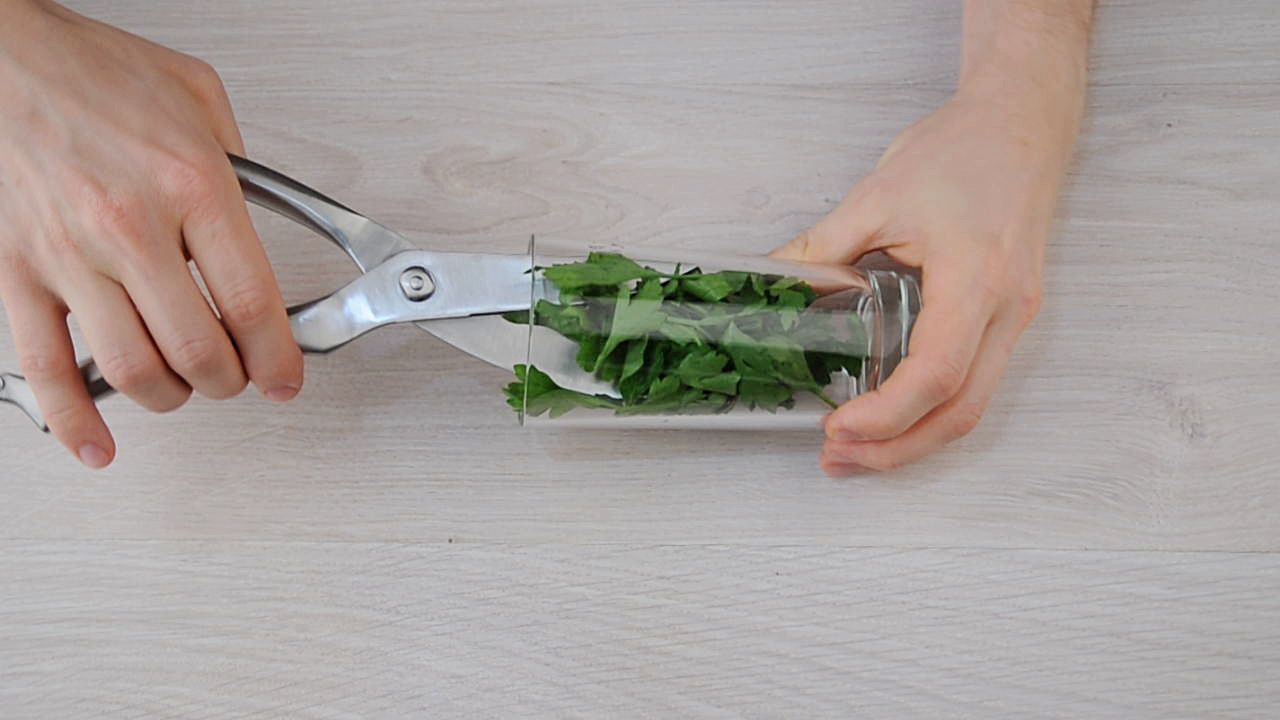
For quick garnishes, hold a small bunch of dry parsley over a bowl or plate and snip it with clean kitchen shears. This is not the best method for very fine chopping, but it is fast and convenient. It is especially useful when you want to finish soup, scrambled eggs, baked potatoes, or pasta without creating another cutting board situation.
Method 3: The Leaf-Picking Method
For delicate dishes, pick the leaves from the stems before chopping. This takes longer, but the result is softer and more refined. Use this method for garnishes, herb salads, and recipes where parsley is a star ingredient rather than a background singer.
Common Mistakes When Cutting Parsley
Using Wet Parsley
Wet parsley clumps, bruises, and turns into a sad green mat. Always dry it well before cutting. Your knife will move better, the pieces will look cleaner, and your garnish will actually sprinkle instead of landing in one damp blob.
Using a Dull Knife
A dull knife crushes herbs instead of slicing them. If your parsley turns dark, wet, or mushy after chopping, your knife may be the problem. A sharp blade makes clean cuts and preserves the herb’s fresh flavor.
Over-Chopping
Parsley does not need to be punished. Once it reaches the right size, stop chopping. Too many passes with the knife can bruise the leaves and make the flavor harsher.
Throwing Away All the Stems
Thick stems can be tough, but tender stems are flavorful. Save larger stems for stock, soup, beans, sauces, or roasted meats. They add herbal depth without wasting food.
Adding Parsley Too Early
Parsley is often best added near the end of cooking. Long heat can dull its color and fresh flavor. For soups, stews, pasta, and roasted dishes, stir in some parsley at the end and sprinkle a little more on top before serving.
How Much Chopped Parsley Comes from One Bunch?
A standard bunch of parsley usually gives about 1 to 2 cups of loosely packed leaves, depending on size and how much stem you remove. Once chopped, that volume shrinks. A big fluffy handful can become a modest little pile very quickly. Parsley is basically the laundry of herbs: it looks huge until you deal with it.
As a rough guide, 1 cup of loosely packed parsley leaves becomes about 1/2 cup chopped parsley. For most recipes, exact precision is not critical. If you love a bright herbal flavor, add more. If parsley is only there as a garnish, use a lighter hand.
Best Recipes for Fresh Chopped Parsley
Gremolata
Finely chopped parsley mixed with lemon zest and garlic creates a punchy topping for fish, chicken, veal, beans, roasted vegetables, and soups. It is simple, fresh, and tastes like your dinner suddenly learned Italian.
Chimichurri
Parsley is the backbone of many chimichurri recipes. Chop it finely and combine it with garlic, vinegar, olive oil, oregano, red pepper flakes, and salt. Spoon it over grilled steak, chicken, vegetables, or crusty bread.
Tabbouleh
In tabbouleh, parsley is not a garnish. It is the main event. Use a sharp knife and hand-cut the parsley for the best texture. A food processor may be tempting, but it can bruise the leaves and make the salad watery.
Parsley Garlic Butter
Mix finely chopped parsley with softened butter, garlic, lemon juice, salt, and pepper. Spread it on bread, melt it over steak, toss it with potatoes, or use it on vegetables. This is one of those small upgrades that makes people suspiciously impressed.
Soups and Stews
Add chopped parsley at the end of cooking to brighten chicken soup, lentil soup, vegetable stew, beef stew, and bean dishes. It adds color and freshness without overpowering the bowl.
How to Store Fresh Parsley Before Cutting
If you are not cutting parsley right away, trim the stems and place the bunch upright in a jar with a small amount of water, like flowers. Cover loosely with a plastic bag and refrigerate. Change the water every few days. This keeps parsley fresher than tossing the bunch into the crisper drawer and hoping for the best.
You can also wrap parsley in a slightly damp paper towel and store it in a sealed bag or container. This method works well for short-term storage. Keep the leaves from getting too wet, because excess moisture encourages spoilage.
How to Freeze Chopped Parsley
Freezing parsley is a smart move when you have more than you can use. Wash and dry it thoroughly, chop it, then pack it into ice cube trays. Cover with water or olive oil and freeze. Once solid, transfer the cubes to a freezer bag.
Frozen parsley will not have the same texture as fresh parsley, so it is not ideal for garnishing salads. However, it works beautifully in soups, stews, sauces, rice dishes, sautés, and braises.
Food Safety Tips for Cutting Parsley
Because parsley is often eaten raw, it should be handled carefully. Wash your hands before preparing it. Use a clean cutting board and clean knife. Rinse the herb under cool running water or swish it in a bowl of cold water, then dry it thoroughly. Keep parsley refrigerated and discard any bunches that smell bad, feel slimy, or show obvious signs of spoilage.
Do not chop parsley on a board that was just used for raw meat, poultry, or seafood unless the board has been properly washed and sanitized. Cross-contamination is not a flavor profile.
Experience-Based Tips for Cutting Parsley Better
After cutting parsley many times for weeknight dinners, holiday meals, meal prep containers, and last-minute “make this plate look less beige” emergencies, one lesson stands above the rest: parsley behaves best when you slow down for the first minute. Rushing the washing and drying steps almost always creates more work later. Wet parsley sticks to the knife, clings to your fingers, and spreads across the cutting board in a way that feels personal.
A practical habit is to wash parsley as soon as you bring it home if you plan to use it within a day or two. Spin it dry, wrap it gently, and store it properly. Then, when it is time to cook, the parsley is ready instead of becoming one more task between you and dinner. However, if your refrigerator tends to be very humid, wash it closer to the time you use it and dry it especially well.
Another useful trick is to separate parsley into two zones: leaves for finishing and stems for flavoring. Keep tender leaves for chopping and garnishing. Save the thicker stems in a small freezer bag with onion ends, celery leaves, and carrot peels for homemade stock. Parsley stems are excellent in broth, beans, poaching liquid, and sauces. This habit reduces waste and makes you feel like the kind of person who has a plan. Even if the plan is mostly “soup someday.”
For everyday cooking, do not obsess over removing every tiny stem. Many home cooks spend too much time picking parsley leaf by leaf, then wonder why dinner takes forever. Tender stems near the top of the bunch taste fresh and chop easily. Unless you are making a very delicate garnish or a parsley-heavy salad, include them. The flavor is good, the texture is fine, and your patience remains intact.
When chopping parsley for a crowd, use a large cutting board. A small board makes herbs fall over the edge, and then you start chasing parsley around the counter like it owes you money. Spread the leaves into a manageable pile, chop, gather, and chop again. If the pile is too large, divide it in half. Smaller batches produce a cleaner, more even cut.
The best visual cue for a good medium chop is “green confetti.” The pieces should be small enough to scatter evenly but not so tiny that they become wet paste. For sauces like chimichurri, a slightly uneven hand chop can actually be nicer than a perfectly processed texture. It gives the sauce personality and keeps the parsley from turning into green sludge.
One of the easiest ways to make food look restaurant-level is to chop parsley just before serving and sprinkle it from higher above the plate. Not from the ceiling, obviously. Just raise your hand 8 to 12 inches above the dish and let the parsley fall naturally. This spreads it more evenly and avoids clumps. It is a tiny move with surprisingly elegant results.
Finally, taste your parsley before using a lot of it. Fresh parsley should taste clean, grassy, and slightly peppery. If it tastes bitter, dull, or unpleasant, use less or choose a fresher bunch. Herbs are ingredients, not decorations with legal immunity. Good parsley brightens a dish. Bad parsley just sits there, green and suspicious.
Conclusion
Cutting parsley is simple once you understand the basics: wash it, dry it, remove the toughest stems, gather the leaves, and chop with a sharp knife using a controlled rocking motion. The key is to treat parsley gently. Do not crush it, soak it, over-chop it, or let it sit wet on the board. A little care keeps the leaves bright, fragrant, and ready to bring life to everything from soups and salads to grilled meats and buttery potatoes.
Whether you prefer a rough chop for rustic dishes, a fine mince for sauces, or quick snips for garnish, parsley is one of the easiest herbs to use well. Master these 10 steps and you will never again stare at a bunch of parsley wondering where the edible part begins. Your cutting board will be cleaner, your food will taste fresher, and your garnish game will quietly become powerful.