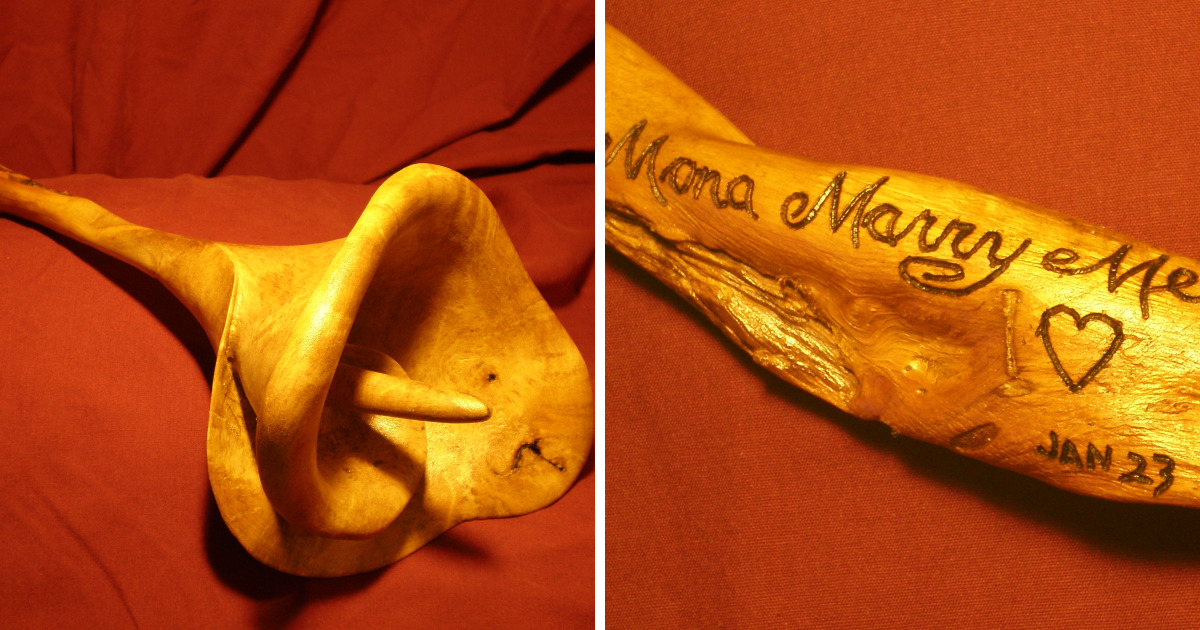
Some people meet the love of their life at a party. Some meet through friends, at work, or after accidentally reaching for the same bruised avocado at the grocery store. Me? I met my future wife because I carved a crooked little box that looked like it had survived a minor earthquake.
It was not elegant. It was not symmetrical. It was not even entirely sure it wanted to be a box. But that small carved piece of wood became the beginning of a love story, a creative habit, and a marriage built on the kind of everyday effort that cannot be bought in a store.
This is the story of how one handmade carving changed my life with my beautiful wifeand why imperfect gifts often say more than polished, expensive ones ever could.
A Small Piece of Wood With a Big Future
Before I made that first carving, I thought handmade gifts belonged to people who had dramatic talents. You know the type: people who casually say, “Oh, I just made this,” while presenting a hand-thrown vase, a portrait, and a sourdough loaf that somehow looks better than a bakery display.
I was not one of those people.
I liked the idea of making something with my hands, but I had the confidence of a person assembling furniture with only three screws left over and no idea where they came from. Still, I was drawn to the quiet patience of wood carving. A plain piece of wood could become a keepsake, a useful object, or a tiny work of art. More importantly, it could carry a story.
That was the appeal. A store-bought gift could be lovely, but a handmade gift had fingerprints all over itsometimes literally. It showed time, thought, mistakes, second attempts, and the stubborn refusal to quit when the project looked less like a romantic treasure and more like a potato with ambition.
I chose a simple design: a small carved keepsake box with a floral pattern on the lid. The plan was modest. The execution was less modest. I spent days sketching, sanding, rethinking, and staring at the wood as though it might reveal its own instruction manual.
It did not.
But somewhere during that process, I began to understand why people fall in love with carving. The work rewards attention. It asks you to slow down. It reminds you that good things are built one careful decision at a time.
The Day I Met Her
I met my wife at a local art and craft gathering where I had brought the box mostly because I needed proof that I had finished something. It sat on the table among polished ceramics, framed paintings, jewelry, and handmade textiles. My little box looked brave but nervous.
Then she walked over.
She did not pretend it was perfect. That may have been the first thing I loved about her. She looked closely at the carving, ran her fingers lightly over the floral design, and smiled in a way that made the entire room feel warmer.
“You made this?” she asked.
I admitted that I had.
“It has character,” she said.
Now, “character” can be a dangerous word. It can mean charming. It can also mean, “This is technically an object, and I respect its confidence.” But she meant it kindly. She noticed the small uneven details, the hand-drawn pattern, and the tiny initials I had hidden inside the lid.
Instead of asking whether I sold carvings, she asked why I made them.
That question changed everything.
I told her I liked making objects that could last. I liked the thought that something small and ordinary could become meaningful because someone kept it. She said she understood. Her favorite things were never the most expensive ones; they were the things that reminded her of a moment, a person, or a version of herself she wanted to remember.
We talked for nearly an hour. First about art. Then about music. Then about family traditions, favorite meals, bad jobs, good books, and the strange confidence people develop after successfully repairing one household item with tape.
By the time she left, I knew two things: I wanted to see her again, and I suddenly cared very deeply about the future of that little carved box.
Why Handmade Gifts Feel Different
A handmade gift is not automatically meaningful because it is handmade. A rushed project can still feel rushed. A fancy project can still feel distant. What gives a handmade gift its power is intention.
That first carving mattered because it carried more than a design. It carried time. It carried uncertainty. It carried the embarrassing number of evenings I spent trying to make one corner look less like it had been chewed by an optimistic beaver.
My wife saw the effort behind it. She did not fall in love with a perfect carved box. She connected with the person who had tried to make something honest.
That became one of the lessons of our relationship: love is rarely built through grand gestures alone. It grows through repeated acts of attention. It is remembering how someone takes their coffee. It is listening when they tell the same childhood story again because the story still matters to them. It is noticing when they have had a rough day and deciding that dinner can be simpler, the chores can wait, and sitting together is the better plan.
A gift can be part of that language, but it is never the whole conversation.
It Was Never Just About the Carving
The box gave us an opening, but the relationship grew because we kept showing up. We went on walks, shared meals, visited flea markets, and talked about the future with the nervous excitement of people who are not sure whether they are planning a life or simply collecting snacks for the road.
She encouraged my creative side without treating it like a novelty. When I made something that did not work, she did not tell me it was brilliant just to be nice. She asked what I would change next time. That kind of support is underrated. It is affectionate, but it is also honest.
Over time, carving became part of our shared rhythm. She would sit nearby with a book, sketch in a notebook, or work on one of her own projects while I focused on a piece of wood. Sometimes we talked. Sometimes we did not. The silence was never awkward. It was the kind of silence that says, “I am comfortable being here with you.”
The Craft Lessons That Followed Us Into Marriage
Marriage, as it turns out, has a lot in common with carving.
First, you cannot rush it. The faster you try to force a shape, the more likely you are to make a mess. A strong marriage needs patience, especially when life becomes noisy, busy, expensive, or unexpectedly full of laundry.
Second, small details matter. A marriage is not made only of anniversaries, vacations, and milestone photos. It is made of weekday mornings, grocery lists, shared jokes, apologies, and the quiet habit of asking, “How are you really doing?”
Third, imperfections are not always flaws. The natural grain in wood does not ruin a carving; often, it gives the piece its personality. In the same way, no person enters a marriage perfectly polished. We bring our quirks, fears, habits, history, and occasionally a completely unreasonable opinion about how the dishwasher should be loaded.
The goal is not to sand each other into different people. The goal is to learn how to build a life that makes room for both people honestly.
Patience Beats Perfection
One of the reasons I still love carving is that it gives me a visible reminder of progress. A project may begin as a plain block, but careful attention gradually reveals the design. Marriage works similarly. You do not wake up one day with a perfect partnership. You build it through choices that may seem small at the time.
You choose to listen before reacting. You choose to be grateful instead of taking someone for granted. You choose to apologize without adding a speech titled “Why I Was Technically Still Right.” You choose to celebrate your partner’s wins, even when they are quieter than the world’s version of success.
Those choices become the pattern.
The Box That Became a Family Keepsake
Eventually, I gave her the carved box.
Not that day. Not right away. At first, it stayed on my shelf, partly because I was shy and partly because I was still deciding whether it looked handmade or merely survived.
But after we had been together for a while, I gave it to her with a note inside. The note was simple. I told her that meeting her had made me want to be more patient, more creative, and more present. I told her that the box was imperfect, but it was the first thing I had ever made with someone specific in mind.
She cried. I panicked for approximately three seconds because I thought I had accidentally turned a sentimental moment into a woodworking emergency.
Then she laughed, hugged me, and told me she loved it.
Years later, the box still sits in our home. It holds little things now: old tickets, notes, tiny souvenirs, and a few objects that would mean nothing to anyone else. To us, it is a map. It points back to the beginning.
That is what keepsakes do at their best. They turn a memory into something you can hold.
How Creativity Can Strengthen a Relationship
You do not need to become a professional artist to bring more creativity into your relationship. The point is not to produce museum-quality work. The point is to make room for shared meaning.
Couples can create a small tradition around making things together: a scrapbook after each trip, a playlist for every season, a handwritten note tucked into a lunch bag, a photo wall that grows over time, or a simple project that reflects an inside joke only the two of you understand.
Creative rituals are especially valuable because they interrupt autopilot. They give couples something to anticipate and something to revisit. They create proof that life was not only lived quickly; it was noticed.
My wife and I still make things for each other. Sometimes it is a carved ornament, sometimes a framed photo, sometimes a terrible birthday cake decorated with enough enthusiasm to qualify as architecture. The object is never the point. The thought behind it is.
The Best Gift Is Attention
People often assume romance must be expensive to be memorable. It does not. Thoughtfulness is more durable than a price tag.
A small gift becomes meaningful when it says, “I see you.” Maybe it reflects a favorite memory, a private joke, a dream your partner mentioned months ago, or an ordinary detail that most people would miss.
My first carving worked because my wife saw the attention inside it. It was a small gesture, but it opened the door to a larger conversation: Who are you? What matters to you? What are you trying to make of your life?
That is a pretty good conversation starter for a crooked wooden box.
Five Lessons From the Carving That Started It All
- Make room for imperfect beginnings. Most meaningful things start before we feel fully ready.
- Notice the details. Attention is one of the clearest forms of affection.
- Choose patience over performance. A relationship is not a competition or a highlight reel.
- Build traditions together. Small rituals can become the emotional landmarks of a shared life.
- Keep creating. Creativity keeps a relationship curious, playful, and personal.
Experiences From the Carving That Started My Life With My Beautiful Wife!
The funny thing about our early days is that I thought the carving was the bold part of the story. I thought the difficult thing had been sitting alone with a piece of wood, trying to turn a rough idea into something worth keeping. Looking back, the real bravery was letting someone see it.
There is a vulnerable feeling that comes with sharing anything handmade. A painting, a song, a recipe, a note, or a carving all carry a little bit of the maker. You are not just showing an object. You are revealing your patience, your taste, your sense of humor, and occasionally your questionable ability to draw a flower that looks like a flower instead of a startled sea creature.
My wife never made me feel foolish for trying. That mattered more than I understood at the time. She did not praise every result blindly, and she did not act as though creativity had to be serious to be valuable. She simply made room for it. She let the projects be part of our life instead of treating them as something that competed with real life.
There were weekends when I worked on a carving while she sat nearby planning a meal, reading, or scrolling through ideas for our home. We were not always talking, but we were together. Those hours taught me that companionship is not always loud. Sometimes love is sharing a room with someone who understands your need to concentrate and still reaches over occasionally to steal one of your snacks.
One winter, I tried to make her a small ornament for our first holiday after getting married. I had pictured something delicate and elegant. What I created looked more like a snowflake that had survived a wind tunnel. I considered starting over, but she insisted we hang it on the tree.
Every year, she still finds it first.
That ornament has become one of our favorite decorations precisely because it is imperfect. It reminds us of a time when our home was newer, our furniture did not match, and we were still figuring out which traditions belonged to us. We did not need a flawless holiday. We needed a real one.
Another experience that stays with me happened after a difficult week. Nothing dramatic had happened, but we were both tired, distracted, and moving through our routines like people trying to finish a long list before bedtime. One evening, my wife opened the old carved box and took out the note I had placed inside years earlier.
She read it again, then looked at me and said, “You were always trying to make things last.”
I had not thought about the note in a long time. But she was right. That first carving was never only about making a box. It was about making a moment solid enough to survive time.
Marriage has taught me that lasting love is not built by preserving every moment perfectly. It is built by returning to each other after ordinary days, complicated conversations, missed expectations, and busy seasons. It is built when both people keep saying, in different ways, “I am here. I am paying attention. Let’s keep making this together.”
That is why the carving still matters. It was small, uneven, and made by someone who did not yet know what his future would look like. But it carried the first shape of a life I would come to love.
And somehow, against all odds, that little wooden box did exactly what I hoped it would do: it held a story worth keeping.