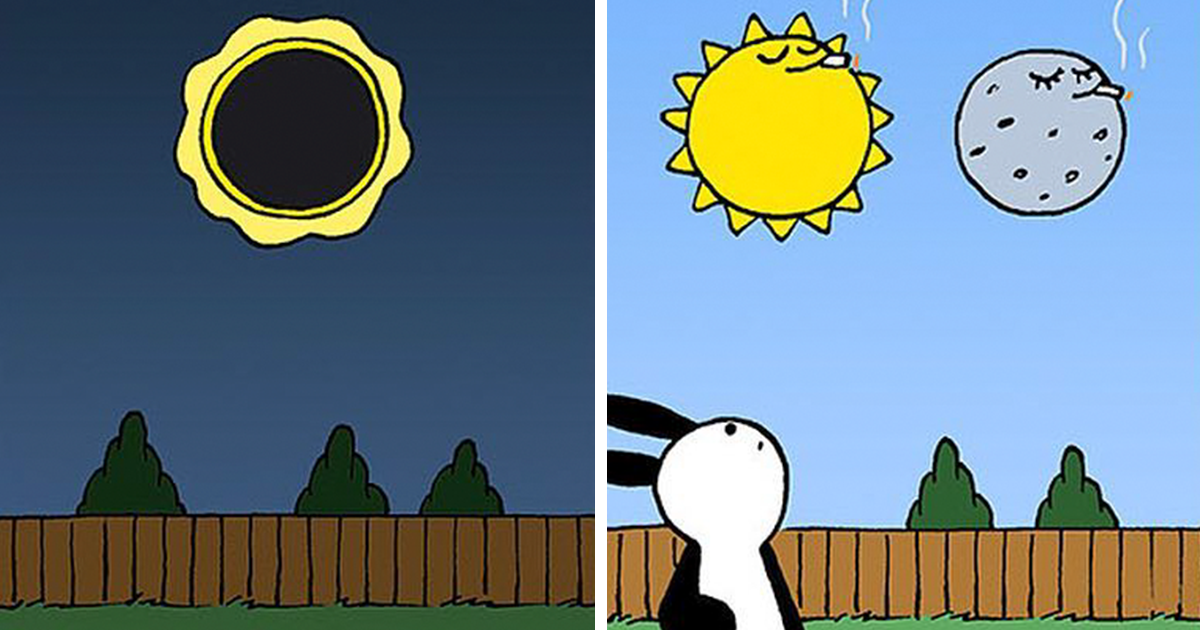
If you hear the phrase cute bunny comics, your brain probably serves up fluffy ears, pastel backgrounds, and the kind of wholesome energy that says, “Nothing bad will happen here.” That is exactly why My 67 Cute Bunny Comics That Often Don’t End Well works so beautifully. It lures readers in with sweetness, then quietly hands them a banana peel, an existential crisis, and a punchline with teeth.
At the center of this odd little miracle is Buni, the wide-eyed rabbit created by cartoonist Ryan Pagelow. The character looks innocent, hopeful, and almost aggressively huggable. But the world around him is not interested in being kind. In comic after comic, Buni stumbles into situations that begin with charm and end with irony, heartbreak, or absurd disaster. Somehow, that mix makes the series even more lovable.
That is the secret behind the success of these dark humor bunny comics: they are not cruel for the sake of being cruel. They are clever, visually sharp, and emotionally tuned to the way modern readers actually feel. Life is weird. The internet is weird. Hope is weird. A rabbit who keeps trying anyway? That part feels surprisingly familiar.
Why This Bunny Comic Series Feels So Different
What separates Buni from a thousand other adorable animal strips is not just the rabbit. It is the format. Most of the comics are driven by visuals rather than long dialogue, which makes each strip fast to read and easy to understand. That matters in a digital world where readers scroll quickly and decide in seconds whether something is worth their attention.
The result is a wordless webcomic style that feels almost universal. You do not have to decode heavy exposition. You do not need a deep backstory. You just need eyes, a sense of humor, and maybe a little emotional resilience. One panel sets up the expectation. The next builds tension. The last one kicks the stool out from under your assumptions. Comedy achieved. Slight emotional damage also achieved.
That rhythm is what makes the collection of 67 comics so bingeable. Each strip is tiny, but the cumulative effect is huge. You start by laughing at the joke. Then you notice a pattern. Then you realize the rabbit is basically living inside a cheerful trap. Then, against all logic, you want more.
The Genius of Cute Meets Catastrophe
There is a reason the “cute but twisted” formula works so well. Cuteness lowers your guard. It tells your brain to expect safety, softness, and maybe a nice carrot. Dark humor does the opposite. It interrupts comfort. When those two tones collide, the contrast becomes the joke.
In Buni’s world, the design does half the comedy before the punchline even arrives. Rounded shapes, simple expressions, and clean layouts create a childlike visual language. Then the story swerves into something darker, sadder, or just gloriously ridiculous. That gap between appearance and outcome is where the series lives.
And no, the comics do not rely on gore or cheap shock to be funny. The best strips land because they turn everyday feelings into visual surprises. Rejection, awkward hope, bad timing, self-sabotage, bad luck, misunderstood good intentions, and the occasional universe-level insult all show up in miniature. It is basically emotional weather, just with more rabbits and fewer therapy bills.
Buni Is More Than a Mascot With Terrible Luck
One reason these cute bunny comics with dark endings stick in the mind is that Buni is not just a prop for jokes. He is a character. He is optimistic in a way that would be inspiring if it were not so often immediately punished by the universe. He wants love, connection, meaning, and a decent day. Instead, he frequently gets chaos wrapped in a smile.
That optimism is the emotional engine of the comic. If Buni were cynical, the punchlines would feel expected. If he were mean, the stories would lose their sweetness. If he learned too quickly, the strip would stop working. His innocence is not just part of the design; it is the entire structure. He keeps believing. The world keeps proving belief to be a risky hobby. Readers keep laughing because they recognize the pattern from their own lives.
There is also something quietly moving about a character who wakes up ready to try again. Even when a strip ends badly, the larger series does not feel hopeless. That is an important distinction. The comics are dark, but the project itself is not emotionally dead. It runs on resilience. Buni absorbs failure, absurdity, and heartbreak, then reappears in the next strip with the same soft face and terrible instincts. Honestly, that is either admirable or concerning. Probably both.
Why the Wordless Format Is a Huge Advantage
It makes the comic instantly readable
Readers do not need paragraphs of setup. The visual storytelling does the heavy lifting. That makes the series ideal for social media, where attention spans are short and punchlines must arrive fast.
It travels well across audiences
A mostly wordless strip can cross language barriers more easily than dialogue-heavy comics. Visual humor is quick, portable, and easy to share. That gives the series a wider reach and helps explain why it has done well across different platforms.
It forces stronger storytelling
Without a wall of text to explain the joke, every panel has to count. Expressions, composition, timing, and contrast become essential. That discipline gives the comic a clean, almost elegant feel, even when the ending is delightfully mean.
The World Around the Bunny Is Cute, Which Is Exactly the Problem
Part of the fun in My 67 Cute Bunny Comics That Often Don’t End Well is that Buni does not live in an ordinary world. He exists in a surreal environment populated by strange, adorable, and often suspiciously dangerous figures. The comic has room for teddy bears, desserts, zombies, random objects, and side characters that feel like they wandered in from a toy store after making several poor choices.
This matters because the setting keeps the strip from becoming repetitive. The formula may be recognizable, but the delivery stays fresh. Some comics play like visual puns. Others turn into relationship jokes, social commentary, or tiny existential sketches. One strip may poke fun at technology, another at loneliness, another at self-improvement, and another at the general unfairness of being alive on a Tuesday.
That flexibility is why Buni has stayed relevant for so long. The character is simple enough to fit any scenario, but expressive enough to carry real feeling. He can be the star of a joke about dating, doomscrolling, ambition, food, mortality, embarrassment, or plain old bad luck. In that sense, the rabbit is not narrow at all. He is a soft white delivery system for universal frustration.
Why Readers Keep Coming Back for Twisted Endings
People do not return to a comic like this just because they enjoy seeing a bunny have a rough day. They come back because the series understands timing. Every good comic strip depends on structure, and Buni’s structure is especially satisfying. The strip invites prediction and then defeats it. Readers get the pleasure of trying to solve the joke before the last panel, and the better the setup, the more satisfying the surprise.
There is also a deeper reason. These comics mirror the emotional logic of the internet age. So much of modern life feels like a cute beginning followed by a strange ending. You download an app to simplify life, and now your screen time has become its own personality trait. You make a plan to be productive, and suddenly you are researching the history of spoons. You open a wholesome comic, and somehow leave thinking about longing, bad luck, and the collapse of expectation. The form fits the era.
That makes Buni more than a novelty. It is a comic built for readers who understand irony, but still want heart. It is for people who can laugh at disappointment without pretending disappointment is fun. That balance is harder to achieve than it looks.
How Ryan Pagelow Built a Lasting Comic Brand
Another reason this title resonates is that it points to a real creative achievement. Buni did not become memorable through one viral strip alone. It grew through consistency, clarity, and a format that works across platforms. Over the years, the comic has appeared on major online comics hubs, built a large social following, and expanded into book form. That kind of durability is rare in webcomics, where attention can vanish faster than Buni’s luck.
Pagelow’s approach is smart because it respects the medium. The art is clean. The premise is easy to grasp. The punchlines are shareable. The character design is instantly recognizable. And the emotional tone is distinctive enough that readers know what kind of ride they are boarding, even if they never know exactly where the crash will happen.
There is also an important branding lesson here for creators: specificity wins. A cute rabbit in bad situations sounds almost too simple, but simplicity is often what allows a concept to travel. Once the core idea is strong, variation does the rest. Buni can be romantic, lonely, ridiculous, unlucky, observant, or accidentally profound, all while staying completely within the identity of the series.
What It Feels Like to Read 67 Bunny Comics in One Sitting
Reading a large batch of Buni comics all at once is a strange and wonderful experience. At first, it feels light. You click into the gallery expecting a harmless visual snack, the kind of thing that will give you a quick laugh before you move on with your day. The first few comics deliver exactly that. They are neat, compact, and charming. Then the endings start to stack up, and the mood becomes something richer.
You begin to notice that each strip creates a tiny emotional whiplash. Not enough to make the experience unpleasant, but enough to keep your brain alert. Your expectations stop relaxing. You start scanning each panel like a detective, looking for the trapdoor. Is that cupcake too cheerful? Is that shadow suspicious? Why does that teddy bear seem like it has a criminal record? The comics train you to read sweetness as a setup, and that is part of the fun.
There is also a rhythm to the binge. Laugh. Pause. Smirk. Ouch. Repeat. Some strips are pure comedy. Others sneak in a little melancholy. A few make you laugh and feel attacked at the same time, which is honestly a premium internet experience. By the time you are deep into the collection, Buni stops feeling like a random bunny and starts feeling like a mascot for every plan that looked good in your head and collapsed in public.
What makes the experience memorable is that the comics never become emotionally flat. Even when the structure is familiar, the outcomes vary enough to keep the tone alive. One joke may hinge on romance, another on anxiety, another on vanity, and another on the simple fact that the universe enjoys practical jokes. The rabbit is constant, but the meaning keeps shifting. That gives the binge a surprising sense of momentum.
There is something oddly comforting about that pattern. Buni loses, stumbles, misreads the room, and gets blindsided, but the series itself keeps moving. The next comic always arrives with another setup, another little hope, another chance for everything to go sideways. In a weird way, that persistence is uplifting. The endings may not go well, but the act of continuing does. That feeling lingers after the laugh.
For many readers, that is the real experience of these rabbit comics. They are funny because they understand disappointment, but they are satisfying because they never surrender to it. The art stays cute. The joke stays sharp. The rabbit stays hopeful. And somehow that combination makes 67 comics feel less like a random internet gallery and more like a miniature worldview: life is absurd, timing is cruel, and yet tomorrow still feels weirdly worth showing up for.
That is why the title works so well. My 67 Cute Bunny Comics That Often Don’t End Well sounds like a warning, a confession, and a sales pitch all at once. It promises charm, chaos, and an emotional ambush delivered by a bunny. And frankly, that is excellent branding.
Final Thoughts
In the end, Buni succeeds because it does not treat cute and dark as opposites. It treats them as partners. The softness makes the sting funnier. The optimism makes the setbacks sharper. The visual simplicity makes the emotional twist stronger. Whether you come for the rabbit, the humor, the surreal world, or the expertly timed last panel, the result is the same: you leave entertained, slightly surprised, and maybe a little too aware of how often life behaves like a comic strip with a mean sense of humor.
So yes, these are cute bunny comics that often don’t end well. That is exactly why they do.
Note: This body HTML is cleaned for web publication and contains no placeholder citation artifacts or unnecessary markup.