Restaurant insurance is not just a policy purchase. It is a daily operating story, and proactive risk management helps restaurant owners tell insurers a better one.
Why Restaurant Insurability Has Become a Hot Kitchen Topic
Running a restaurant has never been a quiet little stroll through the herb garden. It is more like juggling flaming skillets while someone asks whether the gluten-free fries were cooked in a dedicated fryer. Food costs rise, labor markets shift, customers expect speed, delivery apps add complexity, and one poorly placed wet-floor sign can turn a Tuesday lunch rush into a claim file with its own zip code.
That is why proactive risk management for restaurants has become one of the strongest ways to improve a restaurant’s insurability. Insurability, in plain English, means how attractive a business looks to an insurance carrier. A restaurant with clean records, strong safety procedures, reliable maintenance, trained employees, and a clear claims history usually presents a better risk than one that operates on “we’ll figure it out when something catches fire.” Spoiler: insurers are not huge fans of that second strategy.
Insurance companies look at restaurants through a practical lens. They ask: What can go wrong here? How often might it happen? How expensive could it be? And does management have a real plan to prevent it? A restaurant that can answer those questions with documentation, training logs, inspection records, and consistent procedures is easier to underwrite. It may also have a better shot at broader coverage, more stable renewals, and potentially lower premiums over time.
What Insurers Actually Want to See
Insurers do not expect a restaurant to eliminate risk. That would be like expecting a bakery to eliminate flour from the air or a brunch spot to eliminate people asking for substitutions. Risk is part of the business. What carriers want to see is control.
1. A clear understanding of the restaurant’s operations
A small daytime café, a late-night bar with live music, a fast-casual chain, a food truck, and a full-service seafood restaurant all have different risk profiles. Hours of operation, alcohol sales, delivery exposure, payroll size, cooking methods, building age, security, and employee turnover all affect underwriting. The more accurately the restaurant and its insurance agent explain the operation, the easier it is for an underwriter to evaluate the account.
2. Strong documentation
Documentation is the insurance equivalent of a clean kitchen during health inspection season. It does not guarantee perfection, but it proves the owner is paying attention. Useful records include employee training logs, fire suppression inspections, hood-cleaning invoices, incident reports, equipment maintenance records, driver policies, food safety procedures, payroll reports, and updated property valuations.
3. A management culture that takes safety seriously
Risk management fails when it lives in a dusty binder next to the extra ketchup packets. It works when managers talk about it, employees practice it, and owners treat it as part of profitability. A restaurant with regular safety huddles, clear reporting procedures, and visible leadership support is more likely to prevent claims before they happen.
The Big Restaurant Risks That Affect Insurance
Restaurant insurance costs are shaped by a mix of property, liability, workers’ compensation, food safety, auto, cyber, and sometimes liquor liability risks. A proactive plan addresses the biggest exposures before they become expensive surprises.
Commercial Kitchen Fires
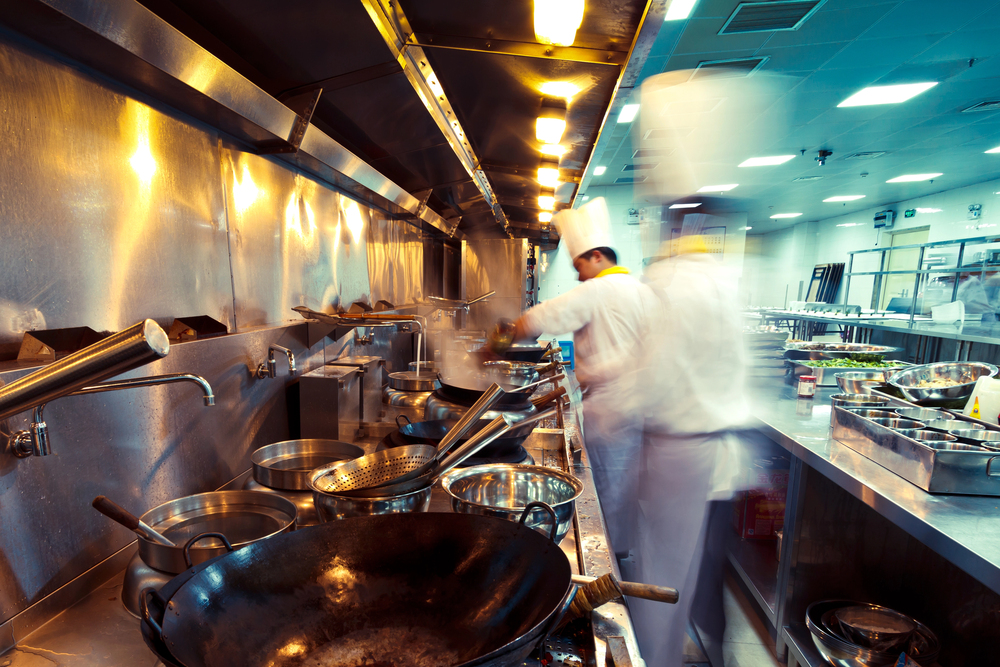
Fire is one of the most serious property risks in restaurants because commercial kitchens combine heat, grease, electrical systems, gas lines, cooking equipment, and very busy humans. That is not a recipe; it is a risk cocktail wearing an apron.
Restaurants can improve insurability by maintaining fire suppression systems, keeping Class K extinguishers available where required, scheduling professional hood and duct cleaning, keeping exits clear, inspecting electrical systems, and training employees on emergency procedures. Standards such as UL 300 and NFPA 96 are commonly discussed in commercial kitchen safety because they help reduce the risk of grease-related fires and support more consistent fire protection practices.
Slips, Trips, and Falls
In restaurants, floors are basically action movies. Water spills, oil splashes, ice drops, cords wander, mats curl, and someone is always carrying soup at high speed. Slip-and-fall prevention is crucial because these claims can involve both customers and employees.
Smart controls include slip-resistant flooring, properly placed mats, immediate spill cleanup, clear walkways, good lighting, footwear policies, drainage maintenance, and employee training. The goal is not just to own a wet-floor sign. The goal is to use it before a guest performs an unplanned interpretive dance near table seven.
Employee Injuries and Workers’ Compensation
Restaurants have many workplace hazards: cuts, burns, strains, sprains, lifting injuries, slips, falls, heat exposure, and repetitive-motion problems. Workers’ compensation costs are influenced by payroll, job classifications, claims frequency, claims severity, and experience modification factors. In simple terms, if a restaurant has more or worse claims than similar businesses, its insurance costs may climb.
Proactive operators identify their most common injuries and build targeted solutions. If cuts are common, they review knife storage, cut-resistant gloves, slicer guards, and training. If strains are common, they improve lifting procedures, storage layout, and staffing during deliveries. If burns are frequent, they review fryer procedures, hot-liquid handling, and protective equipment. The best safety programs are specific, not decorative.
Foodborne Illness and Food Safety
Food safety is central to restaurant risk management because one outbreak can damage customers, reputation, revenue, and insurance history. The FDA Food Code is widely used as a model for retail food safety practices in the United States, and local rules often build from similar principles.
Restaurants can lower risk by using proper temperature controls, date marking, handwashing procedures, illness reporting policies, cleaning schedules, allergen awareness, supplier controls, and manager oversight. Insurers like to see that food safety is not a guessing game played with thermometers that disappeared in 2019.
Liquor Liability
For restaurants legally licensed to serve alcohol, liquor liability can be a major underwriting concern. Claims may involve injuries, property damage, or lawsuits connected to alcohol service. Risk controls often include written house policies, staff training, compliance with state and local laws, documentation of incidents, and management procedures for difficult situations.
The key is consistency. A responsible-service policy should not depend on whether the manager on duty “has a good feeling about it.” Insurers prefer written procedures, trained staff, and records that show the restaurant treats alcohol-related risk as seriously as food quality.
Delivery and Hired/Non-Owned Auto Exposure
Delivery can boost revenue, but it also adds auto liability, driver safety, customer interaction, cash-handling, and route-related risks. Even when employees use personal vehicles, the restaurant may still face exposure depending on the facts and applicable law.
Better practices include driver screening, proof of insurance, safe-driving policies, delivery logs, electronic payments, clear customer address records, personal-safety guidance, and written rules about when a driver should not complete a delivery. If a restaurant offers alcohol delivery where legal, it needs strict compliance procedures and age-verification controls.
Cyber and Payment Data Risks
Modern restaurants are also tech businesses, whether owners like it or not. Point-of-sale systems, loyalty programs, online ordering, Wi-Fi networks, vendor portals, and employee payroll platforms all create cyber exposure. A data breach can lead to notification costs, business interruption, reputational harm, and legal expenses.
Basic cyber hygiene matters: secure passwords, software updates, limited employee access, vendor management, staff phishing awareness, payment-card compliance, and backups. A restaurant may be known for tacos, but hackers do not care; they see data.
How Proactive Risk Management Improves Insurability
It reduces claim frequency
Insurance pricing is strongly influenced by claims. A restaurant with fewer incidents is often easier to place in the insurance market. When an owner reduces common losses through training, maintenance, and accountability, the restaurant becomes a more attractive account.
It reduces claim severity
Not every incident can be prevented, but good preparation can keep a small problem from becoming a large one. Fast incident reporting, first-aid procedures, return-to-work programs, surveillance footage, manager reports, and documented corrective actions can help control claim costs.
It gives underwriters confidence
Underwriters like evidence. A restaurant that can show updated revenue, payroll, property values, equipment lists, fire inspection records, training logs, and loss-control improvements gives the insurance carrier something concrete to evaluate. That can be the difference between “decline” and “let’s take a closer look.”
It helps agents advocate for better terms
A knowledgeable insurance agent can do more than shop prices. The agent can help explain the restaurant’s story to carriers: what changed, what controls were added, why old claims are unlikely to repeat, and how management has improved operations. A strong underwriting narrative can help a clean, well-run restaurant avoid being treated like a mystery box with a fryer.
It supports more accurate coverage
Restaurants change quickly. Payroll rises. Revenue shifts. Delivery begins. Outdoor dining expands. A catering arm appears. A bar adds events. If coverage is not updated, the restaurant may face audit surprises, gaps, or disputes after a loss. Regular reviews help keep coverage aligned with the real business.
Practical Risk Management Steps Restaurants Can Use
Build a living risk management checklist
Create daily, weekly, monthly, and annual checklists. Daily items might include floor inspections, cooler temperature checks, fryer-area cleaning, and exit clearance. Weekly items may include grease filter cleaning, first-aid supply review, and safety huddles. Monthly items may include fire extinguisher checks, incident trend reviews, and equipment maintenance. Annual items may include insurance coverage reviews, fire suppression inspections, employee handbook updates, and emergency drills.
Train every employee like they are new
Turnover is a reality in hospitality. Seasonal workers, first-time employees, and rushed onboarding can increase injuries. Restaurants should assume new hires do not know the restaurant’s safety rules until they are trained, tested, and observed. Short, practical training works better than long lectures. Show employees how to lift, where to store knives, how to report spills, how to handle hot items, and what to do after an incident.
Use incident reports as learning tools
An incident report should not be treated like a punishment form. It should be a treasure map to the next fix. Did three employees slip near the dish area? Review drainage, mats, footwear, and cleaning chemicals. Did a server burn a hand on hot plates? Review tray procedures, protective towels, and communication between kitchen and service staff. Every incident asks a question. Smart operators answer it.
Keep maintenance boring
Boring maintenance is beautiful. Exciting maintenance usually begins with smoke, water, sparks, or an emergency invoice. Restaurants should schedule preventive maintenance for refrigeration, cooking equipment, HVAC, electrical systems, plumbing, fire suppression, and exhaust systems. Insurers often care deeply about whether the building and equipment are maintained, especially when property coverage is tight.
Review contracts with vendors and partners
Delivery platforms, caterers, event partners, landlords, security providers, cleaning vendors, and equipment contractors can all affect risk. Restaurant owners should review indemnity provisions, insurance requirements, additional insured wording, and responsibility for accidents or property damage. A contract can quietly move risk from one party to another, so owners should not treat it like the software terms nobody reads.
Update insurance values before renewal
Property values, build-out costs, equipment replacement costs, and business income exposures can change quickly. Inflation and supply-chain costs can make old limits inadequate. Before renewal, owners should review replacement values, sales, payroll, seating capacity, hours, delivery operations, alcohol sales, and any new services. Accurate information helps prevent coverage gaps and ugly audit surprises.
What Agents Can Do to Encourage Better Restaurant Risk Management
Independent agents are in a strong position to help restaurants become more insurable. They see carrier expectations, claim patterns, renewal pressure, and coverage gaps. Their job is not only to sell a policy but to help owners understand what the insurance market rewards.
A good agent can ask detailed questions about operations, identify missing controls, connect the restaurant with carrier loss-control resources, suggest documentation improvements, and prepare a stronger submission. For example, instead of sending an underwriter a basic application for a restaurant with prior slip claims, the agent can include a summary explaining new flooring, improved mats, footwear requirements, staff training, and the absence of repeat incidents.
That kind of advocacy matters. It turns the account from “restaurant with losses” into “restaurant that identified a problem, fixed it, and documented the fix.” Underwriters are human. They appreciate a good plot twist, especially when the twist is fewer claims.
Example: Turning a Risky Renewal Into a Better Story
Imagine a neighborhood bistro facing a difficult renewal. The restaurant had two employee burn claims, one customer slip claim, and a small grease fire in the past three years. Premiums jumped. One carrier declined. The owner was frustrated and blamed “the insurance market,” which, to be fair, is a popular villain.
Then the agent helped the owner build a proactive risk plan. The restaurant scheduled certified hood cleaning, documented fire suppression inspections, retrained staff on fryer safety, added anti-slip mats near the dish pit, changed cleaning procedures, required slip-resistant shoes, installed better lighting near the back entrance, and created a manager incident-review checklist. The owner also updated payroll and revenue projections before renewal and gathered invoices, training logs, and photos.
The next submission did not simply say, “Please insure this restaurant.” It said, “Here is the risk, here is what happened, here is what changed, and here is the evidence.” That is the heart of improving restaurant insurability. It does not erase the past, but it proves the business is managing the future.
Experience Notes: What Restaurant Owners Learn the Hard Way
One of the most common real-world lessons in restaurant risk management is that small habits create big insurance outcomes. Owners often focus on dramatic disasters, such as fires or lawsuits, but everyday details usually shape the claims record. A loose mat, a missing glove, a rushed new hire, a wet entryway, an undocumented delivery route, or a broken cooler thermometer can become the beginning of an expensive story.
Experienced operators learn to treat risk management as part of hospitality. A safe restaurant feels better for guests and employees. Floors are cleaner. Lighting is brighter. Staff know where things belong. Managers respond faster. Equipment works more reliably. The dining room may look relaxed, but behind the scenes, the operation has rhythm. That rhythm is what insurers want to see.
Another lesson is that documentation should happen before anyone asks for it. Many owners scramble during renewal because they know they fixed problems but cannot prove it. They remember the hood was cleaned, but the invoice is missing. They know staff were trained, but there is no sign-in sheet. They replaced the mat, but nobody took photos. In underwriting, undocumented improvements can disappear like free bread on a hungry table.
Restaurant owners also discover that claims conversations should be honest and early. Hiding problems from an agent is like hiding smoke from a fire alarm. It rarely ends well. A strong agent can help frame the issue, gather evidence, and explain corrective action. But the agent needs time and facts. The earlier the owner communicates, the better the chance of building a credible renewal strategy.
A final experience-based insight: employees usually know where risks live. Ask a dishwasher where people slip. Ask a line cook which station causes burns. Ask servers which doorway gets crowded during dinner rush. Ask delivery drivers which procedures feel unsafe. Frontline workers see hazards long before they appear in loss runs. When managers invite that feedback, they turn employees into risk sensors with name tags.
The best restaurants make safety normal, not dramatic. They do not wait for a claim to teach a lesson. They use five-minute refreshers, quick inspections, visible checklists, and simple accountability. They celebrate near-miss reporting instead of ignoring it. They correct hazards without turning every conversation into a courtroom drama. Most importantly, they connect risk management to the restaurant’s larger purpose: keeping people safe, keeping doors open, and protecting the business everyone depends on.
That is the practical magic of proactive risk management. It is not glamorous. It will not get photographed like a perfect plate of handmade pasta. But it protects the pasta, the people making it, the people eating it, and the business that serves it. For insurers, that kind of discipline makes a restaurant easier to trust. For owners, it can mean better renewal conversations, fewer surprises, and a stronger operation from the host stand to the walk-in cooler.
Conclusion: Better Risk Management Makes a Restaurant Easier to Insure
Encouraging proactive risk management improves a restaurant’s insurability because it gives insurance carriers what they need most: confidence. A restaurant cannot promise that nothing will ever go wrong. But it can prove that leadership understands the risks, trains the team, maintains the property, documents improvements, and responds quickly when incidents occur.
For restaurant owners, this mindset turns insurance from a once-a-year panic session into an ongoing business advantage. For agents, it creates an opportunity to be more than price shoppers. They can become strategic advisers who help clients reduce losses, strengthen submissions, and compete for better coverage options.
In a challenging insurance market, the restaurants that stand out are not always the fanciest, largest, or trendiest. Sometimes they are simply the best prepared. And in hospitality, preparation is everything. After all, the dinner rush is much easier when the fire system works, the staff knows what to do, and nobody has to mop up a claim with a bar towel.