There are two kinds of Spotify users: people who proudly share their top artists, and people who suddenly remember they streamed one embarrassing song 47 times during a very specific emotional crisis. If you belong to the second group, congratulations. The internet has built a tiny digital goblin just for you.
How Bad Is Your Spotify?, now commonly found as How Bad Is Your Streaming Music? by The Pudding, is an interactive AI-style music taste bot that looks at your listening habits and roasts them with the confidence of a record-store employee who owns too many tote bags. Instead of telling you that your year in music was “beautiful,” “unique,” and “so you,” it asks the important question: what if your playlist is actually a crime scene with bass?
The tool became popular because it flips the usual music-stat experience upside down. Spotify Wrapped gives you colorful praise. Music bots give you numbers. This one gives you judgment. It scans signals such as your top tracks, top artists, repeated favorites, and genre patterns, then turns them into a sarcastic report card. The result is part personality quiz, part comedy bit, part mirror you wish had better manners.
But behind the jokes is a surprisingly interesting story about music identity, data permissions, AI personalization, and why people love being insulted by a website as long as the insult is accurate. Let’s break down how the bot works, what it actually judges, whether it is safe to use, and why your obsession with sad indie pop may finally be brought before the court.
What Is “How Bad Is Your Spotify?”
How Bad Is Your Spotify? is an online interactive project created by The Pudding, a publication known for visual essays and playful data storytelling. The original experience became famous for letting an “AI-powered” bot analyze a user’s Spotify listening habits and deliver a sarcastic verdict on their music taste.
The tool later broadened into How Bad Is Your Streaming Music?, reflecting that the experience is not only about one platform in spirit. Still, most people continue to search for it with the old phrase because “How Bad Is Your Spotify?” sounds exactly like a challenge whispered by your most judgmental friend at a party.
The premise is simple: you connect your music account, the bot reviews parts of your listening history, asks a few dramatic questions, and produces a final judgment. That judgment might describe your taste as basic, painfully nostalgic, aggressively online, emotionally unstable, or trapped in a decade you claim you left behind. In other words, it is a music personality roast wearing a lab coat.
How the AI Bot Judges Your Music Taste
The magic of the bot is not that it truly understands your soul. It is that your listening data is often loud enough to yell across the room. If your top tracks include three breakup songs, two gym anthems, and one oddly specific sea-shanty remix, the bot has plenty to work with.
It Looks at Your Top Artists and Tracks
Music platforms can provide information about a user’s most-played artists and tracks when a user grants permission. This type of data is the backbone of many music-stat tools. The bot uses those signals to identify patterns: who you return to, which songs you replay, and whether your “guilty pleasure” is actually just your entire personality.
For example, listening to one mainstream pop song does not make your taste basic. Listening to the same ultra-famous chorus every morning, afternoon, and emotionally questionable evening gives the bot a stronger case. The more consistent your habits are, the more confident the roast feels.
It Notices Genre Clusters
Genres are messy. One artist can be tagged as indie pop, bedroom pop, alt z, dream pop, or “music for people who text back three days later.” Streaming platforms organize music through large systems of metadata, artist relationships, and listener behavior. The bot does not need perfect genre science to make a joke. It only needs enough pattern recognition to say, “Ah, you are in your soft-sad-synth era.”
This is why the final result often feels weirdly specific. The bot may combine artists, songs, and genres into a label that sounds invented but also painfully fair. That is the comedy sweet spot: exaggerated, but not random.
It Asks Questions Like a Nosy Friend
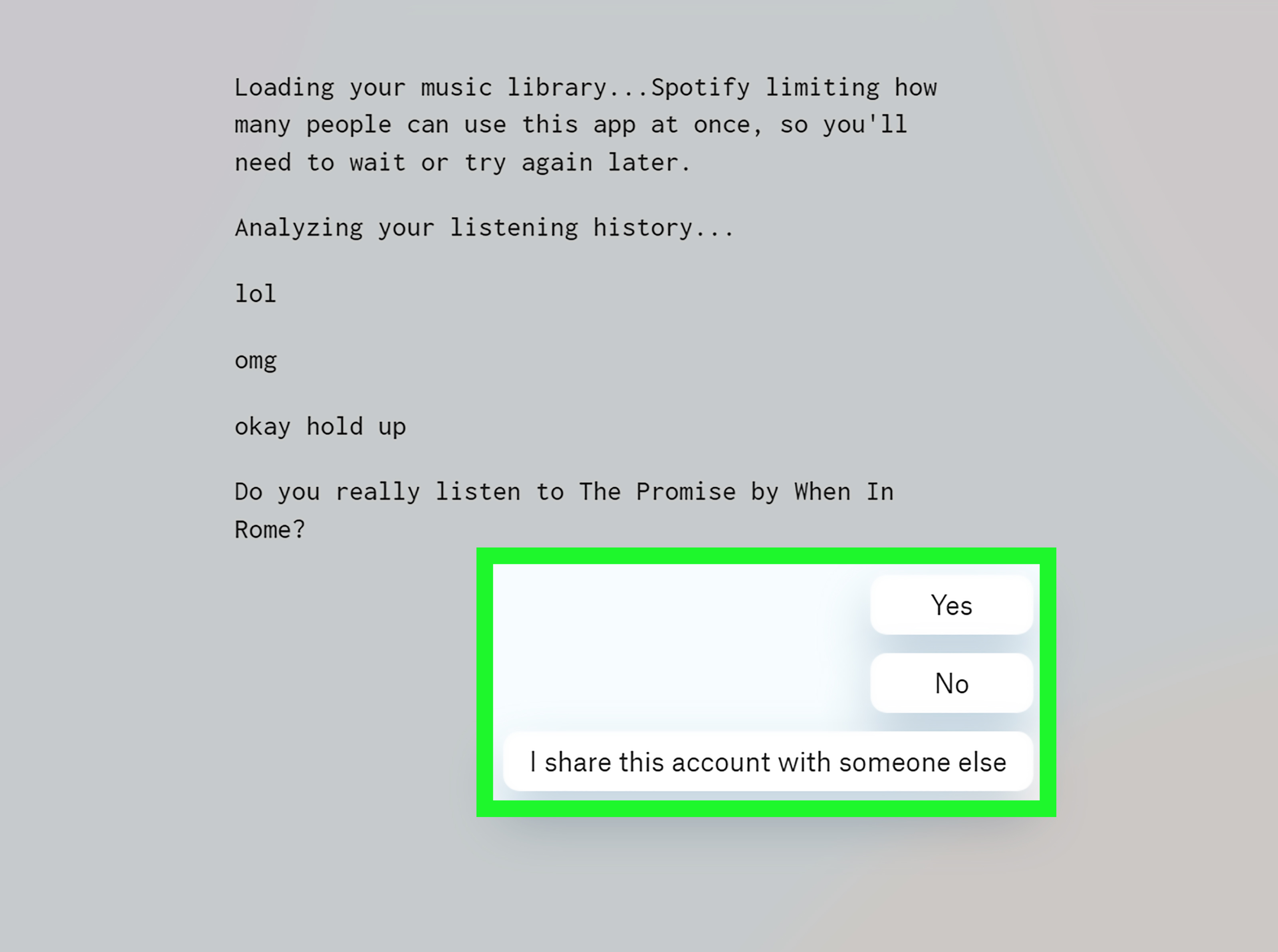
Part of the experience is interactive. The bot may pause and question your choices, almost like it cannot believe you really listen to that much of one artist. This is where the tool becomes more than a static stats page. It creates the feeling of a conversation, except the conversation is with a tiny robot that has chosen violence.
Those questions are designed for entertainment. They make the roast feel personal, not because the bot is alive, but because the pacing mimics human teasing. It builds suspense, pokes at your habits, and then delivers the final blow with theatrical confidence.
How to Use “How Bad Is Your Spotify?”
Using the tool is usually straightforward, but it helps to understand what you are agreeing to before you hand over access. You are not uploading your soul into a jukebox, but you are connecting a third-party app to your music data.
Step 1: Go to the Official Pudding Tool
Search for How Bad Is Your Streaming Music The Pudding or How Bad Is Your Spotify The Pudding. Make sure you are on the official Pudding website, not a copycat page with suspicious buttons, dramatic pop-ups, or a URL that looks like it was assembled during a sneeze.
Step 2: Click “Find Out”
The tool begins with a simple prompt. Once you start, it will ask you to connect your streaming account. This is where the real data access begins.
Step 3: Log In and Approve Permissions
When you connect Spotify to any outside app, Spotify should show an authorization screen explaining what the app wants to access. Read it. Yes, actually read it. This is the adult part of the fun, like checking the weather before leaving the house in suede shoes.
Common music-stat tools may request access to information such as top artists, top tracks, playlists, or recently played content, depending on how they are built. The exact permissions can vary, so do not assume every music bot asks for the same thing.
Step 4: Let the Bot Analyze Your Listening
After permission is granted, the bot processes your music taste and starts commenting. It may take a moment to load. If it appears stuck, refreshing or trying again later can help, especially when a viral tool is getting heavy traffic.
Step 5: Read Your Roast and Decide Whether to Grow as a Person
The final result gives you a humorous summary of your taste. It might call out tracks you play too much, artists you adore a little too intensely, or decades you seem unable to leave. You may laugh. You may deny everything. You may immediately stream the same artist again out of spite. All responses are valid.
Is “How Bad Is Your Spotify?” Safe?
The safest answer is: it can be fine if you use the official tool, understand the permissions, and revoke access afterward if you do not plan to use it again. This is good practice for any third-party app connected to your Spotify account.
Spotify states that third-party apps require explicit permission before linking to your account. Spotify also provides an Apps page where you can remove access from connected services. That means you can enjoy the roast, laugh at your terrible score, and then politely kick the bot out of your account like a guest who insulted your vinyl shelf.
Privacy Tips Before You Connect
First, confirm that you are using the official website. Second, review the permissions on the authorization screen. Third, avoid logging in through random clones or social posts that redirect you through strange domains. Fourth, revoke access after you finish if you want a cleaner privacy setup.
None of this means the tool is automatically dangerous. It simply means your listening data is personal. Your playlists can reveal moods, routines, nostalgia, language preferences, relationship eras, workout phases, and the exact month you discovered dramatic piano ballads. Treat that data with the same care you would give any other digital profile.
Why People Love Being Roasted by an AI Music Bot
At first glance, the popularity of How Bad Is Your Spotify? seems strange. Why would anyone volunteer to be mocked by a machine? Then again, people also pay for escape rooms, hot sauce challenges, and gym memberships, so humanity has never been fully rational.
The bot works because music taste is deeply personal but also very shareable. We use songs to express identity. We build playlists for crushes, road trips, rainy days, workouts, study sessions, and imaginary movie scenes in which we finally say the perfect comeback. When a bot makes fun of that, it feels both silly and intimate.
It is also safer than real judgment. If a friend says your music taste is bad, that friendship may need a committee meeting. If a website says it, you screenshot the result and post it with laughing emojis. The roast becomes a social object. People compare scores, argue with the labels, and secretly feel proud when the insult sounds unique.
Spotify Wrapped vs. How Bad Is Your Spotify
Spotify Wrapped and How Bad Is Your Spotify? use the same broad cultural fuel: people love seeing their listening habits turned into a story. The difference is tone.
Wrapped is celebratory. It tells you that your top artist defined your year, your minutes were impressive, and your taste is wonderfully yours. It is a confetti cannon loaded with data. The Pudding bot is the opposite. It looks at the same kind of personal music obsession and says, “Interesting. Have you considered apologizing?”
That contrast is exactly why the bot became memorable. Wrapped flatters you. The bot challenges you. Wrapped is your supportive friend. The bot is your friend’s older sibling who heard your playlist once and never forgot it.
What Your Result Really Means
Here is the important truth: there is no such thing as objectively bad music taste. There is only music taste that is predictable, chaotic, extremely mainstream, painfully niche, or so nostalgic it should come with a yearbook photo.
The bot’s final judgment is not a scientific ranking of your cultural worth. It is comedy based on patterns. If your result says you are basic, it may mean you listen to very popular artists. If it says you are stuck in the 2010s, it may mean your favorite songs cluster around that era. If it says you worship a certain artist, it may mean that artist appears heavily in your top tracks.
In other words, the bot is not diagnosing your personality. It is remixing your data into jokes. You should not delete your playlists because of a sarcastic website. Unless your playlist is called “Songs to Text My Ex To,” in which case the website may have a point.
Can AI Really Understand Music Taste?
AI can detect patterns, compare data, classify genres, generate labels, and imitate a conversational tone. That does not mean it experiences music the way humans do. It does not remember the first time you heard a song in the back seat of a car. It does not know which track helped you survive a bad week. It does not understand why one cheesy chorus can emotionally flatten you at 1:13 a.m.
What AI and algorithmic systems can do is organize signals. They can identify what you play often, what artists are related, which genres overlap, and how your habits compare with broader listening trends. That is useful for recommendation engines, playlist tools, and funny bots. But music taste is more than data. It is memory, identity, timing, context, and sometimes one questionable remix you refuse to explain.
Why the Bot Feels So Accurate
The bot feels accurate because your listening habits are often more honest than your self-description. You may tell people you listen to “a little bit of everything,” but your top tracks may reveal that “everything” means one pop star, two sad bands, and a podcast theme song you accidentally turned into a lifestyle.
Streaming behavior removes the filter. It records what you actually play, not what you think sounds cool at dinner. That is why music-data tools can feel revealing. They catch the difference between your public taste and your private habits. Your public taste says, “I appreciate a wide range of genres.” Your private Spotify says, “Play that one dramatic bridge again.”
Best Alternatives and Related Spotify Stats Tools
If you enjoy How Bad Is Your Spotify?, you may also like other music-stat experiences. Some tools show your top artists over different time ranges. Others turn your listening into charts, playlists, genre maps, or personality-style summaries. Spotify Wrapped remains the most famous official annual recap, while third-party tools often focus on deeper, stranger, or more customizable insights.
Before using any third-party tool, apply the same privacy habits: check the source, review permissions, and revoke access when finished. A good music tool should be fun, clear, and respectful of your data. A suspicious one should be treated like a mystery playlist titled “Definitely Not Malware.”
How to Improve Your Spotify Taste, According to Common Sense
First, let’s be clear: you do not need to improve your taste to satisfy a bot. Music is not homework. Still, if the roast inspires you to explore beyond your usual rotation, that can be a good thing.
Try One New Genre Each Week
Pick a genre you barely know and listen for 30 minutes. Try jazz fusion, amapiano, bluegrass, post-punk, ambient, salsa, hyperpop, classic soul, or anything else outside your normal zone. You do not have to love it. The goal is to give your ears a passport.
Use Artist Radio With Intention
Artist radio can help you move from one familiar act to related musicians. Instead of replaying the same five songs, start with an artist you love and follow the trail outward. This is how casual listening becomes discovery.
Make Playlists by Mood, Not Just Genre
Genres are useful, but moods are often more honest. Create playlists for “Monday motivation,” “rainy window drama,” “cleaning like I’m in a montage,” or “songs that make me walk faster for no reason.” This helps you discover tracks based on feeling, not just category.
Listen to Full Albums
Streaming encourages singles, but albums still matter. A full album gives you pacing, context, deep cuts, and transitions. It also makes you less likely to become trapped in a loop of the same viral chorus until the bot files a formal complaint.
Common Questions About “How Bad Is Your Spotify?”
Is the Bot Actually AI?
The tool uses an AI-style personality and pattern-based analysis to produce a comedic judgment. It is best understood as an interactive data comedy project rather than a serious artificial intelligence authority on taste.
Does It Change My Spotify Account?
The tool is designed to read and analyze music data, not rebuild your account. Still, always read the permission screen. If a third-party app ever asks for more access than seems necessary, pause before approving.
Can I Use It Without Logging In?
To judge your personal listening habits, the tool needs access to your music data. Without connecting an account, it cannot generate a personalized roast.
Can I Delete Its Access Later?
Yes. You can visit your Spotify account’s Apps page and remove access for third-party services you no longer use. This is a smart habit after trying any one-time music-stat tool.
Experiences Related to “How Bad Is Your Spotify?”
The funniest part of using How Bad Is Your Spotify? is not the final score. It is the emotional journey that happens while the bot loads. At first, you feel confident. You think, “My music taste is interesting. I contain multitudes.” Then the bot starts reading your listening habits, and suddenly you remember the week you played the same breakup song every morning like it was prescribed by a doctor.
A typical experience begins with curiosity. You see someone post their result online, usually with a caption like “I’ve been attacked” or “This bot knows too much.” Naturally, you click. You tell yourself it is just for research. You connect your account. The loading screen appears. For a few seconds, you are calm. Then your brain starts making a list of every embarrassing song you have ever streamed. That novelty track from college? The musical-theater phase? The suspicious amount of early-2000s pop-punk? The playlist you made for “focus” that somehow became 80 percent movie soundtracks? It is all potentially evidence.
Then the bot begins asking questions. This is where the experience gets personal. It may call out an artist you genuinely love, and your first reaction is defensive. “Actually, that album is critically underrated,” you say to an algorithm that cannot hear you. Then it points out a song you overplayed, and the defense gets weaker. By the time the final roast appears, you are no longer sure whether you are laughing because it is wrong or because it is devastatingly right.
Sharing the result becomes part of the ritual. People post screenshots not because they want everyone to know their score, but because the insult becomes a badge of identity. A good roast says, “This is embarrassing, but specifically embarrassing.” That specificity makes it funny. Being called basic is one thing. Being told your Spotify sounds like “a mall food court in 2012 after one emotional iced coffee” would feel like a personal documentary.
The experience also sparks real reflection. Many users discover that their music habits are narrower than they thought. They may claim to love discovering new artists, but the bot reveals that they mostly rotate between five comfort acts. Others realize that nostalgia dominates their listening. Some learn they use music as emotional furniture: background sound for work, stress, exercise, cooking, or pretending to be the main character while walking to the grocery store.
That is why the tool works so well. It is silly, but it is not empty. It turns private listening into a public joke, and in doing so, it shows how much personality lives inside our playlists. Your Spotify may be “bad” according to a sarcastic bot, but bad can mean loyal, sentimental, dramatic, adventurous, chaotic, or wonderfully unbothered. If the AI judges you, let it. Then play your favorite song again. Nothing annoys a judgmental bot more than confidence.
Conclusion
How Bad Is Your Spotify? is more than a viral music roast. It is a funny reminder that our listening habits are personal stories disguised as data. The bot works because it takes familiar informationtop artists, favorite tracks, repeated obsessions, genre patternsand transforms it into comedy with a sharp little eyebrow raise.
Is your Spotify actually bad? Probably not. It is yours. It reflects your moods, memories, phases, private jokes, and questionable decisions. The AI bot may roast you for being basic, nostalgic, chaotic, or overly committed to one artist, but that is part of the fun. Music taste does not need to be perfect. It needs to be honest enough to make life sound better.
Try the bot for a laugh, review the permissions before connecting, remove third-party access afterward if you want, and do not let a website bully you out of loving what you love. Unless it catches you streaming the same song 200 times in one month. In that case, hydrate, stretch, and maybe make a second playlist.
Note
This article is based on real public information about The Pudding’s music-judging bot, Spotify third-party app permissions, Spotify Web API concepts, and current AI music personalization trends. It is written as original, publication-ready content with no copied source text or inserted source links.