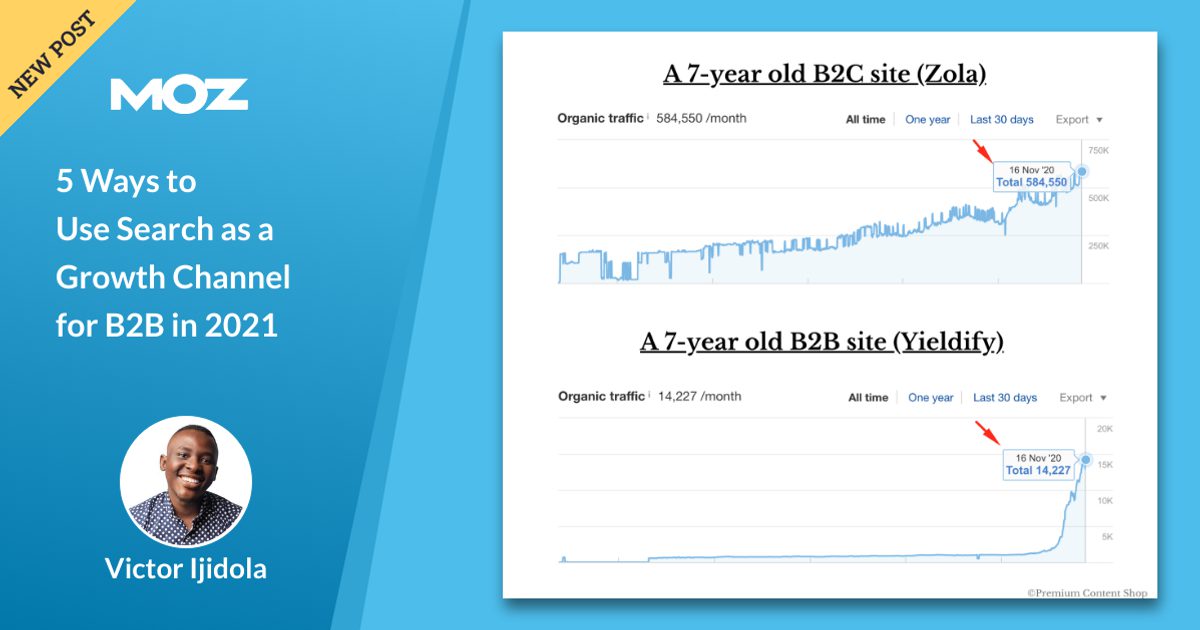
For many B2B companies, search used to be treated like a polite little side dish: nice to have, occasionally useful, and usually ignored until someone asked, “Why is our competitor everywhere on Google?” But in 2021, search became much more than a traffic tactic. It became a serious growth channel for B2B brands that wanted to attract educated buyers, generate qualified leads, shorten sales cycles, and build trust before the first sales call ever happened.
The challenge, of course, is that B2B search is not exactly a carnival of giant keyword volumes. A consumer brand can target phrases like “best running shoes” and swim in search demand. A B2B SaaS company selling compliance automation for mid-market finance teams may look at keyword tools and find a search volume so tiny it needs a microscope and emotional support. Still, low volume does not mean low value. In B2B, one right visitor can be worth more than 10,000 casual browsers looking for free templates and a snack.
This article breaks down five practical ways to use search as a B2B growth channel, inspired by the strategic thinking popularized by Moz and other leading SEO, content marketing, and demand generation experts. The goal is not to chase every keyword under the sun. The goal is to build a search ecosystem that attracts the right buyers, answers their questions, supports sales, and turns organic visibility into pipeline.
Why Search Matters for B2B Growth
B2B buyers rarely wake up, sip coffee, and say, “Today feels like a perfect day to buy enterprise software from a vendor I have never heard of.” They research. They compare. They ask colleagues. They read guides, watch demos, scan reviews, evaluate risk, and quietly judge your website like a restaurant menu with typos.
Search fits naturally into this process because it captures intent. When someone searches for “best CRM for manufacturing companies,” “SOC 2 compliance checklist,” or “how to reduce customer churn in SaaS,” they are revealing a business problem. They may not be ready to book a demo yet, but they are giving you a chance to enter the conversation early. In B2B marketing, that early entrance can be priceless.
Search also compounds. Paid ads stop when the budget stops. A strong SEO asset, however, can keep attracting visitors, leads, links, and sales conversations for months or years. It is like hiring a salesperson who works weekends, never asks for commission, and only occasionally panics during algorithm updates.
1. Build Search Strategy Around Real Buyer Intent
The first way to use search as a growth channel is to stop treating keywords as isolated phrases and start treating them as signs of buyer intent. B2B SEO works best when it maps search behavior to the actual buying journey.
Understand the Different Intent Levels
Not every keyword deserves the same type of content. A person searching “what is account-based marketing” is probably in learning mode. A person searching “best ABM software for enterprise teams” is much closer to vendor evaluation. A person searching “[competitor] alternatives” may already be halfway down the funnel with one hand on the demo button.
For B2B search, intent usually falls into four broad categories:
- Informational intent: The buyer wants to understand a topic, problem, or trend.
- Problem-aware intent: The buyer knows something is wrong and wants solutions.
- Solution-aware intent: The buyer is comparing tools, services, or approaches.
- Decision intent: The buyer is looking for pricing, alternatives, reviews, demos, or implementation details.
A common B2B SEO mistake is producing endless top-of-funnel articles while ignoring high-intent search terms. Yes, educational content matters. But if your site ranks for “what is email marketing” and has nothing useful for “best email automation software for B2B SaaS,” you may win traffic while losing revenue. Congratulations, you built a library. Unfortunately, the cash register is in another building.
Create Content for the Entire Buying Committee
B2B purchases are rarely made by one person. A CFO may care about ROI. A marketing manager may care about usability. A technical lead may care about integrations and security. A CEO may care whether the tool supports growth without creating operational chaos.
Search content should speak to these different stakeholders. For example, a cybersecurity company could create:
- A beginner guide explaining the cost of data breaches for executives.
- A technical checklist for IT managers evaluating vendors.
- A comparison page for teams choosing between competing platforms.
- A compliance-focused landing page for regulated industries.
This approach turns search into a full-funnel growth system rather than a random blog machine.
2. Target Low-Volume, High-Value Keywords
In B2B SEO, keyword volume can be misleading. Some of the most valuable search terms may only show 10, 20, or 50 searches per month. That does not mean they are worthless. It may mean the market is niche, the buyer is specific, and the commercial value is high.
For example, a keyword like “enterprise data governance platform for healthcare” will never compete with “best headphones” in volume. But the person searching it may represent a company with a six-figure budget. In B2B, small keywords can carry big wallets.
Look Beyond Keyword Tools
Keyword tools are useful, but they do not always capture the full language of B2B buyers. Many valuable phrases come from sales calls, customer interviews, support tickets, product demos, LinkedIn discussions, industry forums, webinars, and competitor review pages.
A smart search strategy should combine traditional keyword research with voice-of-customer research. Listen for phrases buyers use when describing pain points. Do they say “workflow bottlenecks,” “manual reporting,” “poor visibility,” “compliance risk,” or “sales forecast accuracy”? Those phrases can become content topics, page headings, FAQ sections, and landing page copy.
Use Long-Tail Keywords as Growth Seeds
Long-tail keywords are especially powerful for B2B companies because they often reveal context. A broad keyword like “project management software” is crowded and vague. A long-tail phrase like “project management software for construction subcontractors” tells you the industry, use case, and likely pain points.
To turn long-tail search into growth, build pages that are specific enough to be useful. Avoid generic content that simply swaps one industry name for another. Buyers can smell lazy copy from three tabs away. Instead, include real examples, workflows, objections, integrations, and decision criteria relevant to the audience.
3. Create Problem-Solving Content That Sales Teams Actually Use
Search content should not live in a marketing cave where blog posts go to collect dust and polite applause. The best B2B SEO content supports the sales process. It answers the questions prospects ask before, during, and after sales conversations.
Turn Sales Questions Into Search Assets
Your sales team is a gold mine of content ideas. They hear objections every day. They know which questions slow deals down. They know what prospects compare, fear, misunderstand, and secretly worry about while nodding during a demo.
Common sales-driven search topics include:
- “How much does [solution] cost?”
- “How long does implementation take?”
- “What is the difference between [category A] and [category B]?”
- “What are the best alternatives to [competitor]?”
- “How do I calculate ROI for [solution]?”
These topics may feel uncomfortable because they require transparency. But buyers appreciate clarity. A pricing guide, comparison page, implementation checklist, or ROI calculator can pre-qualify leads and reduce friction. It also prevents your sales team from answering the same question 400 times, which is good for morale and possibly office furniture safety.
Build Content That Helps Buyers Make Decisions
Decision-stage content is often underused in B2B SEO. Many companies publish thought leadership but avoid content that directly supports evaluation. That is a missed opportunity.
Examples of decision-support content include:
- Product comparison pages
- Competitor alternative pages
- Industry-specific use case pages
- Case studies optimized for search
- Security and compliance explainers
- Buying guides and vendor evaluation checklists
This content may attract fewer visitors than a broad educational post, but the visitors are often more qualified. A person reading “best payroll software for distributed teams” is not casually browsing. They have a problem, a timeline, and probably a spreadsheet with too many columns.
4. Build Authority With Expert-Led Content
Search engines reward useful, trustworthy content. B2B buyers do the same, except they also forward it to three coworkers with the subject line “thoughts?” That means your content needs more than surface-level definitions and recycled advice.
Expert-led content is one of the strongest ways to stand out in competitive B2B search. Instead of writing generic articles based only on keyword research, bring in subject matter experts, customers, founders, product leaders, consultants, or practitioners who have real experience.
Make Content Hard to Copy
Generic content is easy to duplicate. Real expertise is not. If your competitors can produce the same article by reading the top five search results, your content has no moat. But when you include original insights, examples, mini case studies, data, frameworks, or expert quotes, you create something more defensible.
For instance, instead of publishing “What Is Revenue Operations?” a B2B company could publish “How Revenue Operations Teams Fix Handoff Problems Between Sales and Customer Success.” That article could include real workflow examples, common CRM mistakes, reporting dashboards, and practical fixes from RevOps leaders.
The result is content that ranks, earns trust, and gives buyers a reason to remember your brand.
Use Original Research and Data
Original research can be a powerful search growth asset. Surveys, benchmarks, annual reports, industry studies, and proprietary platform data can attract backlinks, media mentions, newsletter shares, and sales conversations.
A B2B analytics company, for example, could publish a benchmark report on customer acquisition costs by industry. A cybersecurity firm could release a report on common compliance gaps in mid-market companies. A marketing automation platform could analyze email performance by company size or sales cycle length.
These assets support SEO in multiple ways. They target informational searches, attract links naturally, strengthen brand authority, and create material for social posts, webinars, sales decks, and email campaigns. One strong research asset can become an entire content ecosystem. It is the marketing equivalent of cooking one big pot of soup and somehow feeding the whole neighborhood.
5. Connect SEO With Conversion and Revenue Metrics
Traffic alone is not a growth strategy. It is a number on a dashboard that can make people feel productive while revenue quietly waits in the hallway. To use search as a real B2B growth channel, SEO must be connected to conversions, pipeline, and customer acquisition.
Measure the Right SEO KPIs
Traditional SEO metrics still matter. Rankings, impressions, clicks, organic sessions, and backlinks help show visibility. But B2B teams also need to track metrics closer to revenue, such as:
- Organic demo requests
- Marketing-qualified leads from organic search
- Sales-qualified opportunities influenced by SEO
- Conversion rates by landing page
- Pipeline value from organic search
- Assisted conversions from blog and resource content
This is where SEO becomes more than “the blog team.” When organic search can be tied to pipeline, leadership takes it seriously. Suddenly, SEO is not a mysterious wizard activity involving title tags and caffeine. It is a measurable growth engine.
Optimize Pages for Action, Not Just Rankings
Ranking is only half the job. Once visitors arrive, the page must guide them toward the next useful step. That does not mean every blog post needs a giant “BUY NOW” button screaming like a used car commercial. It means the call to action should match the visitor’s intent.
For top-of-funnel articles, useful CTAs may include downloadable guides, newsletter signups, webinars, templates, or related educational content. For mid-funnel pages, offer comparison guides, ROI calculators, case studies, or product tours. For bottom-funnel pages, make demos, pricing conversations, and contact forms easy to find.
Strong internal linking also matters. A blog post about “how to improve sales forecasting” should link to a relevant solution page, case study, template, and perhaps a comparison guide. This helps users continue their journey and helps search engines understand the relationship between your content assets.
How B2B Companies Can Put These Five Search Strategies Into Practice
Knowing the five strategies is useful. Implementing them is where the actual growth happens. A practical B2B search plan should begin with research, move into content creation, and continue through measurement and optimization.
Start With a Search Opportunity Audit
A search opportunity audit identifies where your brand can realistically win. Review your current rankings, competitor pages, content gaps, technical SEO issues, conversion paths, and keyword opportunities. Pay special attention to pages that already rank on page two or three of Google. These are often quick improvement opportunities because the page already has some visibility.
Also review competitor content. Look at what they rank for, how they structure landing pages, what topics they cover, and where their content feels thin. The goal is not to copy them. The goal is to find gaps they have left open. If your competitor wrote a generic guide, you can create a better one with deeper examples, fresher data, stronger formatting, and clearer next steps.
Prioritize by Business Value
Not all SEO opportunities deserve equal attention. A keyword with high volume but little buying intent may be less valuable than a low-volume term that attracts serious prospects. Prioritize topics based on relevance, intent, competitive difficulty, sales value, and conversion potential.
One useful scoring system is to rate each topic from one to five on business relevance, search intent, ranking feasibility, and funnel impact. The best topics are not always the biggest. They are the ones that connect buyer problems with your company’s strengths.
Create Topic Clusters Around Core Solutions
Topic clusters help B2B brands organize content in a way that supports search visibility and user experience. A core pillar page covers a broad topic, while supporting articles answer specific subtopics. For example, a company selling HR software might create a pillar page on “employee onboarding software” and supporting articles about onboarding checklists, remote employee onboarding, compliance documentation, onboarding metrics, and software comparisons.
This structure helps search engines understand your topical authority. It also helps buyers move from education to evaluation without getting lost in a blog archive that looks like it was organized by a raccoon with Wi-Fi.
Common B2B Search Mistakes to Avoid
B2B SEO has huge potential, but it is easy to waste time if the strategy is too shallow. One common mistake is chasing traffic instead of qualified demand. Another is publishing generic content that does not reflect the company’s expertise. A third is ignoring technical SEO, page speed, schema markup, site architecture, and internal links.
Another mistake is treating SEO as separate from the rest of marketing. Search should connect with product marketing, sales enablement, customer success, PR, paid media, and demand generation. The questions buyers ask in search are the same questions they ask in sales calls, webinars, communities, and executive meetings. When teams share insights, content becomes sharper and more useful.
Finally, many companies give up too early. SEO is not instant noodles. It takes time to research, publish, rank, update, and compound. But when done well, it becomes one of the most durable growth channels a B2B company can build.
Examples of Search as a B2B Growth Channel
Imagine a B2B SaaS company that sells contract management software. A weak SEO strategy would publish broad articles like “What Is a Contract?” and hope for the best. A stronger strategy would target specific buyer problems and decision points:
- “Contract approval workflow template”
- “How to reduce contract review time”
- “Contract management software for legal teams”
- “Best contract lifecycle management tools”
- “DocuSign alternatives for enterprise contract management”
Each page would serve a different stage of the buyer journey. Educational posts attract problem-aware visitors. Templates capture leads. Use case pages convert industry-specific searches. Comparison pages support vendor evaluation. Case studies build trust. Together, these assets create a search-driven path from curiosity to conversation.
Another example is a B2B cybersecurity company targeting mid-market healthcare organizations. Instead of only writing about general cybersecurity, it could create content around HIPAA compliance, ransomware prevention, vendor risk management, security questionnaires, and incident response planning. These topics align with urgent buyer concerns and support both SEO and sales enablement.
Additional Experience-Based Insights: What Actually Works in B2B Search
From practical experience with B2B content strategy, the biggest search wins rarely come from simply publishing more. They come from publishing with sharper intent. Many companies already have plenty of content. What they lack is content that clearly connects to buyer pain, product value, and measurable business outcomes.
One useful lesson is that sales conversations often reveal better keyword ideas than keyword tools. Buyers may not use polished industry language. They describe problems in plain terms. They say things like “our reports take too long,” “our team keeps missing handoffs,” “we do not trust the data,” or “we need something that works with our existing system.” Those phrases can lead to content that feels human and specific. Search engines may bring the visitor, but relevance keeps them reading.
Another important experience is that comparison content can be extremely effective when handled honestly. Some brands avoid competitor pages because they feel too aggressive. But buyers are already comparing options with or without you. A fair, useful comparison page gives you a chance to frame the decision. The key is to avoid cheap shots. Explain who each solution is best for, where your product fits, and what buyers should consider. Helpful honesty builds more trust than marketing fireworks.
Updating old content is another underrated growth lever. Many B2B teams constantly publish new articles while older pages slowly decay. Refreshing content with new examples, better structure, clearer CTAs, updated screenshots, stronger internal links, and improved search intent alignment can produce meaningful gains. Sometimes the best new content is not new at all. It is an old page wearing a better suit.
It is also important to involve subject matter experts early. Too many content teams ask experts to “review” an article after it is already written. That usually leads to small edits, mild frustration, and comments like “this is fine,” which is corporate language for “I have accepted defeat.” A better process is to interview experts before writing. Ask them what buyers misunderstand, what mistakes they see in the market, what examples matter, and what advice they would give a serious prospect. Those insights make the content stronger from the beginning.
Finally, B2B search growth works best when content has a clear next step. A great article without a relevant CTA is like a helpful salesperson who gives excellent advice and then vanishes behind a curtain. Every page should guide the reader somewhere useful: a related guide, a product page, a case study, a calculator, a demo, or a newsletter. The goal is not to pressure the visitor. The goal is to make the next step obvious when they are ready.
The companies that win with search are usually not the ones publishing the most noise. They are the ones answering the right questions with the most clarity, credibility, and usefulness. In B2B, that is how search becomes a growth channel instead of just another marketing chore.
Conclusion
Using search as a growth channel for B2B in 2021 required a smarter approach than chasing high-volume keywords and hoping organic traffic would magically become revenue. The strongest B2B search strategies focused on buyer intent, long-tail opportunities, sales-supporting content, expert-led authority, and revenue-connected measurement.
That lesson still matters today. B2B buyers continue to research independently, compare options carefully, and expect useful answers before speaking with sales. Search gives your company a chance to show up at exactly those moments. When your content helps buyers understand problems, evaluate solutions, and make confident decisions, SEO becomes more than visibility. It becomes trust at scale.
The real magic is not ranking for every keyword. It is ranking for the right questions, from the right buyers, at the right stage of the journey. Do that consistently, and search can become one of the most reliable growth engines in your B2B marketing strategy.