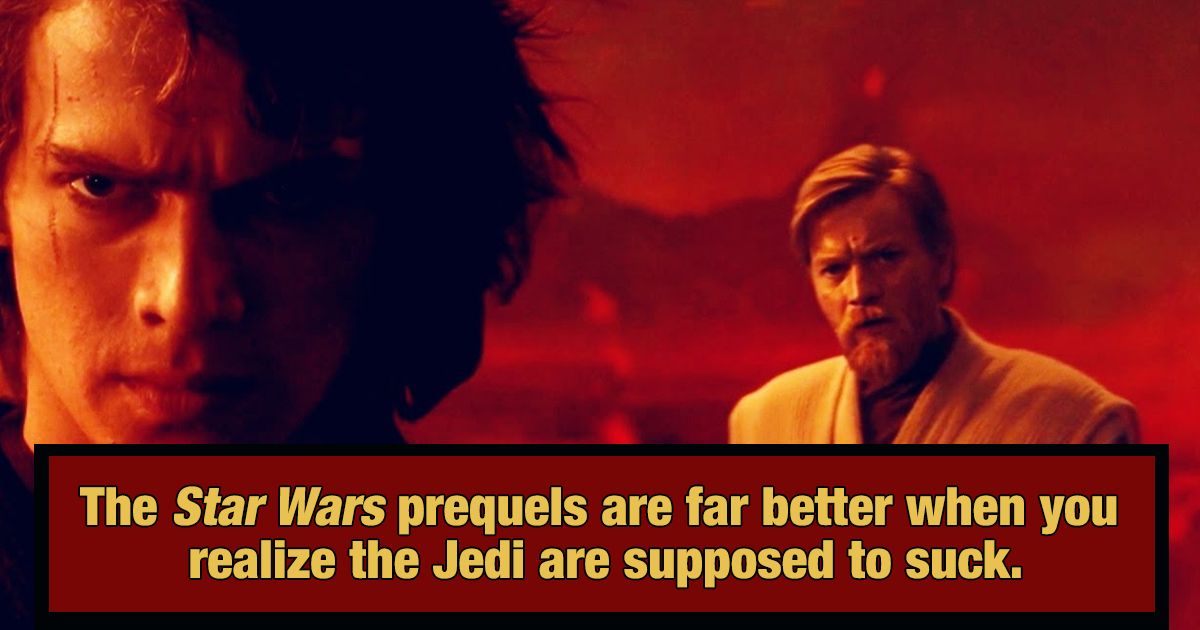
Some movies are bad in the ordinary way: dull lighting, flat dialogue, actors who look like they are mentally composing apology emails to their agents. Then there are famously bad moviesthe glorious, baffling, neon-lit disasters that refuse to disappear. These films do not merely fail. They evolve. They collect fan theories, midnight screenings, memes, critical reassessments, and the kind of passionate defenders usually reserved for sports teams and family recipes.
That is the magic of the “so bad it’s good” movie. A traditional review might say a film does not work. A fan theory asks a much better question: what if it works perfectly, just not in the way anyone expected? Suddenly, a clunky blockbuster becomes secret satire. A hated comic relief character becomes a hidden villain. A musical nightmare becomes a mythic death ritual with choreography.
Below are five theories that make famously bad movies awesomenot by pretending their flaws do not exist, but by turning those flaws into part of the fun. These are not official explanations in every case. Think of them as creative viewing lenses: slightly cracked, extremely entertaining glasses that make cinematic disasters sparkle like discount-store diamonds.
1. The “Darth Jar Jar” Theory Makes The Phantom Menace Way More Fun
The movie everyone wanted to love
Star Wars: Episode I – The Phantom Menace arrived in 1999 carrying the weight of a galaxy. It was the first new Star Wars movie in 16 years, and expectations were not merely highthey were floating somewhere above Cloud City. The film had memorable elements, including podracing, Darth Maul, John Williams’ “Duel of the Fates,” and some groundbreaking digital effects. Still, many viewers complained about stiff dialogue, trade politics, and one Gungan-shaped lightning rod named Jar Jar Binks.
Jar Jar was designed as comic relief, but for many older fans, he became the face of everything they disliked about the prequels. Yet one fan theory completely rewires the character: Jar Jar was never a clumsy fool. He was secretly a Sith-level manipulator hiding in plain sight.
Why the theory makes the movie awesome
The “Darth Jar Jar” theory argues that Jar Jar’s ridiculous luck, odd physical movements, and unexpected political importance are not accidents. He stumbles into battles and somehow survives. He waves his hands while speaking, almost as if using mind tricks. Most importantly, he later helps give emergency powers to Palpatine, clearing a path toward the Empire.
Is this canon? No. Is it hilarious and weirdly persuasive while you are watching the movie at 1 a.m. with snacks? Absolutely. The theory turns Jar Jar from an irritating sidekick into a sinister clown prince of galactic collapse. Every pratfall becomes a disguise. Every goofy line becomes misdirection. The movie’s tonal confusion suddenly feels like camouflage.
Viewed this way, The Phantom Menace becomes less of a disappointing prequel and more of a political magic trick. The Jedi are watching the obvious villain with the red-and-black face paint, while the real mastermind is over there making silly noises and accidentally saving the day. That is not bad writing. That is Sith-level trolling.
2. Showgirls Is Secretly a Brutal Satire of American Ambition
The film that flopped, then refused to die
When Showgirls hit theaters in 1995, it was treated as a catastrophe. Directed by Paul Verhoeven and written by Joe Eszterhas, the movie followed Nomi Malone’s rise through the Las Vegas entertainment world. Critics attacked its performances, tone, dialogue, and extreme excess. It became a punchline almost instantly.
But then something strange happened: people kept watching it. Over time, Showgirls developed a cult following and became one of the most argued-about “bad movies” of the 1990s. Was it a failed drama? A camp masterpiece? A satire misunderstood on arrival? The most interesting theory says the film is not accidentally outrageousit is intentionally exposing the vulgar machinery of fame, money, image, and performance.
Why the satire theory works
Paul Verhoeven is not exactly known for gentle subtlety. His films often use exaggeration to attack the systems they appear to celebrate. RoboCop skewers corporate control and media violence. Starship Troopers dresses fascist propaganda in shiny action-movie armor. With that context, Showgirls starts to look less like a broken prestige drama and more like a neon billboard screaming, “This is what American success looks like when the mask falls off.”
Everything in the movie is too much: the ambition, the dialogue, the lighting, the rivalry, the costumes, the emotional temperature. Nobody behaves like a normal human being because the world of the film does not reward normal human behavior. It rewards spectacle. It rewards competition. It rewards turning yourself into a product and then acting surprised when the marketplace treats you like one.
Under this theory, Nomi Malone is not just an overacted character. She is ambition with legs, rage, and perfect timing. Las Vegas is not merely a setting; it is a factory that turns dreams into choreography and people into brand assets. The result may still be messy, but it is messy in a fascinating way. Showgirls becomes a glitter cannon aimed directly at the American dream.
3. Batman & Robin Is Not a Failed Dark Batman MovieIt Is a Camp Comic Book Opera
The Batman movie fans love to roast
Batman & Robin is often remembered as the film that froze the Batman franchise until Christopher Nolan thawed it out with Batman Begins. Released in 1997, Joel Schumacher’s sequel gave audiences George Clooney as Batman, Arnold Schwarzenegger as Mr. Freeze, Uma Thurman as Poison Ivy, Alicia Silverstone as Batgirl, neon Gotham sets, rubber suits, ice puns, and more visual sugar than a cereal aisle.
For fans who wanted a dark, psychologically intense Batman, the movie felt like a betrayal. But the theory that makes it awesome is simple: stop comparing it to The Dark Knight. Compare it to the 1960s Batman TV series, comic-book camp, pop art, and toy-store surrealism.
Why the camp theory saves the movie
Viewed as serious action drama, Batman & Robin is chaos in a cape. Viewed as camp opera, it becomes strangely coherent. Mr. Freeze does not speak in puns because the writers forgot how people talk. He speaks in puns because he is a walking silver action figure trapped in a snow-globe tragedy. Poison Ivy does not enter scenes; she attacks them like a drag queen botanist with a supervillain budget. Gotham is not a realistic city. It is a theme park designed by someone who looked at architecture and said, “Needs more glowing tubes.”
The film’s most mocked choicesthe colors, the theatrical acting, the plastic surfacesbecome its identity. It is not embarrassed by its comic-book roots. It does not want Batman to be a grounded vigilante in tactical armor. It wants Batman to be a billionaire myth riding through a city where every object looks like it was designed to be sold separately at Christmas.
That does not make every scene good. Some jokes still land with the grace of a refrigerator falling down stairs. But the camp theory turns Batman & Robin into a fascinating artifact: a superhero movie from a timeline where Hollywood leaned into absurdity instead of realism. It is loud, silly, artificial, and shameless. In other words, it might be bad Batman, but it is excellent neon nonsense.
4. The Room Is an Alien Anthropology Report on Human Relationships
The king of “so bad it’s good” cinema
Tommy Wiseau’s The Room is the Mount Everest of famously bad movies. Released in 2003, it was intended as a serious drama about love, betrayal, friendship, and heartbreak. Instead, it became a midnight-movie phenomenon, famous for strange dialogue, unexplained subplots, awkward performances, repeated rooftop conversations, football tossing, framed spoons, and the immortal greeting: “Oh hi.”
One of the funniest ways to watch The Room is through the “alien anthropology” theory. The idea is not that the plot literally involves extraterrestrials. Rather, the movie feels like it was made by someone who studied human behavior from far away, took detailed notes, misunderstood half of them, and then recreated Earth romance in a laboratory.
Why the theory fits so perfectly
In normal dramas, characters speak because they want something. In The Room, characters often speak as if they have recently downloaded a file called “Human Conversation: Basic Edition.” Friends announce that they are best friends. Romantic partners declare emotional states with astonishing directness. People enter scenes, create confusion, and vanish like NPCs whose side quests were deleted in editing.
That is exactly what makes the movie magnetic. The Room is not boringly incompetent. It is fascinatingly sincere. Wiseau commits to every line with the intensity of a man defending the moon landing in court. The result is a film that accidentally reveals how strange movie conventions are. Why do characters always explain feelings? Why do dramas use betrayal as emotional currency? Why do people in movies toss footballs three feet apart while wearing tuxedos?
Through the alien-anthropology lens, The Room becomes more than a bad melodrama. It becomes outsider art about the performance of normal life. It is a movie about friendship that does not understand friendship, a romance that does not understand romance, and a tragedy that somehow becomes comedy through pure commitment. Many bad movies are forgettable because nobody cared. The Room is unforgettable because somebody cared way too much.
5. Cats Is a Mythic Reincarnation Cult Disguised as a Musical
The digital-fur fever dream
Tom Hooper’s 2019 adaptation of Cats became a cultural event for reasons Universal probably did not put in the marketing plan. The film’s “digital fur technology,” human-cat hybrid designs, unusual scale, and plot-light structure created immediate confusion. Critics and audiences debated whether they had watched a musical, a hallucination, or a cursed screensaver with choreography.
But the central premise of Cats is already bizarre in a fascinating way: a group of Jellicle cats gather for a yearly event where one cat is chosen to ascend to the Heaviside Layer and be reborn into a new life. That means the movie can be reframed as a mythic reincarnation ritual. Suddenly, the weirdness is not a bug. It is the whole operating system.
Why the reincarnation theory makes it better
Most musicals are about romance, ambition, family, or revolution. Cats is about auditioning for metaphysical renewal. Every major character essentially steps forward and says, “Here is my identity, my trauma, my brand, and my dance break. Please consider me for cosmic rebirth.” That is not a traditional plot, but it is a strangely powerful ritual structure.
The movie’s uncanny visuals even help the theory. The cat-people do not look fully animal or fully human because they seem to exist in a liminal space between lives. The oversized sets make London feel like a spiritual playground built from memory. The lack of ordinary realism creates a dream logic where singing your autobiography at midnight is perfectly reasonable.
Under this reading, Cats is not merely a failed movie musical. It is an accidental folk religion with jazz hands. The Jellicle Ball becomes a pageant of souls. The Heaviside Layer becomes a glittering afterlife. The entire film becomes less about story momentum and more about identity, performance, judgment, and transformation. Is it still deeply strange? Of course. But at least now the strangeness has a passport.
Why Fan Theories Make Bad Movies Better
Fan theories are not just internet decorations. They are a form of creative criticism. A good theory can reveal hidden structure, rescue a strange performance, or turn a production mistake into a meaningful pattern. It gives audiences permission to play with movies instead of simply grading them.
This matters because bad movies often expose filmmaking more clearly than polished masterpieces do. A great movie can feel seamless. A bad movie shows the seams, the glue, the panic, the ambition, and sometimes the fingerprints of a director trying to build a cathedral with a leaf blower. When viewers add theories, they are not always claiming the filmmakers intended every connection. They are saying the movie has become more interesting than its reputation.
That is why cult films survive. The Phantom Menace becomes funnier if Jar Jar is a secret genius. Showgirls becomes sharper if its excess is satirical. Batman & Robin becomes more lovable if it is treated as camp opera. The Room becomes weirdly profound if it is watched as outsider anthropology. Cats becomes almost majestic if it is understood as a reincarnation ritual performed by glamorous alley spirits.
In every case, the theory does not erase the flaws. It organizes them. It turns confusion into texture. It gives viewers a reason to rewatch, argue, laugh, and invite friends into the madness. That is the difference between a forgettable bad movie and a legendary bad movie: one ends when the credits roll; the other begins there.
Viewer Experiences: How to Enjoy Famously Bad Movies Without Missing the Point
The best way to experience a famously bad movie is not to sit alone in judgment like a bored Roman emperor waiting to drop a thumb. These films are social creatures. They thrive in living rooms, dorm lounges, group chats, midnight screenings, and any environment where someone can pause the movie and say, “Wait, did that really just happen?” Bad movies become awesome when the audience becomes part of the event.
A good bad-movie night starts with the right expectations. Do not ask, “Will this be good?” Ask, “Will this be memorable?” There is a difference. A bland, competent movie can disappear from your mind before you find your car keys. A famously bad movie can live in your brain forever because it makes choices no normal movie would dare make. It has confidence without evidence. It swings for the fences, misses the ball, hits the scoreboard, and somehow starts fireworks.
Theories make the viewing experience even better because they give everyone a game to play. Before watching The Phantom Menace, tell the room that Jar Jar might be the smartest person on screen. Suddenly, people watch his hands, his timing, and his suspicious survival skills. Before Batman & Robin, declare that the movie is not a superhero drama but a live-action toy commercial from a parallel universe. Suddenly, the ice puns feel less like failure and more like design language. Before Cats, explain the reincarnation angle, and the entire movie becomes a surreal talent competition for the afterlife.
Another trick is to respect the sincerity. Mockery is easy, but affection is more fun. The reason movies like The Room endure is not only because they are strange. It is because they are strangely heartfelt. You can laugh at the awkward dialogue while still recognizing the ambition behind it. You can enjoy the chaos without acting superior to everyone involved. In fact, the best cult-movie audiences are not cruel. They are delighted. They understand that failure, when delivered with enough personality, can become its own kind of success.
Rewatching also changes the experience. The first viewing is confusion. The second is recognition. By the third, you are waiting for specific lines, gestures, cuts, and musical cues like they are old friends arriving late to dinner. That is when a bad movie becomes communal folklore. Everyone knows the moments. Everyone quotes the dialogue. Everyone has a favorite theory. The film stops being just a film and becomes a shared ritual.
That is the real charm of these theories: they turn passive watching into active interpretation. They remind us that movies do not belong only to critics, studios, or opening-weekend box office numbers. Once a film enters culture, audiences keep rewriting its meaning. Sometimes they do it with essays. Sometimes with memes. Sometimes with a bowl of popcorn and a completely serious argument that a goofy alien rabbit was secretly controlling galactic history. Honestly, cinema should be so lucky.
Conclusion: Bad Movies, Great Afterlives
Famously bad movies are not always failed entertainment. Sometimes they are unfinished conversations. They invite viewers to repair them, reinterpret them, and occasionally build entire mythologies out of their strangest choices. That does not mean every bad movie deserves a crown. Some are simply dull, and no fan theory can rescue a movie that commits the ultimate sin of being boring.
But the five films above are different. They are alive in the cultural imagination because they give audiences something to do. They are quotable, debatable, rewatchable, and weird enough to support theories that may be more entertaining than the official explanations. Whether it is secret Sith strategy, Las Vegas satire, superhero camp, alien anthropology, or feline reincarnation, each theory turns cinematic failure into an invitation.
So the next time someone says a movie is bad, ask the important follow-up question: bad how? Bad and forgettable? Bad and cynical? Or bad in a way that opens a portal to midnight screenings, fan essays, group laughter, and theories so absurd they start making sense? Because that last category is not just bad. It is awesome.
SEO Tags
Note: This article is based on synthesized film-history, review, and cultural reception research. Source links are intentionally not included in the publishable body copy.