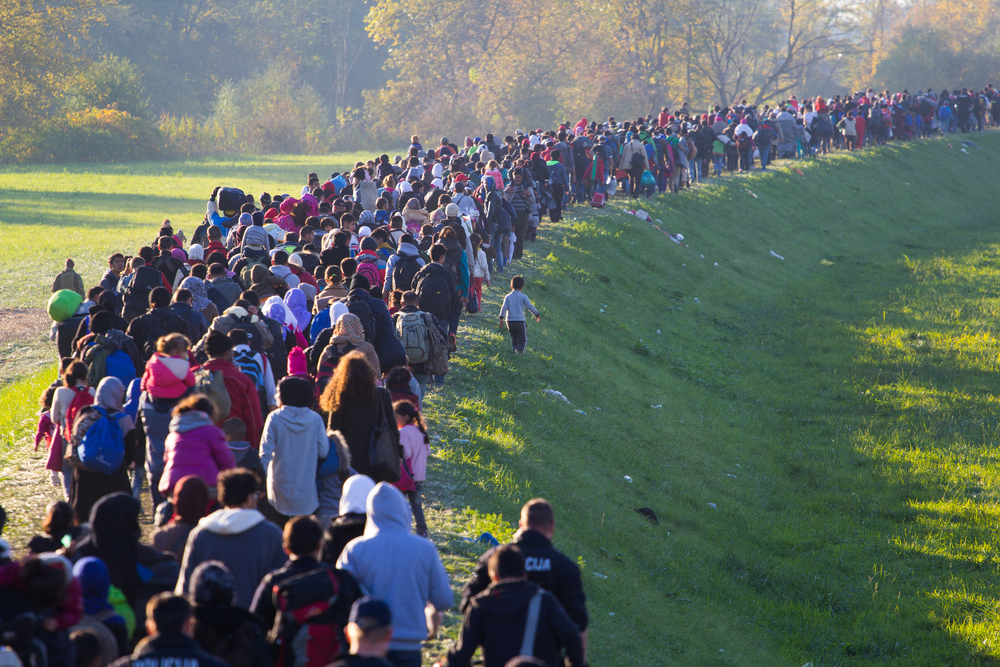
At first, this medical student thought medicine was mostly about solving puzzles. You know the type: strange symptom, smart test, tidy diagnosis, triumphant attending nod. Roll credits. But then came the stories of refugees, and suddenly medicine looked a lot less like a neat detective show and a lot more like real life messy, human, complicated, and impossible to understand through lab values alone.
Listening to refugees talk about leaving home, losing routines, navigating a new language, and trying to stay healthy while rebuilding a life changed the student in ways anatomy lab never could. These stories did not just add emotion to medical training. They changed the student’s definition of what it means to care for someone. They turned health care from a series of transactions into a relationship built on trust, patience, humility, and context.
That shift matters. Refugee health is not simply about “special populations” or one more lecture in a crowded curriculum. It is about recognizing that people arrive in the clinic carrying more than symptoms. They bring disrupted medical histories, interrupted medications, trauma, grief, cultural differences, financial pressure, bureaucratic confusion, and often a deep uncertainty about whether the system in front of them can be trusted. For a medical student, hearing those realities up close can be like switching on a brighter light in a room that once seemed adequately lit.
When a Story Changes the Clinical Encounter
The student first noticed the change in something small: the questions. Before hearing refugee stories, the student’s mental checklist was clinical and efficient. Where does it hurt? How long has this been happening? Any fever, weight loss, shortness of breath? After hearing refugees explain their journeys, those questions still mattered, but they were no longer enough.
Now the student wanted to know what had happened before the appointment. Was the patient able to get here safely? Do they understand what this clinic does? Are they worried about cost? Is an interpreter available, and is it the right language and dialect? Have they ever had a bad experience with authority figures that makes this room feel dangerous rather than helpful? What sounds like “noncompliance” in a chart might actually be transportation trouble, work constraints, childcare needs, fear, or simple unfamiliarity with a health system that assumes everyone already knows the rules.
That is the first major lesson refugee stories teach a future doctor: illness does not show up alone. It travels with systems, histories, losses, and barriers. Once a student hears that clearly enough, it becomes very hard to go back to practicing medicine as if every patient starts from the same place.
What Refugee Stories Reveal That Textbooks Often Miss
Health Is More Than a Diagnosis
Medical education is excellent at naming diseases. It is less excellent at explaining what disease feels like when your whole life has been upended. Refugee stories force that wider view. A cough is not just a cough when someone has moved through camps, shelters, or multiple temporary homes. Anxiety is not simply a symptom checklist when the person describing it is also trying to find work, enroll children in school, understand insurance, and remember what each new English acronym means. In American health care, there are a lot of acronyms. Honestly, some of them sound like the system lost a bet with the alphabet.
For this student, refugee narratives highlighted the social determinants of health in a way no slide deck ever could. Housing stability, food security, transportation, employment flexibility, community support, language access, and legal uncertainty are not “background issues.” They shape whether treatment works at all. A prescription means little if the patient does not understand the instructions, cannot afford the follow-up, or has no stable place to store medication.
Communication Is Clinical Care
Refugee stories also taught the student that communication is not a soft skill floating politely on the edge of medicine. It is medicine. An interpreter is not a nice extra. Clear language is not a luxury. Cultural sensitivity is not decorative professionalism. These are core tools of safe care.
Once the student heard refugees describe confusion around appointments, referrals, labs, co-pays, and specialists, a new truth became obvious: a patient can technically “have access” to care and still be unable to reach it. The door may be open, but the hallway can feel like a maze. If the health system expects patients to decode unfamiliar procedures while scared, rushed, and speaking a second language, then access is only partly real.
That realization changed the student’s behavior. Suddenly, slowing down was not inefficiency. It was respect. Asking a patient to explain back the plan was not awkward. It was safer. Speaking directly to the patient instead of to the interpreter was not a communication trick. It was dignity in action.
Trauma Does Not Always Announce Itself
Another lesson arrived quietly but stayed permanently: trauma is not always visible. Refugee patients do not walk into a clinic labeled with everything they have endured. Many do not lead with it. Some may minimize it. Others may focus on practical survival because they have had no time, privacy, or trust to process anything deeper. A medical student who has listened to refugee stories learns to notice what is not being said as much as what is.
That does not mean every refugee needs the same response or a dramatic trauma narrative assigned to them. In fact, one of the most important lessons is to avoid flattening people into symbols of suffering. Refugees are not case studies in sadness. They are students, parents, workers, artists, neighbors, believers, jokers, caretakers, and stubbornly resilient human beings. The point is not to assume trauma in a performative way. The point is to approach care gently enough that a patient never has to fight the clinic in addition to everything else.
How the Student’s Definition of a Good Doctor Changed
From Expert to Listener
Before these stories, the student thought a good doctor was the person with the answers. Afterward, a good doctor looked more like the person who knows how to listen before reaching for answers. Refugee stories made listening feel less passive and more like a clinical intervention in its own right.
Listening well means making room for pauses. It means resisting the urge to hurry a patient into a cleaner narrative. It means recognizing that what sounds medically “irrelevant” might be the exact detail that explains why the care plan will succeed or fail. The student learned that if a patient mentions three bus transfers, a missed work shift, or worry about official paperwork, that is not a side plot. That is the plot.
From Treatment to Trust
The stories also moved trust to the center of medicine. Refugees may come from places where institutions were dangerous, corrupt, absent, or both. Even in the United States, fear around legal status, cost, and authority can shape whether people seek help at all. So the student stopped thinking of trust as a nice bonus that appears after good care. Trust became part of the care itself.
That shift affects everything. It changes body language, word choice, pacing, eye contact, and how a student explains confidentiality. It changes whether the future physician treats the appointment like a performance of expertise or an invitation to partnership. Refugee stories made the student realize that patients are not just asking, “Can you treat me?” They are also asking, “Are you safe enough for me to tell the truth?”
From Clinic Work to Advocacy
Refugee narratives also nudged the student beyond the exam room. Once you hear enough stories about missed care because of transportation, insurance confusion, lack of interpreters, or social isolation, it becomes impossible to pretend these problems are someone else’s department. The student began to see advocacy not as political theater but as practical medicine. If the system keeps injuring patients on the way to the appointment, then helping patients navigate that system is part of the job.
That can look simple and concrete: connecting a family with a community organization, explaining preventive care in plain language, building referral lists for language-concordant clinicians, or creating patient education that actually makes sense to the people reading it. Advocacy is not always a microphone. Sometimes it is a spreadsheet, a phone call, a support group, or a clinician who refuses to let a patient get lost between departments.
Real Experiences That Reflect This Transformation
Across the United States, medical students working with refugees and asylum seekers have described exactly this kind of change. Some have volunteered at border and refugee clinics and come away shocked by how many people have gone without care or essential medications during migration. Others have helped refugee families navigate the American system by matching them with language-concordant physicians or mentors who can answer questions that hospitals often assume no one needs to ask.
One student’s work with Arabic-speaking refugee families showed how much the system depends on invisible knowledge: understanding co-pays, deductibles, referrals, insurance networks, and the difference between urgent problems and preventive care. Another student working with refugees in Ohio learned that supporting people well means understanding communication styles, loneliness during resettlement, and the emotional value of helping patients feel less alone. A Stanford medical student working with migrants at the border described learning that geography, language, money, and lack of prevention all combine to raise disease burden and that hearing what patients have been through creates a duty to share those realities.
These examples matter because they show that refugee stories do not simply make medical students feel sadder. They make them sharper. More observant. More accountable. More aware that medicine fails when it assumes every patient understands the script.
The Emotional Effect on the Student
Of course, this transformation is not purely professional. It is personal, too. Hearing refugee stories can leave a student humbled, heartbroken, angry, inspired, and occasionally overwhelmed sometimes all before lunch. There is a quiet emotional education that happens when someone trusts you with a story shaped by displacement, separation, uncertainty, and survival.
The student began to understand that medicine is not just about acquiring knowledge; it is also about developing the emotional steadiness to remain present without becoming numb. That is harder than it sounds. It requires compassion without saviorism, empathy without assumptions, and enough humility to remember that listening to a person’s story does not mean you fully understand it.
In some ways, the refugee stories made the student less comfortable and that was a good thing. They disrupted easy narratives about merit, choice, and personal responsibility. They made simplistic judgments feel flimsy. They challenged the fantasy that good health is mainly the reward for good decisions. Sometimes health is shaped by timing, luck, war, policy, geography, or whether someone in power decided your life counted. Refugee stories force medicine students to sit with that reality instead of tidying it away.
Why This Matters for the Future of Medicine
A medical student changed by refugee stories will likely practice differently for decades. That student may order the same labs as anyone else, but they will also think about interpretation, follow-up barriers, transportation, trauma, family roles, health literacy, and community support. They may be less likely to confuse confusion with indifference, or silence with lack of intelligence. They may be more willing to collaborate with social workers, community groups, public health teams, and legal advocates. In other words, they may practice medicine in full color instead of grayscale.
This kind of learning also benefits patients far beyond refugee communities. The habits refugee stories teach humility, curiosity, trauma-informed care, respectful communication, and structural awareness improve medicine for everyone. A doctor who learns to care well for patients navigating a new country will also be better at caring for anyone navigating fear, complexity, or exclusion. That is not niche training. That is excellent training.
So how did the stories of refugees affect this medical student? They made the student realize that the best doctors do more than diagnose disease. They pay attention to context. They earn trust. They explain without condescension. They advocate when systems fail. And they never confuse a chart with a person.
Most of all, those stories taught the student that medicine is not at its best when it sounds impressive. It is at its best when someone who has every reason to feel lost leaves the clinic feeling seen, understood, and a little less alone.
Extended Reflection: Experiences That Deepened the Lesson
What stayed with this medical student most was not one dramatic story, but the accumulation of ordinary moments that revealed how extraordinary the refugee experience can be. A mother asking the same question three different ways because she was too embarrassed to say she still did not understand the instructions. A father nodding politely during a visit, then admitting later that he had no idea what a referral was. A teenager translating for relatives until the student realized how much emotional weight that child had quietly been carrying. A patient who seemed “late” by clinic standards but had actually spent hours figuring out bus routes in an unfamiliar city. None of these moments would headline a lecture, but together they rewired how the student saw medicine.
The student also began to notice resilience with greater care. Refugee stories were never only about hardship. They were also about adaptation, humor, resourcefulness, and fierce devotion to family. Some patients arrived carrying folders of carefully protected records from multiple countries, determined to rebuild continuity from fragments. Others learned new systems with astonishing speed. Some brought questions written down in a second language because they wanted to get the appointment right. One family, after weeks of confusion, started keeping a shared notebook of medications, symptoms, phone numbers, and next steps. It was not fancy, but it was brilliant. The student realized that good care does not begin with assuming patients are helpless. It begins with seeing the strengths they already use to survive.
These experiences changed the student’s approach to prevention as well. In many American clinical settings, preventive care is discussed as if everyone has always had the luxury to think several months ahead. Refugee stories complicate that assumption. When people have spent long stretches focusing on safety, shelter, food, paperwork, and family reunification, prevention can sound abstract or secondary. The student learned not to frame this as irresponsibility, but as a mismatch between medical priorities and lived realities. Talking about screenings, vaccines, chronic disease management, or nutrition requires context, patience, and respect for what people have had to prioritize before reaching the clinic.
The student also grew more careful with language. Terms like “nonadherent,” “poor historian,” or “difficult patient” started to feel far too blunt. Refugee stories exposed how often those labels hide system failures. Maybe the patient missed a follow-up because the reminder was sent in the wrong language. Maybe the medication was never picked up because the pharmacy instructions were confusing. Maybe the history sounded incomplete because revisiting the past felt unsafe. The student did not stop caring about accuracy or accountability, but learned to ask better questions before assigning blame. That shift may sound small, yet it transforms clinical culture.
In the end, the biggest experience was this: the student stopped seeing refugee care as an “extra” expression of compassion and started seeing it as a test of whether medicine means what it claims to mean. If health care is truly about treating human beings with dignity, then refugee stories are not peripheral. They are central. They reveal whether a future doctor can remain curious under pressure, careful with power, and generous with explanation. They reveal whether medicine is capable of meeting people where they are, not where the system wishes they were. For this medical student, those stories did not merely influence a career path. They reshaped the moral center of what becoming a doctor should look like.