Futurama is set a thousand years in the future, which should make it the safest place on Earth to avoid
stale internet discourse. Yet the newest season premiere (Hulu’s numbering) opens by dragging us back to
the great cultural moment of… explaining NFTs. Not roasting them from a deliciously weird sci-fi angle.
Not turning them into an absurd, future-only problem. Just: “Hey, remember these?”
That’s the core issue with the episode: the NFT jokes don’t just feel latethey feel like they were written
for a time capsule that arrived after everyone stopped checking the mailbox. And the kicker is that Futurama
already did a more entertaining “crypto panic” story recently, when it turned the topic into a genre parody
instead of a glossary.
Why the NFT Premise Feels Behind the Times
1) Topical comedy has an expiration dateand animation has a long shipping label
When a show is animated, the “we thought of this last week” illusion is hard to pull off. Scripts, storyboards,
voice sessions, animation, revisionsby the time an episode arrives, the cultural conversation may have moved on,
changed shape, or gotten replaced by a newer, shinier mistake.
That production reality matters because NFTs aren’t a “slow burn” idea like smartphones, streaming addiction,
or workplace surveillance. NFTs were a loud trend that peaked, crashed, and then mostly turned into background noise
plus court cases. So when a season premiere treats NFTs like the hottest thing in the room, viewers don’t feel
“seen.” They feel like the show just rediscovered a meme folder from two phones ago.
2) “Explaining” the joke is rarely the joke
Futurama’s best tech satire usually works by exaggeration and misdirection: take a modern concept, push it through
a sci-fi blender, then serve it with a character-driven punchline. In this premiere, a lot of the humor comes from
characters explaining NFT mechanics to the adultson purpose, repeatedly, and in a way that turns “confusion” into
the running gag.
That can be funny in small doses. But when a plot leans too hard on definitions, it risks turning the episode into
an educational video you didn’t ask forlike a required training module, except the quiz at the end asks you to name
Bender’s feelings.
What Actually Happens in the Episode (And Why It’s a Solid Premise… on Paper)
Bender discovers NFTs and instantly becomes the worst kind of entrepreneur
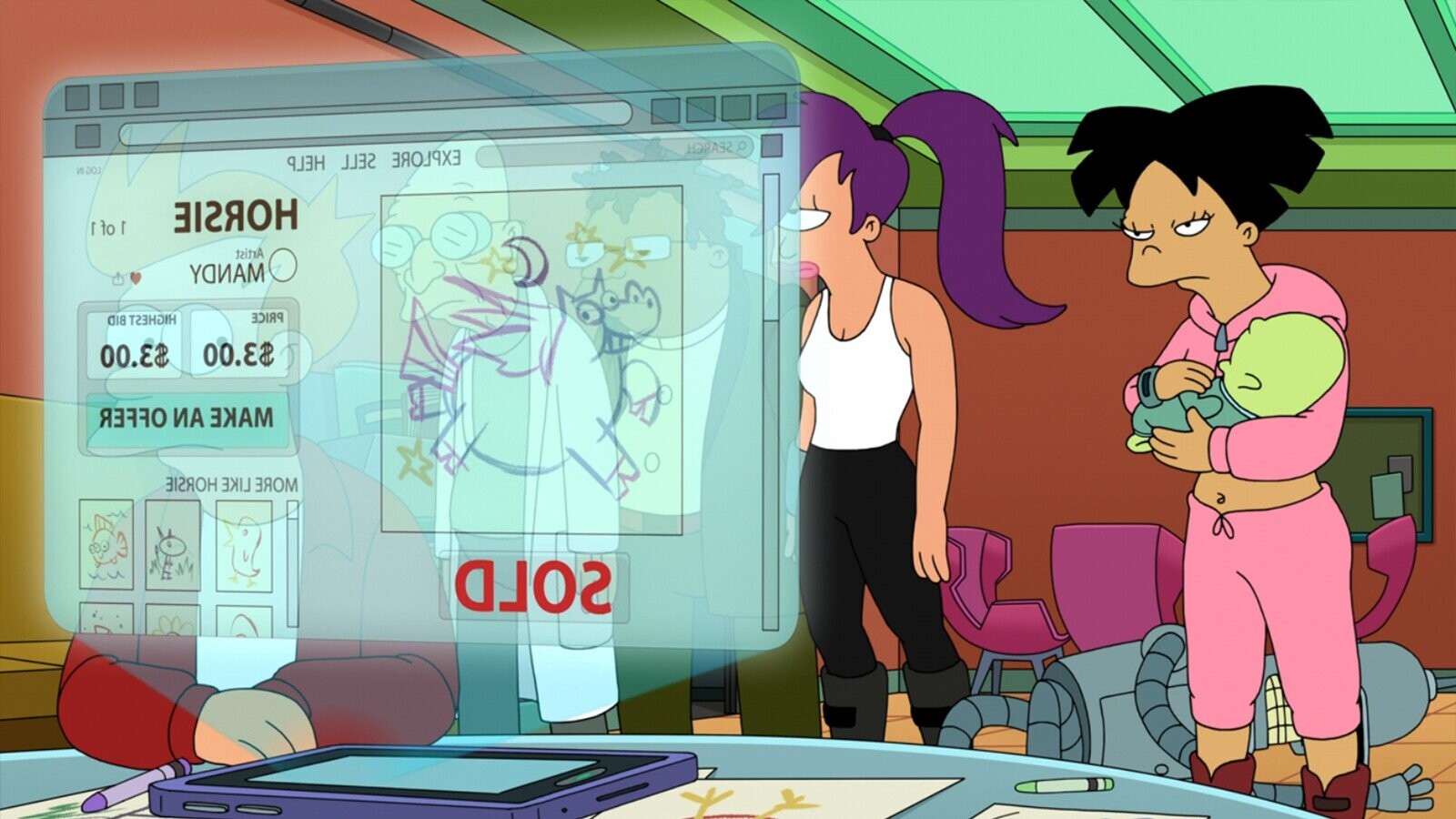
The episode, titled “The One Amigo”, starts with the Planet Express “kids” making NFTs and attempting to
explain them. The big comic beat is that the explanation doesn’t clarify anything for the adultsif anything, it
makes the whole concept sound even more ridiculous. Naturally, Bender hears “ridiculous money for nonsense” and
decides this is his calling.
Soon, Bender is minting a collection based on himselfBender in costumes, Bender in personas, Bender as the
concept of Bender. It’s a perfect character fit because Bender’s ego has always been a renewable resource,
and NFTs are basically ego with a receipt.
The museum twist: owning the “concept” turns into an identity crisis
The episode’s strongest idea is the museum angle: a museum buys Bender’s whole NFT collection for an exhibit,
effectively claiming ownership over the “concept” of him. This pushes Bender into existential meltdown mode.
Not “I might be worthless.” More like “I might be… licensable.”
That’s a very Futurama kind of horror: your identity isn’t stolen; it’s cataloged. It’s curated. It has a gift shop.
In the hands of a sharper episode, that premise could have turned into a great satire of modern branding,
influencer culture, and how corporations own “you” the moment your personality becomes marketable.
The split plot: Bender goes to Mexxxico while the crew plans a heist
While Bender runs off to reconnect with his roots in “Mexxxico,” the rest of the crew starts plotting a museum heist
to reclaim the NFTs. This structure is classic Futurama: heartfelt character quest on one side, chaotic caper on the
other, with a science-y gimmick holding the whole thing together with duct tape and a confident shrug.
The heist concept is fun, and it’s a natural place for Futurama to escalate. The episode even frames the blockchain
like a locked vault you can’t simply smashbecause the “vault” is math, and math doesn’t care how determined you are.
So Why Do the NFT Jokes Feel Old?
Futurama’s best satire is “one step removed.” NFTs in this episode are… just NFTs.
Here’s the trap: if you put “current thing” into Futurama without transforming it, you don’t get satireyou get
a reference. And references don’t age well unless they’re attached to a larger human truth.
In this episode, NFTs aren’t reimagined as a bizarre 31st-century phenomenon with new stakes. They’re basically the
same NFTs we already argued about online: questionable art, hype-driven value, and the feeling that somebody is
getting rich while everyone else is getting a headache.
The show already did “crypto,” but better: turn the headline into a genre episode
Compare the NFT premiere to the earlier crypto-themed episode “How the West Was 1010001”, which used a
bitcoin-mining frenzy as the excuse to do a full Western parody. That approach works because the topical subject
becomes a launchpad, not the entire runway. The audience gets a familiar genre framework, strong visual comedy,
and story momentumeven if they don’t care about crypto at all.
In other words: “crypto” was the ingredient, not the whole meal. The NFT premiere sometimes feels like you ordered
dinner and got served an ingredient list with a wink.
What the Episode Gets Right
Bender as an NFT guy is painfully believable
If you had to assign NFTs to a Futurama character, Bender would be the unanimous pickpartly because he’s greedy,
partly because he’s impulsive, and mostly because he would absolutely sell a certificate of authenticity for a thing
he stole from you five minutes earlier. The episode understands that comedic alignment.
The museum idea is a genuinely great sci-fi metaphor
The funniest version of an NFT story isn’t “NFTs are dumb.” We already know that’s a take available in bulk.
The funniest version is “NFTs are a new way to argue about ownership, identity, and value.” The museum twist nails
that, at least conceptually. It’s the kind of metaphor Futurama can do better than most shows because its world is
already built around absurd ownership disputesrobots, clones, heads in jars, you name it.
What Would Have Made the NFT Satire Feel Fresh?
1) Make the NFT a future-only object with future-only consequences
Imagine if Bender’s NFT didn’t just represent a picture of him, but the legal rights to his personality subroutines.
Or if the museum literally owned his laugh, forcing him to speak only in polite museum-audio-guide tones. Or if the
blockchain was run by an ancient alien civilization that punishes “duplicate concepts” by deleting the idea of soup.
(No, not soup. Anything but soup.)
2) Don’t explain NFTsweaponize them
The best Futurama tech jokes don’t require a whiteboard. They land because the characters behave in recognizable ways
under ridiculous pressure. The episode could have leaned harder into character flaws: Hermes trying to regulate the
concept of Bender with forms; Fry accidentally becoming a blue-chip collector because he clicked the wrong button;
Zoidberg purchasing an NFT that is legally binding as “one (1) friend.”
3) Aim at the human behavior, not just the technology
NFT stories are really stories about scarcity, status, and anxietypeople trying to prove something by owning
something. That’s why NFTs didn’t just sell; they performed. If the episode focused less on “how NFTs work” and more
on “why people wanted them,” the jokes would have felt less like a time capsule and more like social commentary.
Why This Matters for the Hulu Era of Futurama
A season premiere is a mission statement. Starting with NFTs signals that the show is still chasing modern headlines
instead of letting its future-world logic generate its own headlines. That doesn’t mean Futurama can’t be topical
it always has been. The difference is whether the topic is transformed into something only Futurama could do.
When Futurama is great, it’s not because it recognizes the internet. It’s because it recognizes peopleand then
traps those people inside a futuristic problem that makes their choices look simultaneously noble and extremely dumb.
Viewer Experiences: Why the NFT Episode Hits Like Yesterday’s Tech News (About )
If you’ve ever watched a show and felt your brain whisper, “Oh no… we’re doing this topic,” you already know
the emotional arc of the NFT premiere. You hit play expecting future-chaos, and within minutes you’re back in the
cultural year where everyone argued about JPEGs like the fate of civilization depended on pixel ownership.
A lot of viewers have a specific kind of fatigue herenot anger, just a soft, disappointed sigh. It’s the same feeling
you get when an acquaintance starts a sentence with, “So I was reading about crypto…” in 2026. You don’t hate them.
You just start mentally reorganizing your pantry.
The experience can be oddly split, too. On one hand, Bender-as-NFT-guy is funny in a way that feels inevitable.
You might laugh at the hustle, the montage energy, the smug confidence of a character who would sell you your own
reflection if he could get a cut. On the other hand, you may feel the show reaching for relevance instead of
generating relevancelike it’s trying to win a conversation that ended two group chats ago.
There’s also the “didn’t we just do this?” sensation. If you watched the earlier crypto-themed episode, you might
remember enjoying how the show used the topic as fuel for a bigger comedic enginea Western parody, new settings,
classic Futurama rhythm. With the NFT premiere, some viewers report a more classroom-ish vibe: the joke is that NFTs
are confusing, and then the episode demonstrates that confusion at length. That can feel less like satire and more
like being stuck at a party where someone insists you must understand the blockchain “just real quick” before you’re
allowed to go back to having fun.
Another common experience is noticing the difference between “timely” and “timeless.” When Futurama jokes about
relationships, insecurity, ambition, or loneliness, it doesn’t matter what year you’re watching. When it jokes about
a specific tech fad, the comedy lives or dies on whether that fad is still emotionally present for the audience.
If NFTs have already been filed away in your brain under “stuff I survived,” the episode can feel like reopening a
dusty drawer just to confirm it still contains dust.
And yetbecause it’s Futuramamany viewers still walk away with affection. Even when the premise feels dated, the
show’s voice, character chemistry, and occasional surrealism can carry you through. The experience becomes:
“This was not their sharpest idea… but I still like hanging out with these idiots.” In the end, that may be the most
Futurama viewer experience of all: mild disappointment, a few genuine laughs, and a hopeful belief that the next
episode will remember the show’s greatest superpowermaking the future weird again.
Conclusion
“The One Amigo” isn’t doomed because it mentions NFTs. It’s shaky because it treats NFTs like a fresh target when the
audience has mostly moved on, and because it sometimes confuses “topical” with “funny.” The episode has a strong core
ideaownership of the “concept of Bender” is a great Futurama nightmarebut it leans heavily on explanation rather
than transformation.
Futurama doesn’t need to chase the internet to stay relevant. It needs to do what it does best: take a modern human
impulsegreed, status, insecurity, obsessionthen catapult it 1,000 years forward until it becomes ridiculous,
specific, and oddly heartfelt. That’s the kind of joke that doesn’t expire next season.