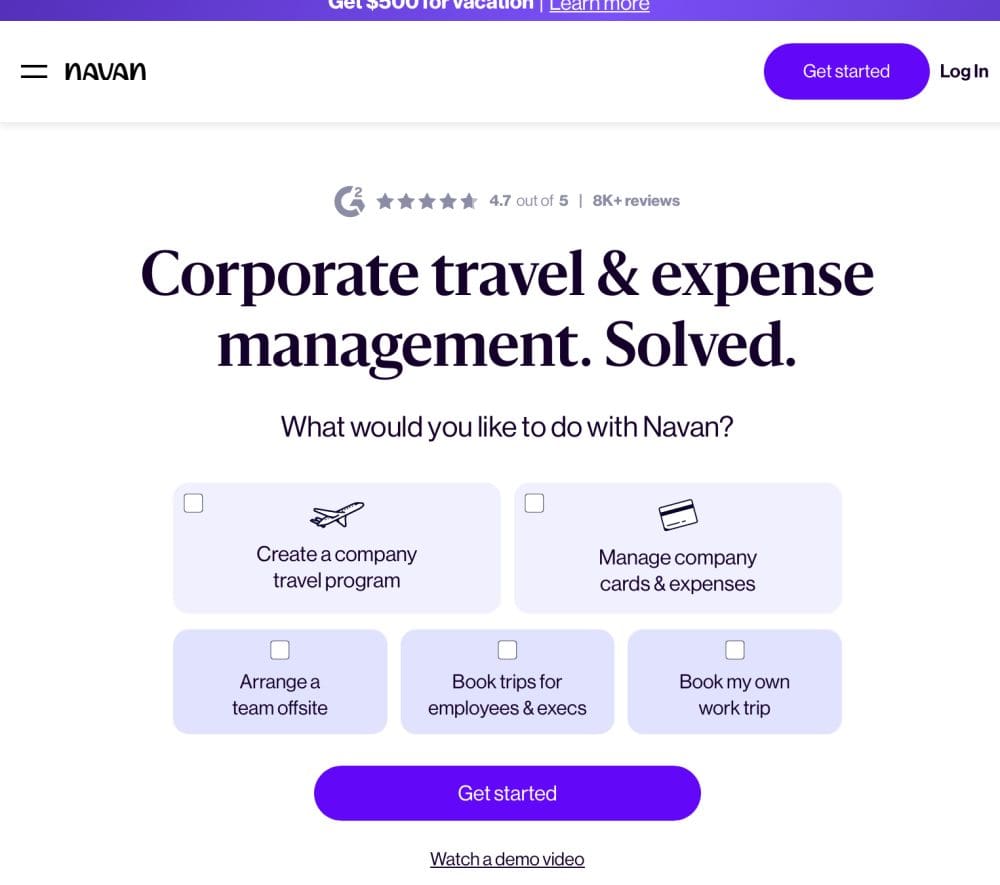
For years, the B2B technology IPO market felt like a fancy airport lounge with the lights on, the snacks out, and absolutely nobody boarding. Then Navan walked up to the gate with a corporate travel bag in one hand, an expense-management platform in the other, and a public-market boarding pass stamped “NAVN.” The question is simple: did Navan’s IPO mark the opening of the B2B IPO floodgates, or was it just one ambitious traveler squeezing through before the crowd?
Navan, formerly known as TripActions, built its name by modernizing business travel, payments, and expense management. It confidentially filed for a U.S. IPO in June 2025, made its filing public in September, launched its roadshow in October, and priced its IPO at $25 per share before beginning trading on the Nasdaq Global Select Market under the ticker NAVN on October 30, 2025. That timeline matters because Navan was not just another tech company seeking liquidity. It became a test case for late-stage B2B startups waiting to see whether public investors were ready to love software again without needing every company to wear an “AI superhero cape.”
Why Navan’s IPO Caught the Market’s Attention
Navan’s IPO drew attention because it sat at the intersection of three big themes: the reopening of the U.S. IPO market, the return of business travel, and the pressure on venture-backed software companies to finally face public-market math. The company offered 36,924,406 shares of Class A common stock at $25 per share. Of that total, 30 million shares were sold by Navan, while about 6.9 million shares were sold by existing stockholders. In plain English: the company raised fresh capital, but some early backers also took a partial trip to the liquidity buffet.
The offering raised about $923 million and valued the company near $6.2 billion at pricing. That sounds large because it is. However, it was also below the $9.2 billion valuation Navan reached in its 2022 private funding round. That gap turned Navan into a symbol of the new IPO reality: going public is back, but the market is no longer handing out 2021-style valuations like Halloween candy.
From TripActions to Navan: A Pandemic Survival Story
Navan’s backstory is part business-school case study, part “please do not let the revenue go to zero” thriller. Founded in 2015 by Ariel Cohen and Ilan Twig, the company started as TripActions, a corporate travel management platform designed to improve a category long dominated by legacy providers and clunky enterprise workflows.
Then COVID-19 arrived, and business travel did what any reasonable person did in 2020: stayed home, wore sweatpants, and avoided airports. For a company centered on corporate travel, that was not a gentle speed bump. It was more like discovering the road had been replaced by a lake.
Instead of disappearing, Navan expanded deeper into expense management, corporate cards, payments, and finance automation. That pivot helped turn it from a travel-booking company into a broader business spend platform. The move mattered because corporate travel alone can be cyclical. Travel plus expense plus payments creates a larger, stickier workflow inside companies. Once finance teams build policies, approvals, reimbursements, and reporting around a platform, switching becomes about as fun as moving apartments during a thunderstorm.
The Numbers Investors Studied Closely
Public-market investors tend to ask the same brutally practical questions: How fast is the company growing? Is it profitable? Are losses shrinking? Does the business deserve a premium multiple? Navan’s IPO filing gave them plenty to chew on.
For the six months ended July 31, 2025, Navan reported revenue of $329.4 million, up from $253.7 million in the same period a year earlier. That represented roughly 30% revenue growth, a respectable figure for a company of its scale. But the company also reported a net loss of $99.9 million for that six-month period, compared with a net loss of $92.5 million a year earlier. Translation: growth was real, but profitability had not exactly arrived wearing a tuxedo.
This is where the B2B IPO conversation gets interesting. In the private markets, strong growth can carry a company for years. In the public markets, investors still like growth, but they also ask whether the business can eventually produce durable free cash flow. The old “grow now, explain later” playbook has been replaced by “grow efficiently, and please bring receipts.” Conveniently for Navan, receipts are kind of its thing.
Was Navan Really the First Domino?
The phrase “B2B IPO floodgates” sounds dramatic, like a dam bursting and thousands of SaaS logos floating downstream. The reality is more nuanced. Navan’s listing did not instantly guarantee a stampede of enterprise software IPOs. It did, however, offer an important signal: mature B2B companies with recognizable brands, real revenue, global customers, and credible growth stories could test the market again.
Before Navan, the 2025 IPO market had already shown signs of life. Renaissance Capital reported that the third quarter of 2025 was the biggest quarter for U.S. IPO issuance since 2021, with 64 IPOs raising a combined $15.3 billion. Other tech and growth names, including Figma, Hinge Health, CoreWeave, Chime, and MNTN, helped investors recalibrate their appetite for new issues. But not every IPO received applause. Investors became selective, rewarding strong stories and punishing anything that smelled too much like yesterday’s valuation.
Why B2B Companies Were Waiting
Many B2B software companies delayed IPO plans after the 2022 market reset. Interest rates rose, software multiples compressed, and public investors stopped treating annual recurring revenue as a magical spell. Late-stage startups that had raised money at peak valuations faced an awkward decision: go public at a lower valuation, stay private longer, or raise money under less flattering terms.
Navan’s IPO showed that a down-round IPO does not have to be a disaster. It can be a reset. A company that accepts a more realistic public valuation may gain access to capital, brand visibility, employee liquidity, and a real-time market scorecard. Is that always comfortable? No. But neither is explaining to employees why their private stock options are theoretically valuable but practically frozen in a financial refrigerator.
What Made Navan Different From a Typical SaaS IPO?
Navan is not a pure SaaS company in the traditional sense. It blends software, travel services, payments, expense management, and corporate card economics. That hybrid model can make the story harder to value but also more interesting. Investors are not only betting on subscriptions; they are evaluating transaction volume, travel recovery, payment monetization, customer retention, and operating leverage.
This gives Navan multiple growth levers. A customer might start with travel booking, then add expense management, corporate cards, policy controls, analytics, and global payments. Each extra product deepens the relationship. The company can pitch itself not merely as a travel tool but as a control center for business spend.
That said, complexity cuts both ways. Public investors must understand revenue mix, gross margins, take rates, customer acquisition costs, and exposure to travel cycles. A clean software story is easier to digest. Navan’s story is richer, but it requires investors to read the menu instead of just ordering “SaaS with fries.”
The AI Angle: Helpful Tailwind or Fancy Window Dressing?
No 2025 tech IPO analysis would be complete without mentioning artificial intelligence, because apparently every business now needs an AI paragraph the way every coffee shop needs oat milk. Navan has leaned into AI across traveler support, itinerary planning, expense automation, receipt capture, and policy guidance. In theory, AI can improve both customer experience and operating efficiency.
For business travelers, AI can recommend better routes, flag policy-compliant options, answer support questions, and reduce the need to chase humans for routine help. For finance teams, AI can help categorize expenses, detect policy issues, automate reconciliation, and surface spending patterns. These are practical use cases, not sci-fi confetti.
However, AI is not a moat by itself. If every competitor can access similar models, the advantage comes from workflow integration, proprietary data, user experience, and execution. Navan’s challenge is to turn AI from a marketing headline into measurable margin expansion and customer loyalty.
Why the First-Day Trading Reaction Mattered
Navan priced its IPO at $25 per share, but its first day of trading was not a victory parade with confetti cannons. Shares closed below the IPO price, a reminder that IPO pricing and public-market demand are two different conversations. The first tells you what investors agreed to pay before trading opened. The second tells you what the wider market thought once the stock was free to move.
That reaction was important for other B2B startups watching from the sidelines. A weak debut can make boards hesitate. A strong debut can pull more companies forward. Navan’s case sent a mixed but useful message: the window was open, but investors were checking IDs at the door.
What Navan’s IPO Means for Other B2B Startups
For late-stage B2B companies, Navan’s IPO offered several lessons. First, scale matters. Public investors want meaningful revenue, not just a beautiful pitch deck with “platform” written 47 times. Second, efficient growth matters. A company can still be unprofitable, but losses must look explainable, manageable, and headed in the right direction. Third, valuation discipline matters. The market may accept a haircut if the business is credible. It will not accept fantasy pricing just because the last private round had a big number and a very confident press release.
Navan also demonstrated the value of category expansion. A single-point product may be easier to understand, but a multi-product platform can tell a bigger total-addressable-market story. For B2B companies preparing to go public, the winning formula is not simply “we have software.” It is “we solve a painful business workflow, we are embedded in daily operations, we can expand within accounts, and we know how to grow without setting piles of cash on fire.”
Are the B2B IPO Floodgates Open?
The honest answer: partly. Navan helped crack the gate open, but it did not remove the hinges. The B2B IPO market is more open than it was during the frozen stretch of 2022 and 2023, yet it remains selective. Investors want companies with scale, strong retention, credible margins, a differentiated product, and a believable path to profitability.
The next wave of B2B IPO candidates will likely be judged against a stricter checklist. Do they have durable revenue? Are customers expanding? Are gross margins improving? Can AI help rather than just decorate the investor deck? Are losses narrowing? Is the valuation reasonable compared with public peers? If the answer is yes, Navan’s path may encourage them. If the answer is “please do not look at slide 38,” they may stay private a little longer.
Experience-Based Perspective: What Navan Teaches Founders, Investors, and Operators
Looking at Navan’s IPO through an operator’s lens, the most valuable lesson is not simply “go public when the window opens.” It is “build a business that can survive when the window closes.” Navan’s journey from TripActions to a public company shows how fast a category can change. Corporate travel was booming, then nearly vanished, then returned in a different shape. Companies that depend on one use case, one budget line, or one macro trend are vulnerable when the weather changes.
For founders, Navan’s experience is a reminder to build optionality into the product roadmap. The company’s move into expenses and payments was not just a nice add-on; it became a survival mechanism and later a growth story. In B2B markets, adjacent workflows can become lifeboats. A travel platform that also controls expenses and payments has more ways to stay relevant when travel slows. A software company that owns only one small workflow may find itself easier to cut during budget reviews.
For finance leaders, Navan’s story highlights why integrated platforms appeal to companies. Nobody wakes up excited to reconcile receipts, chase approvals, or explain why a salesperson booked a luxury hotel because “the lobby had good vibes.” A platform that combines booking, policy controls, card payments, approvals, and reporting can reduce friction for employees while giving finance teams better visibility. That is the core B2B promise: make the user’s day less annoying and make the buyer’s spreadsheet less terrifying.
For investors, the lesson is valuation humility. Navan’s IPO valuation below its 2022 private valuation was not unusual in the post-boom environment. Many companies that raised capital during the zero-interest-rate era now face a public market that values discipline over dreams. A lower IPO valuation can still be a healthy outcome if it gives the company a liquid market, improves credibility, and creates a foundation for long-term performance. Ego may prefer the old number. The market prefers the real one.
For employees at late-stage startups, Navan’s IPO also offers a practical lesson about patience and expectations. Private-company equity can look exciting on paper, but liquidity often takes years. An IPO can turn theoretical value into something measurable, but it can also expose employees to volatility, lockup periods, and price swings. The public market is not a magical cash machine. It is more like a very opinionated scoreboard that updates every second and occasionally yells.
For other B2B companies considering IPO plans, Navan suggests that timing matters, but readiness matters more. A friendly IPO window helps. A compelling growth story helps. But the strongest candidates will be those that can explain their business in simple terms, show improving economics, and convince investors that customers will keep paying even when budgets tighten. Public investors do not need perfection. They need evidence.
In that sense, Navan’s IPO may not have opened the floodgates all at once. It may have done something more useful: it gave the market a real example to debate. It showed that scaled B2B companies can go public again, but it also showed that the road is narrower than founders might like. The next wave will not be judged by private-market hype. It will be judged by growth quality, efficiency, category leadership, and whether the company can make its story understandable before investors finish their coffee.
Conclusion
Navan’s IPO was more than a corporate travel company stepping onto the Nasdaq. It was a market signal. After years of hesitation, B2B technology companies could see a path back to public listings, but that path came with tolls: realistic valuations, better financial discipline, and a stronger case for long-term profitability.
So, did Navan open the B2B IPO floodgates? Not completely. But it did turn the handle. The companies most likely to follow are the ones with real scale, durable customer demand, efficient growth, and a story that survives outside the warm blanket of private-market optimism. The era of “trust us, we are disrupting things” is fading. The new era asks a better question: can this business grow, endure, and make money without needing investors to squint?
Note: This article is written for informational and editorial purposes only and should not be treated as investment advice.