Building an off-grid cabin is wonderfully liberating until you turn a faucet and hear the plumbing equivalent of crickets. Electricity may get most of the attention in remote-living plans, but a dependable water supply is usually the system that determines whether cabin life feels comfortably independent or suspiciously like an extended camping trip.
The best off-grid water system is not simply the one with the largest tank, deepest well, or shiniest solar pump. It is the system that matches your climate, property, household demand, water quality, maintenance tolerance, and budget. A weekend hunting cabin may function beautifully with hauled water and a compact cistern, while a full-time mountain home may need a drilled well, large storage tank, filtration equipment, and freeze-protected plumbing.
This guide compares the main off-grid cabin water options, explains how to store and treat water safely, and helps you build a system that remains useful after the novelty of carrying buckets has worn off.
Start by Calculating How Much Water Your Cabin Needs
Before choosing a source, estimate your daily and seasonal demand. Conventional American homes may use roughly 80 to 100 gallons per person per day, although well-planned off-grid households often use considerably less through low-flow fixtures, efficient appliances, composting toilets, and careful habits. Penn State Extension suggests that many private systems should be planned around approximately 50 to 75 gallons per person per day when normal household plumbing is expected.
A conservation-minded weekend cabin might use only 15 to 30 gallons per person per day. A full-time residence with showers, laundry, a flush toilet, gardening, and visiting relatives who believe showers are a competitive sport will require much more.
Include These Uses in Your Estimate
- Drinking and cooking
- Handwashing, bathing, and showering
- Dishwashing and laundry
- Toilet flushing, unless you use a composting toilet
- Pets, livestock, and poultry
- Gardens, greenhouses, and fire protection
- Water lost during filter cleaning or system maintenance
Storage should cover more than an average day. Plan for droughts, frozen pipes, pump failures, cloudy weather, delivery delays, or the inevitable moment when three friends arrive with four children and an inflatable kiddie pool.
Option 1: Drill a Private Well
A drilled well is often the most convenient long-term water source for a full-time off-grid cabin. Groundwater can provide water throughout the year, and a properly designed system can operate much like conventional residential plumbing.
A typical setup includes the well, submersible pump, electrical controls, pressure tank, storage tank if needed, filtration equipment, and buried supply lines. The pump may run from a solar array, battery bank, generator, or a combination of energy sources.
Advantages of a Well
- Potentially dependable year-round production
- No roof catchment area or delivery truck required
- Convenient pressurized household plumbing
- Less exposure to surface contamination than streams or ponds
Disadvantages of a Well
- High drilling and installation costs
- No guarantee that drilling will produce enough usable water
- Possible problems with hardness, iron, manganese, arsenic, sulfur, or other contaminants
- Dependence on a pump and energy source
- Repairs may require specialized equipment
Private wells are not regulated and monitored like public water systems. The owner is responsible for testing the water, understanding local contaminants, and selecting treatment equipment based on laboratory results. The CDC recommends testing private well water regularly and consulting local health officials about contaminants common in the area.
Using a Low-Yield Well
A well does not need to produce a roaring underground river to be useful. A low-yield well can slowly refill a large atmospheric storage tank throughout the day. A separate booster pump then supplies the cabin during periods of peak demand.
This arrangement prevents showers, washing machines, and other fixtures from drawing water faster than the well can recover. Penn State Extension recommends using storage to compensate for low well output and offers a general planning rule of approximately 100 gallons of storage per household member in some low-yield situations.
Option 2: Harvest Rainwater from the Cabin Roof
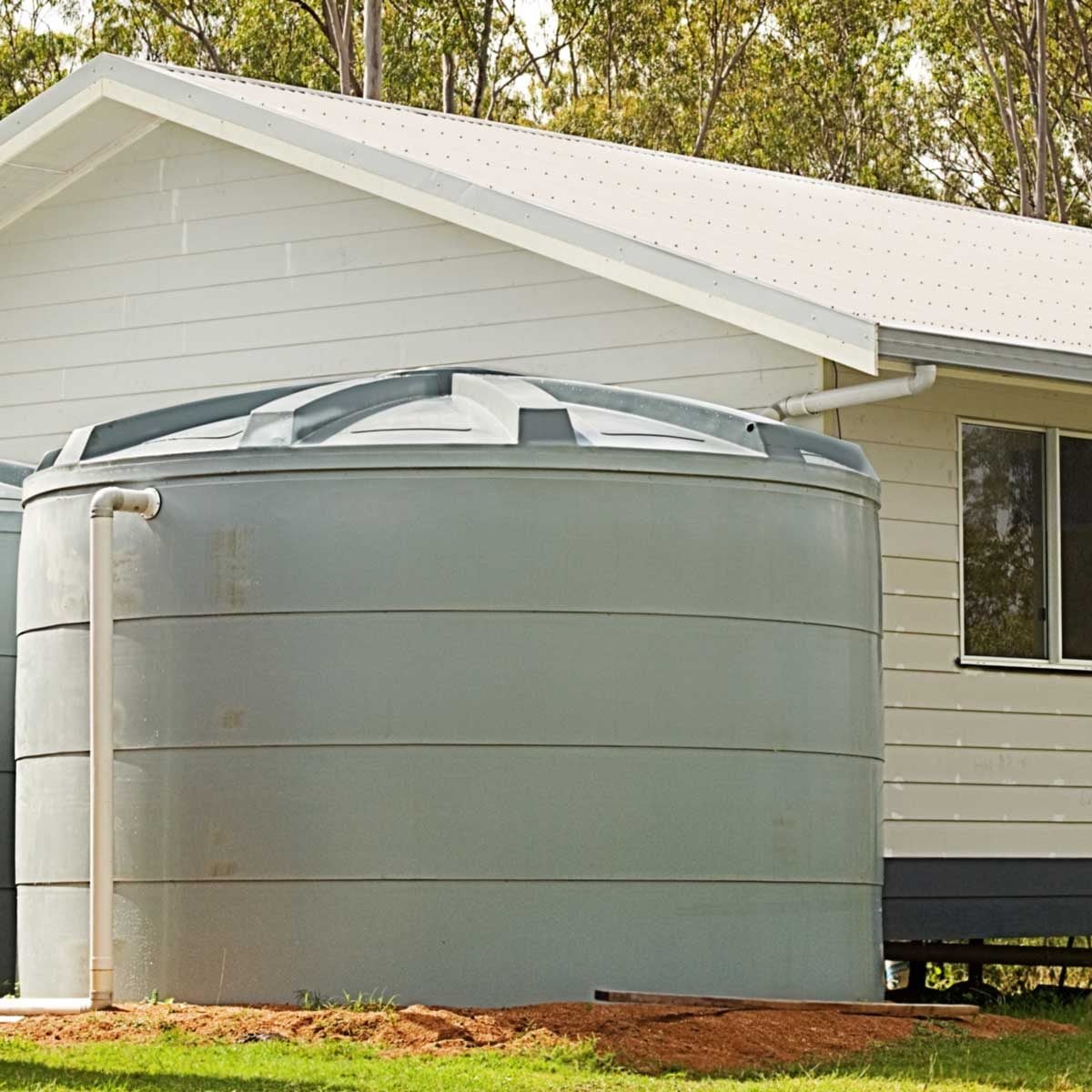
Rainwater harvesting is one of the most appealing off-grid water system options because the collection surface may already be sitting above your head. Gutters direct rainfall through screens and prefilters into a cistern. The water can then be used for irrigation, cleaning, toilets, bathing, or drinking when the system has been appropriately designed and treated.
However, rainwater is not automatically pure because it arrived from the sky wearing a clean-looking disguise. It can collect dust, smoke particles, bird droppings, insects, roofing chemicals, and contaminants from gutters, pipes, or tanks. Water intended for drinking requires more protection and treatment than water used for landscaping.
Estimate Your Rainwater Collection Potential
A useful planning formula is:
Annual gallons = roof area in square feet × annual rainfall in inches × 0.623 × collection efficiency
For example, an 800-square-foot roof receiving 20 inches of annual precipitation could theoretically capture 9,968 gallons. Using an 80% planning efficiency to account for first-flush diversion, splash, leaks, evaporation, and overflow, the expected usable yield would be approximately 7,974 gallons.
Do not rely only on annual totals. A location may receive plenty of rain overall but experience a three-month dry season. Storage must bridge the longest likely gap between meaningful storms.
Essential Rainwater System Components
- A suitable roof catchment surface
- Properly sized gutters and downspouts
- Leaf screens and debris guards
- A first-flush diverter or roof washer
- A sealed, opaque, food-grade storage tank
- Screened inlet, overflow, and ventilation openings
- A pump or gravity-fed outlet
- Sediment filtration and application-specific treatment
A first-flush diverter sends the dirtiest initial runoff away from the storage tank. University of Arizona guidance describes potable rainwater systems as a sequence that includes roof collection, prefiltration, storage, pressurization, filtration, and disinfection.
Check state, county, plumbing, and health-department rules before using harvested rainwater indoors. Regulations can differ significantly, particularly when rainwater will be connected to potable plumbing.
Option 3: Develop a Natural Spring
A spring can provide a wonderfully simple cabin water source when groundwater naturally emerges uphill from the building. Properly developed spring water is captured in a sanitary spring box or collection structure and carried through a protected pipe to storage.
When elevation allows, gravity can move water without an electrical pump. That is excellent news for anyone who prefers their water system to contain fewer electronic devices with blinking error lights.
Advantages of Spring Water
- Potential for continuous natural flow
- Gravity delivery may require little or no energy
- Lower operating costs after development
- Storage can capture water continuously between periods of use
Spring System Risks
- Seasonal or drought-related flow reduction
- Contamination from wildlife, livestock, septic systems, and runoff
- Damage caused by erosion, roots, freezing, or heavy equipment
- Legal questions involving water rights or downstream use
Penn State Extension recommends capturing the spring in a protected sanitary structure and preventing surface water from entering the collection area. Even clear, cold spring water should be tested before it becomes drinking water.
Option 4: Haul Water to a Cistern
Hauled water is not glamorous, but it is often the most practical choice for a seasonal cabin, difficult drilling site, or property with unreliable rainfall. Potable water is delivered by a licensed hauler or transported in a sanitary tank and transferred into a larger cabin cistern.
This option avoids the financial uncertainty of drilling a well and can work in nearly any climate. It also gives owners a known water source, provided the supplier, transport tank, fill hose, storage tank, and transfer process are sanitary.
When Hauled Water Makes Sense
- The cabin is occupied only on weekends or seasonally
- Groundwater is too deep, salty, contaminated, or uncertain
- Rainfall is insufficient or highly seasonal
- Delivery trucks can access the property
- The cost of occasional deliveries is lower than drilling and maintaining a well
Design the fill connection so water can be unloaded quickly without dragging hoses through mud, snow, or questionable substances left by local wildlife. Install an accessible fill pipe, screened vent, overflow route, level indicator, and enough turning space for the delivery vehicle.
The major disadvantage is dependence on roads, weather, fuel prices, supplier availability, and your ability to notice that the tank is empty before shampoo application.
Option 5: Use Surface Water from a Stream, Pond, or Lake
Surface water may look abundant, but it is usually the most treatment-intensive off-grid option. Streams, ponds, and lakes can contain sediment, parasites, bacteria, viruses, algae, animal waste, agricultural runoff, and chemical contamination.
A cabin system drawing surface water may require an intake screen, settling or sediment filtration, finer filtration, disinfection, protected storage, and possibly specialized treatment based on laboratory testing. Boiling is a dependable emergency method for killing germs, while the CDC advises filtering and then disinfecting when boiling is impractical. Disinfection does not make chemically contaminated water safe.
Water rights, environmental rules, seasonal flow, fish habitat, shoreline regulations, and intake permits must be investigated before installation. Surface water is generally better treated as a supplemental or non-potable source unless a professionally designed treatment system is practical.
Option 6: Bring Water in Portable Containers
For a tiny weekend cabin, hunting shelter, or emergency backup, portable containers may be all you need. Food-grade jugs can supply drinking, cooking, and basic washing water without permanent plumbing.
This approach has the lowest installation cost and almost nothing to winterize. Unfortunately, water weighs approximately 8.34 pounds per gallon. A five-gallon container weighs more than 40 pounds before you add the awkward handle and steep cabin steps.
Portable water works best when combined with a hand pump, foot pump, gravity dispenser, compact sink, or separate non-potable water supply for cleaning and toilets.
How to Store Water at an Off-Grid Cabin
Storage creates resilience. It allows a slow well or spring to accumulate water, captures rain for dry weather, reduces pump cycling, and provides a buffer during repairs.
Aboveground Tanks
Aboveground tanks are easier to inspect, install, clean, and repair. They are also exposed to sunlight, temperature swings, freezing, impact damage, and algae-promoting conditions if the tank allows light penetration.
Underground Cisterns
Buried tanks save space and benefit from more stable soil temperatures. However, they cost more to install and must be specifically engineered for burial. A standard aboveground tank can collapse when surrounded by soil, which is an impressively expensive way to learn the difference between product categories.
Indoor or Insulated Storage
In cold climates, tanks may be placed in a heated mechanical room, insulated enclosure, basement, or buried vault. Indoor storage simplifies freeze protection but requires overflow control, drainage, structural support, and leak planning.
All potable-water tanks should be made from materials approved for drinking-water contact. Keep tanks sealed from sunlight, insects, animals, surface runoff, and contaminants. Use screened vents and overflows, accessible inspection ports, and fittings that can be isolated for maintenance.
Gravity-Fed Water Versus Pressurized Plumbing
A gravity-fed system places storage above the fixtures and uses elevation to create pressure. Every 2.31 feet of vertical elevation produces roughly one pound per square inch of static pressure. A tank 23 feet above a faucet therefore provides about 10 psi before pipe and filter losses.
Gravity is quiet, efficient, and reliable, but the available pressure may feel modest. Low-pressure fixtures and large-diameter pipes help improve performance.
A pressurized system uses a pump and pressure tank to deliver familiar household flow. A small DC pump may serve a sink and shower, while a larger booster system can handle multiple fixtures. Pumps should be protected from running dry, freezing, sediment, and excessive cycling.
Solar Water Pumping
Solar-powered pumps are particularly useful for wells, springs, and transfer systems. Instead of demanding a large burst of power whenever someone opens a faucet, a solar pump can move water slowly into an elevated or atmospheric storage tank during daylight. Stored water then supplies the cabin later.
This “pump water while the sun shines” strategy can reduce battery demand because the tank functions as a practical form of energy storage. Photovoltaic technology converts solar radiation into electricity, making it suitable for remote pumping when the array, controller, wiring, and pump are correctly matched.
Build a Treatment Train, Not a Mystery Filter
No single filter solves every water-quality problem. Treatment should be selected after testing the source and identifying the contaminants that must be removed.
A common cabin treatment sequence may include:
- Intake screening: Blocks leaves, insects, and larger debris.
- Settling or coarse filtration: Reduces sand, silt, and visible particles.
- Fine sediment filtration: Protects later treatment equipment.
- Activated carbon: Can improve taste and odor and reduce certain chemicals.
- Specialized treatment: May address hardness, iron, manganese, arsenic, nitrates, or other tested contaminants.
- Disinfection: Uses ultraviolet light, chlorine, ozone, heat, or another approved method to control microorganisms.
UV systems work best with clear water because suspended particles can shield microorganisms. They also require electricity, lamp replacement, clean sleeves, and adequate flow control. Chlorination can provide a residual disinfectant in storage and plumbing, but dosing must be carefully managed.
Reverse osmosis can remove many dissolved contaminants, but it produces reject water, reduces flow, requires pressure, and needs regular membrane maintenance. It is often most efficient as point-of-use treatment for drinking and cooking rather than for every gallon used in the cabin.
Test first, treat second, and retest to confirm that the equipment is working. Selecting a filter because its packaging contains mountains, blue droplets, and the word “pure” is not a water-quality strategy.
Protect the System from Freezing
Cold-weather design should begin before the first trench is dug. Bury exterior lines below the local frost depth, insulate exposed fittings, eliminate low spots that trap water, and keep valves accessible.
Seasonal cabins should be designed for simple draining. Install shutoff valves, drain points, unions, and fixtures that can be emptied without dismantling half the kitchen. Pumps, filter housings, water heaters, pressure tanks, and toilet components may retain water even after the main pipe appears empty.
Year-round systems may need heat tape, insulated utility spaces, circulation loops, or backup heat. Any heating method should be installed according to electrical and fire-safety requirements. A generator or alternative heat source can protect the system during extended winter outages.
Do Not Forget Wastewater and Septic Separation
Water supply planning cannot be separated from wastewater planning. Wells, springs, rainwater tanks, septic systems, composting toilets, graywater areas, and surface drainage must be positioned to reduce contamination risks.
Local codes typically establish setback distances and design requirements based on soil, slope, groundwater, property boundaries, and system type. Poorly placed or failing septic systems can contaminate groundwater and nearby wells, so consult county health or environmental officials before finalizing the cabin layout.
Which Off-Grid Cabin Water System Is Best?
| Water Source | Best Application | Main Advantage | Main Limitation |
|---|---|---|---|
| Drilled well | Full-time cabin | Convenient year-round supply | High and uncertain drilling cost |
| Rainwater harvesting | Cabins with adequate roof area and rainfall | Renewable on-site collection | Requires storage and careful treatment |
| Developed spring | Properties with reliable uphill flow | May operate entirely by gravity | Seasonal flow and contamination risks |
| Hauled water | Seasonal or hard-to-drill sites | Predictable source quality | Requires road access and deliveries |
| Surface water | Supplemental or non-potable use | May be readily available | Complex treatment and legal concerns |
| Portable containers | Minimal-use cabins | Simple and inexpensive | Labor-intensive and limited capacity |
Many successful cabins use a hybrid system. A well may provide the main household supply while rainwater handles irrigation. A spring may slowly fill a tank, with hauled water available during drought. Portable drinking water may serve as a backup whenever treatment equipment is offline.
Practical Experiences and Lessons from Real-World Cabin Systems
The most valuable off-grid water lessons often appear after installation, when a system meets weather, guests, maintenance delays, and ordinary human forgetfulness. The following scenarios reflect practical experiences commonly reported by cabin owners, installers, extension educators, and rural water-system users.
Experience 1: Storage Often Matters More Than Maximum Pump Output
One common mistake is buying a powerful pump while installing a tank that is far too small. A cabin supplied by a low-yield well or spring may function perfectly when water is collected slowly and stored between visits. Without adequate storage, the owner can have a technically productive source and still run out during two simultaneous showers.
A better design begins with the source’s dependable daily output, not its best five-minute performance. Storage should then be sized for peak use, recovery time, drought, and a reasonable emergency reserve.
Experience 2: Rainwater Systems Succeed or Fail at the Roof
Owners sometimes spend heavily on pumps and filters while ignoring dirty gutters, overhanging branches, deteriorating roofing, or an undersized first-flush diverter. The result is a tank that becomes a large, expensive leaf-tea brewer.
Keeping the catchment surface, gutters, screens, and inlet equipment clean reduces sediment and organic material before they enter storage. Preventing contamination is usually easier and cheaper than removing it later.
Experience 3: Simple Systems Are More Likely to Be Maintained
An elaborate treatment system may look reassuring on installation day, but every additional filter, sensor, solenoid, controller, and ultraviolet lamp creates another maintenance task. Remote cabins may sit unattended for weeks, making simplicity especially valuable.
Successful owners label valves, record filter sizes, store spare cartridges, photograph equipment layouts, and keep written startup and shutdown instructions near the mechanical area. This also prevents the cabin’s water system from becoming understandable only to one person who is inevitably unreachable when something leaks.
Experience 4: Freeze Protection Must Include Tiny Components
Large pipes receive plenty of attention, yet small filter housings, check valves, gauges, pumps, faucet cartridges, and low sections of tubing frequently suffer first. A tablespoon of trapped water can crack a component just as effectively as a full pipe.
Cabins designed for seasonal draining benefit from strategically placed valves and compressed-air connections. Owners should perform a dry run before winter rather than discovering the missing drain fitting during the season’s first hard freeze.
Experience 5: A Backup Source Changes Everything
Off-grid resilience does not require duplicating the entire water system. A backup can be a few sealed drinking-water containers, an alternate tank connection, a delivery-company phone number, a manual pump, spare treatment supplies, or access to a tested community source.
Cabin owners who plan a second option are less likely to take unsafe shortcuts when the primary source fails. They can stop using questionable water, repair the system properly, and continue cooking, drinking, and washing without turning a minor malfunction into an emergency.
Experience 6: Water Conservation Is a Design Feature
People conserve more effectively when the cabin makes conservation easy. Low-flow showerheads, efficient faucets, front-loading washers, composting toilets, visible tank gauges, and separate outdoor water lines reduce consumption without requiring constant self-discipline.
A tank-level monitor is particularly useful. Water feels unlimited when it arrives from an ordinary faucet, even when only 87 gallons remain between the household and an awkward conversation. Making the remaining supply visible changes behavior quickly.
The broader lesson is that a reliable off-grid water system is not a single product. It is a coordinated chain involving the source, storage, energy supply, plumbing, treatment, drainage, wastewater plan, maintenance routine, and backup strategy. Strengthening the weakest link usually provides more value than upgrading the most impressive component.
Conclusion
The right off-grid water system for your cabin depends on how often the property is occupied, how much water you use, what natural sources are available, and how much maintenance you are prepared to perform. Wells offer convenience, rainwater provides flexible on-site collection, springs can support low-energy gravity systems, and hauled water delivers a practical answer when nature refuses to cooperate.
Start by testing available sources, calculating realistic demand, and checking local regulations. Then build around sufficient storage, appropriate treatment, freeze protection, wastewater separation, and a backup supply. A thoughtfully designed system will not make water completely effortless, but it can make cabin life comfortable, resilient, and far less dependent on heroic bucket-carrying.
Research note: This educational article synthesizes information from more than a dozen authoritative U.S. resources published by the CDC, USDA Natural Resources Conservation Service, U.S. Department of Energy, University of Arizona Cooperative Extension, Penn State Extension, and the EPA. Water quality, permitting, water rights, plumbing codes, and treatment needs vary by location; consult certified laboratories and local health, building, and environmental authorities before constructing a potable system.