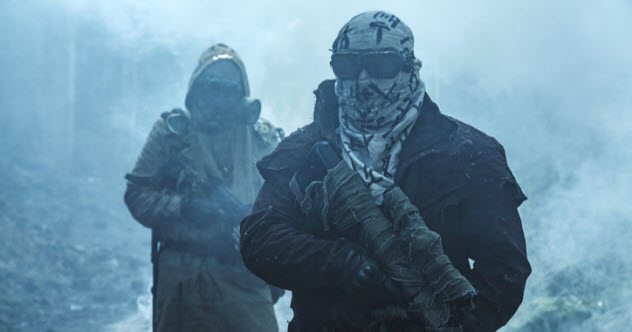
A nuclear apocalypse is usually pictured as one blinding flash followed by heroic survivors wearing suspiciously fashionable leather. Reality would be less cinematic and far more exhausting. A nuclear explosion can destroy buildings, ignite fires, cause severe burns, scatter radioactive fallout, and overwhelm emergency services. For many survivors, however, the longer nightmare would begin afterward, when water, hospitals, electricity, transportation, food distribution, government services, and communication stop functioning normally.
The consequences would depend on the number and size of the weapons, burst altitude, targets, weather, wind, season, and the ability of institutions to respond. A single urban detonation would not produce the same conditions as a large-scale nuclear exchange. Credible assessments also identify major uncertainties in predicting long-term environmental and societal effects. Nevertheless, research into blast damage, radioactive fallout, disaster medicine, infrastructure failure, and nuclear winter reveals several grim realities that appear across many scenarios.
1. Survival Could Be Decided Within Minutes
Near the point of detonation, there may be no meaningful survival strategy. A nuclear blast produces an intense combination of heat, pressure, initial radiation, flying debris, collapsing structures, and fire. Damage does not form one perfectly tidy circle. Terrain, weapon yield, burst height, construction materials, and local conditions can substantially change the effects. People outside the zone of total destruction could still suffer burns, eye injuries, lacerations, fractures, and wounds filled with contaminated dust.
The first division between survival and death would therefore be brutally random. One person might be protected by a concrete stairwell while another, only a few blocks away, is exposed through a window. A substantial basement could provide useful protection, while a vehicle would offer relatively little shielding from fallout. The nuclear apocalypse would not begin as a fair test of courage. It would begin with architecture, distance, timing, and luck.
2. Radioactive Fallout Would Turn Geography Into a Moving Threat
Radioactive fallout is not a glowing green fog. It consists of particles formed when material pulled into a nuclear explosion mixes with radioactive products and later falls back to Earth. Fallout can contaminate people, buildings, roads, food, and exposed water. Wind may carry it far beyond the area of obvious blast damage, while the most hazardous concentrations can arrive within minutes in some downwind locations.
This creates a cruel contradiction. Frightened survivors may feel compelled to flee immediately, yet rushing outdoors could increase their radiation exposure. U.S. public-health guidance emphasizes getting inside, staying inside, and staying tuned for official instructions. Dense building materials and distance from exterior surfaces improve protection, so basements and central rooms in substantial buildings are generally safer than cars, sheds, or rooms beside windows. The heroic sprint toward the horizon may be exactly the wrong move.
3. Shelter Life Would Be Claustrophobic and Confusing
“Stay inside” sounds simple until the building is dark, the plumbing is unreliable, someone is injured, a child is terrified, and nobody knows whether the latest warning is genuine. Sheltering may require survivors to remain in the most protected part of a structure while radiation levels decline and officials assess safer routes. Buildings can provide considerable shielding, but the amount of protection varies enormously according to construction and location inside the building.
The social challenge could become nearly as serious as the physical one. Strangers might have to share small spaces, supplies would be unevenly distributed, and rumors could spread faster than verified instructions. Batteries, radios, medication, sanitation supplies, and calm leadership would become more useful than the decorative survival ax someone bought after binge-watching three seasons of post-apocalyptic television. Public guidance repeatedly emphasizes receiving updated information because sheltering and evacuation decisions depend heavily on changing conditions.
4. Clean Water Would Become More Valuable Than Almost Anything
Modern water systems require pumps, electricity, treatment chemicals, intact pipes, trained employees, testing laboratories, and functioning transportation networks. A nuclear disaster could damage several of those components simultaneously. Fallout may contaminate exposed supplies, while broken mains and sanitation failures could introduce ordinary disease-causing microbesthe boring kind that remain perfectly capable of causing severe diarrhea, dehydration, and death. Healthcare facilities are especially vulnerable because patient care and sanitation require large, dependable water supplies.
Following a radiation emergency, sealed bottled water is the source most certain to be free from radioactive contamination until public testing confirms that other water is safe. Boiling may kill many germs, but it does not remove radioactive material. That distinction matters. Survivors could possess a pot, a fire, and tremendous confidence while still making the wrong decision. Clean water would be required for drinking, preparing food, cleaning wounds, taking medication, maintaining hygiene, and keeping medical facilities operational.
5. Hospitals Would Have More Patients and Fewer Resources
Nuclear casualties would not arrive in convenient categories. Hospitals could receive patients with severe burns, blast injuries, fractures, embedded glass, radiation exposure, contaminated clothing, chronic illnesses, pregnancy complications, and intense psychological distress at the same time. Some medical facilities might be damaged or located inside dangerous fallout zones. Others could lose electricity, water, staff, laboratories, blood products, sterilization capacity, medicine, or usable access roads.
Medical teams would have to triage patients under conditions rarely encountered in modern American healthcare. Radiation symptoms can overlap with other illnesses, while estimating a person’s dose may require geographic information, clinical findings, repeated blood counts, or specialized biodosimetry. Routine care would also collide with the emergency. Insulin would still run out, dialysis patients would still require treatment, appendixes would still rupture, and babies would continue arriving with their famous lack of respect for scheduling.
6. Electricity and Communication Could Fail Together
Blast damage, fires, destroyed substations, damaged transmission equipment, fuel shortages, blocked roads, and loss of skilled workers could produce major power outages. Electricity supports water pumping, refrigeration, hospitals, fuel stations, warehouses, banking systems, traffic controls, and communication networks. When the grid fails, other systems do not politely wait their turn. They begin failing together. This cascading disruption is a reasonable consequence of the physical infrastructure destruction anticipated in nuclear-impact assessments.
Communication would probably become fragmented. Cellular equipment requires electricity and functioning network connections, while emergency broadcasts may be incomplete, delayed, or difficult to receive inside shelters. Survivors could know that important information exists without being able to access itan especially maddening form of ignorance. A working battery-powered radio might suddenly outrank a thousand-dollar smartphone whose primary remaining feature is displaying a 2 percent battery warning.
7. Local Food Shortages Could Become Global Famine
In the immediate aftermath, stores could empty quickly because modern cities depend on frequent deliveries instead of enormous backroom reserves. Warehouses, roads, ports, refrigeration, payment systems, farms, fertilizer production, fuel supplies, and labor are interconnected. Break enough links and the statement “food exists somewhere” becomes irrelevant to a hungry family staring at an empty shelf.
A large nuclear war could create a much wider agricultural catastrophe. Climate models indicate that smoke from burning cities could reach the upper atmosphere, reduce incoming sunlight, cool the planet, shorten growing seasons, and disrupt crops and fisheries. One widely cited peer-reviewed study estimated that a full-scale nuclear war between the United States and Russia could eventually cause more than five billion deaths from famine.
The exact outcome is uncertain and depends on assumptions about fire behavior, soot production, atmospheric circulation, climate response, trade, food reserves, and adaptation. Recent scientific assessments have emphasized that important knowledge gaps remain. The central warning, however, is difficult to soften: starvation could spread far beyond the countries where weapons were detonated.
8. Sanitation Failures Would Invite Old Diseases Back
People often imagine radiation as the signature killer of post-nuclear life, but damaged sanitation could make ordinary infections terrifying again. Toilets require water or workable alternatives. Garbage requires collection. Crowded shelters require handwashing facilities, ventilation, waste control, safe food handling, and protection against contaminated water. Hospitals need dependable water for cleaning, sterilization, patient care, and infection control.
When hygiene and clean water decline, gastrointestinal illnesses can spread more easily. Wounds become infected, pests flourish, and shortages of antibiotics make otherwise treatable conditions more dangerous. Malnutrition can further weaken the body’s defenses. Civilization’s greatest daily miracle may not be the smartphone. It may be the fact that waste disappears when a handle is pressed. After a major nuclear catastrophe, that miracle could stop working.
9. Inequality Would Become a Survival Factor
Disasters rarely distribute harm evenly. People with substantial shelter, stored water, transportation, savings, medical supplies, flexible employment, and strong social networks usually have more options. People facing poverty, unstable housing, language barriers, disabilities, chronic illnesses, limited mobility, or responsibility for small children may encounter greater obstacles. Research on disasters consistently indicates that existing vulnerabilities and inequalities can amplify harm.
Communities would also confront difficult questions about rationing, evacuation, property, security, authority, and access to medical treatment. Some cooperation would be extraordinary; disasters frequently produce mutual aid as well as tension. Social support is a documented protective factor after catastrophic events. The most resilient groups would probably not be collections of self-declared lone wolves. They would be networks of people who share skills, verify information, protect vulnerable members, and establish rules before every disagreement turns into a small constitutional crisis.
10. Psychological Damage Could Last for Generations
Surviving the initial disaster would not mean returning emotionally unchanged. People could lose relatives without receiving confirmation, witness severe injuries, abandon their homes, endure repeated alarms, and live with uncertainty about radiation exposure or future illness. Disaster research links catastrophic events with increased risks of post-traumatic stress, anxiety, depression, substance misuse, sleeping problems, complicated grief, and impaired daily functioning.
There would also be collective griefthe loss of neighborhoods, schools, jobs, records, landmarks, routines, and confidence in the future. Because radiation is invisible, fear and stigma could remain even after authorities determined that individuals posed no danger to others. Rebuilding mental health would require more than instructing survivors to “be resilient.” It would require physical safety, accurate information, social support, trusted institutions, meaningful activity, healthcare, and time.
What Life After a Nuclear Apocalypse Might Actually Feel Like
The following is an imagined composite experience rather than a firsthand account. It combines patterns found in radiation guidance, disaster medicine, infrastructure research, and mental-health studies to illustrate how the first month might feel for an ordinary survivor outside the zone of total destruction.
Day One: The World Becomes a Room
The flash comes before the sound. Windows shudder, alarms begin, and every phone displays a different mixture of missed calls and no service. You move into the basement with neighbors you previously knew only as “the man with the loud leaf blower” and “the woman whose packages keep arriving at my door.” Nobody knows exactly how far away the explosion occurred. Somebody wants to drive north. Somebody else remembers that fallout moves with the wind, not according to compass-based optimism.
You cover a cut, carefully remove dusty outer clothing, place it away from the occupied area, and wash exposed skin without scrubbing. Removing outer clothing and gently washing can eliminate much of the external radioactive contamination carried on a person. The radio repeats instructions to remain sheltered. The message is reassuring for approximately four minutes. Then the lights fail.
Days Two and Three: Information Becomes a Ration
The basement develops its own climate, government, and aroma. News arrives in fragments: a working radio station, a neighbor’s receiver, or a text message delivered six hours late. Every fragment produces three rumors. Someone insists that all tap water is poisoned. Another person claims boiling removes radiation. Neither blanket statement is reliable, and arguments consume energy nobody can replace.
Food is not yet scarce, but appetite is. Sealed cans and supplies stored indoors feel precious. Medication is counted. Phone batteries are guarded like royal jewels. The most valuable person in the room is not the strongest. It is the retired nurse who organizes wound care, records names and medical needs, checks on older neighbors, and prevents people from opening the basement door every time a distant siren sounds.
Week One: The Emergency Expands
Authorities eventually announce a controlled evacuation route. Outside, familiar streets look rearranged. Glass covers the sidewalks, traffic signals are dark, and damaged buildings block several roads. A grocery store has been emptiednot by theatrical raiders wearing spiked shoulder pads, but by frightened families searching for bottled water, infant formula, medication, batteries, and whatever food remains.
The public shelter contains cots and rules but too few chargers, too few bathrooms, and not enough answers. One man needs dialysis. A child has developed a fever. Several residents cannot locate relatives. The problem is no longer simply radiation. It is the collision of radiation risk with every ordinary human need.
Weeks Two and Three: Normal Life Becomes Archaeology
Days are structured around water distribution, medical checks, sanitation duty, meals, and official announcements. Money has limited usefulness when stores are closed and supply chains are broken. Practical abilities become a form of currency: repairing a pump, translating instructions, calming children, tracking inventory, recognizing infection, cooking safely, or fixing a damaged radio.
Community forms because isolation is inefficient. People create lists of residents, organize childcare, assign cleaning duties, and share information from verified broadcasts. They also argue about portions, privacy, noise, and whose turn it is to maintain the temporary toilets. Humanity has survived the end of the familiar world but remains fully capable of fighting over bathroom schedules.
Grief arrives unevenly. Some survivors cry immediately. Others become intensely practical and collapse days later. Small comforts gain absurd emotional power: clean socks, hot broth, a charged flashlight, or a confirmed message from a relative. Humor survives too, although it becomes darker. Someone labels the least terrible portable toilet “the executive suite,” and for ten seconds the entire shelter laughs as though the old world still exists.
Week Four: Survival Becomes a Long-Term Question
By the fourth week, the word “temporary” feels suspicious. Officials discuss relocation areas, contamination surveys, damaged utilities, school arrangements, and uncertain reopening dates. Survivors begin asking questions that cannot be answered by an emergency checklist: Where will we live? Is my job gone? Was my neighborhood contaminated? Will my children be safe years from now? Who decides which town receives rebuilding resources first?
The central experience is not nonstop action. It is prolonged uncertainty interrupted by urgent problems. Survival depends on patience, cooperation, credible information, functioning public institutions, and thousands of small decisions. The fantasy of the lone survivor fades quickly. People endure by sharing scarce resources, learning from expertise, maintaining sanitation, caring for one another, and continuing necessary work after adrenaline has packed its bags and left.
Conclusion: The Nuclear Apocalypse Would Be a Systems Failure
The most brutal reality of life after a nuclear apocalypse is that there would be no single enemy to defeat. Survivors could face blast injuries, radioactive fallout, thirst, medical shortages, blackouts, food disruption, infection, displacement, inequality, grief, and political uncertainty simultaneously. The severity would vary enormously by scenario, and scientific organizations continue to identify important uncertainties in predicting environmental and societal consequences.
Nuclear war would not be a reset button that returned humanity to a charmingly simpler age. It would damage the complex systems that make modern life possible while leaving enormous populations dependent upon those same systems. Preparedness could improve outcomes, especially during the first hours after a detonation, but no backpack, bunker, or heroic attitude could eliminate the wider consequences. The best way to survive a nuclear apocalypse remains the least cinematic strategy of all: prevent it from happening.