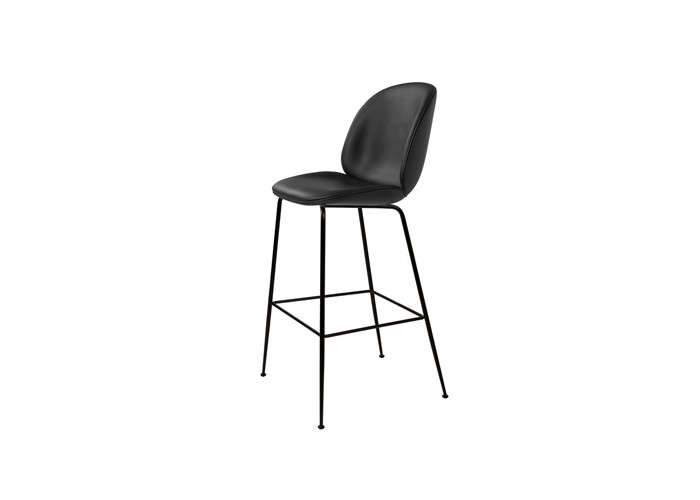
The Tall Beetle Bar Stool is the kind of furniture that proves a bar stool does not have to look like something borrowed from a neighborhood diner at closing time. Designed by the Danish-Italian studio GamFratesi for GUBI, the Beetle family translates the segmented shape, protective shell, and curved anatomy of a beetle into modern furniture. The result is sculptural without becoming strange, elegant without becoming painfully formal, and compact enough to work in spaces where a larger bar chair might feel like it has moved in permanently.
Although people often use “bar stool” as a catch-all term, the Beetle collection includes several distinct elevated seating options. The backless Beetle Bar Stool is particularly interesting because it combines a slim metal structure, an upholstered seat, a useful footrest, and a tall seat height without visually overwhelming a kitchen island or bar. That combination makes it attractive for contemporary kitchens, restaurants, breakfast bars, and design-conscious entertaining spaces.
There is, however, one important rule before falling in love with its curves: measure your counter. Beautiful furniture is considerably less charming when your knees cannot fit underneath it.
What Is the Tall Beetle Bar Stool?
The Beetle Bar Stool is part of GUBI’s broader Beetle Collection, created by designers Stine Gam and Enrico Fratesi. Their studio, GamFratesi, blends Danish furniture traditions with an Italian approach to form and concept. That dual influence is easy to see here. The stool has Scandinavian restraint in its thin frame and controlled proportions, while the upholstered seat brings a softer, more expressive character.
The backless version differs noticeably from the Beetle Bar Chair. Instead of wrapping the sitter with a tall molded back, the stool reduces the design to the essentials: seat, supportive shell structure, metal legs, and footrest.
According to current manufacturer specifications, the bar-height Beetle Stool has a seat approximately 75 cm, or 29.5 inches, above the floor. Its upholstered seating area is roughly 44 cm wide and 35 cm deep, translating to about 17.3 by 13.8 inches. Those relatively compact dimensions explain why it can work particularly well when several stools need to line up beneath a bar.
Why the Beetle Design Looks Different
Nature Inspired the Shape
The unusual name is not a marketing department throwing darts at a dictionary. GamFratesi genuinely studied beetles when developing the collection.
The designers focused on contrasts found in the insect’s anatomy: a firm external shell protecting a softer interior, separate sections working together, and rigid components arranged so that the whole creature can still move efficiently. Those ideas were translated into seating through distinct curved surfaces and carefully structured connections.
The result is recognizable without literally looking like an insect. Nobody is going to walk into your kitchen, scream “enormous beetle!” and call pest control. Instead, the biological inspiration appears through subtle curves, shell-like forms, and a sense that the seat is gently enclosing the person using it.
A Minimal Frame Keeps It Visually Light
Tall seating can become visually bulky surprisingly quickly. Thick wooden legs, giant backs, and oversized cushions can turn a row of stools into a small architectural wall.
The Tall Beetle Bar Stool takes the opposite route. Its thin metal legs create substantial open space underneath the seat. That makes the stool appear lighter and helps countertops, cabinetry, flooring, and nearby furniture remain visible.
This characteristic is especially valuable in apartments, smaller kitchens, and open-plan homes where every large piece of furniture affects how spacious the room feels.
Tall Beetle Bar Stool Dimensions and Fit
Seat height matters far more than the word “tall” in a product description. Most American furniture guides distinguish between counter-height, bar-height, and extra-tall stools.
A conventional kitchen counter is usually around 36 inches high and generally works best with a seat around 24 to 27 inches high. A taller bar or pub-height surface around 40 to 43 inches usually calls for a stool around 28 to 33 inches high.
With its approximately 29.5-inch seat height, the Beetle Bar Stool belongs firmly in the bar-height stool category.
Leave Enough Legroom
A useful rule is to maintain roughly 10 to 12 inches between the top of the stool seat and the underside of the counter. This gives most adults enough room to sit naturally without performing an accidental knee inspection on the countertop.
Do not measure only to the top surface. Some islands have thick stone countertops, structural aprons, drawers, or decorative trim underneath. Measure from the floor to the lowest point where your legs will actually go.
Choose Counter Height When Necessary
GUBI also offers Beetle seating in counter-height configurations. If your kitchen island is approximately 36 inches high, the shorter version will normally provide a better ergonomic relationship.
Buying bar height simply because taller sounds more dramatic is a classic furniture mistake. At a standard counter, a 29- or 30-inch seat can leave too little thigh clearance. The stool may look spectacular while being about as comfortable as eating dinner under a low shelf.
Comfort: More Than a Pretty Seat
Backless stools generally sacrifice some long-session support in exchange for compact proportions. The Beetle Stool attempts to compensate with a shaped, upholstered seating surface rather than a completely flat wooden or metal platform.
The soft interior echoes the broader Beetle design concept of combining a protective outer form with a comfortable inner surface. Upholstery also makes the seat more forgiving when breakfasts turn into coffee conversations, or when someone says, “I’ll stay for five minutes,” and is still sitting there 90 minutes later.
The Footrest Matters
On tall stools, a footrest is not merely decorative metalwork. Without one, the legs can hang unsupported, creating pressure behind the thighs and making longer periods of sitting uncomfortable.
The Beetle Bar Stool incorporates a footrest into its slender frame. GUBI lists the footrest at approximately 33 cm, or about 13 inches, from the floor on a current bar-stool configuration.
That gives users somewhere natural to place their feet and also visually ties the legs together.
Materials and Upholstery Options
One reason the Beetle family has remained relevant since its introduction is customization. The collection has appeared with different upholstery treatments, colors, shells, and base finishes rather than being locked into one fashionable combination.
The upholstered Tall Beetle Bar Stool can therefore behave very differently depending on the textile selected.
Bouclé for Texture
Bouclé emphasizes the seat’s rounded geometry and gives modern spaces additional softness. It works particularly well with natural stone, plaster walls, warm woods, and subdued color palettes.
The downside is predictable: highly textured pale upholstery and spaghetti sauce are not natural allies. In a heavily used kitchen, maintenance requirements deserve consideration.
Dark Fabric for Everyday Practicality
Charcoal, brown, deep green, navy, and other darker textiles tend to hide everyday marks better and can create a sophisticated contrast against white or pale-oak kitchens.
They are particularly useful when stools are used daily rather than reserved for immaculate magazine-photo breakfasts involving exactly one croissant.
Statement Upholstery
Because the stool itself occupies relatively little visual mass, upholstery is an easy place to introduce stronger colors. Rust, mustard, wine, forest green, or patterned textiles can turn the stools into focal points without repainting an entire kitchen.
How Many Beetle Bar Stools Should You Use?
Do not calculate seating by asking how many stools can physically be forced underneath the countertop. Technically fitting and comfortably fitting are very different achievements.
American furniture and interior-design guidance commonly recommends leaving several inches of open space between seats, with wider stools requiring more breathing room. Around 24 to 30 inches of counter width per person is a practical starting point for many layouts.
Because the Beetle Stool’s seating area is relatively compact, it can be easier to arrange than oversized upholstered bar chairs. Still, users need space for shoulders, elbows, and getting on or off the stool.
For example, a 72-inch seating section will often feel much more comfortable with three stools than four. An eight-foot island may accommodate four depending on its legs, cabinet arrangement, and usable overhang.
Where the Tall Beetle Bar Stool Works Best
Modern Kitchen Islands
The Beetle’s slim steel base pairs naturally with waterfall stone islands, flat-panel cabinetry, terrazzo, marble, concrete, and warm contemporary wood finishes.
It is particularly effective when designers want comfortable upholstered seating without adding visually heavy chairs around the island.
Home Bars
A genuine bar-height counter is perhaps the most obvious location. The approximately 29.5-inch seat height is well suited to elevated surfaces commonly found in dedicated entertaining areas.
Choose upholstery that complements cabinet hardware or lighting fixtures. A dark frame can disappear quietly into a dramatic bar, while metallic finishes can add a jewelry-like detail.
Restaurants and Hospitality Interiors
The Beetle family has long been associated with both residential and hospitality settings. Its recognizable silhouette gives restaurants a designer identity while the compact stool format helps preserve circulation space.
For commercial use, fabric durability, cleaning requirements, flooring, and local furniture standards should all be evaluated before specifying a particular configuration.
Small Apartments
A backless stool has a major advantage: it does not create a tall visual barrier above the countertop. In a small apartment, that can keep sight lines open between the kitchen and living area.
Depending on counter construction, the stool may also tuck farther beneath an overhang than a large high-back bar chair.
Styling the Beetle Bar Stool
Pair It With Warm Wood
Wood cabinetry softens the stool’s precise metal frame. Walnut, smoked oak, and medium-toned natural woods create a particularly rich background for neutral upholstery.
Use Contrast in Minimalist Kitchens
An all-white kitchen can benefit from black-framed Beetle stools with darker fabric, providing rhythm along the island. Conversely, pale upholstery can soften a kitchen dominated by black cabinetry or dark stone.
Repeat Curves Elsewhere
The Beetle’s rounded seat looks especially intentional when the room contains other curved elements such as globe pendant lights, rounded island corners, circular tables, or softly shaped accessories.
You do not need to turn the entire kitchen into a geometry lesson. Repeating one or two curves is enough to create visual continuity.
Things to Consider Before Buying
- Measure the counter: Make sure bar height, rather than counter height, is appropriate.
- Check the usable overhang: Cabinets or structural supports can reduce knee space.
- Consider back support: A backless stool stays visually compact but is less supportive for prolonged lounging than the Beetle Bar Chair.
- Think about upholstery care: Busy family kitchens may benefit from durable, forgiving textiles.
- Check floor protection: Use suitable glides for wood, tile, stone, or other flooring.
- Plan spacing before ordering multiples: Comfortable seating beats maximum stool density every time.
Is the Tall Beetle Bar Stool Worth Considering?
The Tall Beetle Bar Stool makes the most sense for someone who views bar seating as part furniture and part interior architecture. Less expensive stools can certainly provide somewhere to sit. The Beetle’s appeal comes from design pedigree, proportions, upholstery possibilities, recognizable sculptural language, and the ability to coordinate with a larger furniture collection.
It is also less visually demanding than many premium upholstered bar chairs. Without a full back, the stool keeps the kitchen open while still bringing softness into a space usually dominated by hard surfaces.
Its biggest limitation is equally straightforward: backless seating is not ideal for everybody. If an island doubles as a work-from-home desk, homework station, and three-hour dinner table, a Beetle Bar Chair with substantial back support may be more appropriate.
Real-World Experience With a Tall Beetle Bar Stool
The most noticeable thing about living with a stool of this style is how little visual space it consumes compared with its actual usefulness. Place three substantial high-back chairs in front of an island and suddenly the kitchen can feel like a tiny conference room. Replace them with slim Beetle stools and the cabinetry and countertop become visible again.
That difference is particularly noticeable from the adjoining living room. In an open-plan home, furniture is rarely viewed from only one angle. Bar stools are often directly in the sight line from the sofa, dining table, or entrance. A narrow metal frame and low-profile upholstered seat make the Beetle comparatively quiet when nobody is using it.
Daily Breakfast Use
For quick meals, the format makes excellent sense. It is easy to approach from either side because there is no backrest dictating exactly how the stool must be entered. Sit down, rest your feet on the rail, drink coffee, question your life choices before 7 a.m., and move on with the day.
The upholstered surface offers a noticeable comfort advantage over hard backless stools. Even relatively short sessions benefit from cushioning, especially when the stool becomes the unofficial place for checking email, chatting during meal preparation, or waiting for somebody who said they would be ready “in two minutes.”
Entertaining With Several Stools
The compact shape becomes even more useful when guests arrive. Backless stools encourage people to rotate naturally toward the kitchen, dining area, or another person rather than remaining fixed in a forward-facing position.
Spacing still matters enormously. Three well-spaced Beetle stools can feel luxurious, while four squeezed into the same opening can make expensive furniture feel like airline seating. Giving each person adequate elbow room usually produces a cleaner design as well.
Cleaning and Maintenance Experience
Upholstery selection has more influence on day-to-day ownership than many buyers expect. A beautiful pale textile can look spectacular in photographs, but households with children, pets, frequent entertaining, or enthusiastic tomato-sauce consumption should think practically.
Textured fabrics can disguise minor visual wear, although crumbs may require more attention than on a smooth surface. Whatever fabric is selected, following the textile manufacturer’s cleaning recommendations is wiser than attacking an expensive upholstered seat with whichever mystery spray happens to live beneath the sink.
The exposed metal framework is comparatively straightforward. Dust tends to collect around footrests and lower leg connections, so occasional wiping keeps the stool looking sharper. Appropriate furniture glides are also worth checking periodically, especially on hardwood floors.
Longer Sitting Sessions
The biggest experiential distinction between a Beetle Bar Stool and Beetle Bar Chair appears after extended sitting. For breakfast, cocktails, or casual conversation, the backless design provides freedom and keeps the room visually uncluttered. During a long work session, however, some users will miss lumbar support.
That makes intended use an important purchasing question. If stools are primarily occasional seating, the minimalist format is compelling. If somebody will sit at the counter for several hours every day, the backed Beetle Bar Chair deserves serious consideration.
The Importance of Getting Height Right
Nothing affects the experience as quickly as incorrect seat height. With the right bar, a roughly 29.5-inch seat places the user naturally at the surface. With a standard 36-inch kitchen counter, the same stool may feel unnecessarily tall.
This is why measuring beforehand is not boring homework; it is the difference between designer furniture that feels effortless and designer furniture that makes everybody wonder where to put their knees.
Once the proportions are correct, the Tall Beetle Bar Stool succeeds because it does not try too hard. It adds texture and personality while allowing the kitchen or bar itself to remain the star. That is a surprisingly difficult balanceand a major reason the Beetle concept has continued to evolve long after its original introduction.
Conclusion
The Tall Beetle Bar Stool combines recognizable modern design with practical elevated seating. GamFratesi’s beetle-inspired concept gives the stool an organic identity, while the slim metal frame, upholstered seat, integrated footrest, and compact footprint make it appropriate for sophisticated kitchens, home bars, restaurants, and smaller interiors.
Its approximately 29.5-inch seat height is intended for genuine bar-height surfaces rather than standard kitchen counters, so accurate measurements should come before fabric samples and finish decisions. When sized correctly, the stool offers an appealing compromise between the comfort of upholstery and the visual openness of a backless design.
For people who want their kitchen stools to contribute to the room rather than merely occupy it, the Beetle remains an unusually distinctive option. It is elegant, adaptable, slightly playful, anddespite the namerequires absolutely no bug spray.
Note: Product dimensions, materials, configurations, availability, and finishes may vary by model, market, and production period. Verify current specifications with the manufacturer or authorized retailer before purchasing.