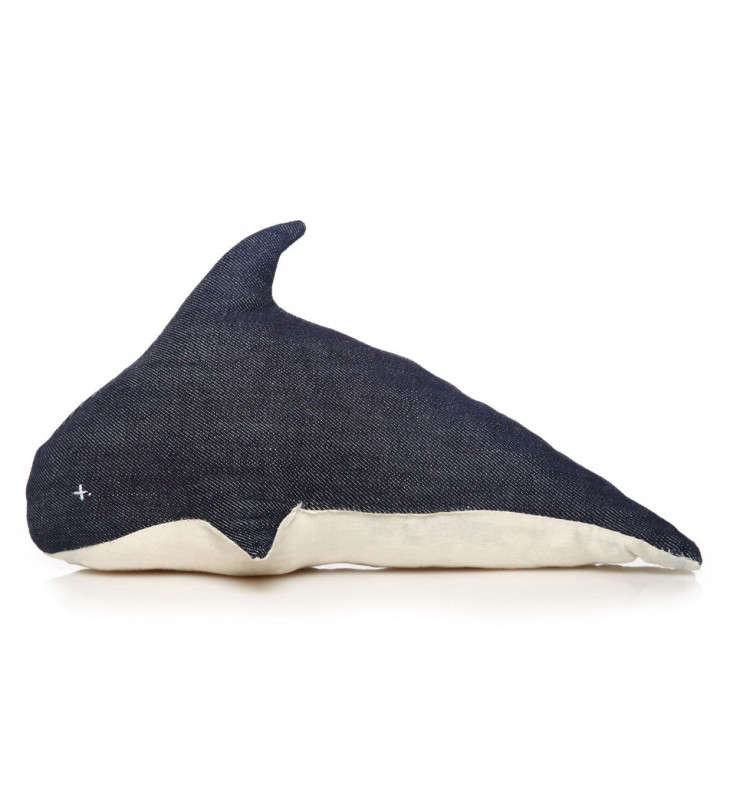
Some products arrive with all the subtlety of a marching band. Others just quietly float into view, looking charming, useful, and a little cooler than they have any right to be. Wally the Whale x A. W. T. B. belongs firmly in the second camp. It is, on paper, a small soft object: a denim whale made in collaboration between Fait La Force and A Well Traveled Brand. In spirit, though, it is much more than that. It represents the kind of thoughtful design that turns leftover materials into something warm, playful, and weirdly elegant. Yes, elegant. Even whales can dress well.
What makes this piece memorable is not some flashy gimmick or “look at me, I’m sustainable” grandstanding. It is the opposite. Wally the Whale feels like the kind of object that lets its materials and story do the talking. Denim gives it structure and personality. The canvas underside adds contrast. The stuffing, made from leather and fabric scraps from the workshop, turns what could have been waste into something tactile and lovable. That is good design in a nutshell: usefulness, restraint, and just enough whimsy to make people smile without rolling their eyes.
For anyone interested in ethical goods, nursery décor, artisan-made objects, or simply the rare stuffed whale that does not look like it was designed in a panic at a giant licensing meeting, Wally the Whale x A. W. T. B. is a fascinating case study. It sits at the crossroads of craftsmanship, sustainability, storytelling, and style. It also proves that a toy can feel handmade without looking homespun in the “this belongs next to a jar of antique buttons and a lecture about sourdough” sense.
What Exactly Is Wally the Whale x A. W. T. B.?
At its most basic, Wally the Whale x A. W. T. B. was a collaboration piece from Fait La Force and A Well Traveled Brand. The publicly described version was a denim whale with a canvas underside, filled with leather and fabric scraps from the workshop. That detail matters. A lot. In a mass retail landscape where stuffing is usually invisible and materials are often generic, Wally’s construction was part of its identity. The product did not hide its origins. It wore them proudly, like a tiny blue whale saying, “Yes, I am made with intention. Also, I am adorable. Two things can be true.”
The dimensions were modest, which likely added to its charm. It was not a giant floor pillow pretending to be an animal. It was a compact, tactile object sized for a shelf, a crib-side basket, a child’s hands, or a grown-up design enthusiast who insists they are buying it “for the house,” which is code for “I am absolutely keeping this.”
Its discontinued status only adds to the intrigue. In the design world, discontinued does not always mean forgotten. Sometimes it means the opposite. It can turn a small object into a snapshot of a moment when certain ideas were coming together: small-batch production, travel-shaped aesthetics, socially conscious commerce, visible handwork, and a hunger for products that felt both personal and principled.
Why This Collaboration Still Feels Special
A Meeting of Design and Craft
One reason this piece stands out is the collaboration itself. Fait La Force was associated with artisan production in Haiti and with products that balanced modern utility and traditional techniques. A Well Traveled Brand brought another layer: a handmade, personal, travel-inflected sensibility. When those two currents met, the result was not a corporate “capsule collection” with an overworked press release and underworked soul. It felt intimate. Considered. Like people actually sat at a table, handled materials, tested ideas, and wanted the finished object to feel honest.
That honesty matters. Consumers are very good at spotting when a brand is using phrases like crafted, heritage, or thoughtful as decorative garnish. Wally the Whale works because the object itself supports the story. Denim is sturdy. Canvas is practical. Scraps used as stuffing are not marketing confetti; they are a direct extension of workshop life. Instead of pretending production is magical, the piece acknowledges the workshop as a real place with real leftover material and real hands shaping the result.
The Beauty of a Product That Does Not Try Too Hard
There is also a design confidence here that deserves attention. Wally does not seem overloaded with embellishment. It does not need metallic trim, five novelty prints, or a face with the emotional intensity of a cartoon sidekick. The concept is simple: make a whale, make it well, let the fabric speak, and stop before it starts shouting. That restraint is one reason the piece likely appealed to adults as much as children.
Minimalist children’s products can sometimes drift into the humorless territory of “beautiful object that has never met a real child.” Wally avoids that trap. It still sounds soft, playful, and giftable. It has personality. But it also carries a grown-up design vocabulary, one rooted in texture, material contrast, and handmade credibility. In other words, it looks like it could belong in a stylish nursery without making the room feel like a boutique exploded in it.
The Sustainability Angle Is Not an Afterthought
If Wally the Whale has a secret superpower, it is that it turns material leftovers into emotional value. That is no small thing. Textile waste is a real issue, and design that extends the life of materials is more than a feel-good bonus. When brands use leftovers intelligently, they reduce waste while creating objects that often feel more distinctive than their mass-produced counterparts.
That is part of what makes Wally feel so modern, even now. The object belongs to a broader conversation about upcycling, deadstock, leftovers, and craft-led sustainability. Yet it does not lecture the buyer. It simply demonstrates the idea. A child sees a whale. A design lover sees clever material use. A sustainability-minded shopper sees resourcefulness. Everybody wins, including the workshop scrap bin, which finally gets a promotion.
And unlike some eco-branded products that seem to think righteousness is a substitute for beauty, Wally appears to understand that the object still has to be desirable. Good intentions alone do not make a great product. A bag made from noble principles but ugly enough to startle a mirror is still a bad bag. The same rule applies to toys and soft goods. Wally’s design strength is that it pairs values with visual appeal instead of expecting one to excuse the absence of the other.
Why the Whale Motif Works So Well
There is something especially smart about choosing a whale. Whales carry emotional weight without becoming saccharine. They suggest calm, wonder, travel, ocean depth, and a kind of gentle scale that children instinctively respond to. A whale can be comforting without being cutesy, which is harder to pull off than most people think. Many animal toys swing too far in one of two directions: either aggressively cartoonish or so pared down they look like abstract sculpture for infants with trust funds.
Wally seems to land in the sweet spot. The whale form is inherently friendly, but the denim material gives it a grounded, tactile quality. That contrast works beautifully. A sea creature made from workwear fabric creates a quiet little tension that makes the object more memorable. It is soft, but not flimsy. playful, but not silly. handmade, but not precious.
There is also a poetic logic in pairing a whale with a travel-minded brand. Whales migrate. They cross vast distances. They belong to stories of movement, memory, and return. A Well Traveled Brand, even by name, suggests journeys and collected experience. So the whale is not just cute branding. It feels thematically aligned. That kind of subtle coherence is what separates a decent collaboration from one that actually lingers in the imagination.
Wally the Whale as a Design Object, Not Just a Toy
One of the most interesting things about Wally the Whale x A. W. T. B. is that it can be read in two ways at once. It is a toy or soft companion, yes, but it is also a design object. That may sound dramatic for a little denim whale, but hear me out. The best small objects often carry oversized meaning. They reveal how a brand thinks about proportion, materials, texture, ethics, and audience.
Wally tells us a lot. It suggests a preference for natural wear, softness with structure, and materials that age gracefully. Denim does not remain pristine forever, and that is part of its charm. It acquires character. It becomes familiar. For a child, that can mean a favorite object that feels better over time. For an adult, it means the piece resists the sterile perfection of overmanufactured décor.
As a home accent, Wally would likely work in a nursery, a child’s reading corner, or even a living room shelf where it could function as a soft sculptural detail. Not every household wants a plastic rainbow elephant staring into the room like it knows your secrets. Some people want warmth, texture, and a hint of playfulness without sacrificing the whole aesthetic. Wally appears built for exactly that audience.
What Modern Brands Can Learn from It
There is a useful lesson here for contemporary brands trying to produce meaningful objects. First, material transparency matters. Buyers are drawn to products that make sense physically, not just emotionally. Second, collaboration works best when each partner contributes something visible: skill, story, technique, or design language. Third, sustainability is strongest when it is integrated into the object itself rather than taped onto the marketing after the fact like a sticky note saying “Please clap for our ethics.”
Wally the Whale x A. W. T. B. also reminds brands that scale is not everything. Small products can carry big narrative value. A modestly sized handmade item can communicate more authenticity than a sprawling collection with twenty-six SKUs and zero personality. Sometimes one thoughtful object says, “We know who we are.” That is more powerful than launching half a catalog and hoping one of the items develops a soul by accident.
The Enduring Appeal of Handmade, Travel-Shaped Design
Part of Wally’s staying power comes from how well it fits a broader American appetite for handmade, globally aware, story-rich goods. Consumers have long been drawn to items that feel connected to place, craft tradition, and real people. But they also want those items to fit contemporary homes and habits. That is where products like Wally shine. They are not museum pieces. They are not rough prototypes of a good idea. They are finished objects with warmth and polish.
That combination is rare. Many artisanal products are either beautifully made but difficult to integrate into daily life, or very practical but stripped of any cultural or tactile richness. Wally seems to bridge both needs. It is functional as a soft object, decorative as an accent, and compelling as a story. That triple role helps explain why a discontinued item can still spark interest years later.
There is also a quiet emotional intelligence to the piece. Handmade objects often feel more companionable because they carry signs of decision-making. Even when the construction is neat and controlled, the buyer senses that someone chose this seam, this fabric, this shape, this finish. That human trace creates attachment. It is the difference between “I bought a thing” and “I live with something.” Wally feels like the second category.
Experiences the Topic Brings to Mind
Imagine seeing Wally the Whale x A. W. T. B. for the first time not on a product page, but in a real room. Maybe it is resting in a woven basket beside a stack of board books, catching a sliver of afternoon sun. Maybe it is on a child’s bed beside a quilt with visible stitching and a linen pillow that has been washed enough times to stop trying to impress anyone. It does not dominate the space. It quietly completes it. That is a lovely kind of product experience, because the object feels discovered rather than announced.
There is a particular pleasure in picking up a handmade piece and instantly understanding it through touch. Denim reads differently than plush fleece. Canvas has its own confidence. A piece stuffed with workshop scraps has a more complex hand-feel than a generic stuffed toy. You imagine turning it over, noticing the contrast underneath, pressing it lightly, and realizing that it feels substantial in a way that surprises you. Not heavy. Not stiff. Just grounded. Like it knows where it came from.
Now imagine it as a gift. Not a panicked, pharmacy-aisle gift bought with the emotional energy of a dead battery, but a gift chosen with actual thought. The kind of thing someone unwraps and immediately asks about. “Where did you find this?” is one of the highest compliments an object can earn. Wally seems like the kind of gift that invites that question. It is playful enough for a child, stylish enough for a parent, and meaningful enough that the person giving it does not have to fake enthusiasm. Nobody has to say, “Well, at least it came with a gift receipt.”
There is also the experience of living with something that ages well. Denim softens. Fabric settles. Handmade goods pick up the memory of use. A mass-produced toy often looks tired once it has been loved. A well-made textile object often looks better. It becomes part of the room’s rhythm. It gets moved from crib to chair, from chair to shelf, from shelf to keepsake box. One day it stops being “that cute whale” and starts being “the whale we always had around.” That shift is subtle, but powerful. It is how objects become memory anchors.
For adults, the appeal can be just as real. There is a specific joy in owning something that aligns with your values without feeling preachy. You do not need every item in your home to make a speech. Sometimes you just want a beautiful object that happens to be smartly made, responsibly considered, and loaded with quiet character. Wally feels like that kind of presence. It is a reminder that ethical design does not need to look severe, and playful design does not need to look disposable.
And maybe that is the most memorable experience of all: the sense that a small object can hold many lives inside it. The designer’s eye. The artisan’s hand. The workshop’s leftover materials. The buyer’s taste. The child’s attachment. The room’s atmosphere. The years that pass. Wally the Whale x A. W. T. B. may be a modest item, but it suggests an expansive way of thinking about products. Not as clutter. Not as trend bait. But as companions to daily life, stitched from usefulness, beauty, and a little bit of wonder.
Final Thoughts
Wally the Whale x A. W. T. B. is a perfect example of how a small object can carry a surprisingly large design story. It combines handcrafted character, thoughtful collaboration, material reuse, and emotional appeal without becoming overly sentimental or overly serious. It is a whale made of denim and scraps, yes, but it is also an argument for making things better: better materials, better stories, better relationships between product and maker, and better reasons to keep an object around.
In a world crowded with disposable goods and loud branding, Wally’s quiet intelligence is refreshing. It shows that sustainability can be beautiful, that children’s design can be tasteful, and that handmade products can feel modern without sanding off their humanity. Most of all, it proves that good design does not always roar. Sometimes it just swims by in denim, looking effortlessly cool.