Most people describe their investment time horizon by counting the years until retirement. A 30-year-old says, “I have 35 years.” A 55-year-old says, “I have only 10.” Then retirement arrives, everyone blows an imaginary whistle, and the portfolio is apparently expected to stop growing, put on slippers, and spend the rest of its days watching daytime television.
That is not how investing works. Your true time horizon is determined by when each dollar will be spentnot simply when you leave your job. Some money may be needed next year, while another portion might remain invested for 20, 30, or even 50 years. Once you recognize those separate timelines, your financial plan can become more realistic, more flexible, and considerably less frightened by every dramatic market headline.
Research basis:
What Is an Investment Time Horizon?
An investment time horizon is the period between investing money and needing to use it for a specific financial goal. The correct horizon is attached to the goal, not permanently attached to the investor.
Money for a vacation next summer has a short time horizon. A home down payment planned for seven years from now has an intermediate horizon. Retirement savings belonging to a worker in their twenties may have a horizon measured in decades. Even after retirement, money intended for expenses at age 85 may still have 20 years or more to grow.
This goal-by-goal definition matters because investments behave differently over different periods. Volatile assets may offer greater long-term growth potential, but their value can fall sharply at inconvenient moments. More stable assets may protect near-term spending, yet they can struggle to keep pace with inflation over several decades.
Source support:
Why Your Real Investing Horizon May Be Surprisingly Long
Retirement Is a Transition, Not an Expiration Date
Many retirement plans treat the retirement date as the finish line. In reality, it is closer to halftimeexcept the second half may last several decades and include more medical appointments.
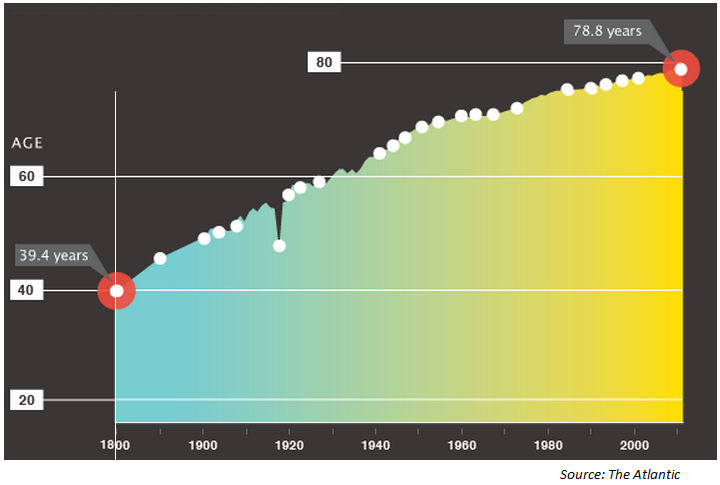
According to final U.S. mortality data, life expectancy at age 65 was another 19.7 years in 2024. That is an average, not a personal deadline. Many people live well beyond it, and couples must consider the possibility that one spouse will survive much longer than the other.
A person retiring at 65 may therefore need part of a portfolio to support spending at 85, 90, or later. Moving every dollar into cash on retirement day could reduce short-term volatility, but it may also expose the portfolio to decades of inflation and missed growth.
Source support:
Different Dollars Have Different Deadlines
Suppose a 65-year-old retiree has accumulated $800,000. They will not normally spend the entire balance during their first year of retirement. A portion may cover expenses over the next two years, another portion may be used during the following decade, and the rest may not be touched for 15 years or longer.
Calling the entire $800,000 a “short-term portfolio” ignores those separate spending dates. A better framework divides the money by purpose:
| Approximate Horizon | Primary Job | General Planning Emphasis |
|---|---|---|
| 0–3 years | Near-term bills and emergencies | Liquidity and capital preservation |
| 3–10 years | Intermediate spending goals | Balance between stability and growth |
| 10+ years | Late retirement or legacy goals | Long-term growth and inflation protection |
These ranges are not universal investment prescriptions. They simply demonstrate that one household can have several time horizons operating simultaneously.
Source support:
Your Household Horizon May Extend Beyond Your Lifetime
Some assets may eventually support a younger spouse, children, grandchildren, a charitable organization, or another beneficiary. That does not automatically mean the money should be invested aggressively. It does mean the investor should identify the asset’s eventual purpose before assuming that age alone determines the appropriate strategy.
Retirement accounts also come with distribution and beneficiary rules. Those rules can affect when assets must be withdrawn, how long they can remain tax-deferred, and how heirs receive them. Long-term investing should therefore coordinate portfolio decisions with estate planning and tax planning rather than treating them as unrelated hobbies.
Source support:
Why Time Can Be an Investor’s Most Valuable Asset
Compounding Needs Years, Not Excitement
Compounding occurs when an investment earns returns and those returns begin producing returns of their own. It is not visually thrilling. There are no fireworks, theme songs, or people shouting into three television cameras. It simply becomes more powerful as time passes.
Consider a hypothetical $10,000 investment growing at an average annual rate of 6%, with no taxes, fees, withdrawals, or additional contributions:
- After 10 years: approximately $17,908
- After 20 years: approximately $32,071
- After 30 years: approximately $57,435
- After 40 years: approximately $102,857
The assumed return is not guaranteed, and actual markets do not deliver the same result every year. The example simply shows how additional decades can matter more than investors expect. Time is a slow employee, but it rarely asks for a raise.
Source support:
A Long Horizon May Improve Your Ability to Absorb Volatility
Investors with many years before a goal may be able to tolerate more short-term fluctuation because they are less likely to need money during a market decline. Historically, broad stock portfolios have had more opportunities to recover over long holding periods than over short ones.
However, “lower probability of loss” is not the same as “no risk.” Stocks can remain disappointing for years, individual companies can fail permanently, and a concentrated portfolio can turn a long horizon into a long apology. Time helps diversified investments more reliably than it helps speculation.
Source support:
Long-Term Money Can Better Confront Inflation
Cash is useful for emergencies and near-term spending, but inflation gradually reduces what each dollar can buy. A portfolio that must support spending decades in the future usually needs some opportunity for growth. Otherwise, its balance may look stable while its purchasing power quietly shrinks in the background.
The objective is not to avoid cash or bonds. It is to assign each asset an appropriate job. Cash can handle immediate needs, bonds can provide stability and income, and diversified growth investments can pursue returns for later goals.
Source support:
A Long Time Horizon Is Not Permission to Ignore Risk
Risk Tolerance Still Matters
Your financial capacity to accept risk and your emotional willingness to accept it are not always the same. A spreadsheet may say you can withstand a 30% decline. Your stomach may submit a formal objection after the first 12%.
A theoretically efficient portfolio is not useful if normal volatility causes you to abandon it at the worst possible moment. An appropriate asset allocation must consider the goal, time horizon, income, liquidity needs, investment experience, and personal reaction to losses.
Source support:
Liquidity Can Shorten Your Horizon Without Warning
You may intend to invest for 30 years, but an unexpected medical bill, job loss, home repair, or family emergency can suddenly create an immediate need for cash. Selling long-term investments during a market decline can permanently damage a plan.
That is why an emergency reserve is not “lazy money.” It protects the rest of the portfolio from being interrupted. The reserve acts like a financial bouncer, keeping surprise expenses away from assets that need time to grow.
Source support:
Withdrawals Introduce Sequence-of-Returns Risk
During the accumulation stage, a market decline can be uncomfortable but may allow ongoing contributions to purchase assets at lower prices. During retirement, the same decline can be more damaging if the investor must sell assets to fund expenses.
This is known as sequence-of-returns risk. Poor returns early in retirement, combined with withdrawals, may leave fewer assets available to participate in a later recovery. Two retirees can earn similar long-term average returns yet experience very different outcomes because those returns arrived in a different order.
Maintaining near-term spending reserves, adjusting discretionary withdrawals, diversifying income sources, and regularly reviewing the plan may help manage this risk.
Source support:
How to Build a Portfolio Around Multiple Time Horizons
Step 1: Name Every Major Goal
Begin with the reason the money exists. Retirement is too broad by itself. Break it into categories such as essential expenses, travel, future health care, housing, family support, charitable giving, and inheritance goals.
When a goal has a name, it becomes easier to estimate when the money may be needed and how much volatility it can reasonably tolerate.
Step 2: Protect Near-Term Obligations
Money required soon should generally not depend on favorable stock market conditions. Build an emergency reserve and consider how upcoming spending will be funded before increasing exposure to long-term assets.
Retirees should also account for predictable income such as Social Security, pensions, or annuity payments. For example, Social Security retirement benefits generally increase when claiming is delayed, up to age 70, although the best claiming decision depends on individual circumstances.
Source support:
Step 3: Match Investments to Spending Dates
Once short-term needs are protected, the remaining portfolio can be organized around intermediate and long-term goals. Investors commonly use combinations of cash, high-quality bonds, diversified stock funds, and other assets based on their risk profile.
Diversification does not guarantee a profit or prevent losses. It reduces dependence on a single company, industry, country, or investment style. In plain English, diversification keeps one terrible idea from being promoted to chief executive officer of your entire financial future.
Source support:
Step 4: Keep Costs and Taxes in the Conversation
Small recurring costs can compound in the wrong direction, particularly over a long horizon. Review fund expenses, advisory charges, trading costs, and account fees. A strategy does not become sophisticated merely because its fee schedule requires a magnifying glass.
Asset location may also matter. Investments that generate different kinds of taxable income may be better suited to different account types. Tax decisions can be complex, so investors should evaluate them alongside qualified tax guidance rather than making choices solely from generic online rules.
Source support:
Step 5: Rebalance Instead of Reacting
As markets move, a portfolio can drift away from its intended allocation. Periodic rebalancing restores the target mix by trimming assets that have grown beyond their role and adding to areas that have fallen below their target.
Rebalancing is different from panic trading. One follows a plan; the other follows a flashing headline and three strangers arguing on social media. Reviews can be performed on a schedule or when allocations move beyond predetermined limits.
Source support:
Step 6: Update the Plan When Life Changes
A time horizon is not carved into stone. Retirement dates move. Health changes. Families grow. Careers end earlier or later than expected. Spending goals also evolve once people discover that retirement hobbies can cost significantly more than the brochure suggested.
Review the plan after major life events and during regular portfolio checkups. The purpose is not to predict every future market move. It is to keep the investments aligned with the life they are supposed to support.
Source support:
Questions That Reveal Your True Investment Horizon
Before describing yourself as a short-term or long-term investor, ask:
- When will I need the first dollar from this account?
- When might I need the final dollar?
- Which expenses are essential and which are flexible?
- What income will come from outside the portfolio?
- Could a spouse or beneficiary use these assets after my death?
- Do I have enough liquid savings to avoid selling during an emergency?
- How would I respond emotionally to a major market decline?
- Has my portfolio become concentrated in one company, sector, or country?
Your answers may reveal that your money has a much longer lifespan than your retirement countdown suggests.
Experience-Based Scenarios: What a Long Horizon Feels Like
The following are composite educational scenarios based on common investor experiences. They are not personal testimonials or individualized recommendations.
The Young Investor Who Thought Every Decline Was an Emergency
Maya began contributing to a workplace retirement account in her late twenties. She selected a diversified portfolio, automated her deposits, and felt wonderfully responsible for approximately six weeks. Then the market declined.
She opened her account every morning, although no meaningful retirement decision required daily inspection. A temporary loss felt permanent because she was looking at a 35-year goal through a 24-hour window.
After reviewing the purpose of the account, Maya recognized that she would not need the money for decades. She also noticed that her automatic contributions were purchasing more shares at lower prices. She stopped checking daily, increased her emergency reserve, and scheduled one annual portfolio review.
The important experience was not that the market immediately recovered. It was learning that discomfort did not automatically require action. Her long time horizon became useful only after her behavior allowed her to keep it.
The Retirees Who Had More Than One Finish Line
David and Elena retired with pensions, Social Security benefits, savings, and a diversified investment portfolio. Their first instinct was to move everything into cash because they no longer received paychecks. Cash felt safe, and safety felt especially attractive after decades of saving.
However, their essential income covered much of their normal spending. Only a portion of the portfolio would be needed during the next several years. Another portion might fund expenses in their eighties, and some assets were intended for their children.
They organized the portfolio by spending horizon rather than labeling every asset “retirement money.” Near-term withdrawals were supported by stable reserves, while later goals retained measured exposure to growth. They still experienced market declines, but they no longer believed every decline threatened next month’s grocery budget.
The experience showed them that retirement had changed their cash flow, not eliminated their need for long-term planning.
The Successful Saver Who Had Accidentally Built a Concentrated Portfolio
Jordan worked for a fast-growing company and accumulated a large position in employer stock through grants and an employee purchase plan. The investment had performed well, and its success made the position feel safer than it was.
Jordan had a long horizon, but that did not protect against company-specific risk. Employment income, health benefits, future bonuses, and a large portion of the investment portfolio all depended on the same business.
Rather than making one emotional all-or-nothing decision, Jordan created a gradual diversification plan, considered tax consequences, and redirected new savings into broader investments. The goal was not to predict whether the company would rise or fall. It was to prevent one corporate surprise from determining the family’s entire financial future.
The lesson was simple: a long time horizon can help a diversified strategy recover from volatility, but it cannot resurrect a company that permanently loses value.
The Investor Who Discovered That Patience Needs Infrastructure
Rachel regularly described herself as a long-term investor, yet unexpected expenses repeatedly forced her to withdraw money. A broken water heater, a dental bill, and a period between jobs turned her long-term account into an expensive emergency fund.
Her problem was not a lack of patience. It was a lack of financial structure. Rachel temporarily reduced her investment contributions and built a dedicated cash reserve. Once the reserve was established, she resumed investing automatically.
The change was not glamorous, but it allowed her long-term assets to remain long term. She learned that successful patience requires practical support: accessible savings, manageable debt, realistic insurance coverage, and a spending plan that leaves room for life to be inconvenient.
Scenario principles supported by:
Conclusion: Think Beyond the Retirement Date
You might really have a long time horizon to investeven if retirement is approaching or has already begun. The key is to stop treating your age as the only clock that matters. Each financial goal has its own deadline, and each portion of your portfolio should be designed around when the money will be used.
A longer horizon may create more opportunity for compounding, recovery, and inflation-beating growth. It does not eliminate risk, excuse poor diversification, or make speculative investments sensible. Near-term obligations still need protection, withdrawals must be planned carefully, and the portfolio must remain compatible with your actual tolerance for volatility.
The strongest investment plan is not the one that predicts next year perfectly. It is the one that gives tomorrow’s money enough time to remain invested while ensuring that today’s bills do not have to ask the stock market for permission.