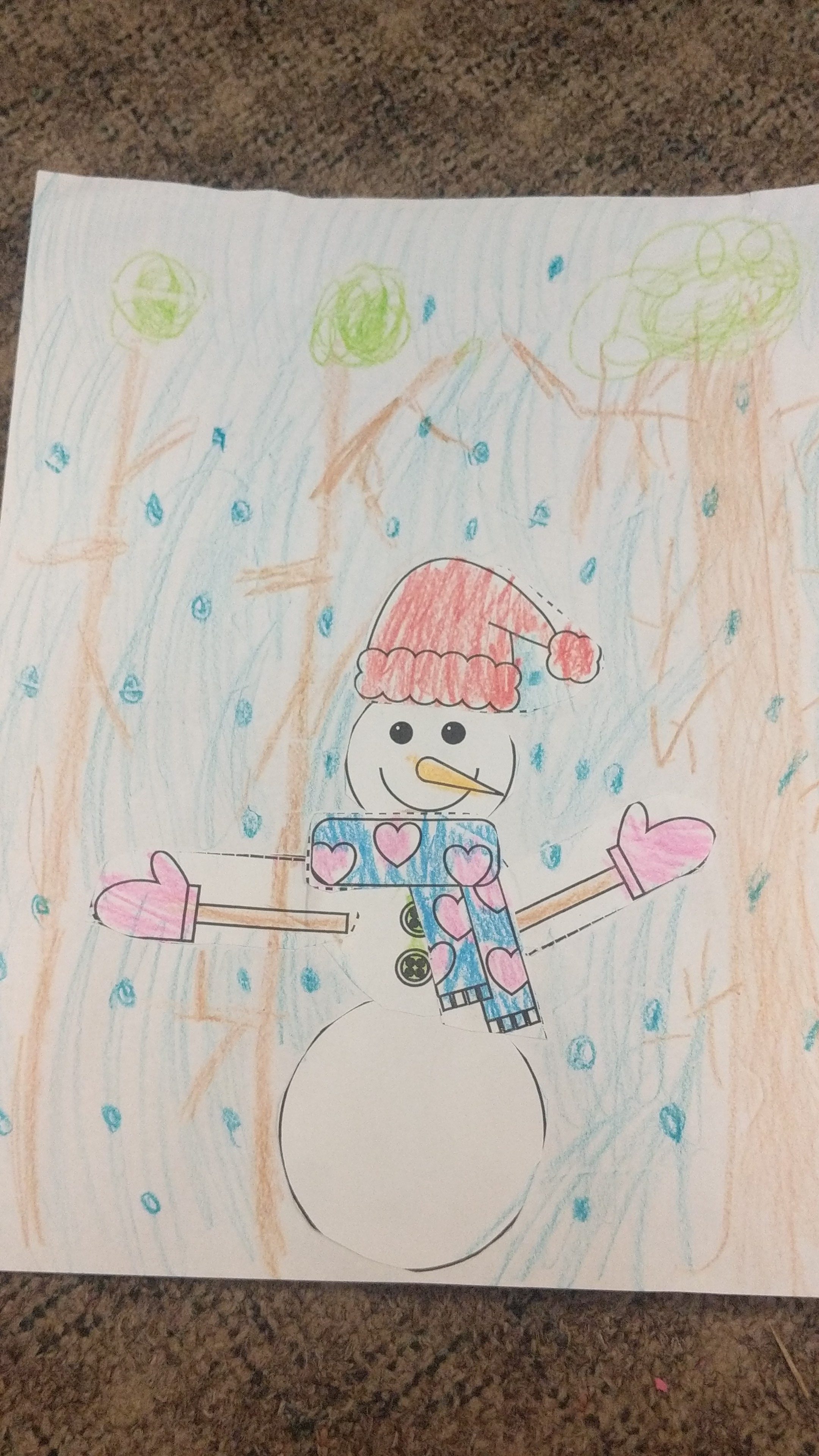
Some childhood drawings belong in museums. Others belong in a locked cabinet labeled, “We will discuss this when you are 30.”
Maybe you once drew your family as floating heads with six-inch legs. Perhaps your child created a purple animal called “Grandma’s Emergency Horse,” then calmly explained that it eats refrigerators during thunderstorms. Or maybe your younger sibling produced a portrait so unsettling that everyone agreed to hang it on the fridgemostly because nobody wanted to make the creature angry.
That is exactly what this community challenge celebrates: the wonderfully strange, unintentionally hilarious, occasionally spooky art created by children. Skill is optional. Anatomical accuracy is strongly discouraged. Siblings are absolutely accepted, especially when they provide supporting testimony.
Behind every weird kids’ drawing is often a story, an experiment, a joke, a memory, or a piece of logic that makes perfect sense to the young artist. Let us explore why childhood artwork becomes so delightfully bizarre, how adults can respond without crushing the creativity, and how to share these miniature masterpieces respectfully.
Why Weird Childhood Drawings Are So Entertaining
Adults usually draw what they believe an object is supposed to look like. Children are much less burdened by this inconvenient concept.
A child may draw a dog with seven legs because there was extra room under its stomach. A person may have enormous hands because hands are important for holding cookies. Dad might be colored green because the green crayon was nearby. The sun may appear indoors because, according to the artist, “The house needed better lighting.”
Children do not always separate observation, memory, imagination, and storytelling. Those ingredients can land on the same sheet of paper at once. The result may resemble a family portrait directed by a surrealist filmmaker who has consumed too much fruit punch.
Children Draw What Matters, Not Necessarily What Is Visible
Young artists frequently emphasize the features they consider important. A favorite hat may be larger than the person wearing it. A feared spider may occupy half the page. A baby sibling may be represented as a tiny circle because, artistically and politically, the baby has not yet earned limbs.
As children develop, their drawings generally move from exploratory marks and scribbles toward recognizable shapes, symbols, people, and scenes. The CDC lists drawing a person with three or more body parts among the milestones commonly reached by age four, while pediatric guidance emphasizes that development varies among children. A single unusual picture is therefore better treated as a conversation starter than as a technical examination.
What Children Practice When They Draw
A strange drawing may look like ten minutes of chaotic crayon activity, but a surprising amount of work can be happening behind it.
Fine Motor Coordination
Holding a crayon, controlling pressure, making curves, and trying to connect lines all involve small-muscle coordination. Drawing and early writing give children opportunities to practice movements they will later use for letters, numbers, buttons, scissors, and other precise tasks.
This does not mean every preschooler needs to produce a gallery-ready portrait. One child may love drawing while another prefers blocks, music, pretend play, or repeatedly launching toy trucks down the stairs in the name of “science.” Fine motor abilities and artistic interest do not always develop at identical speeds.
Symbolic Thinking
Drawing lets children use one thinga line, shape, or colorto represent something else. A circle can become a face. Four lines can become a family. A black rectangle with teeth can become “the machine that makes Tuesdays.”
This symbolic leap is important because it connects visual expression with language, storytelling, planning, and early writing. Penn State Extension notes that preschoolers increasingly understand how a picture or model can represent a real object, while NC State Extension describes children’s art as part of a broader progression in creative development.
Creative Problem-Solving
A blank page presents dozens of tiny decisions. What should be drawn? Which color should be used? How can a dragon, a grocery store, and an aunt named Susan fit in the same landscape?
Process-focused art gives children room to experiment without chasing one predetermined result. Organizations including the National Association for the Education of Young Children and PBS KIDS encourage adults to value exploration, choice, and discovery rather than demanding that every project match an adult example.
The Classic Ingredients of a Super-Weird Kid Drawing
Every young artist has a unique style, but certain features repeatedly appear in the world’s finest refrigerator galleries.
Questionable Human Anatomy
Expect arms emerging directly from heads, fingers shaped like garden rakes, transparent bodies, and smiles containing enough teeth for three adult sharks.
These are not necessarily mistakes from the child’s point of view. They are efficient design choices. Why waste time drawing a torso when the legs can simply attach to the face?
Impossible Animal Hybrids
Children rarely respect the traditional boundaries between species. Common creations may include:
- A cat with wings, antlers, and roller skates
- A fish that lives in a tree and dislikes sandwiches
- A dinosaur with human hair
- A horse whose back opens into a snack cabinet
- A snake with shoes because “the floor is cold”
The explanation is often much better than the drawing itself, so record the creature’s name and biography before those details disappear.
Unintentionally Ominous Messages
Nothing improves a cheerful family portrait like the handwritten sentence, “WE ARE ALL INSIDE FOREVER.”
Children may choose dramatic words because they recently heard them, enjoy how they sound, or are experimenting with spelling. Context matters. Ask what is happening rather than reacting as though a tiny screenwriter has just pitched the next supernatural horror franchise.
Wild Differences in Scale
In childhood art, physical size often follows emotional importance rather than geometry. The family dog may be taller than the house. A birthday cake may occupy 80% of the paper. One parent may be three times larger than the other because that parent was drawn first and the artist failed to budget space responsibly.
How Adults Should Respond to Strange Children’s Art
The easiest response is often, “What is that?” Unfortunately, this question can make a child feel that the picture failed to communicate anything recognizable.
A warmer approach begins with observation and curiosity.
Describe What You Notice
Try comments such as:
- “You used a lot of red around this character.”
- “I see several tiny doors on that building.”
- “This creature has an impressive number of elbows.”
- “You filled almost the entire page.”
These comments show attention without deciding what the image is supposed to represent.
Ask Open-Ended Questions
Useful questions include:
- “Can you tell me the story of this picture?”
- “What is happening over here?”
- “Who is this character?”
- “What happens next?”
- “Which part was the most fun to draw?”
Drawing can help children communicate ideas and feelings that are difficult to explain directly. Child development specialists commonly recommend commenting gently and allowing the child to supply the meaning rather than imposing an adult interpretation.
Praise the Effort and Choices
Instead of relying only on “That is beautiful,” mention the process:
“You worked carefully on those patterns.”
“You invented something I have never seen before.”
“That color combination makes the monster look extremely official.”
Process-based feedback encourages children to continue experimenting. NAEYC guidance recommends art experiences with room for choice and exploration, while pediatric play guidance encourages adults to praise creative effort and provide supplies without controlling the outcome.
Do Not Diagnose a Child From One Weird Picture
Adults are natural pattern-finders. Unfortunately, that means an unusual drawing can tempt someone to transform into an amateur detective.
“Why is Mom missing from the picture?”
Maybe Mom was at work. Maybe the child ran out of room. Maybe Mom was represented by the enormous blue tornado labeled “M.”
There is no foolproof system for decoding a child’s inner life from one image. Drawings can support conversation, observation, or professional therapeutic work, but their meaning depends heavily on the child, situation, instructions, and surrounding behavior.
If disturbing themes repeatedly appear alongside major behavioral changes, intense fear, sleep problems, withdrawal, aggression, or statements suggesting that a child feels unsafe, respond calmly and seek guidance from a pediatrician or qualified child mental health professional. The concern should be based on the broader pattern, not merely the presence of a black crayon or an artistically suspicious moon.
How to Join the “Hey Pandas” Drawing Challenge
Ready to release your family’s strangest artwork into the world? Search old school folders, closets, memory boxes, refrigerators, grandparents’ houses, and that mysterious drawer where every family stores dead batteries and documents from 2009.
What You Can Submit
- A picture you drew as a child
- A drawing made by your child
- A creation by a brother or sister
- A collaborative sibling masterpiece
- A school assignment that took a bizarre turn
- A drawing with a hilarious original caption
- A picture that requires an extensive explanation
The ideal submission is not necessarily the strangest image. A simple drawing can become legendary when paired with the artist’s explanation.
For example:
“This is our family visiting the moon. Dad is not in the picture because he forgot his helmet.”
That is not just art. That is narrative efficiency.
Include the Story Behind It
When possible, add:
- The artist’s approximate age
- What the child said the picture represented
- Where the drawing was discovered
- How the family reacted
- Whether the artist still remembers creating it
A few sentences of context can turn a mysterious doodle into a complete comedy scene.
Share Children’s Art Without Embarrassing the Artist
A childhood drawing may be funny, but the child is still a person rather than an unpaid content department.
Ask permission when the artist is old enough to understand. Avoid posting full names, school information, addresses, recognizable documents, or details that reveal a child’s location. Consider covering a written surname or classroom label before uploading the image.
The American Academy of Pediatrics encourages parents to think carefully before posting material about children, including whether the child could later feel embarrassed. The FTC also advises families to discuss online privacy and remember that photos and personal information can spread beyond the original audience.
If your sibling created the drawing decades ago, permission is still a wise idea. “But you were six” is not a legally recognized defense against an angry family group chat.
Ways to Preserve Weird Childhood Artwork
Children can produce paper at an industrial rate. Saving everything may require a storage facility and a forklift, but a simple system can preserve the best pieces.
Create an Annual Art Folder
Choose a sturdy folder or portfolio for each year. Add the date, age, title, and any memorable explanation in pencil on the back.
Photograph Oversized or Fragile Work
Sidewalk chalk, cardboard sculptures, and paintings made on questionable surfaces may not survive. A clear photograph can preserve the creation without requiring the family to store a refrigerator box covered in glue.
Make a Family Art Book
Scan selected pieces and arrange them chronologically. Include quotations from the artists. A printed book of strange childhood drawings can become a meaningful gift, particularly when presented at an age when the recipient is mature enough to appreciate it and too polite to leave immediately.
Display Art at the Child’s Eye Level
Displaying selected work shows that the effort matters. Penn State Extension recommends presenting children’s artwork in ways that affirm their creative work, and NAEYC notes that documenting the artistic process can include photographs, work samples, observations, and the child’s own words.
Turn One Weird Drawing Into a Family Activity
A memorable picture does not have to remain a static artifact. Use it to launch another creative project.
- Write the backstory: Invent the creature’s origin, occupation, favorite food, and greatest enemy.
- Redraw it years later: Ask the original artist to reinterpret the picture without removing its strange features.
- Trade drawings: One sibling draws a creature, and another creates its home.
- Build a sculpture: Recreate the character using cardboard, modeling clay, or recycled materials.
- Create a comic: Place the character in a three-panel adventure.
- Play drawing telephone: Each family member adds one element without explaining it.
Shared drawing activities can support conversation, flexibility, cooperation, and playful connection. Research-based child development resources consistently emphasize that creative, child-led play provides opportunities to practice communication, planning, and social skills.
Experiences From the Wonderful World of Weird Kid Art
The following composite experiences reflect the kinds of situations parents, teachers, siblings, and former young artists commonly recognize.
The Portrait That Became Family Evidence
One parent discovered an old kindergarten drawing showing four family members standing beside a house. Three figures had ordinary circular heads. The fourth had a square head, black teeth, and arms extending beyond the edges of the paper.
Naturally, everyone wanted to know which family member had inspired the geometric nightmare.
The now-adult artist studied the picture for several minutes before remembering the truth: the square-headed figure was an older brother wearing a bicycle helmet. The “black teeth” were the helmet vents, and the giant arms represented his habit of blocking the television.
A picture that initially looked like evidence from a paranormal investigation turned out to be an accurate record of sibling irritation.
The lesson was simple: save the explanation with the art. Memory fades, context disappears, and eventually everyone starts accusing Uncle Mark.
The Monster With a Responsible Career
Another child drew a towering orange creature with fourteen eyes, wheels instead of feet, and a small briefcase. The adults assumed it was a villain. The artist was offended.
The creature, named Kevin, was apparently a building inspector. His extra eyes helped him locate cracks, his wheels allowed him to travel between construction sites, and the briefcase contained permits. He looked angry because, as the child explained, “Nobody follows the rules.”
That explanation transformed the drawing. The monster was not frightening; he was exhausted by regulatory noncompliance.
The adults asked follow-up questions, and the child developed an entire world populated by specialized creatures. One checked elevators. Another inspected playground slides. A third creature worked at a desk and rejected forms for reasons nobody understood.
What began as a strange drawing became a week of storytelling, character design, and pretend play. The experience demonstrated why asking “Tell me about this” is often more productive than immediately asking, “Why does it have fourteen eyes?”
The Sibling Collaboration That Escalated
Two siblings once agreed to share a sheet of paper. The older child drew a peaceful farm with a barn, fence, clouds, and several carefully proportioned cows. The younger sibling added a enormous purple circle in the sky.
“That is the moon,” the younger artist announced.
The older sibling objected because the picture already showed daytime. The younger child responded by adding teeth to the moon. Then came legs. Then laser beams. Soon the cows were escaping in a bus while the farmer attempted to defend the barn with a spoon.
The older sibling was initially furious. Years later, however, that chaotic collaboration became one of the family’s favorite surviving drawings. The polished farm would have been pleasant. The carnivorous moon made it unforgettable.
This is one reason siblings are enthusiastically accepted in the challenge. Shared art captures negotiation, rivalry, humor, and the occasional hostile takeover of another person’s composition.
The Drawing Nobody Should Have Corrected
A preschooler drew rain falling upward into a cloud. An adult nearly explained that rain moves in the opposite direction but paused and asked what was happening.
The child said the cloud had become empty and the ocean was “giving the water back.”
The scientific mechanism required additional work, but the underlying idea was imaginative and surprisingly connected to the water cycle. Correcting the direction immediately would have ended the conversation. Curiosity revealed the theory.
Adults often know more facts, but children are unusually talented at combining ideas that adults keep in separate mental boxes. Their pictures may mix dreams, lessons, jokes, fears, observations, and invented rules. Supporting that process does not require pretending every statement is accurate. It means allowing the child to finish the thought before beginning the explanation.
The Childhood Picture That Improved With Age
Sometimes the artist is the person rediscovering the weird drawing. An adult may open a school folder and find an old self-portrait with blue skin, a triangular body, and a caption announcing, “When I grow up I will live behind the grocery store.”
The first reaction is embarrassment. The second is laughter. The third is often affection for the fearless little person who had strong opinions about color and highly specific real-estate goals.
Childhood artwork preserves more than drawing ability. It captures vocabulary, humor, family dynamics, temporary obsessions, and versions of the world that no longer exist. That is why even the weirdest picture may become precious. It is a message from a younger mind that had not yet learned which ideas were considered reasonableand was probably more interesting because of it.
Conclusion: Let the Strange Little Masterpieces Shine
Weird childhood drawings deserve more than a quick laugh. They show children experimenting with symbols, stories, movement, emotions, relationships, and the difficult task of fitting an eight-legged grandmother onto letter-size paper.
So open the memory box. Inspect the refrigerator archives. Contact your siblings and request clearance to publish their finest early work. Share the lopsided families, suspicious animals, cheerful disasters, and monsters with administrative jobs.
Most importantly, include the story. The picture may be strange, but the explanation is often where the true masterpiece lives.
Note: This article synthesizes child-development and arts guidance from reputable U.S. organizations and educational resources, including the American Academy of Pediatrics, CDC, NAEYC, Child Mind Institute, Harvard University, NC State Extension, Penn State Extension, PBS KIDS, National Endowment for the Arts, Cleveland Clinic, Federal Trade Commission, and professional commentary on children’s artistic expression.