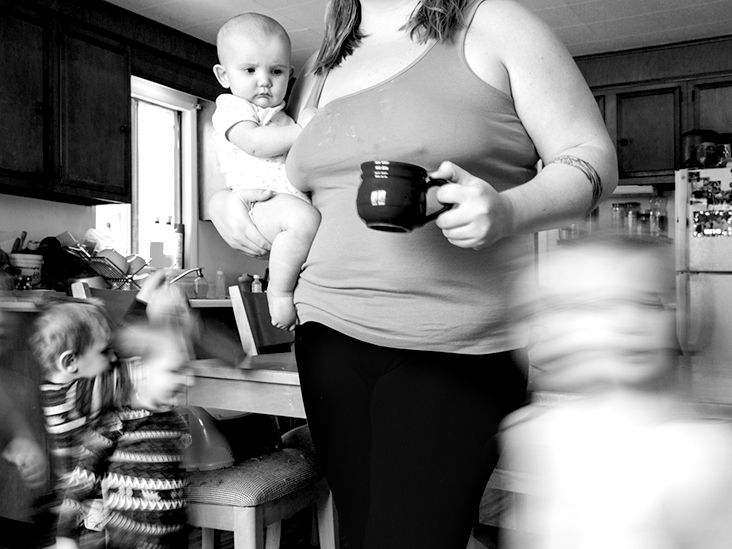
Staying home with children can be meaningful, funny, tender, chaotic, and deeply exhaustingsometimes all before 8:15 a.m. Although many mothers value the opportunity to care for their families full time, the experience can also bring isolation, identity loss, financial dependence, relentless responsibility, and a surprising amount of loneliness.
Stay at home mom depression is a common phrase used to describe depressive symptoms that develop or become worse while a mother is primarily caring for children at home. It is not a separate clinical diagnosis. A health care professional may instead diagnose major depression, perinatal depression, anxiety, caregiver burnout, or another condition based on the symptoms, their duration, and their effect on daily life.
What Does Stay at Home Mom Depression Feel Like?
Depression does not always look like crying in a dark room while sad piano music plays in the background. A mother may prepare meals, schedule appointments, clean up spilled juice, answer school emails, and appear completely capable while privately feeling empty or hopeless.
Some mothers describe moving through the day on autopilot. They complete an impressive number of tasks but experience little pleasure or emotional connection. Others feel unusually irritable, restless, numb, guilty, or angry. They may wonder why they are struggling when they supposedly have something they always wanted.
That question“Why am I unhappy when I should be grateful?”often adds a second layer of pain. Depression is not evidence of ingratitude, weakness, poor parenting, or insufficient love for one’s children. A person can adore her family and still need treatment and support.
Why Staying Home Can Affect a Mother’s Mental Health
Social Isolation
Children provide plenty of company, but conversations about crackers, cartoon dinosaurs, and whether socks are morally necessary do not always satisfy an adult’s need for mutual connection. A stay-at-home mother may go hours or days without meaningful interaction with another adult, especially if friends are working or extended family lives far away.
Online contact can help, but scrolling through polished family photos may sometimes deepen loneliness. Social media shows the coordinated outfits, not the argument that occurred five minutes before the picture.
Invisible and Repetitive Labor
Household and caregiving work is real work, yet much of it disappears as soon as it is completed. The dishes return. The laundry multiplies under mysterious conditions. Someone asks what is for dinner while standing next to the dinner being prepared.
This cycle can create the feeling that nothing is ever finished. When labor is unpaid, unnoticed, or treated as effortless, a mother may feel undervalued even while carrying much of the family’s physical and emotional workload.
Loss of Identity
Before becoming a full-time caregiver, a woman may have received feedback through work, education, hobbies, friendships, or professional goals. At home, her identity may gradually shrink until she feels known only as someone’s mother or partner.
Motherhood can be a treasured part of a person’s identity without being the only part. Missing a career, creative interest, community role, or previous sense of independence does not mean she regrets having children.
No Clear Boundary Between Work and Rest
Most jobs have a beginning, an ending, or at least a door through which the employee can dramatically exit. Full-time parenting does not. Even after bedtime, a mother may be planning meals, washing bottles, packing lunches, monitoring a fever, or mentally reviewing tomorrow’s schedule.
Without protected off-duty time, chronic stress can become normal. A mother may not notice how depleted she is until a small inconveniencesuch as the wrong color cupfeels like the final scene of an emotional disaster movie.
Sleep Loss and Physical Recovery
New mothers may also be healing from pregnancy and childbirth while feeding an infant around the clock. Sleep deprivation can intensify sadness, irritability, anxiety, and difficulty concentrating. Hormonal changes, breastfeeding challenges, pain, thyroid problems, anemia, and other medical conditions may contribute to symptoms and deserve professional evaluation.
Financial and Relationship Pressure
Depending on one income can create stress even when staying home was a mutual decision. A mother may feel uncomfortable spending money, worry about returning to the workforce, or believe she must compensate financially by handling every household task.
Conflict may grow if a working partner assumes the stay-at-home parent has more free time. Caring for children and maintaining a home are not an all-day vacation package, despite the occasional appearance of sweatpants.
Signs of Depression in a Stay-at-Home Mom
Everyone has difficult parenting days. Depression becomes more concerning when symptoms persist for roughly two weeks or longer, occur most of the day, or interfere with relationships, self-care, parenting, and ordinary responsibilities.
- Persistent sadness, emptiness, hopelessness, or emotional numbness
- Loss of interest in activities that once felt enjoyable
- Frequent irritability, anger, or impatience
- Exhaustion that does not improve with reasonable rest
- Sleeping much more or less than usual
- Changes in appetite or weight
- Difficulty concentrating, remembering, or making decisions
- Withdrawing from friends, relatives, or a partner
- Feeling worthless, trapped, guilty, or like a burden
- Believing the family would be better off without her
- Difficulty bonding with or enjoying time with the children
- Thoughts of death, suicide, self-harm, or harming someone else
Some symptoms can also be caused or worsened by physical health conditions. A clinician may consider thyroid disorders, anemia, vitamin deficiencies, medication effects, chronic pain, sleep disorders, or other medical explanations.
Depression, Mom Burnout, or Postpartum Depression?
Mom Burnout
Mom burnout usually involves emotional and physical exhaustion related to ongoing parenting demands. A burned-out mother may feel cynical, detached, overwhelmed, or desperate for a break. Rest, shared responsibilities, and practical support may substantially improve her mood.
Major Depression
Depression often reaches beyond parenting duties. The mother may lose interest in nearly everything, feel hopeless even after resting, or struggle to function across several areas of life. Burnout and depression can overlap, and untreated burnout may contribute to worsening mental health.
Postpartum Depression
Postpartum depression is a form of perinatal depression associated with pregnancy and childbirth. It is more severe and persistent than the temporary baby blues, which usually improve within about two weeks. Postpartum depression may begin during pregnancy or emerge in the months after delivery, sometimes when the family assumes the most difficult adjustment period has already passed.
Symptoms may include intense sadness, anxiety, panic, rage, guilt, sleep disturbance unrelated to the baby’s schedule, frightening intrusive thoughts, and difficulty bonding with the infant. Having intrusive thoughts does not automatically mean a mother will act on them, but they should be discussed promptly with a qualified professional.
Postpartum Psychosis
Postpartum psychosis is rare but constitutes a medical emergency. Warning signs can include hallucinations, delusions, severe confusion, paranoia, disorganized behavior, or a dramatically decreased need for sleep accompanied by unusual energy. Emergency help should be obtained immediately.
How to Get Help for Stay at Home Mom Depression
1. Tell One Safe Person the Unedited Truth
A useful first sentence might be, “I am not doing well, and I need help.” It does not require a detailed presentation, supporting charts, or proof that the laundry has become emotionally offensive.
Choose someone capable of listening without minimizing the problem. The goal is not merely to announce distress but to create a bridge to practical assistance and professional care.
2. Schedule a Professional Evaluation
A primary care doctor, OB-GYN, psychiatrist, psychologist, licensed counselor, or clinical social worker can assess symptoms. New mothers may also mention concerns during a pediatric visit, where screening and referral resources may be available.
Treatment may include psychotherapy, medication, support groups, lifestyle changes, or a combination. Cognitive behavioral therapy can help a person identify harmful thought patterns and develop more effective coping strategies. Interpersonal therapy may focus on role changes, grief, conflict, and social support.
Medication decisions should be made with a qualified prescriber, especially during pregnancy or breastfeeding. A clinician can discuss expected benefits, possible side effects, previous treatment history, and the risks of leaving significant depression untreated.
3. Ask for Specific Help
“Let me know if you need anything” sounds generous but requires the overwhelmed person to identify, organize, and delegate another task. Specific support works better.
- “Can you watch the children from 10 a.m. to noon on Saturday?”
- “Can you bring dinner on Wednesday?”
- “Can you handle bedtime three nights this week?”
- “Can you come with me to my appointment?”
- “Can you call me tomorrow and make sure I scheduled the visit?”
4. Protect Regular Off-Duty Time
A stay-at-home parent needs recurring time in which she is not the default caregiver. This is not a prize earned after every surface shines. Rest is a health need, not a performance bonus.
Protected time may be used for sleep, exercise, therapy, reading, sitting quietly, seeing a friend, or staring into the middle distance while nobody asks for a snack. What matters is that another responsible adult fully takes over.
5. Rebuild Adult Connection
Social connection does not have to begin with a large friend group or an elaborate night out. It can start with a scheduled phone call, a library program, a neighborhood walk, a faith community, a parent group, a class, volunteering, or a peer support meeting.
Consistency matters more than glamour. One honest conversation each week may provide more emotional nourishment than hundreds of passive online interactions.
6. Reclaim a Piece of Personal Identity
Choose one activity that belongs to the mother as an individual rather than as a household manager. It might be writing, gardening, studying, running, painting, learning a language, taking photographs, playing music, or developing a plan for future employment.
The activity does not need to become profitable, impressive, or Instagram-ready. Its purpose is to remind the person that she remains a complete human being with curiosity, skills, and preferences.
7. Support the Body Without Treating Wellness as a Cure-All
Regular meals, hydration, daylight, movement, and sleep support mental health, but they are not moral obligations or replacements for treatment. A severely depressed person does not need to be told that a smoothie and a brisk walk will solve everything.
Small, realistic steps are more sustainable: eating something with protein, stepping outside for ten minutes, showering, taking prescribed medication, or lying down while another adult supervises the children.
8. Review the Household Workload
Couples can write down every recurring task, including planning, scheduling, shopping, nighttime care, school communication, emotional support, cleaning, and remembering when the toothpaste is nearly empty. The invisible work becomes easier to discuss when it is visible on paper.
Responsibilities should be divided according to capacity and availability, not according to the assumption that the parent at home is permanently on call.
How Partners and Relatives Can Help
A supportive person should listen without debating whether the mother has a “good reason” to feel depressed. Depression is not resolved by pointing out that other families have it harder.
Helpful responses include:
- “I believe you.”
- “This is not your fault.”
- “You do not have to handle this alone.”
- “I will take care of the children while you call the doctor.”
- “Let us make a plan for tonight, not solve the entire year.”
Partners should take ownership of complete tasks rather than waiting for instructions. “Tell me what to do” may unintentionally turn the mother into the household project manager yet again.
When safety is a concern, do not leave the person alone. Remove access to weapons, large quantities of medication, or other obvious means of self-harm when it can be done safely, and contact emergency or crisis services.
A Gentle Seven-Day Starting Plan
Recovery rarely arrives as one dramatic breakthrough. It is often built from small actions completed with support.
- Day one: Tell a trusted person what has been happening.
- Day two: Contact a doctor or mental health professional.
- Day three: Arrange one uninterrupted period of rest.
- Day four: Spend at least a few minutes outside or moving gently.
- Day five: Connect with another adult by phone or in person.
- Day six: Transfer one recurring household responsibility to someone else.
- Day seven: Review what helped and confirm the next professional or personal support step.
This plan is not a test. Missing a day does not mean failure. Depression already produces enough guilt; it does not need a color-coded checklist as an accomplice.
Conclusion
Stay at home mom depression can hide behind packed lunches, clean pajamas, completed errands, and a mother who insists she is “just tired.” Yet persistent sadness, numbness, anger, hopelessness, or loss of interest deserves attention, regardless of how well the household appears to function.
A mother does not need to reach complete collapse before asking for help. Treatment, practical support, meaningful rest, shared responsibility, and social connection can make recovery possible. Caring for the caregiver is not separate from caring for the family. It is part of the same job.
Experiences Related to Stay at Home Mom Depression
The following stories are realistic composite examples created to reflect commonly reported experiences. They do not describe specific identifiable individuals.
The Mother Who Looked Completely Organized
Rachel had two young children and a kitchen calendar that could have coordinated a small international summit. Appointments were color-coded. Snacks were packed. Birthday gifts appeared on time. From the outside, she seemed organized and calm.
Inside, she felt almost nothing. She no longer looked forward to weekends, music, or conversations with friends. When her partner came home, she handed over the baby and immediately started cleaning because sitting still made her feel guilty. At night, she scrolled on her phone long after everyone was asleep, not because she was entertained but because it was the only time no one needed her.
Rachel initially dismissed her symptoms because she was still functioning. During a routine appointment, she admitted that she had been feeling empty for months. Her doctor screened her for depression and referred her to a therapist. Her partner began handling bedtime every evening and taking both children out on Saturday mornings.
Her recovery was gradual. The first sign of improvement was not sudden happiness. It was noticing that she enjoyed a cup of coffee again. Later, she returned to a community choir she had abandoned after becoming a mother. The weekly rehearsal gave her adult conversation, structure, and an identity unrelated to diapers or dinner.
The Mother Who Thought She Was Simply Bad at Parenting
After the birth of her first child, Maya expected exhaustion. She did not expect constant dread. She worried about the baby’s breathing, feeding, sleep, development, and safety. Even when the baby slept, Maya could not relax. She repeatedly checked the monitor and imagined terrible emergencies.
Family members told her that all new mothers worry. Because her home was clean and the baby was thriving, Maya assumed the problem was her personality. She became ashamed of frightening intrusive thoughts and avoided telling anyone, fearing they would misunderstand her.
At a postpartum visit, a nurse asked direct questions about anxiety, mood, sleep, and unwanted thoughts. Maya finally described what was happening. The clinician explained that intrusive thoughts can occur with postpartum depression and anxiety and that having a thought is not the same as wanting to act on it.
Therapy helped Maya respond differently to anxious thoughts, while medication reduced the intensity of her symptoms. Her sister began visiting twice a week so Maya could sleep or attend appointments. Being taken seriously gave her enormous relief. She later said that treatment did not make her love her baby more; it removed enough fear for her to feel the love that had been present all along.
The Mother Who Needed More Than a Break
Danielle had been home with three children for six years. She assumed her irritability came from being overworked. When relatives offered to watch the children for an afternoon, she felt briefly relieved but returned home just as hopeless as before.
She stopped replying to friends because conversation felt exhausting. She rarely showered unless the family was leaving the house. Decisions as simple as choosing dinner made her feel overwhelmed. She loved her children but sometimes fantasized about disappearingnot dying, she told herself, merely no longer being responsible for anything.
One evening, Danielle told her spouse that the family would be better off without her. Instead of arguing, he treated the statement seriously. He stayed with her, contacted a crisis counselor, arranged child care, and helped her obtain an urgent mental health evaluation.
Danielle was diagnosed with major depression. Her treatment included therapy, medication, regular medical follow-up, and a major redistribution of household work. She also joined a peer support group where other parents spoke openly about anger, loneliness, resentment, and guilt.
Her experience illustrates an important distinction: a day off can help ordinary exhaustion, but depression may require clinical treatment. Supportive habits matter, yet they work best when they accompanynot replaceappropriate care. Asking for help was not Danielle’s failure as a mother. It was one of the most protective decisions she made for herself and her family.