Every so often, the internet does something useful between arguing about pizza toppings and diagnosing mysterious car noises. One online thread asked a deceptively simple question: who were the toughest people in history? The answers ranged from battlefield legends and explorers to abolitionists, spies, scientists, athletes, and ordinary people who did extraordinary things while the rest of us might have been busy complaining about a slow Wi-Fi connection.
But “tough” does not always mean loud, muscular, sword-waving, or allergic to sleeves. The toughest people in history often shared something deeper: endurance under pressure, moral courage, refusal to quit, and the ability to make terrifying choices when there was no easy exit. Some survived war. Some defied empires. Some saved lives without firing a shot. Some simply kept walking when logic politely suggested they should stop.
This article takes inspiration from that viral discussion and expands it with real historical context. Consider it a greatest-hits album of human resilience, minus the leather pants and with slightly more frostbite.
What Makes Someone One of the Toughest People in History?
Toughness is not one single trait. It is a whole toolbox. Physical toughness matters when someone survives a bear attack, a polar expedition, or a battlefield injury that would make most people see floating cartoon birds. But mental toughness can be even more impressive. It is the calm judgment of Stanislav Petrov refusing to trigger nuclear panic, or Vasili Arkhipov saying no to a nuclear torpedo when everyone around him believed World War III had already started.
Moral toughness is another category altogether. Harriet Tubman returned again and again to dangerous territory to guide enslaved people toward freedom. Witold Pilecki deliberately entered Auschwitz to gather intelligence and report Nazi crimes. Desmond Doss, a combat medic and conscientious objector, refused to carry a weapon yet repeatedly entered fire to save wounded soldiers. Toughness, in other words, is not always about destroying enemies. Sometimes it is about protecting people when fear is screaming in your ear like an unpaid gym coach.
Legendary Survivors Who Made Pain Look Nervous
1. Ernest Shackleton
Sir Ernest Shackleton’s Antarctic expedition went spectacularly wrong when the ship Endurance was crushed by pack ice. That would normally be the part where the documentary narrator lowers his voice and everyone becomes a cautionary tale. Instead, Shackleton kept all 27 of his crew alive through ice, open sea, hunger, and despair. His leadership became a masterclass in crisis management: keep people busy, keep hope alive, and never let the cold convince you it has won.
2. Hugh Glass
Hugh Glass, the American frontiersman whose story inspired The Revenant, survived a brutal grizzly bear attack in 1823. Left for dead and without proper supplies, he crawled and stumbled for more than 200 miles toward safety. That is not “tough weekend hike” energy. That is “the human warranty has expired but the machine is still running” energy.
3. Louis Zamperini
Louis Zamperini was an Olympic runner, World War II bombardier, plane-crash survivor, drifting-at-sea survivor, and prisoner-of-war survivor. At some point, history seemed to be testing him like a badly designed video game. Yet Zamperini endured, later becoming a symbol of resilience, forgiveness, and the strange human ability to rebuild after almost everything has been stripped away.
4. Juliane Koepcke
After a plane broke apart over the Amazon in 1971, teenager Juliane Koepcke survived a fall from thousands of feet and then walked through the rainforest for days. Injured, alone, and surrounded by dangers that would make a survival guide sweat through its laminated pages, she kept moving until she found help.
Warriors, Soldiers, and Resistance Fighters With Titanium Nerves
5. Harriet Tubman
Harriet Tubman’s courage was not a single dramatic moment; it was a lifetime of them. Born into slavery, she escaped, then repeatedly risked capture to lead others to freedom through the Underground Railroad. During the Civil War, she also served the Union as a nurse, scout, and spy. Her toughness combined physical endurance, strategic brilliance, spiritual conviction, and a refusal to accept injustice as normal.
6. Witold Pilecki
Polish resistance fighter Witold Pilecki volunteered to be captured and sent to Auschwitz so he could organize resistance and send reports about Nazi atrocities to the outside world. Let that sentence sit for a moment. Most people volunteer for bake sales reluctantly. Pilecki volunteered for one of the most dangerous missions imaginable because someone had to bear witness.
7. Desmond Doss
Desmond Doss entered World War II as a medic who refused to carry a weapon because of his beliefs. During the Battle of Okinawa, he repeatedly rescued wounded men under enemy fire and became the first conscientious objector awarded the Medal of Honor. His story reminds us that courage does not always hold a rifle. Sometimes it carries a stretcher.
8. Audie Murphy
Audie Murphy became one of the most decorated American soldiers of World War II before he was old enough to rent a car without paperwork drama. At age 19, he helped repel a German attack in France, earning the Medal of Honor. His bravery was extraordinary, but his later struggles also show that toughness includes surviving what happens after the applause fades.
9. Lyudmila Pavlichenko
Lyudmila Pavlichenko, known as “Lady Death,” became one of history’s deadliest female snipers during World War II, credited with 309 confirmed kills. Beyond the battlefield, she challenged sexist assumptions with a sharp tongue and sharper aim. Reporters asked about makeup; she answered like someone who had no patience for nonsense while fascists were still available.
10. Simo Häyhä
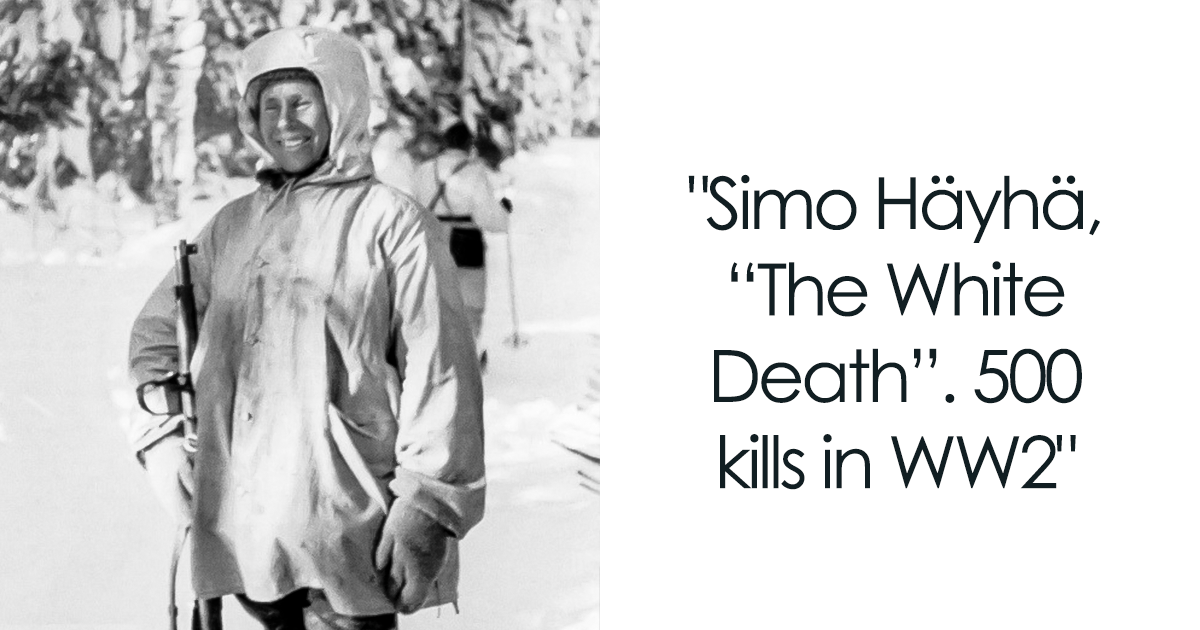
Finnish sniper Simo Häyhä, nicknamed “The White Death,” fought in the Winter War against the Soviet Union. He endured extreme cold, used the snowy landscape to his advantage, and survived a devastating facial wound. Häyhä’s legend is part marksmanship, part endurance, and part proof that Finland does not play around with winter.
People Who Saved Lives by Refusing to Panic
11. Stanislav Petrov
In 1983, Soviet officer Stanislav Petrov was on duty when an early-warning system falsely indicated incoming U.S. missiles. Instead of reporting the alert as a confirmed attack, he judged it likely to be a malfunction. He was right. One calm decision may have prevented nuclear catastrophe. That is toughness without explosions, capes, or theme music.
12. Vasili Arkhipov
During the Cuban Missile Crisis, Soviet submarine officer Vasili Arkhipov refused to approve the launch of a nuclear torpedo while his submarine was under extreme pressure from U.S. forces above. Launch authorization required agreement from senior officers, and Arkhipov’s refusal helped prevent escalation. Sometimes the toughest word in history is simply “no.”
Fearless Women History Should Talk About More Often
13. Nancy Wake
Nancy Wake, nicknamed “The White Mouse” by the Gestapo, worked with the French Resistance and the Special Operations Executive during World War II. She helped Allied servicemen escape, parachuted back into occupied France, coordinated supplies, and operated under a bounty. Her life reads like a spy thriller, except the bullets were real and the sequel was not guaranteed.
14. Boudicca
Boudicca, queen of the Iceni, led a revolt against Roman rule in first-century Britain after brutal treatment by Roman authorities. Her uprising shook Roman control and became a lasting symbol of defiance. She ultimately lost, but losing to the Roman Empire after nearly knocking it off balance still qualifies as historically spicy toughness.
15. Joan of Arc
Joan of Arc was a teenage peasant girl who helped lead French forces to victory at Orléans during the Hundred Years’ War. Captured and executed at 19, she became a national heroine and later a saint. Her story is one of conviction so intense it moved armies before she had lived long enough to have a quarter-life crisis.
16. Mary Fields
Mary Fields, known as Stagecoach Mary, became the first African American woman to carry mail on a Star Route for the U.S. Post Office Department. In her sixties, she drove routes through Montana weather, bandits, wolves, and terrain that seemed personally offended by comfort. She did not merely deliver mail; she delivered attitude with postage.
Outlaws, Lawmen, Explorers, and Wild Cards
17. Bass Reeves
Bass Reeves was born enslaved and later became one of the first Black deputy U.S. marshals west of the Mississippi. Over a long career in Indian Territory, he built a reputation for courage, tracking skill, and thousands of arrests. He survived assassination attempts and became the kind of lawman fiction writers would invent if history had not beaten them to it.
18. Robert Smalls
Robert Smalls escaped slavery by commandeering the Confederate transport ship Planter, piloting it past Confederate defenses, and surrendering it to Union forces. He freed himself, his family, and others, then later served in politics, including the U.S. House of Representatives. That is not just courage; that is courage with navigation skills.
19. Ching Shih
Ching Shih rose from poverty to command one of the most powerful pirate fleets in history along the South China coast. She imposed strict rules, negotiated from strength, and retired with her fortune rather than meeting the usual pirate retirement plan of “rope plus gravity.” Her administrative toughness may be even more impressive than her naval power.
20. Honda Tadakatsu
Honda Tadakatsu, a famed samurai of Japan’s Sengoku period, developed a reputation for surviving dozens of battles without serious injury. Whether every detail is polished by legend or not, his image as an almost untouchable warrior has endured for centuries.
A Fast Roll Call: 73 Tough People Worth Knowing
The full online-thread spirit is not about choosing one winner. It is about realizing history has a very crowded toughness department. Here are 73 names that belong in the conversation, each for a different flavor of grit:
- Harriet Tubman
- Ernest Shackleton
- Witold Pilecki
- Stanislav Petrov
- Vasili Arkhipov
- Desmond Doss
- Audie Murphy
- Hugh Glass
- Louis Zamperini
- Lyudmila Pavlichenko
- Simo Häyhä
- Nancy Wake
- Robert Smalls
- Bass Reeves
- Mary Fields
- Boudicca
- Joan of Arc
- Ching Shih
- Honda Tadakatsu
- Julie d’Aubigny
- Josephine Baker
- Virginia Hall
- Rani Lakshmibai
- Tom Crean
- Roald Amundsen
- Matthew Henson
- Ida B. Wells
- Sojourner Truth
- Frederick Douglass
- Nelson Mandela
- Ona Judge
- Mad Jack Churchill
- Smedley Butler
- Chuck Yeager
- Daniel Inouye
- Alvin York
- Edith Cavell
- Irena Sendler
- Chiune Sugihara
- Raoul Wallenberg
- Oskar Schindler
- Hedy Lamarr
- Alan Turing
- Katherine Johnson
- Grace Hopper
- Hypatia
- Marie Curie
- Emmy Noether
- Fridtjof Nansen
- Gertrude Bell
- Lawrence of Arabia
- Spartacus
- Hannibal Barca
- Alexander the Great
- Genghis Khan
- Saladin
- Shaka Zulu
- Sitting Bull
- Crazy Horse
- Geronimo
- Chief Joseph
- Tecumseh
- Queen Amanirenas
- Mansa Musa
- Hatshepsut
- Cleopatra VII
- Empress Matilda
- Eleanor of Aquitaine
- Catherine the Great
- Florence Nightingale
- Clara Barton
- Helen Keller
- Malala Yousafzai
What These Stories Teach Us About Real Toughness
The biggest lesson from these historical figures is that toughness is not always glamorous. In fact, it is usually deeply inconvenient. It means walking through snow because the mail still has to arrive. It means guiding people through danger even after you escaped it yourself. It means checking your fear long enough to make a rational decision when the world may be minutes from disaster.
Another lesson is that toughness often shows up quietly. Petrov and Arkhipov did not charge into battle; they resisted the pressure to act rashly. Tubman did not seek fame; she sought freedom. Doss did not define bravery as violence; he defined it as service. Shackleton’s greatest achievement was not reaching his original goal, but adapting when that goal became impossible. Toughness, therefore, is not stubbornly crashing into a wall forever. Sometimes it is knowing when to build a door.
History also reminds us that many of the toughest people were overlooked in their own time. Women, enslaved people, colonized people, scientists, nurses, couriers, and civilians often had to be twice as brave to receive half the credit. Online threads can be chaotic, but they sometimes help recover names that traditional storytelling left in the footnotes.
Experiences Related to the Topic: Why These Stories Still Hit Hard Today
Reading about the toughest people in history can feel like stepping into a gym for the soul. At first, the stories seem almost unreal. A man crawls 200 miles after a bear attack. A woman returns repeatedly to rescue others from slavery. A prisoner enters Auschwitz on purpose to expose the truth. A medic saves wounded soldiers while refusing to carry a gun. These examples are so extreme that they can accidentally make modern problems feel small. But that is not the real point.
The real value of these stories is not to shame ordinary people for being tired, scared, or overwhelmed. Everyone has moments when sending one difficult email feels like crossing Antarctica in wet socks. Toughness is not the absence of fear or exhaustion. It is the ability to keep a small promise to yourself when the situation becomes difficult. Historical courage simply shows that the human limit is often farther away than we assume.
In everyday life, the lessons are surprisingly practical. Shackleton teaches leadership: protect morale, make decisions, and do not pretend the ship is fine when it is currently becoming a submarine. Tubman teaches purpose: courage becomes stronger when it is tied to something bigger than personal comfort. Petrov teaches emotional control: not every alarm requires panic, even when the screen is flashing and everyone expects immediate action. Mary Fields teaches reliability: showing up consistently can become its own legend. Desmond Doss teaches that principles are not decorative; they matter most when they cost something.
There is also comfort in seeing toughness as diverse. You do not need to be a soldier, explorer, or rebel queen to be resilient. Parents caring for children through hardship, workers rebuilding after layoffs, students pushing through failure, immigrants starting over, patients fighting illness, and people quietly choosing honesty in dishonest environments all practice smaller versions of the same trait. They may never appear in a viral thread, but history is built on those private acts of endurance.
That may be why online discussions about the toughest people in history remain so popular. We are not only looking for trivia. We are looking for models. We want proof that fear can be managed, pain can be survived, injustice can be challenged, and impossible situations sometimes contain a narrow path forward. The names change, the centuries change, and thankfully most of us are not being chased by Roman legions or trapped in Antarctic ice. Still, the core question remains: when life gets hard, what kind of person do we want to become?
The answer does not need to be dramatic. Maybe toughness today means apologizing first, starting again, refusing cruelty, staying calm, protecting someone vulnerable, or continuing after a failure that made your confidence fold like a cheap lawn chair. History’s toughest people were not made of stone. They were human beings under pressure. That is exactly why their stories matter.
Conclusion
The toughest people in history were not all warriors, and they were not all famous during their lifetimes. Some fought armies. Some fought systems. Some fought cold, hunger, fear, prejudice, or bad information at exactly the wrong moment. What unites them is not perfection but resilience. They made choices under pressure that still echo today.
So, who is the toughest person in history? The honest answer is: it depends on what kind of toughness you value. Physical survival, moral courage, battlefield bravery, emotional discipline, leadership, sacrifice, and stubborn hope all deserve their own medals. The better question may be this: which of these stories makes you want to stand a little taller tomorrow?