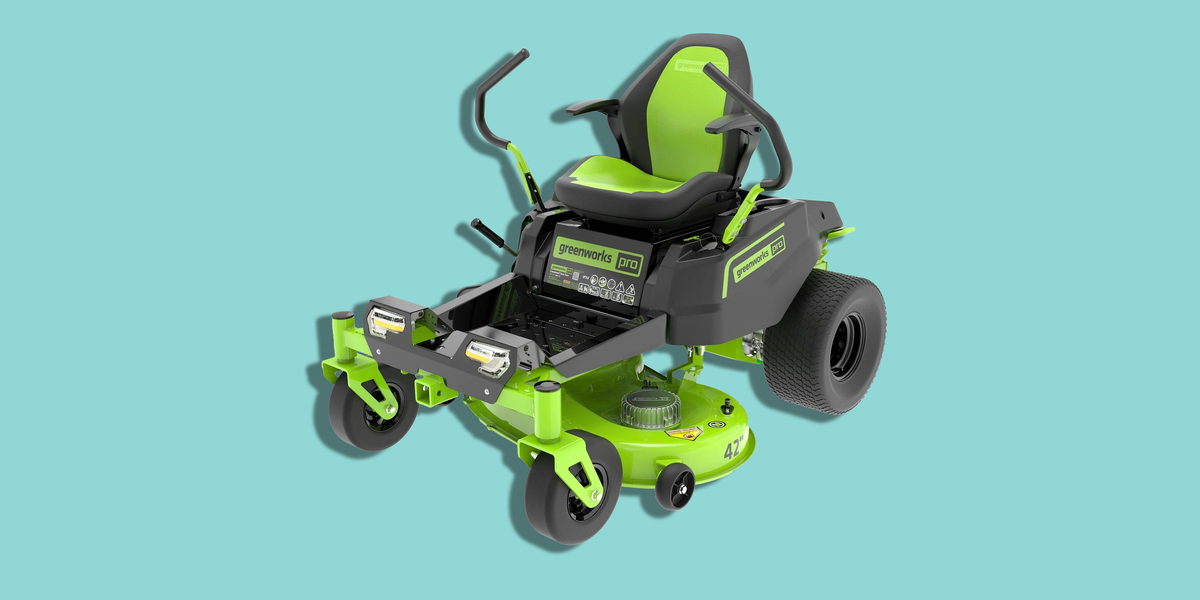
Buying a zero-turn mower is a little like buying a tiny amusement-park ride that happens to cut grass. The steering feels unusual for the first few minutes, the machine can spin in its own footprint, and suddenly a two-hour lawn chore starts looking much less terrifying.
The best zero turn mowers of 2024 combined fast cutting speeds, precise maneuverability, dependable power, and enough comfort to keep a bumpy lawn from rearranging your internal organs. Gas models remained the practical choice for long mowing sessions, while battery-powered machines became quieter, smarter, and more competitive.
Testing note: This guide synthesizes verified manufacturer specifications, published hands-on testing, retailer feedback, and long-term user reports. It does not imply that one editor personally operated every mower listed under identical conditions. Manufacturer acreage estimates are also best-case ratings; tall grass, hills, mulching, towing, and aggressive driving can reduce real-world performance.
Our Top Zero-Turn Mower Picks
| Model | Best For | Power | Deck | Key Advantage |
|---|---|---|---|---|
| Cub Cadet Ultima ZT1 50 | Best Overall | 23-hp Kawasaki gas engine | 50 inches | Excellent balance of strength, agility, and value |
| Toro TimeCutter 75750 | Best for Comfort | 23-hp Kawasaki gas engine | 50 inches | Comfortable controls and strong parts support |
| EGO Power+ Z6 ZT4204L | Best Electric | 22-hp gas-equivalent output | 42 inches | Removable, platform-compatible batteries |
| Ryobi 80V HP RYRM8021 | Best Technology | 31-hp equivalent claimed output | 42 inches | One-handed joystick steering |
| Husqvarna Z254F | Best for Large Open Yards | 24-hp Kawasaki gas engine | 54 inches | Wide fabricated deck and durable frame |
| John Deere Z315E | Best Compact Gas Model | 20-hp V-twin gas engine | 42 inches | Compact size and strong dealer network |
How We Selected the Best Zero Turn Mowers of 2024
Horsepower and deck width look impressive on a product page, but they do not tell the entire story. A useful residential zero-turn mower must also track straight, respond predictably around landscaping, discharge clippings cleanly, and remain comfortable after the first 20 minutes.
We compared cutting-deck construction, engine or motor output, estimated mowing capacity, steering design, speed, seat support, maintenance access, warranty coverage, and compatibility with baggers or mulching kits. Independent test reports were used to identify practical advantages and recurring frustrations that do not always appear in marketing material.
Zero-turn mowers are generally best suited to relatively level lawns with obstacles. Consumer Reports notes that their rear-wheel steering can damage turf during abrupt turns and that lever controls require practice. The publication also cautions that zero-turn machines are not ideal for steep properties because traction and control can become unpredictable on slopes.
1. Cub Cadet Ultima ZT1 50: Best Zero-Turn Mower Overall
The Cub Cadet Ultima ZT1 50 occupies a particularly useful middle ground. Its 50-inch deck is wide enough to make quick work of two- and three-acre lawns, but the machine is not so enormous that every tree becomes an obstacle course.
A 23-horsepower, 726cc Kawasaki FR691V twin-cylinder engine supplies the power. Cub Cadet pairs it with dual hydrostatic transmissions, a maximum forward speed of 7 mph, and a 50-inch AeroForce fabricated deck. Unlike a lightweight stamped deck, this welded steel assembly is better prepared for bumps, sticks, and the occasional poorly placed landscaping stone.
Why It Stands Out
The open frame and removable floor area make routine deck access less frustrating. Its adjustable lap bars, supportive high-back seat, LED headlights, and straightforward deck-height control also help it feel more polished than many entry-level residential machines.
Published hands-on testing has consistently praised Ultima models for even cutting, responsive handling, and their ability to remain composed over mildly uneven ground. Retailer feedback similarly highlights maneuverability and ride comfort, although some owners wish an hour meter were standard.
What Could Be Better
The ZT1 does not include a full suspension platform, so rough lawns can still communicate every bump directly to the driver. It is also a gas mower, meaning oil changes, filters, spark plugs, belts, and fuel storage remain part of the relationship.
Best for: Homeowners with roughly one to four acres who want a durable, versatile gas mower without moving into commercial pricing.
2. Toro TimeCutter 75750: Best for Comfort and Long-Term Ownership
The Toro TimeCutter is the sensible pickup truck of residential zero-turn mowers. It is easy to find, familiar to repair shops, and supported by a broad network of dealers and parts suppliers. That matters when the mower is eight years old and needs a belt on the same weekend your grass decides to imitate a rainforest.
Model 75750 uses a 23-horsepower Kawasaki V-twin engine and a 50-inch, 10-gauge IronForged fabricated deck. It travels at up to 7 mph, carries three gallons of fuel, and offers cutting heights from 1.5 to 4.5 inches. Toro rates it for properties as large as four acres under suitable conditions.
Why It Stands Out
Toro’s Smart Speed system gives the operator different ranges for mowing, trimming, and towing. This makes the machine less jumpy around flower beds and more manageable when pulling a small cart. Wraparound control levers, steering dampers, armrests, and a sliding high-back seat add comfort during longer sessions.
Hands-on TimeCutter reviews have praised its predictable controls, strong cutting performance, and ability to reduce mowing time substantially compared with walk-behind equipment. Testers have also emphasized the practical value of Toro’s parts availability and dealer network.
What Could Be Better
The hour meter is optional on this configuration, and headlights are not standard. The ride is comfortable for a conventional residential frame, but buyers with especially rough ground may want a TimeCutter equipped with Toro’s MyRIDE suspension system.
Best for: Homeowners who value comfort, repairability, and dependable long-term parts access.
3. EGO Power+ Z6 ZT4204L: Best Electric Zero-Turn Mower
The EGO Z6 is what happens when a riding mower borrows the dashboard from an electric car. There is an LCD interface, multiple driving modes, extensive LED lighting, Bluetooth connectivity, a USB port, and considerably less engine noise.
Four included 56-volt, 10.0Ah batteries provide an estimated capacity of up to two acres per charge. Two additional battery slots allow owners to expand runtime. EGO rates the four brushless motors at the equivalent of a 22-horsepower gas engine, with mowing speeds between 3 and 7 mph and an 8-mph transport mode.
Why It Stands Out
The removable batteries also work with other EGO 56-volt tools. That is a major advantage over electric riders with sealed, mower-specific battery packs. Owners can use the same battery platform for a blower, chainsaw, string trimmer, or walk-behind mower.
The 42-inch deck has 10 height positions between 1.5 and 4.5 inches. Mulching, bagging, and side discharge are supported, although accessories may be sold separately. An adjustable seat-suspension system and three drive modes help soften the learning curve.
What Could Be Better
Runtime estimates assume favorable conditions. Thick spring growth, wet grass, frequent stops, aggressive blade speeds, and mulching can use energy quickly. Owners also need a suitable charging location and should consider the eventual replacement cost of multiple high-capacity batteries.
Best for: One- to two-acre properties where low noise, reduced routine maintenance, and shared battery compatibility matter more than unlimited runtime.
4. Ryobi 80V HP RYRM8021: Best High-Tech Zero-Turn Mower
Most zero-turn mowers use two lap bars. The Ryobi RYRM8021 replaces them with its iDrive joystick, allowing one-handed steering. It feels strange for approximately three minutes, after which conventional control levers may start looking unnecessarily dramatic.
Ryobi rated the mower’s four brushless motors at a combined 31-horsepower equivalent and claimed a mowing capacity of up to three acres per charge. Its 42-inch, 12-gauge steel deck uses four blades, while the battery system combines two 80-volt packs with two removable 40-volt batteries.
Why It Stands Out
The LCD panel displays battery status, runtime information, blade speed, and drive settings. LED headlights, Bluetooth connectivity, armrests, cup holders, and seat suspension make it one of the most feature-packed residential mowers in its class.
Independent long-term testers found the joystick intuitive and praised the mower’s quiet operation, maneuverability around trees, and consistent cutting across changing conditions. The ability to charge without removing the main batteries also makes ownership refreshingly simple.
What Could Be Better
This particular 2024-era model has since been replaced by newer Ryobi designs, so buyers should verify parts support, warranty status, and battery-package details when shopping remaining inventory or used machines. The electronics also create more specialized repair requirements than a basic gas mower.
Best for: Technology-focused homeowners who want electric power and find joystick steering more approachable than lap bars.
5. Husqvarna Z254F: Best for Large, Open Lawns
When a property contains broad stretches of grass and relatively few narrow passages, a wider deck saves time. The Husqvarna Z254F brings a 54-inch cutting path without jumping into full commercial-mower territory.
Its 24-horsepower Kawasaki V-twin engine drives a 10-gauge ClearCut fabricated deck with three blades and six anti-scalp wheels. The hydrostatic transmission delivers a maximum forward speed of approximately 6.5 mph. Cutting height ranges from about 1.5 to 4 inches.
Why It Stands Out
The fabricated deck, cast-iron spindle assemblies, greasable mandrels, removable foot plate, and sturdy frame give the Z254F a reassuringly mechanical personality. The deck can discharge, mulch, or collect clippings when equipped with the appropriate accessories.
A ventilated high-back seat helps during hot-weather mowing, while the automatic parking brake engages as the steering levers move outward. LED headlights are another useful feature for early starts, although mowing after dark is still a fine way to discover every branch you forgot to pick up.
What Could Be Better
The 54-inch deck needs more storage room and may not fit through smaller gates. At approximately 590 pounds, it can also leave marks on soft soil if the operator makes sharp pivot turns.
Best for: Two- to four-acre lawns with wide, open sections and enough storage space for a 54-inch machine.
6. John Deere Z315E: Best Compact Gas Zero-Turn Mower
The John Deere Z315E is a practical choice for homeowners who want zero-turn maneuverability but do not need a deck large enough to qualify as a small bridge.
It combines a 20-horsepower V-twin engine with a 42-inch Accel Deep deck, a maximum forward speed of 7 mph, and a three-gallon fuel tank. John Deere backs the residential model with a three-year or 200-hour limited warranty, subject to the company’s terms.
Why It Stands Out
The 42-inch deck is easier to guide between trees, raised beds, sheds, and gate openings than a 50- or 54-inch platform. John Deere’s extensive dealership network can also simplify service, maintenance, and parts ordering for owners who prefer local support over mail-order troubleshooting.
The deep deck design creates room for airflow beneath the housing, helping lift grass before the blades cut it. The relatively compact footprint also reduces storage demands compared with wider residential zero-turn mowers.
What Could Be Better
Its smaller deck requires more passes on large, open properties. Buyers paying partly for the John Deere dealer experience should confirm that a convenient, well-reviewed dealership is actually nearby.
Best for: Small-to-medium residential lawns with landscaping obstacles, narrow storage areas, or limited gate clearance.
How to Choose the Right Zero-Turn Mower
Match Deck Width to the Property
A 42-inch deck is easier to store and maneuver around tightly spaced landscaping. Decks between 48 and 50 inches provide a useful compromise for many two-acre properties. A 54-inch deck can reduce mowing time on open ground, but only when it fits through the gates and between obstacles.
Compare Gas and Battery Power Honestly
Gas mowers can work for hours with a quick refill, making them suitable for large properties and neglected grass. Their disadvantages include noise, fumes, oil changes, filters, spark plugs, belts, and seasonal fuel concerns.
Battery zero-turn mowers start instantly, run quietly, and eliminate much of the engine maintenance. However, acreage estimates can fall when mowing tall or wet grass. Battery replacement cost and access to a sheltered charging area should be included in the purchase decision.
Do Not Ignore Comfort
A supportive seat, armrests, steering dampers, and suspension matter more than decorative phone holders. If your lawn is rough, test the seat and ride quality before buying. A mower can have excellent specifications and still feel like a shopping cart being pushed down a staircase.
Study the Terrain
Zero-turn mowers perform best on dry, relatively level ground. Always follow the slope limitations in the operator’s manual. The Consumer Product Safety Commission warns operators to keep movements on slopes slow and gradual and avoid sudden changes in speed or direction.
Check the Total Ownership Cost
Ask about delivery, setup, mulching kits, baggers, replacement blades, batteries, chargers, annual maintenance, and warranty service. A mower with a slightly higher purchase price may become the better value when parts and local repairs are readily available.
Real-World Experiences That Matter More Than the Specification Sheet
The first experience most new owners remember is not horsepower. It is the discovery that a zero-turn mower reacts immediately to small hand movements. Push the left lever farther than the right lever and the mower turns right. Pull one lever back while pushing the other forward and the machine rotates almost in place. During the first mowing session, smoothness matters more than speed. Starting in an open area and practicing gradual turns prevents tire marks, flattened flower beds, and awkward conversations about why the birdbath is suddenly horizontal.
Deck width creates another lesson that brochures rarely emphasize. A 54-inch mower may finish an open field faster, but it cannot magically shrink when approaching a 48-inch gate. Measure gates, shed doors, trailer ramps, paths, and the space between permanent obstacles before shopping. Remember that the discharge chute may extend beyond the listed cutting width. Owners often discover that a slightly smaller mower finishes the entire property faster because it can reach more areas without requiring a second machine for cleanup.
Grass conditions dramatically affect the experience. A mower that leaves a polished finish on dry weekly growth may produce clumps when asked to process wet, six-inch grass at full speed. The best results usually come from waiting until the lawn is dry, using sharp blades, and reducing ground speed when growth is heavy. University of Minnesota Extension recommends delaying mowing when grass is wet and removing no more than roughly one-third of the leaf tissue in a single session. Sharp blades also create cleaner cuts and reduce stress on the turf.
Comfort becomes increasingly important as property size grows. A basic seat may feel perfectly acceptable during a five-minute demonstration on pavement. After 90 minutes on dry, uneven soil, every missing inch of padding becomes a philosophical issue. Seat suspension, armrests, steering dampers, and large rear tires can be more valuable than Bluetooth speakers. Testers comparing different residential mowers frequently identify ride quality as one of the clearest differences between an adequate machine and one they genuinely enjoy operating.
Electric ownership introduces a different routine. Instead of checking fuel, oil, and spark plugs, the operator watches battery charge, charger placement, and available electrical capacity. Removable packs are especially convenient because they can be used in compatible handheld tools or brought indoors for temperature-controlled storage. Still, acreage claims should not be treated as promises. Mulching, thick growth, hills, and maximum blade speed consume more energy. A battery mower is happiest when the lawn is maintained regularly rather than rescued from botanical rebellion once a month.
Gas ownership requires more maintenance but offers predictable refueling. Keeping blades sharp, cleaning debris from the deck, checking tire pressure, monitoring belts, and following engine-service intervals can extend machine life. An hour meter is useful because “I think I changed the oil sometime last summer” is not a maintenance schedule. Buyers should also consider dealer access. A machine that can be repaired locally often delivers more long-term value than an exotic model with dazzling features but no nearby service support.
Finally, experienced operators learn not to force a true zero-radius pivot on delicate turf. One rear tire can scrub the ground while the other drives the turn, leaving a brown circle that looks like evidence from a very small UFO landing. A gentle three-point turn, performed while both rear tires remain moving, protects the lawn and still takes very little space. The fastest mowing technique is not maximum speed everywhere; it is maintaining a steady pattern, minimizing unnecessary turns, and slowing down before obstacles rather than apologizing to them afterward.
Final Verdict
The Cub Cadet Ultima ZT1 50 is our best overall zero-turn mower of 2024 because it combines a strong Kawasaki engine, durable fabricated deck, responsive handling, and a size that works for a broad range of residential properties.
The Toro TimeCutter is an excellent alternative for buyers who prioritize comfort, repair support, and long-term parts availability. The EGO Z6 is the strongest all-around electric choice, while the Ryobi 80V HP offers an unusually intuitive joystick and an impressive collection of technology.
For large, open lawns, the Husqvarna Z254F provides a wide 54-inch fabricated deck. For tighter properties, the John Deere Z315E delivers gas-powered zero-turn capability in a manageable 42-inch package.
Editor’s note: Model numbers, battery bundles, prices, warranty terms, and regional availability can change. Confirm the exact configuration with the manufacturer or an authorized dealer before purchasing.