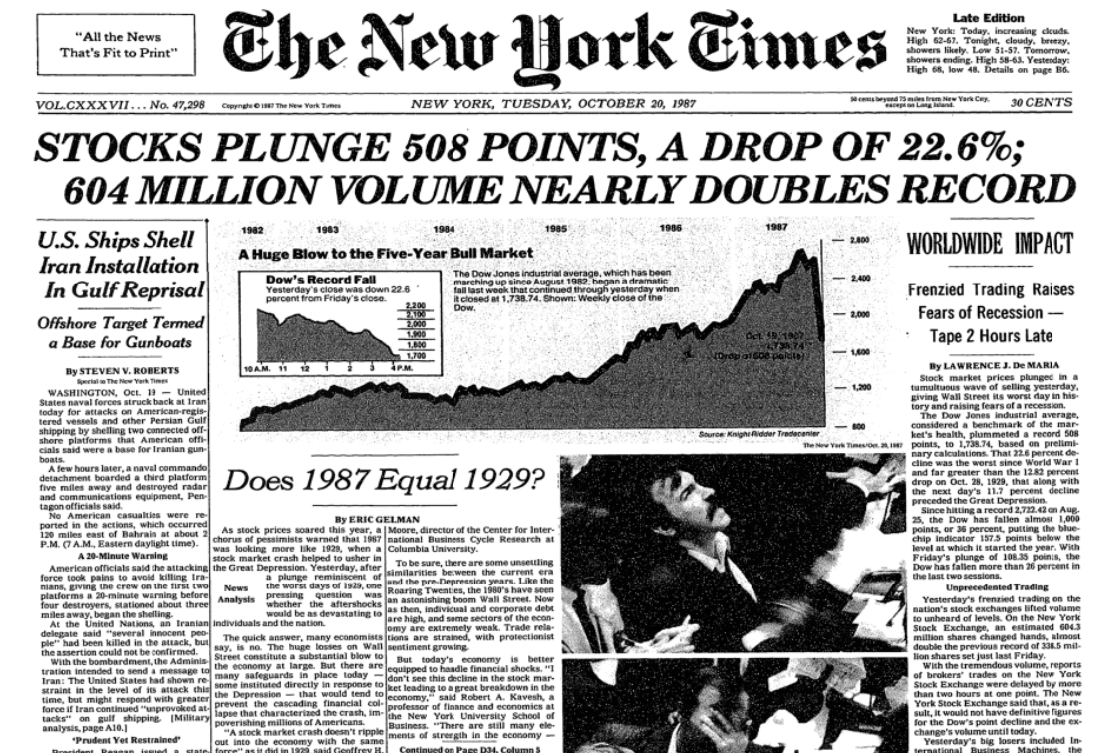
Market corrections are uncomfortable, noisy, and excellent at making perfectly reasonable people refresh their portfolio app like it owes them money. But they are also a normal part of long-term investing.
Introduction: When the Market Sneezes, Everyone Reaches for a Thermometer
A market correction has a way of turning calm investors into amateur economists, technical analysts, and late-night philosophers. One week, the market is climbing like it had three espressos. The next, headlines are shouting about sell-offs, volatility, recession fears, rising yields, geopolitical risks, stretched valuations, and whether artificial intelligence stocks have eaten too much cake at the valuation buffet.
In simple terms, a stock market correction usually means a decline of at least 10% from recent highs. It is not the same as a bear market, which is generally defined as a decline of 20% or more. Corrections can happen in broad indexes like the S&P 500, in sectors such as technology, or in individual stocks that previously became investor darlings. They may last days, weeks, or months. They may feel dramatic while they are happening, even when they later look like a small pothole on a very long investing road.
The problem is not only the decline itself. It is the emotional circus that comes with it. Investors begin asking: Should I sell? Should I buy more? Is this just a dip? Is this the beginning of something worse? Should I pretend I forgot my brokerage password until Thanksgiving?
This article shares three practical thoughts about the market correction: first, corrections are normal but still deserve respect; second, your plan matters more than your prediction; and third, volatility can reveal whether your portfolio is built for real life, not just sunny market weather. These thoughts are not magic. They will not make red numbers turn green overnight. But they can help investors think more clearly when the market starts acting like a toddler denied a cookie.
Thought 1: A Market Correction Is Not Automatically a Market Disaster
Corrections Are Part of the Market’s Personality
The first thought about a market correction is that it is not automatically a crisis. It is a decline, yes. It can be painful, yes. But it is also a recurring feature of stock investing. Markets do not move in a straight line. They advance, pause, retreat, panic, recover, overreact, underreact, and occasionally behave like they read too many social media comments before breakfast.
Historically, market corrections have happened frequently. Long-term investors have lived through inflation scares, recessions, oil shocks, banking stress, wars, political drama, technology bubbles, pandemic shutdowns, and plenty of “this time is different” moments. Some of those events led to serious bear markets. Many others created temporary pullbacks that eventually gave way to recovery.
This does not mean investors should shrug at every correction. A 10% drop can expose real weaknesses. Overvalued stocks may fall harder. Companies with fragile balance sheets may struggle. Speculative areas of the market, especially those lifted by excitement rather than earnings, may suddenly discover gravity. A correction is not meaningless. It is the market asking, “Are we sure these prices still make sense?”
The Difference Between Price and Value Matters
During a correction, price changes quickly. Value usually changes more slowly. If a strong company falls because the entire market is selling off, that is different from a company falling because its business is deteriorating. The distinction matters.
For example, imagine two stocks decline 15%. Company A has growing revenue, manageable debt, strong cash flow, and a product customers still need. Company B was trading at a wild valuation based mostly on hype, future promises, and investor enthusiasm that could disappear faster than free snacks at an office meeting. The same percentage decline does not mean the same thing for both companies.
This is why market correction analysis should go beyond the headline number. Investors should ask what is actually being corrected. Is the market correcting excessive optimism? Is it adjusting to higher interest rates? Is it reacting to weaker earnings? Is it punishing concentrated exposure to one hot sector? Or is it simply digesting gains after a strong run?
Corrections Can Be Healthy, Even If They Feel Rude
A correction can reset expectations. It can reduce speculative excess. It can remind investors that risk did not retire and move to Florida. It can also create better entry points for investors with cash, patience, and a plan.
That does not mean every dip is a bargain. “Buy the dip” sounds easy until the dip becomes a dip with a basement. But corrections can improve future return potential when prices move closer to reasonable levels. The key is not to treat every decline as either the end of capitalism or a guaranteed shopping spree. The wiser approach is to separate fear from facts.
Thought 2: Your Plan Matters More Than Your Prediction
Forecasting the Bottom Is a Very Popular Way to Be Wrong
The second thought is simple: your investment plan matters more than your market prediction. Nobody consistently knows where the bottom is. Not the person on television with the dramatic chart. Not the anonymous trader posting rocket emojis. Not your cousin who once bought a stock that doubled and now speaks in candlestick patterns.
Market timing is tempting because it offers the illusion of control. Sell before the big drop. Buy back at the bottom. Smile wisely. Retire early. Unfortunately, real life is messier. Markets often rebound before the news improves. Some of the strongest up days occur close to the worst down days. Investors who sell in panic may miss the recovery because they wait for “clarity,” which usually arrives after prices have already moved.
This is why long-term investing depends on a written or clearly defined plan. A good plan should include your goals, time horizon, risk tolerance, asset allocation, contribution schedule, rebalancing rules, and liquidity needs. In plain English: know why you own what you own before the market starts throwing furniture.
Risk Tolerance Is Not a Personality Quiz
Many investors believe they have high risk tolerance during bull markets. That is easy. Everyone is brave when the chart is green. Real risk tolerance appears during corrections. If a 10% decline makes you want to abandon your entire strategy, your portfolio may be more aggressive than your nervous system can comfortably handle.
Risk tolerance includes both ability and willingness. Ability is financial. Can you afford volatility without damaging your goals? Do you have emergency savings? Are you years away from needing the money? Will a temporary decline force you to sell? Will withdrawals during a downturn create pressure?
Willingness is emotional. Can you sleep when your portfolio falls? Can you avoid panic decisions? Can you stay disciplined when headlines are written in all but actual flames? A portfolio that looks good in a spreadsheet but causes constant anxiety may not be the right portfolio.
Rebalancing Is Boring, Which Is Why It Works
Corrections are useful moments to review asset allocation. If stocks surged before the decline, your portfolio may have become more equity-heavy than intended. If one sector, such as technology or AI-related stocks, dominated gains, concentration risk may have quietly increased. A correction can reveal that your “diversified portfolio” is actually a tech fund wearing a fake mustache.
Rebalancing means bringing your portfolio back toward its target mix. That may involve trimming assets that grew too large or adding to assets that have fallen below target. It sounds dull because it is. But dull can be beautiful in investing. Dull pays attention to risk. Dull avoids emotional chasing. Dull does not need to impress anyone at dinner.
Investors with new cash can also consider dollar-cost averaging. This strategy invests money in scheduled installments over time rather than all at once. It does not guarantee better returns, and lump-sum investing has often performed well over long periods. However, dollar-cost averaging can reduce timing regret and help cautious investors put money to work during volatile markets without betting everything on one entry point.
Thought 3: Corrections Reveal What You Really Own
Volatility Is a Portfolio Stress Test
The third thought about the market correction is that volatility reveals the truth. Rising markets can hide weak assumptions. When everything is going up, investors may forget to ask whether their holdings are profitable, reasonably valued, diversified, liquid, and aligned with their goals. A correction shines a bright light on those questions.
Think of a market correction as a financial home inspection. You may not enjoy discovering cracks in the foundation, but it is better to find them before the storm gets worse. Maybe your portfolio is too concentrated in one sector. Maybe you own investments you do not understand. Maybe your emergency fund is too small. Maybe your retirement account is fine, but your taxable account is full of speculative trades you made during a suspiciously confident mood.
Corrections can expose overconfidence. They can also expose quality. Companies with strong earnings, durable demand, reasonable debt, and competitive advantages may still decline, but they often give investors more confidence than businesses dependent on cheap financing or endless hype.
Cash Is Not Cowardice
One lesson from corrections is that cash has a purpose. Cash is not always a failure to invest. It can be an emergency fund, a source of optionality, or a buffer against forced selling. Investors who need money in the next year or two generally should not depend on stocks being up exactly when the bills arrive. The market has never checked your calendar before declining.
For retirees or near-retirees, sequence risk matters. Selling investments after a sharp decline can do more damage than experiencing a paper loss. A thoughtful income plan may include cash reserves, short-term bonds, or other conservative assets designed to cover spending needs during market weakness. This allows long-term assets more time to recover.
For younger investors, cash plays a different role. It can support consistency. An emergency fund can prevent the need to sell long-term investments during a downturn. It can also help investors continue regular contributions when markets are volatile, which is often when discipline matters most.
Diversification Still Deserves Its Boring Crown
Diversification rarely feels exciting when one hot sector is leading the market. In those moments, owning bonds, international stocks, value stocks, dividend payers, or defensive sectors may feel like bringing a cardigan to a fireworks show. But when the market corrects, diversification often earns its keep.
Diversification does not eliminate losses. It does not promise that everything will be fine every Tuesday. But it can reduce dependence on a single company, sector, theme, or economic outcome. A diversified investor may still feel the correction, but the portfolio is less likely to be entirely defined by one crowded trade.
In recent market environments, investors have paid close attention to technology concentration, artificial intelligence spending, interest rates, energy prices, geopolitical risks, and bond market signals. These forces can all influence corrections. A portfolio built around only one optimistic scenario may struggle if the market begins pricing in a different one.
Practical Examples: What Investors Can Do During a Market Correction
Example 1: The Long-Term Retirement Investor
Suppose an investor is 35 years old and contributing monthly to a retirement account. A market correction hits, and the account balance falls. The emotional reaction may be frustration, but the practical response may be to continue contributions, review allocation, and rebalance if needed. With decades before retirement, lower prices may allow new contributions to buy more shares.
The danger for this investor is not volatility itself. The danger is stopping contributions, selling after the decline, and waiting too long to return. Time is the investor’s biggest advantage, but only if the plan stays intact.
Example 2: The Near-Retiree
Now imagine an investor who is 62 and plans to retire in three years. A correction has a different meaning here. This investor should review cash needs, expected withdrawals, bond exposure, and whether the portfolio is too aggressive. The right move may not be panic selling. It may be adjusting risk before retirement income begins.
For near-retirees, the question is not “Will the market recover someday?” The question is “Can my plan handle the timing of this decline?” That is a more personal and practical question.
Example 3: The Overconcentrated Tech Investor
Consider an investor whose portfolio became heavily concentrated in a handful of technology or AI-related stocks after a strong rally. During the correction, those stocks fall harder than the broader market. This investor may still believe in the long-term theme, but the correction reveals a risk problem: too much depends on one story going perfectly.
The solution may be gradual diversification. That could include broad index funds, other sectors, fixed income, or international exposure. The goal is not to abandon growth. The goal is to avoid letting one theme drive the entire financial future.
Common Mistakes to Avoid During a Market Correction
Mistake 1: Confusing Headlines With Strategy
Financial headlines are designed to get attention. “Market Falls as Investors Weigh Concerns” is accurate but boring. “Stocks Plunge as Fear Grips Wall Street” gets clicks. Investors should read headlines carefully but avoid treating them as instructions.
Mistake 2: Selling Everything to Feel Better
Selling can provide emotional relief, but relief is not the same as strategy. If selling is part of a planned rebalancing or risk reduction process, that is one thing. If it is a panic reaction to red numbers, it can lock in losses and create a second problem: deciding when to get back in.
Mistake 3: Buying Every Dip Without Discipline
Buying during corrections can work well, but only when it fits a plan. Throwing money at every falling stock because it is “cheaper” can be dangerous. Some stocks become better values. Others become value traps wearing discount stickers.
Mistake 4: Ignoring Debt and Liquidity
A correction is harder to handle when personal finances are stretched. High-interest debt, weak emergency savings, or short-term cash needs can force bad investment decisions. A strong financial foundation makes it easier to stay calm.
Experience-Based Reflections: What Market Corrections Teach Investors Over Time
One of the most valuable experiences related to market corrections is realizing that the first correction always feels uniquely terrifying. It does not matter how many charts you have seen showing long-term market recovery. When it is your money declining, the lesson becomes personal. The neat historical chart suddenly has a pulse, and that pulse is yours.
Many investors begin with confidence. They say they are long-term investors. They say they understand volatility. They say they will buy when others are fearful. Then the market drops, and the same investor starts checking prices before coffee, after lunch, during dinner, and once more before bed, because apparently the portfolio might apologize overnight. That experience is humbling, but useful. It shows the gap between theoretical risk tolerance and actual risk tolerance.
A correction also teaches the importance of writing things down before emotions get loud. An investment plan created during calm markets can act like a note from your rational self to your anxious future self. It might say: “My retirement goal is 25 years away. My target allocation is 80% stocks and 20% bonds. I rebalance once or twice a year. I do not sell broad index funds because of headlines.” That note can be surprisingly powerful when fear shows up wearing a business suit.
Another experience many investors share is discovering that boredom is underrated. The simple act of continuing automatic contributions during a correction can feel almost rebellious. While the market argues with itself, the disciplined investor keeps buying according to schedule. No dramatic speech. No perfect timing. Just steady behavior. Over time, that consistency often matters more than the clever move someone brags about on a good day and forgets to mention on a bad one.
Corrections also teach that diversification feels unnecessary until suddenly it feels essential. During strong bull markets, diversification can look like a drag. The hottest stocks make everything else seem slow. But when leadership changes, rates rise, earnings disappoint, or a crowded trade unwinds, diversified portfolios can feel less fragile. They may still decline, but they are less dependent on one idea being right forever.
Investors also learn that cash has emotional value. A proper emergency fund may not produce exciting returns, but it can prevent panic. Knowing that rent, mortgage payments, medical expenses, or business needs are covered can make it easier to leave long-term investments alone. Cash is not there to win a beauty contest. It is there to keep your portfolio from becoming an ATM during a downturn.
Perhaps the biggest lesson is that market corrections reveal behavior. They show whether an investor has a process or only a mood. They show whether a portfolio was built for goals or built to chase whatever performed best last year. They show whether someone owns investments they understand or just ticker symbols recommended by the internet’s loudest uncle.
With experience, corrections do not become fun. Let us not pretend. Nobody throws a party because the S&P 500 dropped and their account balance looks like it skipped leg day. But corrections can become less shocking. Investors who have been through a few downturns often learn to ask better questions: Has my goal changed? Has my time horizon changed? Has the investment case changed? Is my allocation still right? Do I need to rebalance? Am I reacting to facts or feelings?
That shift is the real progress. The goal is not to eliminate emotion. The goal is to stop emotion from driving the car. Fear can sit in the passenger seat and complain about the music. It just should not hold the steering wheel.
Conclusion: The Correction Is a Test, Not a Script
A market correction does not come with a guaranteed ending. It may reverse quickly. It may deepen. It may rotate from one sector to another. It may become a bear market, or it may become one more scary-looking dip in a long-term upward chart. The honest answer is that nobody knows in real time.
But investors do not need perfect predictions to make better decisions. They need perspective, preparation, and discipline. The three thoughts are worth repeating: a correction is not automatically a disaster; your plan matters more than your prediction; and volatility reveals what you really own.
When markets fall, the best response is rarely dramatic. Review your plan. Check your allocation. Rebalance if needed. Keep enough cash for short-term needs. Avoid emotional all-or-nothing moves. Understand what you own. And remember that the market’s mood today does not have to become your financial strategy tomorrow.
Note: This article is for educational purposes only and is not personalized financial advice. Investors should consider their goals, time horizon, risk tolerance, and personal financial situation before making investment decisions.