Rubbing alcohol is useful, inexpensive, and famous for smelling like a doctor’s office collided with a chemistry classroom. But what happens when isopropyl alcohol is unavailable, you prefer an ethanol-based formula, or the only bottle in your cabinet expired sometime during the previous presidential administration?
You may be able to make an emergency hand sanitizer with ethyl alcohol, also called ethanol. However, there is an important scientific catch: there are not three dependable alcohol-free ingredients hiding in the pantry. Vinegar, witch hazel, essential oils, lemon juice, and optimistic thoughts do not become reliable hand sanitizer merely because they are poured into a travel bottle.
The Centers for Disease Control and Prevention recommends washing with soap and water whenever possible. When those are unavailable, it recommends an alcohol-based hand sanitizer containing at least 60% alcohol. Sanitizers containing 60% to 95% alcohol generally work against a broader range of germs than weaker or non-alcohol products.
Can You Make Hand Sanitizer Without Rubbing Alcohol?
Yes, but only if “without rubbing alcohol” means replacing isopropyl alcohol with a suitable concentration of ethyl alcohol. Ethanol is the active alcohol found in many commercial sanitizers and in high-proof food-grade alcohol.
An effective homemade formula must contain enough ethanol after every other ingredient has been added. Starting with 95% ethanol does not mean the finished gel remains 95%. Aloe, glycerin, water, fragrance, and anything else poured into the bowl dilutes it.
Why the final alcohol percentage matters
Imagine adding one cup of 40% vodka to one cup of aloe vera gel. The final mixture would contain only about 20% alcohol. It might smell energetic, but it would not meet the CDC’s minimum recommendation.
For a simple estimate, use this formula:
Final alcohol percentage = alcohol source percentage × alcohol volume ÷ total finished volume
For example, combining 160 milliliters of 95% ethanol with 80 milliliters of aloe creates approximately 240 milliliters of product:
95 × 160 ÷ 240 = 63.3% ethanol
That calculation assumes the ingredients combine predictably. Household measuring cups, thick gels, spills, evaporation, and inaccurate labels can all introduce errors. This is one reason professionally manufactured sanitizer remains the safer choice.
Before You Mix Anything: Ingredient Rules
Use only a clearly labeled ethanol source
Choose undenatured, unflavored, food-grade or USP-grade ethyl alcohol with a known percentage. Never use fuel alcohol, industrial solvent, windshield-washer fluid, homemade distilled alcohol, or an unidentified chemical from the garage.
Do not use methanol or 1-propanol. The FDA considers these unacceptable hand-sanitizer ingredients because they can be toxic. Methanol exposure has been associated with severe illness, vision damage, nervous-system injury, and death.
Skip ordinary liquor
Most vodka, rum, gin, and whiskey sold in the United States is approximately 80 proof, meaning 40% alcohol by volume. Because the starting concentration is already below 60%, no recipe can magically raise it by adding aloe or essential oils. Dilution only moves the percentage downward.
Keep additives minimal
Aloe vera gel and glycerin can make a formula less drying, but excessive amounts reduce the alcohol concentration. Fragrance is unnecessary. Essential oils may irritate sensitive skin, and adding a dozen drops of lavender does not make a weak sanitizer clinically ambitious.
Prepare a clean workspace
- Wash your hands and clean the work surface.
- Use clean measuring cylinders, cups, funnels, and bottles.
- Work in a well-ventilated area away from flames, cigarettes, stoves, heaters, and sparks.
- Label every bottle with its ingredients, estimated alcohol percentage, and production date.
- Never place sanitizer in a beverage bottle or food container.
Recipe 1: 190-Proof Ethanol and Aloe Hand Sanitizer Gel
This is the most approachable of the three homemade hand sanitizer recipes. It replaces isopropyl rubbing alcohol with 190-proof ethyl alcohol, which is approximately 95% ethanol.
Ingredients
- 160 milliliters, or approximately 2/3 cup, of 190-proof unflavored food-grade ethanol
- 80 milliliters, or approximately 1/3 cup, of plain aloe vera gel
- A clean 8-ounce squeeze bottle
Estimated final concentration
The finished mixture contains approximately 63.3% ethanol, assuming the measurements and source concentration are accurate. That provides only a modest margin above the CDC’s 60% minimum, so do not add water, fragrance, carrier oil, or extra aloe.
Directions
- Measure the ethanol and aloe separately rather than estimating by eye.
- Pour the aloe vera gel into a clean mixing bowl.
- Add the ethanol slowly while whisking continuously.
- Continue mixing until the gel is smooth and evenly blended.
- Transfer it to the bottle with a clean funnel.
- Seal and label the container immediately to limit evaporation.
What to expect
Homemade aloe sanitizer is often thinner than commercial gel. Some aloe products also contain thickeners that form little translucent clumps when mixed with concentrated alcohol. That is cosmetically annoying but not automatically dangerous. Separation, a dramatic change in odor, contamination, or an unknown alcohol concentration are better reasons to discard the batch.
Recipe 2: 151-Proof Ethanol Quick-Dry Hand Rub
A 151-proof ethanol source contains approximately 75.5% alcohol by volume. Because it starts much closer to the minimum effective concentration, it cannot tolerate much dilution. This recipe therefore produces a thin hand rub rather than a luxurious gel.
Ingredients
- 190 milliliters of plain, unflavored, undenatured 151-proof ethanol
- 5 milliliters, or approximately 1 teaspoon, of vegetable glycerin
- 5 milliliters of distilled water
- A clean 7-ounce flip-top or pump bottle
Estimated final concentration
This 200-milliliter batch contains approximately 71.7% ethanol:
75.5 × 190 ÷ 200 = 71.7%
Check the ethanol label carefully. A product labeled 140 proof contains 70% alcohol, while an 80-proof product contains only 40%. Proof is not decorative typography; it changes the entire calculation.
Directions
- Add the distilled water and glycerin to a clean container.
- Pour in the measured ethanol.
- Close the container and gently invert it several times.
- Label it as hand sanitizer for external use only.
When this formula makes sense
This recipe is useful when you have a legitimate 151-proof ethanol product but cannot obtain 190-proof ethanol. The mixture will be watery, so dispense it into your palm instead of spraying it through the air. Misting concentrated alcohol wastes product, increases inhalation exposure, and may send sanitizer directly toward the eyeswhich are famously unenthusiastic about that experience.
Recipe 3: WHO-Style 80% Ethanol Hand Rub
The World Health Organization developed standardized local-production formulas for facilities that need reliable alcohol-based hand rub. Its ethanol formulation has final concentrations of 80% ethanol, 1.45% glycerol, and 0.125% hydrogen peroxide.
This is the most precise recipe in this article. It requires laboratory-style measurements and is not ideal for casual kitchen mixing.
Ingredients for 1 liter
- 833.3 milliliters of 96% ethanol
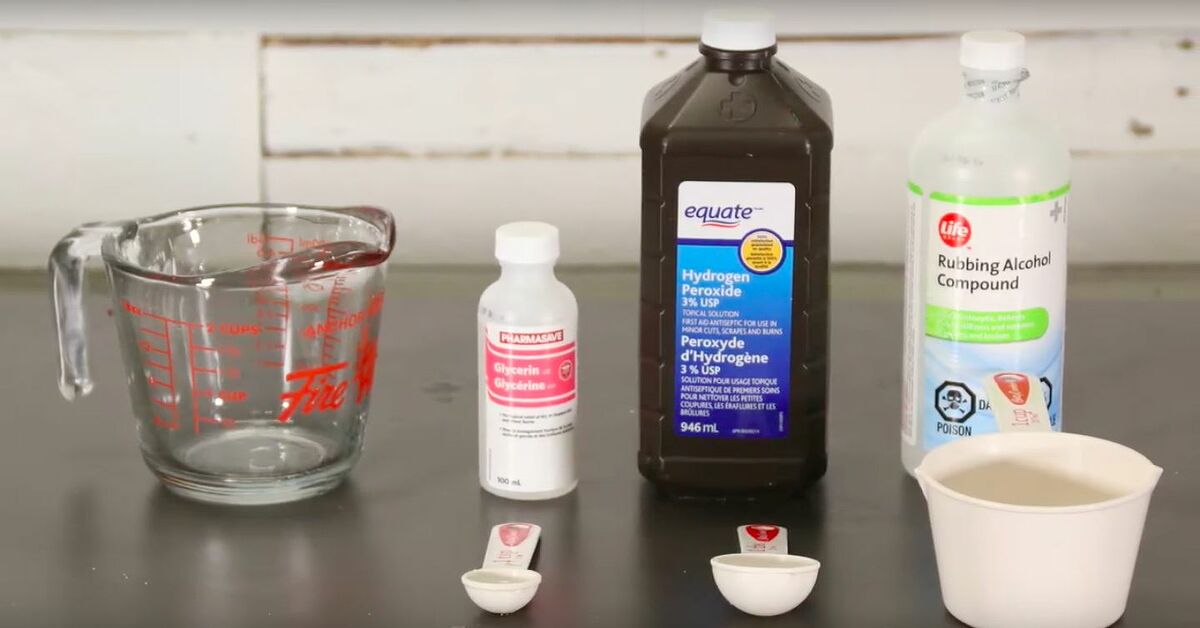
- 41.7 milliliters of 3% hydrogen peroxide
- 14.5 milliliters of 98% glycerol
- Sterile distilled water or water that has been boiled and cooled
Directions
- Pour the ethanol into a clean, graduated one-liter container.
- Add the hydrogen peroxide.
- Add the glycerol. Because glycerol is thick, rinse the measuring cylinder with some of the sterile water and add that rinse to the mixture.
- Add sterile water until the total volume reaches exactly one liter.
- Close the container promptly and mix by gently shaking or turning it.
- Divide the solution into clean, leak-resistant bottles.
- Leave the sealed bottles undisturbed for 72 hours before use, following the WHO production procedure.
Why does it contain hydrogen peroxide?
In this formula, hydrogen peroxide is included to help control bacterial spores that could contaminate the solution or its containers during production. It is not included as the main active ingredient for sanitizing hands. Pouring peroxide onto aloe vera does not create a substitute formula.
Who should use this recipe?
This formulation is better suited to trained personnel, community organizations, or facilities with graduated equipment and quality-control procedures. WHO guidance discusses proper containers, ventilation, fire safety, labeling, and alcohol-concentration verification. Concentrated ethanol and finished alcohol hand rub are highly flammable.
Popular Rubbing Alcohol Alternatives That Do Not Work Reliably
Vodka and other 80-proof spirits
At approximately 40% alcohol, standard liquor starts below the recommended minimum. Adding other ingredients makes it weaker, not stronger.
Witch hazel
Witch hazel is commonly found in skin-care products, but it is not a substitute for an alcohol-based hand sanitizer containing at least 60% ethanol.
Vinegar or lemon juice
Acidity may affect some microorganisms under particular laboratory conditions, but kitchen acids are not validated substitutes for properly formulated hand sanitizer. Save the vinegar for salad dressing, where its performance reviews are considerably better.
Essential oils
Tea tree, thyme, oregano, eucalyptus, and similar oils are often promoted for antimicrobial properties. Their strength, purity, skin tolerability, and effectiveness in homemade blends are not standardized. They should not be treated as the active sanitizing ingredient.
Bleach and household disinfectants
Never apply household bleach, disinfectant spray, surface cleaner, or disinfecting wipes directly to your hands. Products designed for hard surfaces may injure the skin or eyes. The FDA specifically advises against using surface disinfectants on the body.
Alcohol-free DIY sanitizer
Some commercial non-alcohol hand sanitizers contain regulated active ingredients such as benzalkonium chloride. Reproducing these products at home is not as simple as buying a chemical online and hoping the decimal point behaves. The CDC states that alcohol-based sanitizers work against a broader range of germs than non-alcohol alternatives.
How to Use Homemade Hand Sanitizer Correctly
- Apply enough product to cover your palms, fingers, fingertips, thumbs, backs of the hands, and spaces between the fingers.
- Rub all surfaces continuously until your hands feel completely dry.
- Do not wipe the sanitizer away with a towel before it dries.
- Keep your hands away from flames, burners, cigarettes, and sparks until the alcohol has fully evaporated.
- Wash with soap and water as soon as practical.
Coverage matters. A powerful formula cannot sanitize skin it never touches. Mayo Clinic and CDC guidance both recommend rubbing sanitizer across all hand surfaces until dry.
When Soap and Water Are the Better Choice
Hand sanitizer is convenient, but it is not a universal force field. Wash with soap and running water when:
- Your hands are visibly dirty, muddy, greasy, or sticky.
- You have handled raw food, garbage, soil, pesticides, or heavy metals.
- You are caring for someone with vomiting or diarrhea.
- You may have been exposed to norovirus, Cryptosporidium, or Clostridioides difficile.
- You have access to an ordinary sink and at least 20 seconds to use it.
The CDC notes that sanitizer may work poorly on heavily soiled or greasy hands and that soap and water remove certain germs and harmful chemicals more effectively.
Storage and Safety Precautions
- Keep it away from children. Alcohol sanitizer can cause serious poisoning if swallowed. Children should use it only with adult supervision.
- Avoid the eyes. If sanitizer enters the eyes, rinse with clean running water and seek medical guidance if irritation continues.
- Do not drink it. “Food-grade ethanol” describes the alcohol source, not the finished hand sanitizer. Once glycerin, aloe, or peroxide enters the bottle, it is an external-use product.
- Protect it from heat. Alcohol vapor is flammable. Store bottles tightly closed, away from direct sunlight, hot vehicles, flames, and electrical sparks.
- Use ventilation. The FDA advises using alcohol-based sanitizer in a ventilated area, particularly when larger quantities or enclosed spaces are involved.
- Stop if irritation develops. Frequent sanitizer use can dry or irritate the skin. Allow the product to dry and apply an ordinary fragrance-free moisturizer afterward.
Real-World Experience: Lessons From Making and Using DIY Sanitizer
The first practical lesson is that homemade sanitizer rarely resembles the polished gel sold in stores. Commercial manufacturers use carefully selected thickeners, controlled mixing equipment, tested raw materials, and quality checks. A home batch may look cloudy, watery, stringy, or suspiciously similar to a failed science-fair volcano that never received the baking soda.
Aloe is responsible for many texture surprises. One brand may blend smoothly with ethanol, while another produces floating clumps because its stabilizers do not tolerate high alcohol concentrations. Adding more aloe usually makes the mixture prettier but less effective by lowering the final alcohol percentage. The sensible response is not to keep improvising. If the formula separates badly or the measurements become uncertain, discard it and start over with clean equipment.
Another common experience is underestimating evaporation. High-proof ethanol begins evaporating as soon as the container is opened. Leaving the mixing bowl uncovered while searching for a funnel, answering a phone call, and reorganizing the pantry can reduce the alcohol content. Experienced mixers prepare every tool before opening the bottle, work efficiently, and seal the finished sanitizer immediately.
Bottle selection matters more than expected. Thin liquid formulas may leak from cheap flip-top containers, while thick aloe mixtures can clog fine-mist sprayers. A small pump or squeeze bottle generally works better. Clear labeling is equally important. An unlabeled bottle of colorless liquid beside the kitchen sink can be mistaken for water, cleaning solution, or something drinkable. Labels should state “Hand Sanitizer,” “External Use Only,” the ingredients, the estimated concentration, and the date.
People also tend to use too little product. A tiny decorative dab may leave the thumbs, fingertips, backs of the hands, and spaces between fingers untouched. In practice, enough sanitizer should be used to keep all hand surfaces wet during rubbing and to require a reasonable drying period. Wiping wet hands on jeans after five seconds defeats the process and gives the jeans an unrequested supporting role in infection control.
Skin comfort becomes important after repeated use. A very high-alcohol liquid dries quickly but may leave hands tight or rough. Glycerin and aloe can improve comfort, yet too much creates stickiness and unwanted dilution. A better strategy is to keep the sanitizer formula simple, let it dry completely, and apply a separate fragrance-free hand cream later. This preserves the sanitizer concentration without requiring it to moonlight as a luxury moisturizer.
Finally, real-world use teaches when not to reach for the bottle. Sanitizer feels convenient after gardening, preparing food, changing a diaper, or handling something greasy, but physical dirt can prevent good skin contact. When a sink is available, soap and water are usually the easier and more dependable option. Homemade sanitizer is best treated as an emergency bridgenot a replacement for handwashing, commercial quality control, or common sense.
Frequently Asked Questions
Can I make sanitizer with 70% ethanol?
You cannot add much to 70% ethanol without pushing the finished concentration toward or below 60%. Using a properly labeled commercial 70% ethanol hand product as directed is safer than attempting to thicken or modify it.
Can I add more aloe if the sanitizer dries my hands?
No. Extra aloe reduces the alcohol concentration. Apply moisturizer after the sanitizer has dried instead.
Can I add essential oils for fragrance?
Fragrance is unnecessary and may irritate the skin. It also complicates the concentration calculation. Unscented sanitizer is less glamorous, but germs are not known for judging personal branding.
Does a stronger alcohol concentration always work better?
Not automatically. Alcohol needs some water to support protein denaturation, and recommended sanitizer concentrations generally fall between 60% and 95%. Extremely concentrated alcohol is also more drying, evaporates rapidly, and presents greater handling risks.
How long does homemade sanitizer last?
Home batches do not have validated expiration dates. Alcohol can gradually evaporate through poor seals, and contamination can occur during mixing. Prepare only a small amount, keep it tightly closed, and replace it if the container leaks, the mixture separates, or its quality becomes uncertain.
Conclusion
When rubbing alcohol is unavailable, high-proof ethanol can serve as the active ingredient in an emergency hand sanitizer. The key is not the recipe’s scent, texture, or social-media popularityit is the final alcohol concentration.
The 190-proof aloe gel offers the simplest approach, the 151-proof liquid provides an option with minimal dilution, and the WHO-style formula demonstrates how controlled local production is performed. None is safer or more reliable than a reputable commercial sanitizer made under proper manufacturing standards.
Use exact measurements, avoid unverified alcohol sources, keep every mixture away from children and flames, and remember that soap and water remain the first choice. Sometimes the smartest homemade sanitizer recipe is turning on the faucet.