Note: Body-only HTML for direct web publishing.
There was a time when “being unavailable” was normal, directions lived in a glove compartment, and your social life could collapse because somebody’s mom answered the phone and asked way too many questions. Now? We carry a tiny glowing universe in our pockets, every song ever recorded feels one tap away, and somehow we are more connected, more entertained, and more overwhelmed at the exact same time.
That’s why a good then vs now list hits like a nostalgia brick to the forehead. It is not just about old gadgets or vintage vibes. It is about how everyday life has changed so much that some modern habits would have sounded like science fiction twenty years ago, while older routines now feel charming, awkward, and slightly prehistoric.
These nostalgic then vs now scenarios are funny, weird, and just a little emotionally damaging in the best possible way. They show how fast technology, culture, and daily habits have shifted, from how we talked and shopped to how we watched TV, listened to music, and even got bored. If you have ever said, “Kids today will never understand,” congratulations: this article is your moment.
Why Nostalgic Then Vs Now Moments Hit So Hard
Nostalgia works because it turns ordinary memories into emotional landmarks. Nobody thought a family computer room, a stack of burned CDs, or a wallet stuffed with printed photos would become historical artifacts. But here we are. The routines that once felt basic now look almost ceremonial.
And that is what makes then vs now scenarios so irresistible. They do not just compare old tools with new tools. They compare entire mindsets. The old world was slower, more awkward, and less convenient. It also had a strange magic. You had to wait more, plan more, remember more, and improvise more. Modern life often removes friction, but sometimes it also removes the little moments that made things feel memorable.
So let’s lovingly examine the evidence. Prepare to laugh, nod, and possibly stare into the distance like a retired Blockbuster employee remembering the glory days.
23 Nostalgic Then Vs Now Scenarios That Will Break Your Brain
1. Calling the House vs Calling the Person
Then: You did not call your friend. You called their house. That meant anyone could answer: mom, dad, a sibling, or the terrifying family member who said, “Who is this?” in a tone that made you question your life choices. Now: You text one specific human directly, and they still might ignore you for six business days.
2. Memorizing Phone Numbers vs Barely Knowing Your Own
Then: Important numbers lived in your brain like treasured artifacts. Home, grandma, best friend, pizza place. You knew them cold. Now: Your phone knows everybody, and you probably know exactly two numbers: your own and one that used to belong to your childhood home.
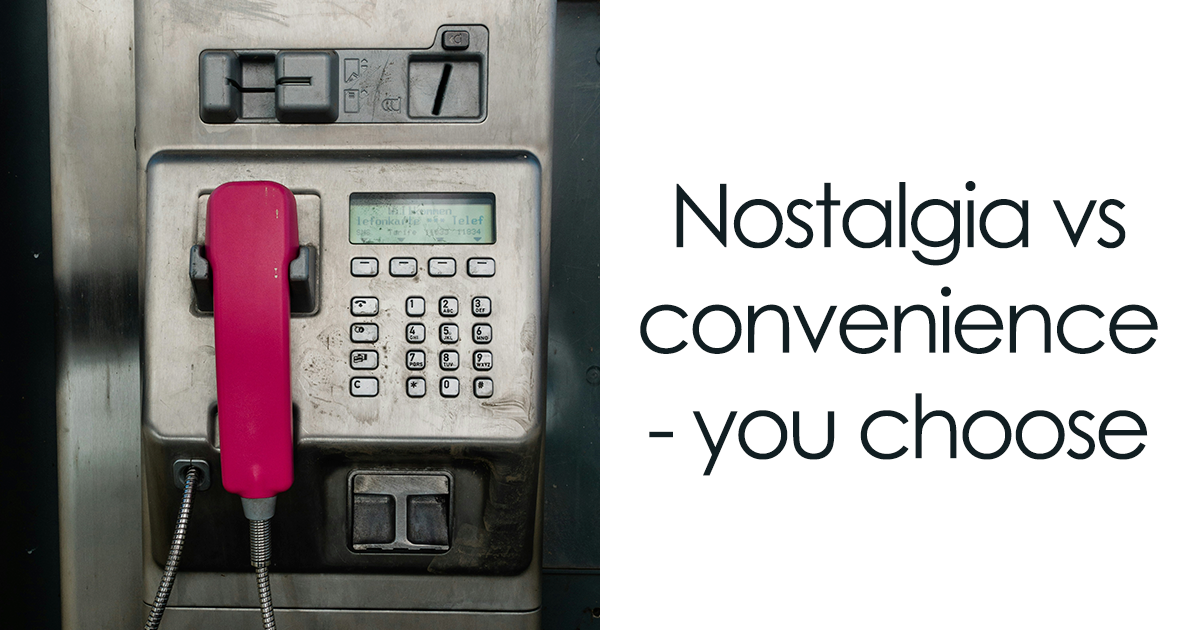
3. Pay Phones vs Pocket Supercomputers
Then: A pay phone was your emergency plan, your lifeline, and occasionally your only hope after a missed ride. You needed coins and patience. Now: Your smartphone is a camera, map, flashlight, wallet, radio, game console, and anxiety machine all in one. The fact that these two eras are separated by one lifetime is honestly rude.
4. Writing Letters vs Sending “Seen” Energy
Then: Letters, postcards, and birthday cards had texture, handwriting, and the thrill of waiting. Even a short note felt important because someone had to sit down, write it, stamp it, and send it. Now: A modern expression of affection is often “happy birthday!!!” followed by a balloon emoji and a meme posted twelve hours late.
5. Paper Maps and MapQuest vs Calm GPS Voices
Then: You unfolded a paper map the size of a bedsheet or printed turn-by-turn directions and prayed no road signs betrayed you. A wrong turn could become a family legend. Now: GPS quietly reroutes you in seconds, and people still manage to miss the exit somehow. Progress is beautiful, but not foolproof.
6. The Family Computer vs A Screen for Every Human
Then: Many households had one desktop in a shared room, which meant your internet life happened in public. Nothing says “privacy” like researching a school project while your dad yelled about printer ink. Now: Everyone has a personal device, a private feed, and a charger they swear they did not steal.
7. Dial-Up Drama vs Constant Connection
Then: Going online sounded like two robots fighting inside a fax machine. And if somebody picked up the phone, your internet session died a tragic death. Now: We complain when a page takes four seconds to load, as if history did not once force us to negotiate with a screaming modem.
8. Waiting for Your Song on the Radio vs Infinite Playlists
Then: You waited all day to hear your favorite song, finger hovering over the record button like a tiny DJ sniper. Now: Every song, remix, live version, and “lofi rain edit” is available instantly. Ironically, this has somehow made us more powerful and less patient.
9. Mixtapes and CD Binders vs Streaming Playlists
Then: A mixtape said, “I care enough to curate emotion.” A burned CD said, “I care, but I also own a computer.” A giant binder in the car said, “We are one pothole away from chaos.” Now: We make playlists in seconds and share them with a link. Convenient? Absolutely. Romantic? Slightly less.
10. Video Rental Night vs Endless Scrolling
Then: Movie night meant physically going somewhere, wandering aisles, judging cover art, and discovering the new release was already gone. Now: You open three streaming apps, scroll for forty-five minutes, and somehow choose nothing. The options expanded. The decision-making skills did not.
11. TV Guide and Channel Surfing vs Algorithmic Recommendations
Then: Families checked the TV guide like it was sacred literature and built evenings around fixed schedules. Missed the episode? Tough luck. Now: Streaming platforms know what you watched, what you almost watched, and what you accidentally left running while making a sandwich.
12. Disposable Cameras vs A Camera Roll With 8,000 Photos
Then: You got twenty-four or thirty-six shots, and every click mattered. Half the photos came back blurry, one had a thumb in it, and somehow that made them more lovable. Now: We take sixty pictures of one brunch plate, keep two, edit both, and still say, “I don’t have any good photos of myself.”
13. Printed Photo Albums vs Cloud Memories
Then: Family memories lived in albums, shoeboxes, and that one plastic bag of random duplicates nobody explained. Looking at photos was an event. Now: Your memories are in the cloud, scattered across apps, and occasionally resurfaced by an algorithm that decides you should revisit an awkward haircut from 2014.
14. The Mall as Social Headquarters vs Shopping From the Couch
Then: The mall was not just for buying things. It was a destination, a social scene, a climate-controlled adventure where you could eat pretzels and roam like a free-range teenager. Now: You can buy socks, lamps, groceries, and a waffle maker while sitting in pajamas. Efficient? Yes. Iconic? Not as much.
15. Cash and Spare Change vs Tap-to-Pay Everything
Then: Your spending power lived in bills, coins, and whatever mysterious amount was hiding in the couch cushions. Now: A watch can buy coffee. A phone can split dinner. A payment can happen so fast you barely feel the emotional damage until later.
16. Arcades and Local High Scores vs Online Gaming Universes
Then: Gaming often meant standing shoulder to shoulder in an arcade, hoping your initials stayed on the high-score board for at least a week. Now: Games are enormous online worlds with updates, skins, voice chat, and battle passes. The fun expanded, but so did the number of things begging for your credit card.
17. Encyclopedias and Library Stacks vs Search Bars
Then: Research meant going to the library, flipping through indexes, and carrying actual books. You could feel knowledge in your arms. Now: Answers arrive in seconds, often before you have fully finished typing the question. Human civilization basically replaced paper cuts with open tabs.
18. Home Movies on Camcorders vs Vertical Video Everywhere
Then: Home videos were shaky, overly zoomed, and narrated by somebody breathing directly into the microphone. They were glorious. Now: Everyone is a filmmaker with a phone, editing tools, filters, captions, and the ability to post a moment before it has even emotionally happened.
19. Showing Up Unannounced vs Texting “You Up?” From the Driveway
Then: People just visited. They knocked on the door and took their chances like social cowboys. Now: Many of us would rather receive a calendar invite than hear an unexpected knock. Courtesy improved, maybe. Spontaneity took a little hit.
20. Boredom as a Lifestyle vs Doomscrolling as a Hobby
Then: Boredom happened often, and because of that, people invented games, wandered outside, doodled, stared at ceilings, and made weird memories. Now: The second boredom appears, a screen arrives to kill it. We solved boredom so efficiently that we may have accidentally endangered daydreaming.
21. Family Event Planning vs Group Chats That Solve Nothing
Then: Plans were simpler because fewer people had instant opinions at all times. You called, agreed, and showed up. Now: A group chat with eleven people can produce eighty-seven messages and still no confirmed dinner reservation.
22. Office Life as Default vs Remote and Hybrid Reality
Then: “Going to work” usually meant commuting to a physical place, wearing real pants, and pretending break-room coffee had personality. Now: Millions of people split time between home and office, proving that entire professional routines can change faster than anyone expected.
23. Owning Things vs Accessing Everything
Then: You bought albums, DVDs, maps, photo prints, and software in physical form. Ownership felt tangible. Now: We subscribe, stream, rent, sync, and access. It is lighter, faster, and less cluttered, but also a little weird that huge chunks of modern life exist as permissions rather than possessions.
What These Then Vs Now Changes Really Mean
The funniest part of nostalgic comparisons is that both eras think they are normal. The past felt ordinary while it was happening. The present feels ordinary now. But place them side by side, and the contrast becomes almost comical. We went from waiting to instant delivery, from local hangouts to digital networks, from scheduled entertainment to infinite media, and from remembering things ourselves to outsourcing memory to devices.
That does not mean the past was better and the present is worse. It means daily life has been radically redesigned. Older habits often required more patience, more planning, and more face-to-face interaction. Modern habits deliver convenience, personalization, and speed. The real brain-breaking part is realizing that many of us lived through both worlds and switched operating systems midlife like confused but adaptable little humans.
And maybe that is why nostalgic then vs now scenarios resonate so deeply. They remind us that change does not always arrive with fireworks. Sometimes it sneaks in through better maps, faster songs, smarter phones, and fewer reasons to leave the house.
A Longer Reflection on the Experience of Living Through “Then Vs Now”
One of the strangest experiences about growing up across different eras is realizing that the old way did not feel old at the time. It felt current. It felt normal. You did not stand in a video rental store thinking, “One day this will seem like a charming historical reenactment.” You were just trying to find a movie before somebody else grabbed the only copy.
That is the emotional core of the then vs now phenomenon. These memories are not powerful because they are ancient. They are powerful because they were ordinary. They were made of everyday rituals: calling a friend after dinner, rewinding a tape, printing directions, waiting for photos to be developed, or checking whether anyone was using the house phone before logging onto the internet. None of it seemed magical then. Looking back, all of it does now.
There is also something uniquely disorienting about being fluent in both worlds. People who remember analog life often had to develop patience without calling it patience. You waited because waiting was built into everything. You waited for mail, for rides, for television episodes, for the camera roll to finish, for the song to come on, for the internet to connect, and for your crush to maybe call back if the stars aligned and their cousin was not hogging the line. Modern life replaced much of that waiting with instant access. That is a triumph in many ways. But it also changed the texture of anticipation.
The old world demanded more commitment. If you bought a CD, you listened to the whole thing. If you rented a movie, that was the movie. If you took a bad photo, congratulations, that memory was now blurry forever. Today, almost everything can be skipped, deleted, re-edited, replaced, or optimized. That flexibility is wonderful, but it can make experiences feel less final and, weirdly, less dramatic.
Another reason these nostalgic scenarios hit so hard is that they reveal how much technology reshaped personality and behavior, not just convenience. We used to tolerate uncertainty better. We got lost more. We asked strangers for directions more. We remembered birthdays, numbers, and appointments in different ways. We spent boredom differently. We socialized with less filtering and less curation. Modern tools improved efficiency, but they also trained us to expect immediacy, precision, and constant stimulation.
Still, nostalgia is not really a campaign to go backward. Most people do not actually want to return to dial-up, paper maps in a thunderstorm, or a world where you had to develop film just to discover every photo was terrible. What people miss is the feeling attached to those systems: surprise, patience, effort, randomness, and the small shared inconveniences that made life feel communal.
That is why the best nostalgic then vs now scenarios do more than make us laugh. They remind us who we were, how we adapted, and how absurdly fast normal life can evolve. One generation’s routine becomes the next generation’s “Wait, you did what?” story. And honestly, that may be the most comforting brain-breaker of all.
Conclusion
From pay phones to smartphones, mixtapes to playlists, and mall hangouts to checkout buttons, these 23 nostalgic then vs now scenarios show just how dramatically everyday life has changed. The wild part is not that technology improved. The wild part is how quickly entire habits, emotions, and social rules changed along with it. If this list made you laugh, wince, or suddenly remember the smell of a video store carpet, mission accomplished.