Woodworking has a funny way of making ordinary people feel like backyard inventors, weekend architects, and occasionally, detectives trying to figure out where that one missing screw rolled. The good news? You do not need a giant workshop, a beard full of sawdust, or a table saw that looks like it belongs in a superhero movie to get started. With the right woodworking projects, you can build practical, good-looking pieces while learning real skills one board at a time.
This guide covers 15 awesome woodworking projects for every skill level, from simple beginner builds to more advanced furniture projects that make your home look custom without making your wallet cry into a pile of receipts. Each idea includes what you will learn, why the project is worth building, and how to make it successful. Whether you are brand-new to DIY wood projects or ready to level up your joinery, there is something here that belongs on your workbench.
Before You Start: Choose Projects That Build Skills
The best woodworking projects do more than create something useful. They teach you how wood behaves, how tools feel in your hands, and why measuring twice is not just a cute saying from someone’s grandpa. A well-chosen project helps you practice cutting, drilling, sanding, gluing, clamping, finishing, and assembly without throwing you into the deep end.
Start with projects that match your current tools and patience level. Beginners should look for square cuts, simple fasteners, and forgiving designs. Intermediate woodworkers can explore curves, angled cuts, shelves, drawers, and more polished finishes. Advanced builders can try furniture, built-ins, complex joinery, and projects where a tiny error may become a “design feature” if you are creative enough.
Beginner Woodworking Projects
1. Classic Cutting Board
A cutting board is one of the best beginner woodworking projects because it is useful, attractive, and small enough to finish without rearranging your whole garage. It teaches you how to select hardwood, cut clean edges, glue boards together, clamp evenly, sand through grits, and apply a food-safe finish.
Maple, walnut, and cherry are popular choices because they are durable and beautiful. Keep the first design simple: straight strips, rounded corners, and a smooth surface. Once you gain confidence, you can experiment with contrasting woods, juice grooves, handles, or end-grain patterns. Just remember that the first cutting board you make may be so proudly displayed that nobody in the house will be allowed to cut onions on it.
2. Wooden Tool Tote
A wooden tool tote is a practical project that teaches layout, drilling, handle placement, and basic box assembly. It is also a great excuse to stop losing your tape measure every 11 minutes. The design is simple: two side panels, two end panels, a bottom board, and a dowel or shaped handle.
This project works well with pine, poplar, or plywood. You can customize the length to fit hand tools, gardening supplies, art materials, or barbecue gear. Beginners will learn how to keep a box square, pre-drill screw holes, and sand edges so the tote feels comfortable in the hand. Add stain or paint, and suddenly your “practice project” looks like something from a charming country store.
3. Simple Wall Shelf
A wall shelf is one of those easy woodworking projects that gives a room instant function. It can hold books, plants, framed photos, or the tiny decorative objects people buy and then pretend they know how to style. A basic shelf requires only a board, brackets, screws, and a finish.
To make it more woodworking-focused, build your own wooden brackets or add a small front lip. This project teaches straight cuts, sanding, edge finishing, and basic wall-mounting. For beginners, the most important lesson is weight support: use wall anchors or attach the shelf to studs. Nobody wants a dramatic midnight shelf collapse starring your favorite plant.
4. Birdhouse
A birdhouse is a classic beginner woodworking project for a reason. It is small, affordable, fun to personalize, and forgiving enough that a slightly imperfect roof still counts as “rustic charm.” You will practice measuring, cutting panels, drilling an entrance hole, assembling with nails or screws, and applying an outdoor-safe finish.
Use cedar, pine, or exterior-rated plywood. Keep the design simple, include drainage holes, and avoid toxic finishes inside the house. A birdhouse also introduces the idea that woodworking projects can be both decorative and functional. Plus, if a bird moves in, you get a tenant who pays in cheerful chirps and questionable lawn behavior.
5. Wooden Planter Box
A planter box is a rewarding beginner project because it looks impressive while relying on basic skills. You can build one for herbs, flowers, patio vegetables, or that ambitious tomato plant you swear will survive this year. The project teaches repeat cuts, assembly, drainage planning, and finishing for outdoor use.
Cedar is a smart choice because it naturally resists decay, but pine can work if it is sealed properly. Add landscape fabric inside, leave gaps or holes for drainage, and raise the planter slightly off the ground to reduce moisture damage. This build is ideal for learning how wood handles weather, which is mostly by complaining unless you protect it.
Intermediate Woodworking Projects
6. Entryway Bench
An entryway bench is where woodworking starts feeling like furniture making. It gives you a place to sit while putting on shoes, a spot to drop bags, and a polite way to say, “Please stop leaving sneakers in the middle of the hallway.”
This project usually involves a rectangular frame, legs, a seat, and possibly a lower shelf. You will practice stronger joinery, repeatable cuts, sanding larger surfaces, and building for weight support. A bench can be made from 2x4s for a chunky farmhouse look or hardwood for a more refined design. Add hooks or cubbies above it and you have a mini mudroom without hiring a contractor.
7. Picture Frames
Picture frames are small, but they teach precision. Angled cuts must meet cleanly at the corners, which means your measuring and miter saw setup matter. If your first frame has gaps, do not panic. That is what wood filler, patience, and selective camera angles are for.
This project teaches 45-degree cuts, rabbet grooves, clamping, glue-ups, and finishing. You can make frames from hardwood scraps, reclaimed wood, or painted pine. Try a simple square frame first, then experiment with profiles, splines, or contrasting corner details. Once you master frames, homemade gifts become much easierand much cheaper than buying custom framing.
8. Floating Nightstand
A floating nightstand is a sleek project that saves floor space and makes a bedroom look intentional. It is basically a small wall-mounted box, but when done well, it looks modern and custom. You can build it with plywood, hardwood, or a mix of both.
This project teaches box construction, wall mounting, edge banding, and careful finishing. Add a small drawer if you want more challenge, or keep it open with one shelf for an easier build. The key is secure installation. A floating nightstand should float visually, not literally fall off the wall at 2 a.m. with your phone and glass of water.
9. Coffee Table
A coffee table is a fantastic intermediate woodworking project because it combines design, strength, and daily usefulness. You can build a simple rectangular table with hairpin legs, a farmhouse table with chunky aprons, or a modern design with storage underneath.
You will learn how to build a flat tabletop, attach legs securely, manage wood movement, and choose a finish that can survive mugs, remotes, snack plates, and the occasional person who ignores coasters despite your emotional investment. A coffee table also gives you room to explore style. Reclaimed wood creates a rustic look, plywood can feel modern, and hardwood makes the piece feel more refined.
10. Bookcase
A bookcase is one of the most practical woodworking projects for improving your home and your skills. It teaches layout, shelf spacing, plywood handling, edge treatment, squareness, and load support. It also reveals how many books you own that you definitely planned to read “soon.”
Start with a simple case: two sides, a top, a bottom, shelves, and a back panel. Intermediate builders can add face frames, adjustable shelf holes, trim, or a painted finish. The biggest challenge is keeping the case square during assembly. Use clamps, measure diagonals, and work on a flat surface. A well-built bookcase looks clean, stores a lot, and makes any room feel more organized.
Advanced Woodworking Projects
11. Storage Cabinet
A storage cabinet is a serious skill-builder because it combines casework, doors, hinges, shelves, and finishing. It is ideal for a garage, laundry room, kitchen, office, or craft space. Unlike a simple shelf, a cabinet requires careful planning so doors line up, shelves fit, and the final piece does not look like it is leaning away from responsibility.
This project teaches accurate plywood cutting, joinery, hinge installation, face frames, and possibly drawers. Advanced woodworkers can add inset doors, soft-close hardware, or adjustable shelving. A cabinet is also a great lesson in workflow: cut parts consistently, label pieces, dry-fit everything, and finish in stages when needed.
12. Adirondack Chair
An Adirondack chair is a beloved outdoor woodworking project because it is comfortable, recognizable, and surprisingly educational. The angled back, wide arms, curved seat, and outdoor exposure all add complexity. It is not impossible, but it asks for patience and accurate templates.
You will practice cutting curves, shaping parts, drilling consistent holes, sanding outdoor furniture, and using weather-resistant fasteners. Cedar, cypress, teak, and pressure-treated lumber are common outdoor choices. A good Adirondack chair turns a patio into a lounging zone, and building one yourself gives you the right to sit in it with a deeply satisfied sigh.
13. Jewelry Box
A jewelry box is a small project with big lessons. Because it is viewed up close, details matter. The lid, corners, lining, dividers, hinges, and finish all need care. This is where woodworking becomes less about “Can I assemble this?” and more about “Can I make this beautiful?”
A basic jewelry box can use mitered corners and a hinged lid. More advanced versions might include dovetails, trays, flocking, inlay, or a contrasting wood lid panel. This project improves precision, sanding discipline, and finishing technique. It also makes a meaningful handmade giftassuming you can bear to give it away after spending hours making the corners perfect.
14. Dining Bench or Small Table
A dining bench or small table is an excellent advanced project because it must be strong, stable, and attractive. People will sit, lean, eat, spill, and possibly stand on it despite your clear instructions not to. That means the joinery and finish need to perform.
This project teaches aprons, leg joinery, tabletop glue-ups, flattening, and durable finishing. Pocket-hole joinery can work for approachable builds, while mortise-and-tenon joinery offers a traditional upgrade. Pay close attention to wood movement, especially with wider tops. A well-built bench or table can last for years and become the piece everyone assumes you bought from a fancy furniture shop.
15. Built-In Shelving or Window Seat
Built-ins are the “big leagues” of DIY woodworking projects. A built-in shelf, window seat, or storage nook can transform a room, but it requires careful measuring, scribing, wall awareness, and trim work. Houses are rarely square, which is rude but true.
This project teaches planning, plywood casework, wall anchoring, trim installation, caulking, painting, and problem-solving. Built-ins are advanced because they must fit the room, not just themselves. Start with a small alcove or window seat before attempting a full wall of shelving. The payoff is huge: custom storage, architectural character, and the ability to casually say, “Oh, I built that,” while pretending not to enjoy the applause.
How to Pick the Right Woodworking Project for Your Skill Level
Choosing the right project is half the battle. Beginners should focus on confidence, not complexity. Look for plans with simple cuts, common materials, and clear steps. Cutting boards, shelves, birdhouses, tool totes, and planter boxes are great starting points because they teach core skills without overwhelming you.
Intermediate woodworkers should choose projects that introduce one or two new challenges at a time. For example, a coffee table might teach tabletop glue-ups and leg attachment. A bookcase might teach plywood handling and shelf support. A floating nightstand might teach wall mounting and edge banding. The goal is steady growth, not emotional damage caused by a twelve-drawer dresser on your third weekend.
Advanced woodworkers can explore projects that require accuracy, patience, and refined finishing. Cabinets, chairs, jewelry boxes, tables, and built-ins all reward careful planning. These projects often require more tools, better dust control, stronger joinery, and a willingness to slow down when things get tricky.
Essential Tools for Most DIY Wood Projects
You do not need every tool in the hardware store to begin woodworking. Start with the basics: a tape measure, square, pencil, clamps, drill, circular saw or miter saw, sander, safety glasses, hearing protection, and dust mask or respirator. As your skills grow, you may add a table saw, router, pocket-hole jig, chisels, planer, jointer, or bandsaw.
Clamps deserve special mention because you will never own enough of them. You may think four clamps are plenty. Then you will glue up a tabletop and discover that woodworking math is different from regular math: the correct number of clamps is always “just a few more.”
Safety Tips That Belong in Every Workshop
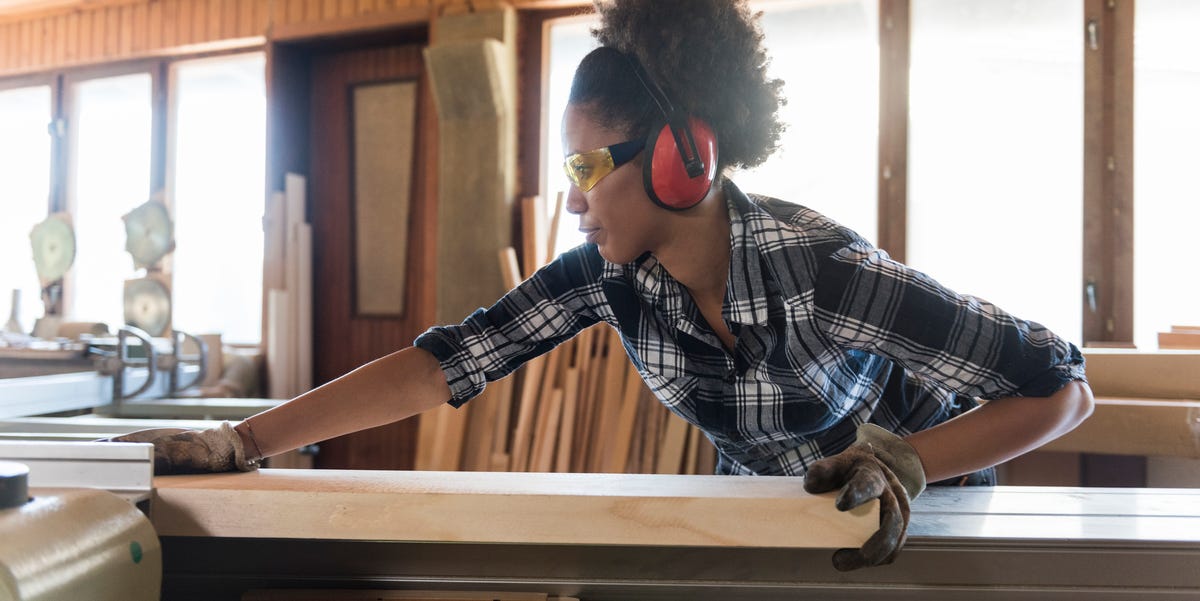
Woodworking should be satisfying, not medically dramatic. Wear eye protection when cutting, drilling, sanding, or doing anything that might send debris flying. Use hearing protection around loud tools. Protect your lungs from sawdust, especially when sanding or working in enclosed spaces. Keep blades sharp, cords clear, workpieces supported, and hands away from cutting paths.
Read tool manuals, use guards when appropriate, and avoid rushing. Most mistakes happen when you are tired, distracted, or trying to “just make one quick cut.” That phrase has caused more regret than almost anything in a workshop. Take your time, plan the operation, and keep the shop clean enough that you are not ice-skating on sawdust.
of Real-World Experience: What These Projects Teach You
The first thing woodworking teaches is humility. A board may look straight at the store, then reveal at home that it has the personality of a potato chip. Your first project might not be perfect, and that is completely normal. In fact, every woodworker has a secret museum of early mistakes: uneven shelves, wobbly stools, blotchy stain, mystery gaps, and at least one project that was “temporarily” moved to the corner and never spoken of again.
Projects like cutting boards and tool totes teach you that small details matter. Sanding is not just a final chore; it changes how a project feels. Clamping is not just squeezing wood together; it controls alignment. Glue is not magic; it needs clean surfaces and even pressure. These simple builds help you understand the rhythm of woodworking: measure, mark, cut, test-fit, adjust, assemble, sand, finish, and admire while pretending you are not staring at it every time you walk by.
Intermediate projects teach planning. When building a bench, bookcase, or coffee table, you quickly learn that the order of operations matters. Some pieces should be sanded before assembly. Some joints should be dry-fit before glue enters the room. Some finishes are easier to apply before hardware is installed. You also learn that wood has grain direction, movement, and mood swings. A tabletop needs room to expand and contract. Plywood edges need covering if you want a polished look. Screws need pilot holes if you do not enjoy splitting boards at the worst possible moment.
Advanced projects teach patience and problem-solving. A cabinet door that is off by one-sixteenth of an inch can look surprisingly dramatic. A built-in shelf may need to be scribed because the wall is not flat. A chair must be comfortable, not just photogenic. These projects force you to slow down, check your layout, and think like both a builder and a designer. The reward is enormous because advanced woodworking projects do not just fill a space; they change how a space works.
One of the best experiences in woodworking is realizing that each project makes the next one easier. After a planter box, a bench feels less intimidating. After a bench, a coffee table makes more sense. After a coffee table, a cabinet no longer seems like a mysterious wooden spaceship. Skills stack. Confidence stacks. Even mistakes stack into wisdom, although usually after a short period of grumbling.
The most important advice is to build something you actually want to use. A project with a purpose keeps you motivated through sanding dust, glue squeeze-out, and that moment when you cannot find your pencil even though it is behind your ear. Whether you start with a birdhouse or jump into a bookcase, woodworking rewards curiosity. Choose a project, respect the tools, enjoy the process, and let every finished piece remind you that your hands can make useful, beautiful things.
Conclusion
These 15 awesome woodworking projects for every skill level prove that woodworking does not have to be intimidating. Start small with beginner-friendly builds like cutting boards, birdhouses, shelves, and tool totes. Move into intermediate projects like benches, frames, nightstands, coffee tables, and bookcases. When you are ready, challenge yourself with cabinets, Adirondack chairs, jewelry boxes, tables, and built-ins.
The secret is not finding the “perfect” first project. The secret is starting with something manageable, learning from each cut, and building momentum. Woodworking is part craft, part problem-solving, and part comedy show starring you, your tape measure, and a board that somehow changed size when you were not looking. Keep building, keep learning, and before long, your home will be full of pieces that carry a better story than anything bought off a showroom floor.