A garden fountain does not need carved marble, professional plumbing, or a budget large enough to make your wallet hide behind the sofa. With a watertight container, a small recirculating pump, and a little imagination, ordinary garden objects can become charming backyard water features.
The best DIY garden fountains combine three simple ingredients: a reservoir that holds water, a pump that moves it, and a decorative surface over which the water bubbles, pours, or trickles. The water continuously returns to the reservoir, so there is no need to connect the fountain to household plumbing.
Inspired by Bob Vila’s collection of inventive fountain projects, the ideas below range from tiny tabletop bowls to pondless rock fountains and rustic barrel displays. Each can be adapted to suit a cottage garden, modern patio, wildlife-friendly yard, or neglected corner currently occupied by one lonely rake.
What You Need Before Building a DIY Garden Fountain
Choose a suitable reservoir
Your reservoir can be visible, as it is in a ceramic bowl or galvanized tub, or hidden beneath rocks in a pondless design. Whatever you choose, it must be watertight, large enough to contain splashing, and sturdy enough to support the fountain’s decorative elements.
Planters with drainage holes can still work, but the openings must be sealed with waterproof silicone, rubber stoppers, or an appropriate exterior sealant. Lowe’s and Home Depot fountain projects commonly use sealed ceramic or terra-cotta planters as practical fountain basins.
Match the pump to the fountain
A tiny bowl requires only a small submersible pump, while a tall urn or stacked-stone feature needs enough lift to push water to the top. Pump packaging usually lists maximum lift, flow in gallons per hour, and recommended tubing size.
As a general reference for pondless fountains, a 1-foot feature may use roughly 120 to 200 gallons per hour, while a 2-foot feature may require approximately 250 to 350 gallons per hour. Taller projects need progressively stronger pumps. An adjustable-flow model is useful because a peaceful trickle can quickly become an accidental garden fire hose.
Use electricity safely
Plug-in pumps should be rated for outdoor fountain use and connected to a weather-protected GFCI outlet. Keep plugs and connections away from standing water, and do not use an indoor extension cord as a permanent outdoor power solution. Complicated wiring or a new outdoor circuit should be handled by a qualified electrician.
Test the fountain before decorating it
Assemble the pump, tubing, and nozzle before adding heavy rocks or plants. Fill the reservoir, run the pump, and watch where every drop lands. Adjust the flow until most of the water returns to the basin. This ten-minute test can prevent an afternoon of dismantling stones while muttering words that frighten the hydrangeas.
11 Inventive DIY Fountain Ideas for Your Garden
1. Plant Pot Fountain
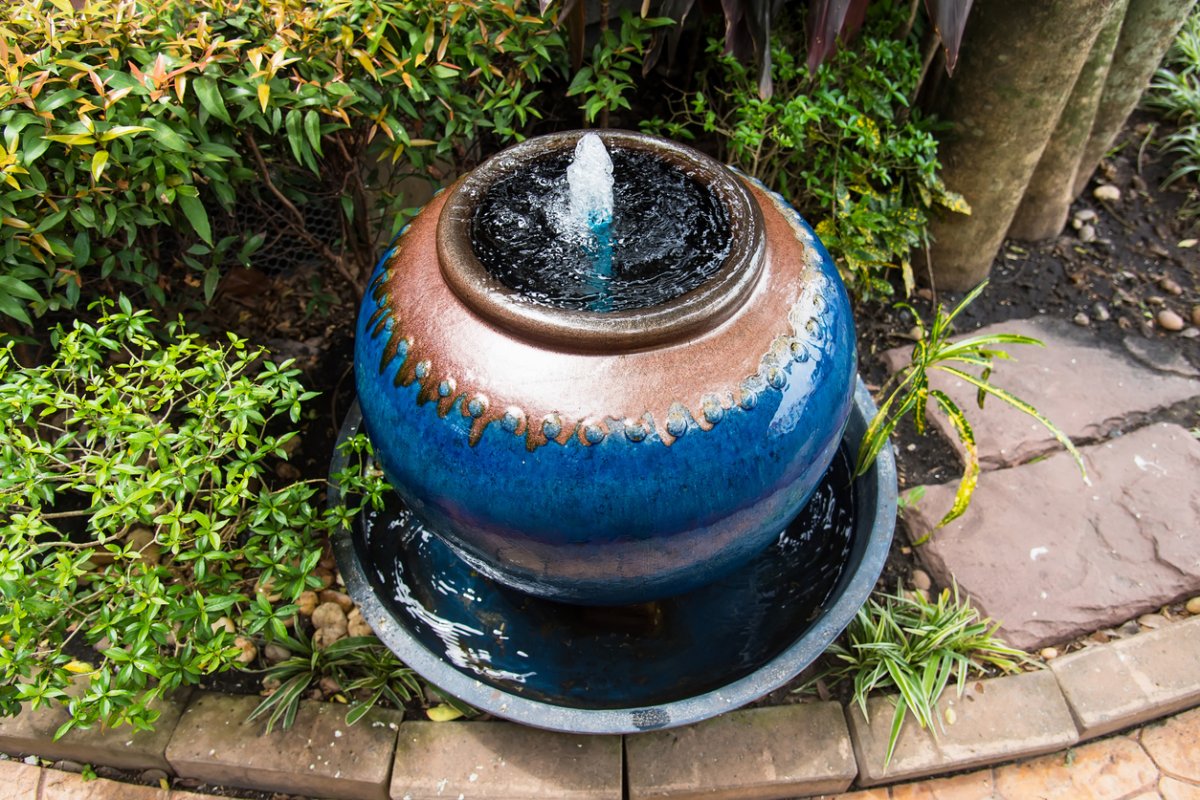
A large glazed planter is one of the easiest foundations for a homemade garden fountain. Choose a pot without cracks, seal its drainage hole, and place a small submersible pump at the bottom. Run flexible tubing upward through a stack of overturned pots, a decorative nozzle, or a bed of polished river stones.
A single pot creates a quiet bubbler, while several graduated planters can form a tiered fountain. For a cleaner appearance, elevate the pump slightly on a brick so sediment settles below the intake. Ceramic planters provide plenty of color, and concrete containers suit more understated landscapes. Bob Vila, HGTV, Martha Stewart, Lowe’s, and Home Depot all feature planter-based fountains as approachable DIY projects.
2. Bowling Ball Fountain
That forgotten bowling ball in the garage can become a surprisingly polished garden bubbler. Mount it above a hidden reservoir and route tubing through a drilled center hole. When the pump runs, water emerges at the top and coats the ball before disappearing into decorative gravel below.
The effect is especially attractive with a dark, marbled, or metallic bowling ball because the moving water emphasizes its color. Drilling through a bowling ball requires secure clamping, suitable cutting equipment, and eye protection. A safer alternative is to have the hole made by a workshop or use a predrilled decorative sphere. The finished fountain looks like an expensive landscape sculpture, although it may occasionally inspire visitors to search for the missing pins.
3. Bamboo Deer-Deterrent Fountain
A tipping bamboo fountain brings movement, rhythm, and Japanese-garden character to a quiet corner. Water slowly fills a pivoting bamboo tube. Once the tube becomes heavy, it tips forward, empties into a stone basin, and falls back against a rock or wooden block with a distinct knock.
This style is often called a deer-deterrent fountain because the intermittent sound is intended to startle visiting animals. The real attraction, however, is its hypnotic cycle. Position it near ferns, ornamental grasses, mossy stones, or a gravel meditation garden. Use exterior-grade hardware at the pivot and test the balance before permanently fastening the frame.
4. Floating Watering Can Fountain
A watering can fountain creates the illusion that water is pouring endlessly from a can suspended in midair. In reality, clear rigid tubing carries water from a lower basin, supports or visually anchors the can, and delivers the returning water to its interior.
Place a submersible pump in a tub, barrel, or large planter. Connect the clear tube to the pump, guide it through the watering can’s rose or spout assembly, and secure the can so wind cannot twist it out of position. Surround the basin with flowers that tolerate occasional splashing.
Vintage galvanized cans create rustic charm, while painted cans offer a playful burst of color. Keep the water flow modest; a gentle shower creates the magical effect, whereas excessive pressure makes the can look as though it is losing an argument with a hydrant.
5. Wine Barrel Fountain
A half wine barrel provides a generous reservoir and instantly gives a backyard fountain farmhouse appeal. Inspect the barrel, remove loose debris, and install a flexible pond liner if the wood is no longer watertight. Place the pump inside and add a simple bubbler, pitcher spout, hand-pump ornament, or second elevated barrel for a cascading design.
Aquatic plants can soften the barrel’s heavy outline, while waterproof LED lights add evening atmosphere. Do not add household cleaning chemicals if plants, birds, or other wildlife may use the water. A wide barrel also loses less water from splashing than a narrow container, reducing how often it must be refilled.
6. Pondless Rock Water Fountain
A pondless fountain hides its water reservoir underground. The pump sits inside a buried basin covered by a strong grate, landscape fabric, and decorative stone. Water bubbles through a central rock or pipe, runs across the surface, and disappears through the gravel to be recirculated.
This design provides the sound and movement of a fountain without leaving a large visible pool. It is useful in smaller gardens and places where an open basin would be inconvenient. However, all buried reservoirs and covers must be structurally sound, and no fountain should be treated as a substitute for child supervision.
Choose a flat area, level the reservoir carefully, and provide an access panel so the pump can be cleaned without excavating the entire feature. Pondless fountains also tend to collect fewer floating leaves because the water storage area is concealed.
7. Wine Bottle Fountain
Empty wine bottles can become fountain spouts, sculptural columns, or colorful accents arranged above a large planter. Green, amber, and blue glass looks particularly attractive when illuminated from below.
A straightforward design secures one or two bottles to a metal frame and routes narrow tubing through or alongside them. Water exits near the bottle opening and falls into the reservoir. Bottles must be firmly supported so they cannot shift, collide, or fall during windy weather.
If the design requires drilling glass, use a diamond hole saw, keep the drilling area wet, wear eye protection, and avoid excessive pressure. Discard any bottle that develops a crack. The result can be elegant and celebratory, particularly beside an outdoor dining area. It is also a respectable reason to save an attractive bottle instead of admitting you liked the label.
8. Bird Bath Fountain
Converting a bird bath into a fountain can benefit both the garden and its feathered visitors. Add a compact pump or solar fountain disc to create gentle movement. Flat stones placed near the edge provide varied depths and secure landing spots.
Keep the spray low and contained because many birds prefer shallow, approachable water rather than a miniature geyser. Clean the basin regularly, replace dirty water, and avoid adding decorative chemicals, antifreeze, or cleaning products to water available to wildlife. Penn State Extension recommends routine care for bird baths and backyard water sources, while Audubon cautions against adding chemicals to bird bath water.
Continuous movement can also make the water less inviting to mosquitoes, although circulation does not eliminate the need for cleaning and refilling.
9. Galvanized Tub Solar Fountain
A galvanized tub, solar pump, aquatic plants, and smooth stones can create a portable container fountain in a single afternoon. Position the empty tub first because it will become surprisingly heavy after filling. Place potted aquatic plants on submerged bricks so their foliage sits at the correct height, then tuck the solar pump among them.
Solar fountains avoid the need to route an electrical cord across the yard. Basic models operate only in direct sunlight, while battery-equipped pumps may continue during cloudy periods or after sunset. Match the nozzle to the tub’s width so the spray lands inside rather than watering the patio one enthusiastic droplet at a time.
10. Stacked Stone Fountain
Stacked stepping stones or drilled natural rocks create a substantial fountain that blends naturally into surrounding landscaping. Install a reservoir and pump below ground, drill a central opening through the stones, and pass rigid tubing or copper pipe through the stack.
Experiment with the order and angle of the stones before turning on the pump. Slightly irregular layers break the water into multiple trickling paths, while smooth, level slabs produce a more even sheet. The total lift from the pump to the highest stone determines how much pumping power is required.
Large stones are heavy, so build on compacted, level ground and use mechanical help when lifting. A broad gravel apron catches stray droplets and visually connects the fountain to nearby planting beds.
11. Mini Water Fountain
A miniature bowl fountain proves that a water feature does not need a sprawling backyard. Choose a watertight ceramic bowl, add a small adjustable pump, cover it with pebbles, and position the nozzle just above the waterline.
This compact fountain can sit on a patio table, balcony shelf, porch step, or garden bench. A gentle bubbler is usually better than a spray nozzle because small containers lose water quickly through splashing and evaporation. Tabletop fountains are also easy to rearrange when outdoor furniture or seasonal decorations change.
How to Make a Homemade Fountain Look Professionally Designed
Place it where the sound matters
A fountain should be visible from a window, patio, pathway, or seating area. To help soften traffic or mechanical noise, position the fountain between the unwanted sound and the place where people gather. Quiet bubblers work best near seating, while larger cascades can be placed farther away.
Repeat materials already used in the landscape
A weathered barrel complements timber edging and cottage plants. Stacked stone feels at home beside a gravel walkway. A cobalt planter can repeat the color of patio cushions or nearby flowers. Repetition makes an inexpensive fountain appear intentional rather than something assembled during a particularly energetic trip through the garage.
Control the sound with water height
Water falling several inches into an empty basin creates a louder splash. Water sliding down stone or bubbling just above the surface creates a softer sound. Adding river rocks beneath a falling stream can reduce harsh splashing while adding texture.
Hide the mechanical parts
Use pebbles, aquatic plants, an overturned plastic pot, or a removable screen to conceal the pump. Leave enough access to remove the intake cover and clean the impeller. A fountain that looks beautiful but requires forty minutes of rock removal every week will soon become a dry sculpture.
Practical Experience and Lessons From DIY Fountain Projects
The most valuable lesson from common DIY fountain builds is that water does not always behave as politely as the sketch on your notepad. It follows sloped stones, clings to tubing, escapes through tiny gaps, and allows the wind to carry it several feet away. For that reason, the first test should use a low pump setting and a partially filled reservoir. Watch the fountain from every angle for at least several minutes before adding permanent decorations.
Reservoir size matters more than many first-time builders expect. A shallow decorative bowl may look perfect, but a sunny afternoon can lower its water level rapidly. When the pump intake becomes exposed, the pump may run dry, overheat, or stop working. A deeper basin provides a larger margin for evaporation and splashing. Smaller fountains should be checked frequently, especially during hot or windy weather.
Another recurring lesson involves pump access. Burying the pump beneath twelve carefully positioned rocks creates a beautifully natural appearanceright until a leaf blocks the intake. Smart builders include a removable stone, hidden access hatch, or lightweight cover. The best fountain is not merely attractive on opening day; it is easy to clean three months later when enthusiasm has encountered pollen, algae, and reality.
Location also determines how much maintenance a fountain demands. Placing it directly beneath a shedding tree almost guarantees a daily collection of leaves, blossoms, twigs, and mysterious organic confetti. A site with morning sun and some afternoon shade may reduce evaporation while still providing enough light for nearby plants. Water features are generally easier to maintain when kept away from heavy leaf drop and contaminated landscape runoff.
Solar pumps require realistic expectations. They are excellent for flexible placement and simple container fountains, but output may vary with cloud cover, shadows, panel angle, and time of day. A design that depends on a perfectly even cascade may perform more consistently with a plug-in pump. A casual bird bath bubbler or galvanized-tub fountain is usually more forgiving. Test several nozzles because a narrow stream often retains water better than a high, wide spray.
Sound should be adjusted before the fountain is declared finished. A strong stream striking a hollow metal tub can sound less like a woodland creek and more like someone filling a bucket in a utility room. River stones, a lower flow rate, or a shorter drop can soften the noise. Conversely, a fountain intended to mask street sounds may need a higher fall or multiple streams.
Finally, seasonal care protects the time invested in the project. Remove debris from the pump, maintain enough water to cover the intake, and inspect tubing for kinks or leaks. In freezing climates, drain vulnerable containers and store pumps according to their manufacturer’s instructions. Water that freezes inside pottery, concrete cracks, tubing, or a sealed basin can expand and damage the fountain.
The most successful DIY fountains are rarely the most complicated ones. They use an appropriately sized basin, a reachable pump, restrained water flow, and materials that belong in the surrounding garden. Start simple, observe how the water moves, and add decoration gradually. Water is already doing most of the visual work; it does not need twelve ornaments, six colors of gravel, and a ceramic frog conducting the entire productionunless, of course, that frog brings you joy.
Conclusion
These 11 inventive DIY fountain ideas demonstrate how easily a plant pot, bowling ball, bamboo tube, watering can, wine barrel, glass bottle, bird bath, galvanized tub, stack of stones, or small ceramic bowl can become a memorable garden feature.
Begin with a watertight reservoir and a properly sized pump. Test the circulation, control the splash, provide safe outdoor power, and keep the pump accessible for cleaning. The finished fountain does not need to be enormous or expensive. It only needs to suit the space, return its water reliably, and make the garden feel a little more peaceful.