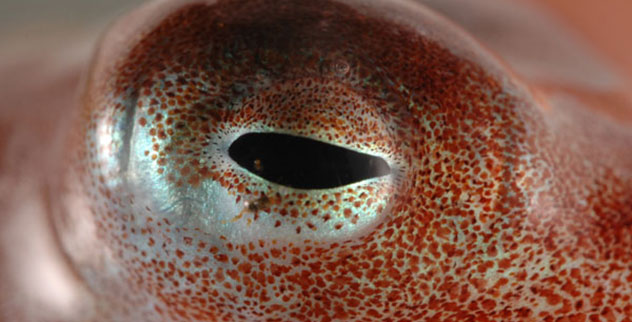
Humans are rather proud of their five senses. We have sharp eyes, sensitive fingertips, and the ability to detect that someone opened a bag of popcorn three rooms away. Compared with many animals, however, our sensory equipment looks suspiciously like the basic model.
Across the animal kingdom, creatures perceive electric fields, infrared radiation, polarized light, magnetic coordinates, underwater pressure changes, and vibrations traveling through solid ground. These unusual animal senses are not decorative evolutionary extras. They help animals find food, avoid predators, select mates, migrate across oceans, and survive in environments where ordinary sight or hearing would be about as useful as a screen door on a submarine.
Here are 10 remarkable examples of animal sensory adaptations that reveal how much of the world exists beyond normal human perception.
1. Sharks Detect Electric Fields
Electroreception turns living bodies into detectable signals
Every moving animal produces tiny electrical fields. Muscles contract, nerves fire, and hearts beat through electrochemical activity. Humans remain blissfully unaware of these signals, but sharks and rays can detect them through specialized organs known as the ampullae of Lorenzini.
These organs appear as small pores around the snout and head. Each pore connects to a jelly-filled canal containing sensory cells that respond to weak electrical changes in the surrounding water. A shark searching along the seafloor can therefore locate a fish buried beneath sand even when the prey is hidden from sight and producing very little sound.
Electroreception works at close range and complements the shark’s smell, vision, hearing, and lateral-line system. It is not supernatural radar, but for an unsuspecting flatfish trying to remain invisible, the distinction may feel academic.
2. Pit Vipers Sense Infrared Radiation
A biological heat detector built into the face
Rattlesnakes, copperheads, cottonmouths, and other pit vipers possess a pair of heat-sensitive cavities between their eyes and nostrils. These pit organs detect infrared radiation emitted by warm objects, including birds and mammals.
A thin, highly sensitive membrane inside each chamber responds to minute temperature changes. By comparing information from the two pits, the snake can estimate the direction of a heat source. Signals from the pits are integrated with visual information in the brain, allowing the animal to strike accurately even when the surrounding light is poor.
The result is often described as “thermal vision,” although the pits are not ordinary eyes. They create a spatial representation of heat rather than a colorful movie like the display on a commercial thermal camera. To a nocturnal pit viper, however, a warm mouse against cool ground is practically carrying a flashing dinner sign.
3. Sea Turtles Navigate With a Magnetic Map
Magnetoreception provides both direction and location
Young sea turtles enter an ocean with no road signs, landmarks, or helpful relatives shouting directions from the beach. Nevertheless, they can follow migration routes extending across enormous stretches of open water.
Sea turtles are capable of magnetoreceptionthe ability to detect information from Earth’s magnetic field. Different geographic regions possess distinctive combinations of magnetic intensity and inclination. Experiments with loggerhead turtles indicate that they can use these variations as navigational coordinates, rather like components of an internal map.
Magnetic information may help turtles maintain a heading, recognize important feeding areas, and estimate where they are along a migratory route. Evidence also suggests that turtles can learn magnetic signatures associated with particular locations. Scientists are still investigating exactly how the sensory mechanism works, so the turtle’s biological compass remains partly mysterious. It is still considerably more impressive than a human getting lost after leaving the airport parking garage.
4. Dolphins Build Pictures With Sound
Echolocation reveals objects in darkness or cloudy water
Dolphins and other toothed whales produce rapid, high-frequency clicks and listen for the returning echoes. The timing, strength, and acoustic structure of those echoes provide information about an object’s distance, direction, size, shape, and movement.
This biological sonar, known as echolocation, allows dolphins to navigate and hunt in murky water where vision is limited. A dolphin can send out a sequence of clicks, receive the reflected sound, and continually update its understanding of a moving fish or nearby obstacle.
Echolocation does not mean dolphins “see” sound exactly as humans see light. Their brains construct a useful sensory representation from echoes. The process is active: the animal sends out a signal and adjusts its clicking behavior as it investigates a target. It is a conversation with the environment, although the environment mostly replies, “Yes, that is indeed a fish.”
5. Fish Feel Water Moving Around Them
The lateral line acts like touch at a distance
Many fish have a sensory system running along their head and body called the lateral line. It contains small structures known as neuromasts, which include sensitive hair cells covered by a gelatinous material. When nearby water moves, these hairs bend and generate nerve signals.
The lateral line detects currents, pressure gradients, wakes, and vibrations. It helps fish notice approaching predators, track struggling prey, orient themselves in flowing water, and maintain their position within a school. A fish does not need to make physical contact with another object to sense its effect on the surrounding water.
This ability is sometimes called “distant touch.” In dark caves or muddy rivers, it can be more dependable than vision. It also explains why a school of fish can turn almost simultaneously without holding a meeting first or appointing an especially bossy sardine.
6. Star-Nosed Moles See the World Through Touch
Twenty-two nasal rays create an extraordinary tactile organ
The star-nosed mole appears to have collided with a tiny pink sea anemone. Its unusual nose consists of 22 fleshy appendages covered with approximately 25,000 microscopic touch structures called Eimer’s organs.
Because the mole spends much of its life in dark, wet soil, detailed vision would offer limited value. Instead, it rapidly taps its nose against the ground, prey, and surrounding objects. The sensory information travels to unusually large and precisely organized regions of its brain.
Two short lower rays function somewhat like a tactile foveathe high-resolution center of attention. After the outer rays detect something interesting, the mole quickly shifts this specialized pair onto the target for closer examination. The animal can identify edible prey in a fraction of a second. It does not merely have a sensitive nose; it has something closer to a high-speed touchscreen attached to its face.
7. Elephants Listen Through the Ground
Low-frequency calls become seismic messages
Elephants communicate with deep rumbles, portions of which fall below the lower limit of typical human hearing. These infrasonic sounds can travel long distances through the air. They may also couple with the ground and spread as seismic vibrations.
Vibration-sensitive structures in elephant feet can help detect these ground-borne signals. Observers have seen elephants become still, lean forward, or shift their weight while apparently attending to distant vibrations. The trunk may also help investigate signals traveling through the soil.
Experiments suggest that elephants can interpret information in seismic calls and may even distinguish familiar callers from unfamiliar ones. Alarm signals, movement, courtship, and social contact can therefore operate through channels that humans barely notice. An elephant herd may be participating in a long-distance group chat while nearby people hear nothing but wind and wonder why everyone suddenly looks serious.
8. Honeybees See Ultraviolet Patterns and Polarized Light
The sky and flowers contain information invisible to us
Human eyes detect only a limited portion of the electromagnetic spectrum. Honeybees can perceive ultraviolet light, revealing patterns on flowers that are invisible to people. These markings often form nectar guides that direct pollinators toward pollen and nectar.
Bees can also detect the orientation of polarized light in the sky. Sunlight scattering through the atmosphere creates a polarization pattern related to the sun’s position. Specialized regions of the bee’s compound eyes can read this pattern, helping the insect maintain a course even when clouds or vegetation partly hide the sun.
This sky compass contributes to the navigation that allows worker bees to travel between flowers and their colony. A garden that looks pleasantly colorful to a person may appear covered with ultraviolet landing instructions to a bee. Apparently, flowers invented directional signage long before humans installed the first airport terminal.
9. Mantis Shrimp Detect Polarized Light
Some of the most specialized eyes in the ocean
Mantis shrimp have independently movable compound eyes divided into specialized regions. Depending on the species, their visual systems contain numerous photoreceptor classes capable of detecting ultraviolet wavelengths, ordinary colors, and different forms of polarized light.
Some species can detect circular polarization, a visual ability rare in the animal kingdom. Polarization cues may assist with communication, contrast enhancement, prey detection, and navigation in an underwater environment filled with reflections and scattered light.
The frequently repeated claim that mantis shrimp simply see every color “better” than humans is misleading. Research suggests their visual processing may emphasize fast recognition and categorization rather than the fine color comparisons humans perform. Their eyes are not merely upgraded human eyes; they represent a dramatically different solution to visual survival. Nature did not improve the same camera. It redesigned the entire photography department.
10. Butterflies Taste With Their Feet
A landing can double as a chemical inspection
Butterflies do not need to bend down and lick every leaf they visit. Taste receptors located on their legs and feet allow them to detect chemicals as soon as they land.
This sense is particularly important to female butterflies choosing where to lay eggs. Many caterpillars can eat only a narrow selection of host plants. A female may tap or “drum” a leaf with her legs, releasing plant chemicals that activate her chemoreceptors. The information helps determine whether the plant will provide suitable food for her offspring.
A monarch, for example, must identify milkweed because monarch caterpillars depend on plants in that family. Choosing the wrong leaf could leave newly hatched larvae without an acceptable meal. Tasting with the feet may sound like questionable table manners, but in butterfly parenting, it is an essential background check.
Why Animals Evolved Such Unusual Senses
Unusual animal senses evolve because species face different sensory problems. Light disappears underground. Visibility collapses in muddy water. Migration routes cross featureless oceans. Social groups become separated by miles of forest or grassland. In each case, natural selection favors animals that can extract useful information from whatever signals remain available.
These adaptations also demonstrate that no animal experiences a complete version of reality. Every nervous system samples selected information and ignores the rest. Humans notice facial expressions and written words, while a shark detects electrical activity and a bee reads polarized skylight. The environment is shared, but the sensory worlds within it are strikingly different.
Experiences That Make Unusual Animal Senses Easier to Understand
Learning the science is fascinating, but a few responsible observations and demonstrations can make animal sensory adaptations feel less abstract. Humans cannot suddenly acquire electroreception or magnetoreception, yet we can create experiences that reveal why those senses are useful.
Observe fish without tapping the glass
At a large aquarium, watch a tightly packed school of fish rather than concentrating on one individual. Notice how neighboring fish adjust their speed and direction with almost no visible delay. Vision contributes to schooling, but the lateral line also provides immediate information about local water movement. The experience becomes more revealing when the fish move through dim areas or around obstacles.
Tapping the aquarium glass should never be part of the experiment. It stresses animals and produces an artificial vibration rather than a meaningful observation. Patience works better. Stand quietly, and the fish will eventually demonstrate their sensory coordination without assistance from an enthusiastic human knuckle.
Watch butterflies inspect plants
A butterfly garden provides an opportunity to observe chemical sensing in action. A female may land briefly on several leaves, tap the plant surface, and depart without feeding. This behavior can be part of the search for a suitable host plant.
Planting native host species makes the experience possible at home. Milkweed attracts egg-laying monarchs, while other butterfly species require different plants. The important lesson is that nectar flowers provide food for adults, but host plants support the next generation. A visually beautiful garden may still be useless as a nursery if it offers the wrong chemistry.
Use a thermal camera to approximate a snake’s challenge
A handheld thermal camera can demonstrate how warm objects stand out against cooler backgrounds. Pointing one toward a warm mug, a handprint left on a table, or a person standing outdoors after sunset reveals information hidden from ordinary vision.
This display does not reproduce a pit viper’s sensory experience, but it illustrates why infrared detection is valuable to a nocturnal predator. No live snake should be disturbed, handled, or experimentally exposed to prey. The safest snake-sense demonstration is one in which the snake remains completely uninvolved.
Explore polarization with ordinary objects
Polarized sunglasses and an electronic screen can provide a simple glimpse into polarization. Rotate the glasses while looking at a phone, monitor, or reflected patch of sky. Brightness and color may change because the lenses block light with particular orientations.
The demonstration is crude compared with bee or mantis shrimp vision, but it reveals that light contains properties humans usually overlook. An insect crossing a cloudy landscape may extract directional information from that hidden structure, while a person merely complains that the weather has ruined the picnic.
Listen for sounds outside the human range
Wildlife centers and science museums sometimes use specialized microphones, speakers, or visual spectrograms to translate ultrasonic and infrasonic signals into forms people can perceive. A bat detector can convert high-frequency calls into audible sounds, while an elephant recording can be displayed as a graph showing energy below the normal human hearing threshold.
These experiences encourage a valuable habit: when an environment seems silent, dark, or featureless, it may be full of information intended for another nervous system. Responsible observation does not require touching, chasing, feeding, or provoking wildlife. The goal is not to force animals to perform but to become better at noticing what they are already doing.
Conclusion
From sharks detecting electric fields to butterflies evaluating leaves with their feet, unusual animal senses reveal a planet far richer than the one presented by human perception alone. Magnetoreception guides migrants, echolocation maps dark water, infrared detection exposes warm prey, and polarized light supplies directions written across the sky.
These abilities are not comic-book superpowers. They are practical responses to real ecological challenges, refined through evolution over countless generations. Studying them improves our understanding of animal behavior and inspires technologies such as underwater sensors, thermal detectors, navigation systems, and advanced medical imaging.
The next time the natural world appears quiet or empty, remember that something nearby may be reading electric currents, tasting a leaf, analyzing an echo, or listening to a message passing beneath your shoes.