Human brains are not boring gray filing cabinets. They are more like over-caffeinated city planners: when one road collapses, they start sketching detours, tunnels, bridges, and occasionally a suspiciously fancy roundabout. That is why stories of people gaining unusual abilities after injury or disease feel so fascinating. They are not superhero origin stories, and they are definitely not advertisements for concussions. They are rare, complicated examples of neuroplasticitythe brain’s ability to reorganize itself after damage, sensory loss, illness, or intense rehabilitation.
The keyword here is rare. Most injuries and diseases do not hand out bonus talents like a medical-themed game show. Brain trauma, stroke, blindness, deafness, amputation, dementia, epilepsy, and Parkinson’s disease can bring pain, disability, anxiety, grief, and years of recovery. Still, in a small number of documented cases, people have developed surprising skills: music, art, calendar memory, mathematical visualization, echolocation, prosthetic control, and sharper visual attention. These stories reveal not that suffering is “worth it,” but that the nervous system is astonishingly inventive when life rudely flips the furniture upside down.
Below are ten awesome skills people have reportedly gained or strengthened after injury and disease, based on real medical cases, neuroscience research, rehabilitation science, and reputable reporting.
1. Mathematical Pattern Vision After Traumatic Brain Injury
Jason Padgett’s story is one of the most famous examples of acquired savant syndrome. Before a violent attack in Tacoma, Washington, in 2002, Padgett was not known as a math person. After a traumatic brain injury, he began seeing the world through geometric patternsspirals, grids, fractals, and shapes that seemed to break ordinary reality into mathematical pieces.
His new skill was not simply “being good at math overnight.” It was more specific and stranger: he could visualize mathematical relationships and draw complex geometric forms by hand. Padgett later studied mathematics more seriously, created artwork based on his perceptions, and became a public example of how brain injury may, in very rare circumstances, change perception and unlock unusual abilities.
Scientists remain cautious about the exact mechanism. Acquired savant syndrome is not fully understood, and experts emphasize that brain injuries are usually devastating, not magical. Still, Padgett’s case suggests that damage or altered inhibition in one part of the brain may allow other networks to become unusually active. Think of it as the brain accidentally removing the “Do Not Disturb” sign from a room you did not know existed.
2. Sudden Piano Composition After Lightning And Concussion
Several reported cases connect neurological events with sudden music obsession or musical ability. Orthopedic surgeon Tony Cicoria was struck by lightning in 1994. After recovering, he developed an intense desire to listen to piano music, then to play it, then to compose his own. He had taken a few lessons as a child, but the post-injury musical drive was dramatically different from anything in his previous life.
Derek Amato’s story is another famous example. After hitting his head in a swimming pool accident, he reportedly developed a sudden ability to play piano in a flowing, composed style. He also described a form of synesthesiaseeing shapes or patterns connected to music. His case has been discussed in relation to acquired musical savant syndrome.
The skill here is not just “learning piano.” Many people learn piano by practicing, regretting their scales, and occasionally apologizing to neighbors. What makes these cases unusual is the abrupt appearance of a powerful musical drive after neurological trauma. Researchers have proposed that changes in frontal or temporal brain networks may affect creativity, inhibition, auditory processing, and emotional response to music.
3. Calendar Calculation And Extreme Personal Memory
Orlando Serrell was reportedly hit on the head by a baseball when he was ten years old. Afterward, he developed a striking ability to calculate calendar dates and remember details from his life with unusual precision. He could say what day of the week a date fell on and recall personal events and even weather from days after the accident.
Calendar calculation is a classic savant skill. It looks like wizardry at a dinner party, although it is probably less useful when someone asks where you put the car keys. In Serrell’s case, the ability emerged after a head injury, placing him among the rare examples of acquired savantism rather than congenital savant syndrome.
Memory researchers are careful not to treat these stories as simple “brain damage equals better memory” equations. Memory is not one thing; it is a system of attention, encoding, emotion, retrieval, and pattern recognition. An injury may disrupt some abilities while amplifying or exposing others. The impressive part is not that injury made life easier, but that the brain’s rearranged wiring produced a narrow island of extraordinary recall.
4. Visual Art After Stroke
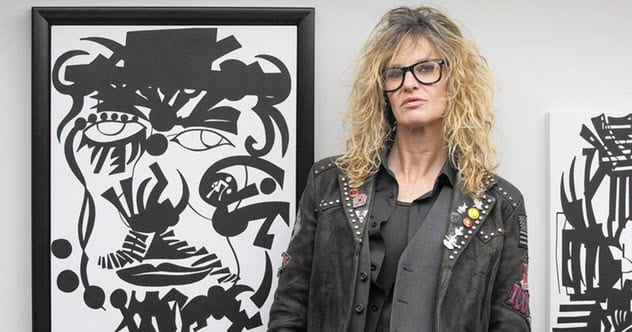
Jon Sarkin was a chiropractor before a brain hemorrhage and stroke changed his life. After surgery and recovery, he developed an overwhelming urge to make art. His workbold, busy, energetic, and often text-filledbecame widely recognized, and his life has been covered as a medical and artistic mystery.
Stroke can cause weakness, speech problems, vision issues, emotional changes, and cognitive challenges. Yet some patients have reported a sudden drive toward painting, drawing, or visual expression. In Sarkin’s case, the new artistic skill was paired with a powerful compulsion to create. He did not casually dabble with a sketchbook; he produced art with the momentum of a printer that had discovered espresso.
Neurologically, this may involve changes in inhibition, attention, emotion, and visual processing. When certain networks are damaged, other networks may become more dominant. It is not that art was “installed” by the stroke. Rather, the injury may have changed what the brain prioritized and how it expressed perception.
5. Poetry And Painting After Brain Hemorrhage
Tommy McHugh, a British man who suffered a serious brain hemorrhage, became known for a flood of artistic and poetic output after his injury. Before the event, he was not recognized as a poet or visual artist. Afterward, he experienced an intense creative drive, producing paintings, writing, and expressive work that seemed to pour out of him.
His case is often discussed alongside acquired savant syndrome and changes in frontal or temporal brain function. The frontal lobes help regulate behavior, filter impulses, and organize expression. When those systems are altered, some people may become less inhibited, more emotionally expressive, or more drawn to symbolic thinking.
Of course, “less inhibited” is not automatically a blessing. It can be disruptive, exhausting, and socially difficult. McHugh’s output was remarkable, but it came after a life-threatening injury. The awesome part is not the hemorrhage; it is the way creativity became a language for surviving the aftermath.
6. New Visual Creativity In Frontotemporal Dementia
Frontotemporal dementia, or FTD, is a serious neurodegenerative disease that affects behavior, language, personality, and executive function. It is not romantic. It is difficult for patients and families. Yet neurologists have documented a small subset of people with FTD who develop new or increased artistic creativity early in the disease.
Researchers at major memory and aging centers have studied patients who began painting, drawing, or producing visual art after symptoms appeared. Anne Adams is one widely discussed example: a scientist who turned toward art and created intricate work, including a famous piece inspired by Ravel’s “Boléro.” Later analysis connected her changes to progressive brain disease affecting language and frontal-temporal networks.
In one study of hundreds of FTD patients, only a small percentage showed this kind of new visual creativity. That matters. The phenomenon is real enough to study, but rare enough that nobody should treat dementia as a creativity hack. Please do not put that on a motivational poster. The better lesson is that creativity can survive, shift, and sometimes bloom in unexpected ways even when disease attacks the brain.
7. Echolocation After Blindness
Some blind individuals have learned to navigate using echolocation: making mouth clicks or other sounds and interpreting the returning echoes. Daniel Kish, who lost his eyes to cancer as a child, became one of the best-known teachers of human echolocation. Ben Underwood, another widely reported case, used clicks to ride a bike, play, and move through the world with impressive confidence after losing his sight to retinal cancer.
This skill is not magic sonar borrowed from bats, although bats may still demand royalties. Human echolocation relies on auditory perception, timing, attention, and brain plasticity. Studies show that people can learn to identify object size, position, and distance from echoes. In blind people, visual brain regions may also help process nonvisual information, showing how flexible the brain can be when one sense is lost.
Echolocation does not replace canes, guide dogs, mobility training, or accessible design. It is one tool among many. But as a skill gained after disease-related blindness, it is extraordinary: a practical, trainable way to turn sound into spatial awareness.
8. Sharper Peripheral Visual Attention After Deafness
Deaf and hard-of-hearing people are not all the same, and deafness should not be reduced to a “superpower” cliché. Still, research has found that some deaf individuals, especially those with early auditory deprivation, may show enhanced attention to visual information in the periphery. In everyday terms, that can mean being especially alert to movement or visual cues outside the center of gaze.
This makes sense. Hearing people often rely on sound to notice something outside their direct line of sight: footsteps behind them, a door opening, a car approaching. When auditory input is absent or reduced, the brain may shift more attention toward visual space. Studies on visual selective attention have found advantages in certain peripheral tasks among deaf participants.
The skill is not “better vision” in every possible way. It is more specific: redistribution of attention, stronger use of visual cues, and often excellent visual communication skills, especially among sign language users. It is a reminder that the brain does not sit in the corner sulking when one information channel goes quiet. It starts reading the roomliterally.
9. Prosthetic Control And Phantom Limb Motor Skills After Amputation
Amputation can result from trauma, cancer, diabetes complications, vascular disease, infection, or other medical conditions. It is physically and emotionally life-changing. Yet many amputees develop astonishing new motor skills through rehabilitation, prosthetic training, and adaptation.
Some advanced prosthetic systems use electrical signals from remaining muscles to control artificial limbs. Targeted muscle reinnervation can reroute nerves to new muscle sites, allowing more intuitive prosthetic control. Research has also explored how voluntary phantom limb movementswhen a person can “move” a missing hand or fingers in their body mapmay help control robotic prostheses.
This is one of the most practical examples of a skill emerging after injury or disease. It is not a sudden savant ability; it is trained, technical, and hard-earned. A person learns to balance, grip, walk, type, run, cook, or compete using a body-machine partnership. The result can look futuristic, but the daily work is very human: repetition, frustration, tiny improvements, and occasionally telling a prosthetic socket exactly what you think of it.
10. Artistic Drive In Parkinson’s Disease And Dopamine Treatment
Parkinson’s disease is best known for movement symptoms such as tremor, rigidity, slowness, and balance problems, but it also affects mood, motivation, sleep, cognition, and creativity. Some reports and studies have described people with Parkinson’s who developed new or increased artistic output, especially while receiving dopamine-related treatment.
Dopamine is involved in movement, reward, motivation, novelty-seeking, and creative drive. Medications that increase dopamine activity can improve Parkinson’s symptoms, but they can also produce side effects such as impulse control problems. In some cases, patients have reported bursts of painting, writing, music, or other creative behavior.
This does not mean Parkinson’s disease “gives people art.” It means the relationship between dopamine, movement, motivation, and expression is deeply complex. For some people, creative activities also become therapeutic: dance helps rhythm and balance, painting supports mood and identity, and music can cue movement. The awesome skill may be less about sudden genius and more about discovering a new way to live inside a changing body.
Why These Skills Happen: The Brain’s Backup Plans
The most important concept behind these stories is neuroplasticity. The brain can reorganize after injury, sensory loss, or disease. It can strengthen unused pathways, recruit nearby regions, change attention patterns, and build new habits through practice. Sometimes this produces extraordinary results. More often, it supports ordinary but life-changing recovery: relearning speech, walking after stroke, using a prosthesis, reading Braille, or navigating with a cane.
Acquired savant syndrome is the flashiest category, but it is also the rarest. It involves exceptional ability emerging after brain injury or neurological disease in someone who did not previously show that ability. Researchers have proposed several possible explanations: reduced inhibition from frontal brain regions, increased access to lower-level perceptual processing, altered connectivity, compulsive practice, or changes in attention and motivation.
Other skills are less mysterious but equally impressive. Echolocation can be trained. Prosthetic control can be learned. Visual attention can adapt. Art can become a powerful communication tool when language changes. These abilities remind us that skill is not always a lightning bolt; sometimes it is a ladder built one rung at a time after the old staircase collapses.
The Reality Check: Injury And Disease Are Not Talent Shortcuts
It is tempting to read these stories and think, “So you are saying I should stand near a storm holding sheet music?” No. Absolutely not. Please step away from the lightning.
Most brain injuries do not create musical genius. Most strokes do not create artists. Most neurological diseases do not unlock hidden superpowers. They usually create medical emergencies, disability, pain, uncertainty, and recovery challenges. Even in famous cases, the new abilities often came with anxiety, sensory problems, personality changes, obsessive behavior, fatigue, or grief.
The respectful way to understand these stories is not as “suffering made them better,” but as “people and brains can adapt in breathtaking ways.” The difference matters. It keeps us from romanticizing illness while still honoring resilience.
Experiences And Life Lessons Related To Skills Gained From Injury And Disease
People who live through injury or disease often describe recovery as a second education. It is not a classroom with neat desks and a cheerful bell. It is more like being dropped into an advanced course called “Your Body Has Changed, Good Luck,” with no syllabus and a final exam every morning. Yet many people gradually gain skills they never expected to need: patience, body awareness, planning, communication, emotional honesty, and creative problem-solving.
Consider a person recovering from a stroke. At first, the goal may be as basic as lifting a spoon, forming a sentence, or walking across a room without fear. Over time, those small repetitions become a new kind of expertise. The person learns how fatigue feels before it becomes overwhelming. They learn which environments are too noisy, which shoes are safest, and how to ask for help without feeling like they have surrendered independence. That is a skill, even if it does not make headlines.
Someone who loses vision may learn orientation and mobility techniques, screen readers, tactile labeling, audio cues, and perhaps echolocation. At first, the world may feel like a booby-trapped furniture showroom. Later, patterns emerge: the echo of a hallway, the texture of a curb ramp, the rhythm of traffic, the tiny sound changes that reveal open doors or parked cars. This is not “compensation” in the shallow sense. It is active learning, and it can be incredibly sophisticated.
Amputees often describe prosthetic training as both physical and mental. A prosthetic limb is not simply strapped on like a movie prop. It requires balance, skin care, muscle control, trust, and constant adjustment. The user learns how to interpret pressure, how to shift weight, how to manage uneven ground, and how to stay calm when technology behaves like technologywhich is to say, occasionally dramatic for no reason. Over time, many users develop a level of body-machine coordination that looks effortless only because outsiders did not see the hours behind it.
People with chronic disease may also gain social and emotional skills. They become experts at reading medical instructions, tracking symptoms, managing appointments, explaining invisible limitations, and advocating for themselves in rooms where time is short and jargon is abundant. They may become better at noticing other people’s pain because they know what it feels like to smile while carrying a private storm.
Creativity often enters here. A person may begin painting because words are hard after aphasia. Another may dance because rhythmic movement helps Parkinson’s symptoms feel less rigid. Someone else may write essays, compose music, garden, cook, build models, or make jokes sharp enough to cut through a bad day. Humor itself can become a survival skill. It does not erase suffering, but it gives the sufferer a steering wheel, even if the road is still bumpy.
The deepest lesson from these experiences is that skill is not always glamorous. Sometimes it is the ability to button a shirt one-handed, read a room without hearing it, cross a street without seeing it, or turn fear into a plan. The internet loves spectacular stories of accidental genius, but the quieter achievements deserve applause too. Recovery is not always a miracle. Often, it is practice wearing work boots.
Conclusion
The stories behind 10 Awesome Skills People Got From Injury And Disease show the strange, humbling power of the human nervous system. A brain injury may reveal mathematical perception. A lightning strike may trigger music. Blindness may lead to echolocation. Deafness may sharpen visual attention. Amputation may lead to remarkable prosthetic control. Neurological disease may, in rare cases, change artistic expression.
But the best takeaway is not that damage creates greatness. It is that people adapt, brains reorganize, and skill can grow in unexpected soil. These cases should inspire respect, not envy. Nobody should wish for injury or illness. Yet when injury or disease happens, the human brain may still find a way to build something astonishing from the rubbleand occasionally, it even remembers to add a piano solo.
Note: This article is based on real documented cases, neuroscience research, rehabilitation studies, and reputable medical reporting. It is for informational and editorial purposes only and does not suggest that injury or disease should be viewed as desirable or beneficial.