Money cannot buy happiness, but apparently it can buy groceries, mortgage payments, streaming subscriptions, andif one very frustrated wife is to be believedan entire household’s financial stability while still not buying her a break from the laundry basket.
A viral relationship story about a woman who earns five times as much as her husband has reignited one of the oldest domestic debates in modern marriage: who should do the chores when one partner works more, earns more, and still feels expected to scrub, schedule, cook, clean, and smile politely through it all?
The situation struck a nerve because it was not just about dishes. It was about respect. It was about invisible labor. It was about what happens when a spouse treats housework as “helping” instead of shared responsibility. And yes, it was also about a PlayStation being locked away, because sometimes marriage drama arrives with a side quest.
The Viral Chore Fight That Had the Internet Taking Sides
In the widely shared story, the wife explained that she worked seven days a week, earned roughly five times what her husband made, and still handled a large share of the household responsibilities. Her husband, who had weekends off and more free time, complained that she was not doing enough around the house.
That complaint did not land gently. It landed like a wet towel tossed onto an already overflowing laundry pile.
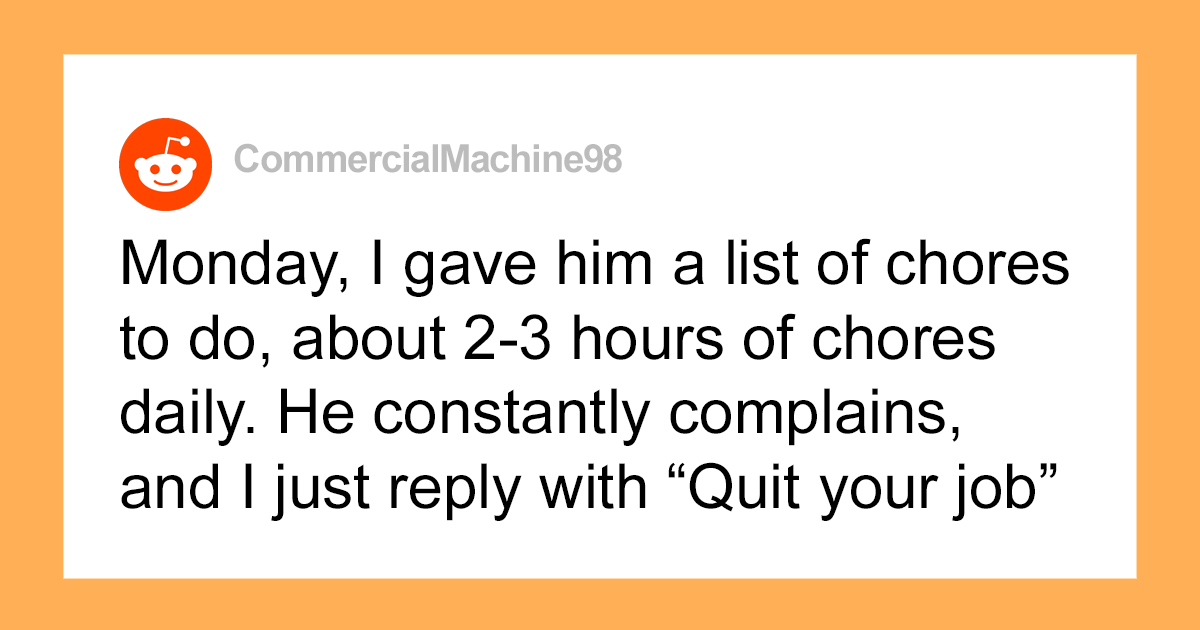
According to the woman, she responded by increasing her husband’s chore list. Things escalated further when she locked his gaming console in a safe, a move that readers found either hilariously petty, completely justified, or a red flag wearing sneakers. Regardless of where people stood on the PS5 incident, most agreed on one thing: the deeper issue was not the console. It was the imbalance.
The wife later reflected that her anger had been building for a long time. That detail matters. Many household arguments are not really about the object in front of the couple. The dirty plate is just the microphone. The real speech is, “I feel unseen.”
Why This Story Hit Such a Nerve
The reason this story spread so quickly is simple: countless couples recognize the pattern. One partner may bring in more income, work longer hours, manage more logistics, or do more emotional labor, while the other partner still believes the household is “basically fair.”
Housework has a sneaky way of becoming invisible when someone else does it. The trash does not magically leave. The fridge does not refill because it has a strong work ethic. Clean towels are not generated by Wi-Fi. Someone notices, plans, acts, and repeats.
In many heterosexual relationships, women still report carrying more of that domestic load, even when they are also major earners. Research on U.S. marriages shows that wives are increasingly becoming primary or equal earners, yet household routines often lag behind financial reality. Translation: the paycheck changed, but the chore chart did not get the memo.
When a Wife Earns More, Old Expectations Can Still Hang Around
The modern household is not the 1950s kitchen commercial version of marriage. Many wives now earn as much as or more than their husbands. In some families, women are the main providers. In others, both partners work full-time and juggle bills, childcare, errands, aging parents, appointments, and the mysterious disappearance of every matching sock.
But old expectations are sticky. A husband may intellectually support his wife’s career while still emotionally expecting her to be the household manager. A wife may love her career and still feel pressured to prove she is “not neglecting” the home. That is how couples end up in a strange arrangement where she is both CEO of the family budget and unpaid director of crumbs under the toaster.
The issue is not that the lower-earning spouse must automatically become a full-time housekeeper. Income alone should not turn a marriage into an employer-employee relationship. But time, energy, workload, and fairness should matter. If one partner works seven days a week and the other has more open time, it is reasonable to expect a practical adjustment.
Chores Are Not Just Chores: They Are Signals of Respect
Most couples do not break down because someone forgot one load of laundry. They break down because one person repeatedly feels like their time is worth less.
When a husband complains that his higher-earning, overworked wife is not doing enough chores, the message may sound like this: “Your paid work counts, but I still expect you to protect my comfort at home.” That can feel especially painful when her income is keeping the household running.
Fairness in domestic labor is not about creating a perfect 50/50 split every single day. Life is messier than that. People get sick, deadlines explode, kids go feral right before bedtime, and sometimes dinner is a bowl of cereal eaten with the confidence of a five-star chef. Fairness is about whether both partners are paying attention and adapting.
The Mental Load: The Chore List You Cannot See
One reason chore arguments get so heated is that many lists leave out the mental load. Physical chores are visible: vacuuming, dishes, cooking, cleaning the bathroom. Mental labor is quieter: noticing the toothpaste is low, remembering the utility bill, planning meals, tracking birthdays, scheduling repairs, knowing which kid needs new shoes, and realizing the dog’s prescription has two pills left.
This invisible management is exhausting because it never fully turns off. It is not simply “doing tasks.” It is being the household’s operating system.
In the viral story, the wife’s frustration seemed to come from more than a few chores. She appeared tired of being judged by someone who did not fully recognize her total contribution. That is where resentment grows: not from work itself, but from work that is expected, minimized, and then criticized.
Why “Helping Around the House” Is the Wrong Phrase
Many people still say a husband “helps” with chores. It sounds harmless, but the wording gives away the problem. If he is “helping,” then the home is secretly considered her responsibility. He becomes a volunteer. She becomes the default manager.
A healthier phrase is “sharing the work.” Partners live in the same home, use the same dishes, walk on the same floors, and benefit from the same clean sheets. Nobody is a guest star in their own house.
This is why the husband’s complaint in the story irritated so many readers. If she was working constantly and contributing most of the money, his criticism sounded less like a request for teamwork and more like a demand that she perform a traditional role on top of a modern breadwinner role. That is not partnership. That is a subscription bundle nobody signed up for.
Was Locking Up the PS5 Too Much?
Let’s be honest: locking up a spouse’s gaming console is not exactly a communication strategy recommended in marriage counseling brochures.
It may have felt satisfying in the moment, and many readers cheered because the image was so dramatic. But as a long-term solution, it is risky. Punishment can turn a legitimate complaint into a power struggle. Instead of discussing fairness, the couple may end up arguing about control, respect, and who touched whose stuff.
That said, extreme reactions often come after repeated smaller conversations failor never happen. Her decision may not have been ideal, but it reflected a familiar emotional state: “I have asked, I have carried, I have swallowed my frustration, and now I am done being polite.”
What a Fair Chore Split Actually Looks Like
A fair division of household labor should consider four things: available time, work intensity, income pressure, and personal capacity. A partner working 70 hours a week does not have the same domestic bandwidth as a partner working 35 hours. A partner doing physically draining labor may need different recovery time than someone in a flexible remote job. A partner carrying financial stress may also be carrying emotional weight.
Fair does not always mean identical. It means both people can explain the arrangement without one person sounding like they are auditioning for martyrdom.
1. Count all labor, not just visible labor
Couples should list physical chores, mental tasks, financial responsibilities, childcare duties, planning work, and emotional support. Paying bills counts. Scheduling appointments counts. Cooking counts. Cleaning the bathroom absolutely counts, especially if the bathroom looks like a shampoo bottle crime scene.
2. Assign ownership, not reminders
There is a difference between “Can you help me with dinner?” and “You own dinner on Mondays, Wednesdays, and Fridays.” Ownership means planning, noticing, and completing the task without needing a household supervisor.
3. Adjust when schedules change
If one person gets a promotion, starts working weekends, loses a job, goes back to school, or becomes the main earner, the home system should change too. A chore chart should not be a fossil.
4. Stop treating income like the only measure of effort
Money matters, but it is not the only thing that matters. A lower-earning partner may still work hard. A higher-earning partner may still need rest. The goal is not to rank people by salary; it is to build a life where neither person feels used.
The Bigger Cultural Question: Can Couples Handle Female Breadwinners?
The story also exposes a cultural tension around women who earn more than their husbands. Many people say they support gender equality until equality shows up in the bank account and asks everyone to update their assumptions.
Some men feel insecure when their wives earn more. Some women feel pressure to soften their success so their partners do not feel uncomfortable. Some couples avoid discussing the shift altogether, hoping love will magically reorganize the dishes. It will not. Love is powerful, but it does not sort laundry by color.
Female breadwinners should not have to perform extra domestic labor to make their success seem less threatening. A wife who earns more does not owe the household extra cleaning as an apology. A husband who earns less is not less valuable, but he does need to contribute in ways that reflect the real needs of the home.
How Couples Can Prevent a Chore War
The best time to discuss household labor is before resentment starts throwing furniture in the emotional living room. Couples can make the conversation less explosive by treating chores as a logistics issue, not a character trial.
Instead of saying, “You never do anything,” try, “I am working seven days a week, and I cannot keep managing these tasks. We need a new split.” Instead of replying, “You are overreacting,” try, “Show me what you are carrying that I may not be seeing.” That one sentence can save hours of fighting.
Couples should also schedule regular check-ins. Not romantic? Maybe. But neither is arguing over dishes at 11:47 p.m. while both people are tired and one fork is somehow in the couch.
Specific Example: A Better Weekly Split
Imagine a couple where one partner works 60 hours a week and pays most major bills, while the other works 35 hours and has weekends free. A fairer split might give the lower-time-pressure partner daily dishes, grocery shopping, laundry, and basic tidying. The higher-workload partner might handle bill management, one weekly meal, and a weekend reset when possible.
If both hate a task, they can rotate it or outsource it if the budget allows. Hiring a cleaner once or twice a month is not a moral failure. It is sometimes cheaper than the emotional cost of arguing about baseboards like they are Supreme Court cases.
What Readers Can Learn From the Story
This viral wife-and-husband conflict is entertaining because of the dramatic details, but it is useful because of the lesson underneath. A household is not balanced just because both people are busy. It is balanced when both people feel their time, effort, and rest matter.
The woman’s anger made sense because she felt unappreciated. The husband’s complaint may have reflected his own frustration, but it ignored the larger context: her work schedule, her financial contribution, and the chores she was already doing. When complaints ignore context, they sound like entitlement.
Experiences Related to This Topic: What This Looks Like in Real Life
Many couples experience a quieter version of this same conflict. It often starts with small comments: “The kitchen is messy,” “We never have clean towels,” or “Why didn’t you pick up milk?” On the surface, these are ordinary household complaints. Underneath, they may reveal a deeper belief that one partner is responsible for noticing and fixing everything.
Consider a wife who works long hours in a demanding job and earns most of the household income. She may come home already mentally drained from decisions, deadlines, clients, meetings, and financial pressure. If she then walks into a house where her partner asks what is for dinner, she is not just hearing a dinner question. She is hearing, “Your shift is not over.”
Or consider a husband who earns less but feels embarrassed by it. Instead of talking honestly about insecurity, he may criticize the house, the schedule, or his wife’s availability. The argument becomes about chores because chores are easier to mention than fear. Saying “I feel useless” is vulnerable. Saying “You didn’t clean enough” is easier, but much more damaging.
Some couples solve this by creating a visible system. They put every task on paper: dishes, trash, laundry, cooking, pet care, budgeting, appointment scheduling, school emails, car maintenance, holiday planning, and family communication. Once the invisible becomes visible, the imbalance is harder to deny. A partner who thought they were doing “half” may realize they were doing half of the visible chores and almost none of the planning.
Other couples use time as the main measurement. Instead of arguing over whose job is harder, they ask: how many hours of paid and unpaid labor is each person doing per week? How much uninterrupted rest does each person get? Who can sit down without feeling guilty? Who has to remember everything? These questions are more useful than comparing salaries alone.
Another common experience is the “weekend resentment trap.” One partner works weekends while the other treats weekends as sacred recovery time. Rest is important, of course. But if only one person gets regular rest, the relationship starts to feel less like teamwork and more like a service arrangement. A spouse with weekends off may need to take on more errands, meal prep, cleaning, or planningnot as punishment, but as partnership.
The healthiest couples do not wait until someone explodes. They notice when the system feels unfair and update it. They say things like, “This season is heavier for you, so I’ll take more at home,” or “I did not realize how much you were managing; let’s redistribute it.” That kind of response can turn resentment into relief.
The biggest lesson from the woman who earned five times as much as her husband is not that the higher earner should control the house. It is that contribution must be seen clearly. Money, time, chores, planning, and emotional energy all count. When couples respect the full picture, they are less likely to fight over who folded the towels and more likely to build a home where both people can breathe.
Conclusion
The viral story of a woman who earns five times as much as her husband and loses patience after being criticized over chores is funny in its details but serious in its message. Modern relationships need modern household rules. If both partners benefit from the home, both partners must help run it. If one partner carries more paid work, the other may need to carry more domestic work. And if resentment is building, it is better to talk before someone locks up the gaming console and becomes a legend on the internet.
At its core, this story is not about income, chores, or even a PS5. It is about partnership. A good marriage is not built on keeping score, but it does require both people to know the score is not wildly unfair. Love may be patient and kind, but it also appreciates a partner who unloads the dishwasher without needing a parade.