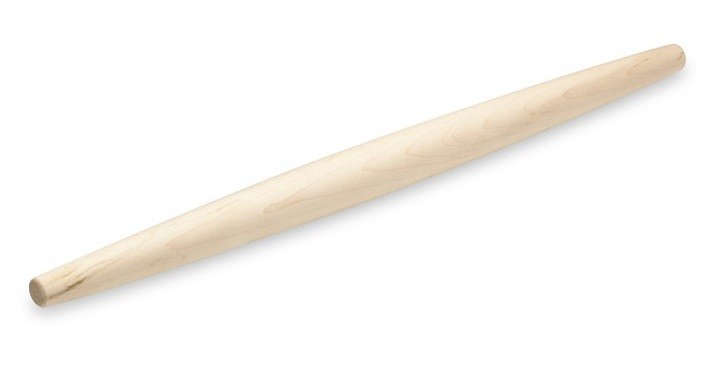
The Williams Sonoma Tapered Rolling Pin looks simple enough to be mistaken for a fancy wooden baton. But give it a chilled pie dough, a lightly floured counter, and five minutes of your attention, and it starts acting like the quiet overachiever of the baking drawer. No handles. No moving parts. No dramatic kitchen gadget energy. Just a beautifully shaped rolling pin designed to help you feel, guide, and control dough with the kind of precision that makes homemade pastry less intimidating.
For home bakers, the appeal of a tapered rolling pin is not just its elegant silhouette. The design changes the way your hands connect with dough. Instead of gripping handles and pushing from the ends, you place your palms directly on the pin, letting pressure travel naturally through your hands. That direct feedback helps you notice thick spots, thin edges, sticky patches, and dough that is about two rolls away from becoming a floury map of Texas.
Williams Sonoma offers tapered rolling pins in premium materials such as olivewood and marble, with the French tapered olivewood rolling pin often standing out for its balance of beauty, maneuverability, and everyday usefulness. Whether you bake pies once a year or casually say “I made croissants” like that is a normal Tuesday activity, this tool deserves a serious look.
What Is the Williams Sonoma Tapered Rolling Pin?
The Williams Sonoma Tapered Rolling Pin is a French-style rolling pin, meaning it has no handles and narrows toward both ends. The most recognizable version is the Williams Sonoma French Tapered Olivewood Rolling Pin, a smooth, slender baking tool designed for rolling pastry dough, pie crust, cookie dough, pizza dough, tart shells, and other kitchen projects where even pressure matters.
Unlike a traditional American rolling pin with handles, a French tapered rolling pin gives the baker more direct contact with the tool. Your palms rest on the body of the pin, which makes it easier to sense dough thickness as you roll. That detail matters more than it sounds. Dough has moods. Pie dough can be cold and stubborn. Cookie dough can become sticky and dramatic. Pizza dough may spring back like it has somewhere else to be. A tapered pin helps you respond with small adjustments instead of brute force.
Why the Tapered Shape Matters
The tapered design is not just for looking graceful in a utensil crock, although it absolutely does that too. The shape allows the baker to pivot and steer the dough more easily. When rolling pie dough into a circle, for example, the narrow ends help you angle the pin and apply slightly different pressure from one side to the other. This makes it easier to correct uneven edges and avoid the dreaded “almost circle” that slowly becomes a pastry continent.
A straight dowel rolling pin is excellent for rolling large sheets of dough evenly, especially when consistency is the main goal. A tapered rolling pin, however, shines when dough needs shaping. Pie crusts, galettes, tart doughs, empanada rounds, dumpling wrappers, and delicate pastry projects all benefit from that extra maneuverability.
Tapered vs. Handled Rolling Pins
Handled rolling pins are familiar and comfortable. Many bakers grew up with one, and there is nothing wrong with them. They provide leverage and can feel sturdy when rolling thicker dough. But handles also create distance between your hands and the dough. You are pushing the tool rather than feeling the dough through it.
With a French tapered rolling pin, pressure comes directly from your palms. That gives you a better sense of how the dough is behaving. You can press harder in the center, ease up at the edges, or guide the dough outward without flattening one section too aggressively. It is a little like switching from oven mitts to bare hands when checking fabric textureexcept, please do not use bare hands inside an oven. We are baking, not auditioning for a superhero origin story.
Materials: Olivewood, Marble, and What They Mean for Bakers
Williams Sonoma’s tapered rolling pin selection includes wood and marble options, and each material brings a different personality to the counter.
Olivewood: Warm, Smooth, and Naturally Beautiful
Olivewood is prized for its striking grain patterns, smooth feel, and durable character. A Williams Sonoma French Tapered Olivewood Rolling Pin is the kind of tool that looks good enough to leave on display, but it is not just decorative. Wood is a classic rolling pin material because it has a warm, natural grip and does not conduct heat as quickly as metal or stone. That can be helpful when working with buttery doughs, since excessive warmth can soften fat too quickly.
Wood also tends to hold a light dusting of flour well, which can reduce sticking. For pie crust, this is a blessing. For anyone who has ever peeled dough off the counter in defeated silence, it is practically emotional support.
Marble: Cool, Heavy, and Polished
Williams Sonoma also offers French tapered marble rolling pins. Marble has a different advantage: it stays cool and has more weight. That can help with buttery pastry doughs, laminated doughs, and other recipes where temperature control matters. The extra heft means the pin does some of the work for you, though some bakers may find marble less responsive than wood because it is heavier and more slippery.
If you want maximum dough feedback and maneuverability, olivewood is usually the friendlier everyday choice. If you often work with rich pastry dough and love a cooler surface, marble may be tempting. Either way, the tapered French shape remains the star.
Best Uses for a Williams Sonoma Tapered Rolling Pin
A tapered rolling pin is versatile, but it has certain jobs where it really earns its counter space.
Pie Crust
Pie dough may be the ultimate test. It needs to stay cold, roll evenly, and move into the pie plate without tearing. A tapered rolling pin helps you roll from the center outward while turning the dough frequently. Because you can adjust pressure with your palms, you are less likely to crush the edges or overwork the center.
For best results, lightly flour the counter, flour the pin, roll outward from the center, and rotate the dough every few passes. If the dough starts sticking, pause and add a whisper of flour. Not a snowstorm. A whisper. Your crust should taste like butter, not like it lost a fight with a flour bag.
Tart Dough and Galettes
Tart dough needs even thickness because thin patches can burn while thick patches stay dense. The Williams Sonoma tapered rolling pin gives enough control to gently shape dough into rounds or rectangles. For rustic galettes, the pin helps create a natural circular shape without making the process feel fussy.
Cookie Dough
For sugar cookies, shortbread, gingerbread, and cutout cookies, a tapered pin can work beautifully, especially with dough that has rested properly. If the dough is very stiff straight from the refrigerator, give it a few minutes to soften slightly before rolling. A French tapered pin rewards steady, even pressure rather than aggressive pushing.
Pizza Dough and Flatbreads
Traditional pizza makers may prefer stretching dough by hand, but a rolling pin can help with thin-crust pizza, crackers, lavash, naan-style flatbreads, and quick weeknight doughs. The tapered shape lets you guide the dough outward without smashing every air bubble into retirement.
Pasta, Dumplings, and Small Dough Projects
For small-batch pasta sheets, dumpling wrappers, hand pies, and turnovers, a tapered pin is easy to maneuver. The narrow ends make detail work more manageable, especially when shaping individual portions.
How to Use a French Tapered Rolling Pin
Using the Williams Sonoma Tapered Rolling Pin is simple, but technique makes a big difference.
Start in the Center
Place the pin in the center of the dough and roll outward. Avoid rolling back and forth endlessly in one spot. That can overwork the dough and create uneven thickness. Roll forward, lift, rotate the dough, and repeat.
Let Your Palms Do the Work
Keep your hands relaxed and use your palms to apply pressure. With a tapered rolling pin, your hands should not feel like they are wrestling the dough. Think confident guidance, not kitchen arm-wrestling.
Rotate Often
Rotating dough keeps it from sticking and helps maintain shape. For pie dough, frequent rotation is one of the easiest ways to create a round crust. It also alerts you early if the dough is sticking underneath.
Use Flour Carefully
Flour prevents sticking, but too much can dry out dough. Dust the surface lightly and add more only as needed. For delicate pastry, a pastry brush can help remove extra flour before baking.
Care and Maintenance
A wooden Williams Sonoma tapered rolling pin should be treated like a quality wood tool, not like a dinner plate. Do not soak it in water. Do not run it through the dishwasher. Do not leave it in the sink “for later,” because later is when wood starts plotting revenge.
After use, wipe the rolling pin with a damp cloth. If dough is stuck on the surface, use a bench scraper or soft cloth to remove it gently. Dry the pin right away. Occasionally, food-safe mineral oil can help maintain the wood and keep it from drying out. Avoid strong-smelling oils such as olive oil or vegetable oil, which can turn rancid over time.
For marble rolling pins, wipe clean with mild soap and water, then dry thoroughly. Marble can stain or etch, so acidic cleaners are not ideal. Store any rolling pin where it will not be knocked onto the floor, because a falling rolling pin has the energy of a kitchen thunderbolt.
Who Should Buy the Williams Sonoma Tapered Rolling Pin?
This rolling pin is a strong choice for home bakers who care about control, simplicity, and aesthetics. It is especially useful if you bake pies, tarts, cookies, galettes, pizza, crackers, or pastry doughs. It is also a great upgrade for someone who has only used handled rolling pins and wants a more responsive tool.
Beginners can absolutely use it, though there may be a short adjustment period. The first few times, it may feel strange not to grip handles. But once your hands learn the motion, the tool starts to feel natural. Many bakers find that a French tapered pin becomes their favorite because it offers better dough feedback and easier shaping.
Who Might Prefer Another Rolling Pin?
If you mostly roll very large sheets of cookie dough and want perfectly uniform thickness, a straight dowel pin or an adjustable rolling pin with thickness rings may be more practical. If you have wrist or grip concerns, a handled rolling pin with comfortable grips may feel easier. If you frequently roll laminated dough and want extra chill, marble or stainless steel may be worth considering.
Still, for a general-purpose baking tool with beauty and control, the Williams Sonoma French tapered style is hard to ignore.
Williams Sonoma Tapered Rolling Pin Buying Tips
Before buying, consider what you bake most often. Choose olivewood if you want a warm, responsive, display-worthy pin for everyday pastry and dough work. Choose marble if keeping dough cool is a top priority and you do not mind a heavier feel.
Check the length, weight, and care instructions before purchasing. A good tapered rolling pin should feel comfortable in your hands and long enough for the doughs you usually make. It should also have a smooth finish without rough patches. The taper should be gradual, not so extreme that the center becomes too small to roll evenly.
Practical Baking Examples
Imagine rolling a Thanksgiving pie crust. The dough is chilled, slightly firm, and full of butter pieces that need to stay intact. A handled pin might flatten the center quickly while leaving the edges thick. With the Williams Sonoma Tapered Rolling Pin, you can roll from the center outward, ease pressure at the edge, rotate the dough, and gradually build a round crust. The result is not just prettier; it bakes more evenly.
Now picture sugar cookies. The dough has rested, but it is still firm. A tapered pin lets you work in sections, applying gentle pressure without dragging handles through the flour. You can roll the dough into a smooth sheet for cookie cutters, then reroll scraps without turning them tough too quickly.
For a rustic galette, the tapered pin may be even more fun. Galettes are forgiving by nature. The dough does not need to be a perfect circle, which is excellent news for anyone whose geometry education left emotional crumbs. The pin helps you shape the dough naturally, leaving enough structure for folding fruit-filled edges.
Common Mistakes to Avoid
Pressing Too Hard
A tapered rolling pin works best with controlled pressure. Pressing too hard can force butter out of pastry, stretch dough unevenly, or make cookie dough tough. Let repeated gentle passes do the work.
Skipping Dough Rest Time
If dough snaps back, it probably needs to rest. Gluten relaxes with time. Give the dough five to ten minutes, then try again. This small pause can save you from turning pizza dough into a rubber band with toppings.
Using Too Much Flour
Flour is helpful, but excess flour can make dough dry. Use just enough to prevent sticking. Rotate the dough often so you can detect sticking before it becomes a countertop rescue mission.
Washing Wood Incorrectly
Never soak a wooden rolling pin. Quick wiping and immediate drying are enough for most cleanup. Treat it well, and it can last for years.
Extra Experience: Living With a Williams Sonoma Tapered Rolling Pin
The first thing you notice about the Williams Sonoma Tapered Rolling Pin is how different it feels from the bulky handled pin many people grew up using. At first, the lack of handles can feel suspicious, almost like someone forgot to finish the tool. But after a few minutes with pie dough, the design starts to make sense. Your hands naturally settle near the center, and instead of pushing from the ends, you guide the dough with your palms. It feels less mechanical and more intuitive.
One of the best real-life advantages is visibility. With a handled rolling pin, your hands sit outside the rolling surface. With a French tapered pin, your hands are above the dough, and you can see how the dough responds as pressure moves outward. If one side is thicker, you feel it. If the edge is getting too thin, you can ease up. That kind of feedback is valuable for anyone trying to improve from “technically edible” to “please take a photo before we cut it.”
For pie crust, the Williams Sonoma tapered rolling pin makes shaping feel calmer. The dough still needs proper chilling and flouring, of course. No rolling pin can save dough that has been abandoned on a warm counter while you search for the cinnamon. But when the dough is prepared well, the pin helps create a smooth, even round. The tapered ends make small directional changes easy, especially when correcting lopsided areas.
For cookies, the experience depends on the dough temperature. Slightly chilled sugar cookie dough rolls nicely, while rock-hard dough needs a brief rest. Once workable, the pin glides smoothly and gives enough control to avoid smashing the dough too thin. For cutout cookies, pairing the rolling pin with thickness guides can help if exact uniformity is important.
Pizza dough is more personal. Some bakers avoid rolling pizza dough because they want to preserve air bubbles. But for thin crust, flatbreads, or cracker-style dough, the tapered pin is very useful. It lets you stretch the dough outward without feeling like you are steamrolling it into submission.
The olivewood version also has a quiet pleasure factor. It looks beautiful on the counter, and that matters more than practical people like to admit. A tool that stays visible is a tool you are more likely to use. Instead of hiding in a drawer with the mystery melon baller, it can sit in a crock or on a shelf and gently suggest that maybe this weekend needs a pie.
Cleaning is easy as long as you respect the wood. Wipe it down, dry it, and occasionally condition it with food-safe mineral oil. Over time, a wooden rolling pin can develop the comfortable feel of a favorite kitchen toolthe kind you reach for automatically. It may not beep, charge, sync, or come with an app, and honestly, thank goodness. It just rolls dough well.
The biggest adjustment is learning not to overthink it. A tapered rolling pin rewards rhythm: roll, lift, rotate, repeat. Once that rhythm clicks, the tool feels less like equipment and more like an extension of your hands. That is the real charm of the Williams Sonoma Tapered Rolling Pin. It makes baking feel more connected, more controlled, and slightly more eleganteven if your apron is covered in flour and your kitchen currently looks like a bakery sneezed.
Conclusion
The Williams Sonoma Tapered Rolling Pin is a smart, stylish, and highly functional tool for bakers who want more control over dough. Its French-inspired shape helps with maneuverability, pressure control, and shaping, especially for pie crusts, tarts, galettes, cookies, and small pastry projects. The olivewood version offers warmth, beauty, and everyday versatility, while marble options appeal to bakers who want a cooler, heavier surface.
It is not the only rolling pin a baker could own, but it may become the one you reach for most often. In a kitchen world crowded with gadgets that promise miracles, this one succeeds by being simple, well-shaped, and honest. It does not try to reinvent baking. It just helps you roll better doughand sometimes, that is exactly the upgrade your pies have been waiting for.
Note: This article is based on synthesized information from reputable U.S. cookware retailers, culinary testing publications, baking guides, and practical pastry technique resources. Product availability, materials, and pricing may change over time.