Some wineries tell their story with dusty bottles, sepia photographs, and a timeline long enough to make your scrolling finger tired. Wente Vineyards can certainly do all of that. Founded in 1883 in California’s Livermore Valley, the estate has remained in thent role in the development of American wine. But one of its most appealing stories once grew quietly beside the more famous vineyards: a chef’s garden filled with tomatoes, eggplants, greens, peppers, herbs, and enod in a candy store.
The garden was not simply decorative landscaping with a few rosemary bushes placed where wedding guests could admire them. Historically, it became a working kitchen garden that connected the soil outside the restaurant to what appeared on the plate. Food scraps became compost. Irrigation reached previously unused ground. Garden experiments inspired restaurant specials. The result was a practical, delicious version of farm-to-table dining before that phrase became so popular that even airport sandwiches started making suspicious claims about provenance.
Today, the story of Wente Vineyards is broader than any single garden or restaurant. The estate represents a meeting point of American wine history, sustainable agriculture, hospitality, food, and the distinctive landscape of the Livermore Valley. To understand why the chef’s garden mattered, it helps to begin with the much deeper roots surrounding it.
A Family Winery With Roots Going Back to 1883
Wente Vineyards traces its beginning to C.H. Wente, a German immigrant who learned winemaking in California before establishing his own operation in Livermore Valley in 1883. More than 140 years later, members of the fifth generation remain involved in the business. That continuity is why Wente is widely described as the oldest continuously family-owned and operated winery in the United States.
Longevity alone, however, is not the most interesting part of the story. Plenty of old businesses survive by becoming excellent at avoiding change. Wente’s history is almost the opposite. Each generation has added something: new vineyard plantings, advances in winemaking, hospitality experiences, sustainability programs, food, events, and a willingness to experiment while keeping the family name attached to the result.
The Chardonnay Connection That Changed California Wine
Wente’s most famous contribution to American viticulture is its connection to Chardonnay. In 1912, second-generation vintner Ernest Wente worked with university expertise to obtain Chardonnay plant material from France. Over time, selections associated with the Wente vineyard became enormously influential in California.
The phrase Wente clone is now deeply embedded in the history of California Chardonnay. University of California records describe the Wente family vineyard in Livermore as one of the principal historical sources for Chardonnay plant material used by the state’s wine industry. Modern estimates commonly attribute a substantial majority of California Chardonnay vines to selections descended from Wente material.
That is a remarkable legacy for a grape that many drinkers now encounter without a second thought. A person can order California Chardonnay at a neighborhood restaurant thousands of miles from Livermore and, genetically speaking, be tasting part of a family tree with roots connected to Wente.
In 1936, Wente also helped advance varietal labeling with a Chardonnay bottling at a time when American wine labels often relied on generic European-style terminology. The winery’s influence therefore extends beyond one famous vineyard. It helped shape how California grew, bottled, identified, and eventually marketed one of the world’s most recognizable white wine grapes.
Why Livermore Valley Matters
Wente Vineyards sits in the Livermore Valley, east of San Francisco and close enough to the Bay Area to be accessible without feeling like an urban tasting room with a decorative barrel in the corner. The region has a long winegrowing history and a climate shaped by its relationship with the nearby Pacific.
Warm days help grapes ripen, while marine influences and cooler nighttime conditions can preserve acidity and freshness. The valley also contains varied soils, giving growers opportunities to match different vineyard sites with different grape varieties. This combination has supported everything from Chardonnay and Sauvignon Blanc to Cabernet Sauvignon, Cabernet Franc, Petite Sirah, and other varieties.
Livermore has sometimes lived in the enormous public-relations shadow cast by Napa and Sonoma. That can be frustrating for local producers but rather convenient for visitors. The region offers serious wine history without requiring everyone to behave as though a tasting appointment is a meeting with royalty.
Wente helped establish Livermore as a destination as well as a wine-producing region. Over the decades, the family expanded the estate experience through tasting, dining, entertainment, events, and golf. The property became a place where wine could be experienced as part of a larger landscape rather than merely purchased by the bottle.
The Chef’s Garden: From Unused Ground to Culinary Inspiration
The most charming part of the chef’s garden story is that it did not begin as a grand corporate agricultural initiative with a twelve-page mission statement. Its development was much more organic.
According to a documented garden visit from 2012, longtime Wente staff member Diane Dovholuk began developing an unused portion of the grounds after having worked as a server at The Restaurant at Wente. She started composting restaurant food scraps and arranged for irrigation to reach garden rows. Gradually, the growing area expanded into a roughly 1,000-square-foot vegetable garden.
That garden supplied produce while also serving as a source of ideas. This distinction is important. A chef’s garden does not have to replace the entire restaurant supply chain to be valuable. Even a relatively small plot can change the creative process in a kitchen.
A crate from a distributor arrives with an invoice. A garden arrives with questions.
What happens when fifteen eggplants ripen at once? Can an unfamiliar green become a winter menu feature? Should those tomatillos be pickled, roasted, fried, or all three because restraint is sometimes overrated? What do you do when the tomatoes decide that today, specifically today, is the day they are all ready?
Those are culinary problems of the best possible kind.
Vegetables With Personality
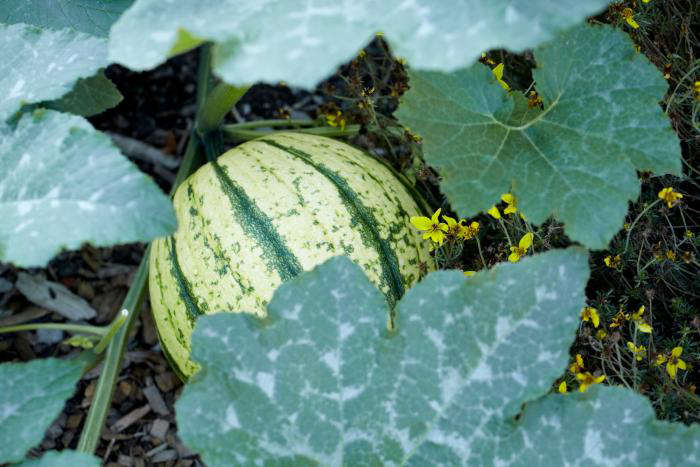
The historical Wente garden included a wide range of edible plants. Heirloom tomatoes appeared in numerous varieties, including visually striking striped types. Eggplant produced heavily enough to become a significant kitchen ingredient. Ethiopian greens were started for cooler seasons. Purple tomatillos inspired an appetizer involving pickling, battering, frying, and buttermilk dressing.
One particularly memorable plant was towering magenta amaranth, described by the gardener as an “attitude plant.” Honestly, every garden needs one. Roses have drama, zucchini has ambition, mint has territorial expansion plans, and apparently amaranth arrives with attitude.
The chef considered using the amaranth as a grain, illustrating how the garden could push the kitchen beyond ordinary menu planning. Instead of beginning exclusively with a recipe and then ordering ingredients, the process could occasionally run in reverse: see what the soil has produced, taste it, and build from there.
When the Gardener and Chef Share the Same Conversation
The most interesting chef gardens function as collaborations. A gardener can grow technically perfect vegetables that a chef has little practical use for. A chef can request ingredients that make absolutely no sense for the climate, available space, or growing season. Successful garden-to-kitchen relationships require both sides to communicate.
At Wente, the historical collaboration between the head gardener and executive chef demonstrated the possibilities of that exchange. The garden could inspire specials, while culinary needs could influence future planting decisions. This creates a feedback loop between agriculture and cooking.
Seasonality Becomes Impossible to Ignore
Restaurants often describe menus as seasonal, but a working kitchen garden makes seasonality extremely literal. Tomatoes are not an abstract category on a purchasing spreadsheet. They are green, then almost ready, then suddenly so abundant that the kitchen staff begins dreaming in tomato sauce.
This kind of immediacy encourages flexibility. Menus can respond to bumper crops, changing weather, and the brief moment when a particular ingredient tastes best. The approach also naturally creates variety. A summer garden has a different personality from a winter garden, and the plate can reflect that difference.
At a winery, seasonal cooking has another advantage: it creates new opportunities for wine pairing. Crisp greens, roasted peppers, earthy eggplants, ripe tomatoes, herbs, and richer autumn vegetables each interact with wine differently. The garden becomes not only a source of food but also another vocabulary for exploring the estate’s wines.
From Compost to a More Circular Food Story
One of the smartest details in the Wente garden’s development was the use of restaurant scraps for compost. The basic idea is beautifully circular: food preparation creates organic material; that material becomes compost; compost supports new plant growth; new plants return to the kitchen.
No, a compost pile is not as glamorous as a candlelit wine cellar. It does not photograph particularly well unless you have an extremely committed lifestyle photographer. Yet compost represents exactly the kind of practical thinking that gives sustainability substance.
That small garden story also fits within Wente’s larger environmental approach. The winery is certified under California’s sustainable winegrowing program and has maintained both vineyard and winery certification. Its documented practices include precision irrigation, water management, cover crops, reduced soil disturbance, winter sheep grazing, integrated pest management, compost, biochar applications where appropriate, and efforts to reduce energy and packaging impacts.
In 2022, Wente Family Estates received the California Green Medal Leader Award, which recognizes broad leadership across environmental, social, and economic dimensions of sustainable winegrowing.
The important lesson is that sustainability rarely depends on one heroic gesture. It is usually a collection of less glamorous decisions repeated for years: how soil is managed, when tractors are used, how water is measured, what happens to waste, how packaging is designed, and whether a business is willing to keep improving after the press release has been archived.
A Winery That Treats Hospitality as Part of the Product
Wente’s development as a wine destination accelerated during the fourth generation of family leadership. The Restaurant at Wente Vineyards opened in the 1980s, expanding the idea of what a winery visit could be. The estate later developed additional visitor experiences, including concerts and an 18-hole golf course designed by Greg Norman.
The original restaurant and chef’s garden belong to an important chapter of that hospitality history. Current visitor experiences have evolved, as hospitality businesses naturally do. Today, Wente promotes wine tasting in settings that include its tasting lounge, caves, barrel-room environments, and patios, along with seasonal food offerings, events, outdoor gathering spaces, and other estate activities.
What remains consistent is the idea that wine tastes better when visitors understand where they are. A bottle becomes more memorable when connected to vineyard rows, a cool cave, a sunlit patio, food, conversation, and the realization that someone has been making agricultural decisions on this land for generations.
Why the Chef’s Garden Still Feels Relevant
The 2012 garden story is more than a charming snapshot of heirloom tomatoes at a famous winery. It illustrates several ideas that have become increasingly important in American food culture.
First, small-scale growing can have an influence greater than its acreage. A 1,000-square-foot garden will not feed an entire restaurant by itself, but it can shape dishes, educate staff, surprise guests, test unusual varieties, and create a stronger relationship between cooking and place.
Second, great hospitality often begins behind the scenes. Diners may see a beautifully arranged plate but not the composting, irrigation, seed selection, pruning, harvesting, washing, and kitchen experimentation that made it possible.
Third, tradition and innovation do not have to fight in the parking lot. Wente is historically important because of its age, but the estate’s more interesting quality is its repeated willingness to adapt. A family business can honor vines planted generations ago while experimenting with regenerative agriculture, new hospitality formats, changing menus, and new ways of introducing guests to wine.
What a Chef’s Garden Adds to the Wine Country Experience
Wine tasting is fundamentally sensory. Visitors notice aroma, flavor, texture, temperature, color, and atmosphere. A garden deepens that sensory experience before a glass is even poured.
Crush a fresh herb leaf between your fingers and smell it. Taste a tomato warmed by the sun. Notice the bitterness of a green or the sweetness of a freshly picked pepper. Those experiences train the same attention that makes wine tasting more interesting.
Suddenly, descriptions such as herbal, floral, earthy, citrusy, or savory feel less like mysterious wine-language gymnastics and more like familiar sensory references. A chef’s garden therefore acts as an informal classroom, although fortunately nobody hands out a final exam.
It also makes the idea of terroir easier to understand. Wine people use that French word to describe the influence of place, including soil, climate, topography, and human choices. A vegetable garden offers a more immediate demonstration. Grow the same tomato in different conditions, and results can change. Agriculture is never completely separate from place.
Conclusion: A Living Version of American Wine History
Wente Vineyards occupies a rare position in American wine. It is simultaneously a historic family business, an influential name in the story of California Chardonnay, a major Livermore Valley destination, and an example of how agriculture can connect with hospitality.
The chef’s garden documented at the estate in 2012 may have been modest compared with the surrounding vineyard acreage, but its meaning was larger than its footprint. It transformed unused ground into productive soil, restaurant scraps into compost, seasonal crops into menu ideas, and the relationship between a gardener and a chef into something guests could eventually taste.
That is perhaps the most appealing way to understand Wente Vineyards. Its history is not preserved behind glass. It lives in vines, soil, farming practices, bottles, meals, and experiences that continue to evolve. More than 140 years after C.H. Wente established the winery, the estate still demonstrates that heritage works best when it keeps growing.
Experiencing Wente Vineyards: A Day Shaped by Wine, Food, and Place
Imagine arriving in Livermore Valley on a clear California morning, when the sunlight gives the hills that particular golden color that makes visitors briefly consider abandoning their careers to become vineyard owners. This fantasy usually lasts until someone mentions irrigation schedules, payroll, frost, pests, harvest logistics, and the fact that grapes do not respond to motivational speeches.
Still, the setting immediately changes your pace. Wente is the kind of destination where the experience makes more sense when you resist the temptation to rush. Rather than treating a tasting as a checklist of glasses, begin by paying attention to the estate itself. Notice the dry California landscape, cultivated vineyard blocks, mature trees, hospitality buildings, and the contrast between agricultural order and the more relaxed contours of the surrounding hills.
A tasting can then become a journey through both flavor and history. Chardonnay is an obvious place to begin because Wente’s relationship with the variety is central to the story of California wine. Taste carefully rather than searching for the “correct” tasting note. One person may find green apple and citrus; another may notice pear, stone fruit, flowers, oak, or a creamy texture. Wine is not a multiple-choice test, and nobody from the vineyard police will confiscate your glass because you said peach instead of apricot.
Moving into Sauvignon Blanc, Cabernet Sauvignon, Cabernet Franc, Pinot Noir, or another estate selection can reveal how different grapes respond to place and winemaking choices. Food makes these differences even more entertaining. A bright white wine can feel sharper and more refreshing beside a salty or creamy bite. A structured red may become softer with richer food. Herbs, roasted vegetables, cheeses, and seasonal ingredients can uncover flavors that were quieter when the wine was tasted alone.
This is where the historical chef’s garden story adds another layer to the visit, even for guests who are not touring that original garden. Knowing that Wente once maintained a documented kitchen garden where chefs and a head gardener collaborated encourages visitors to think differently about wine-country food. The plate is not merely something to prevent tasting on an empty stomach. It can be another expression of agriculture.
Consider the ingredients once documented in the garden: striped heirloom tomatoes, purple tomatillos, eggplant, Ethiopian greens, peppers, and towering amaranth. Picture a chef walking through the rows and realizing that the afternoon’s menu idea is already growing outside. That immediacy is difficult to reproduce in a conventional kitchen.
For travelers, the most rewarding approach is to create space for these connections. Allow enough time to taste without rushing. Eat something thoughtfully paired with the wine. Ask questions about the vineyard, the vintage, and the family’s history. Walk where public access permits and observe how the estate’s hospitality spaces relate to the agricultural landscape. Current programs and availability can change, so reservations and visitor details should always be checked before making the trip.
The broader Livermore Valley also deserves time. Wente is a major historical anchor, but the surrounding region contains numerous wineries and a growing food scene. Spending a full day or weekend in the area provides context: Wente is not an isolated attraction but part of one of California’s oldest winegrowing communities.
Perhaps the best experience, however, is simply the moment when history stops feeling like a list of dates. You taste a Chardonnay and remember that Wente plant material helped shape the variety across California. You look across working agricultural land and recognize that five generations have had to make decisions about how to preserve it. You think about a once-unused patch of ground becoming a productive chef’s garden because one determined person started composting restaurant scraps and persuaded someone to run irrigation to the rows.
That is the real charm of Wente Vineyards. The grand story is made from small actions: a vine cutting selected, a seed planted, a crop harvested, a meal created, a bottle opened. Put enough of those actions together across more than a century, and you do not merely have a winery. You have a living piece of American agricultural and culinary historypreferably enjoyed with a good glass in hand.
Note: The chef’s garden details in this article describe a historically documented period of Wente’s culinary program, particularly the garden featured in 2012. Winery dining, garden access, tastings, events, hours, and other visitor experiences can evolve, so travelers should confirm current offerings before visiting.