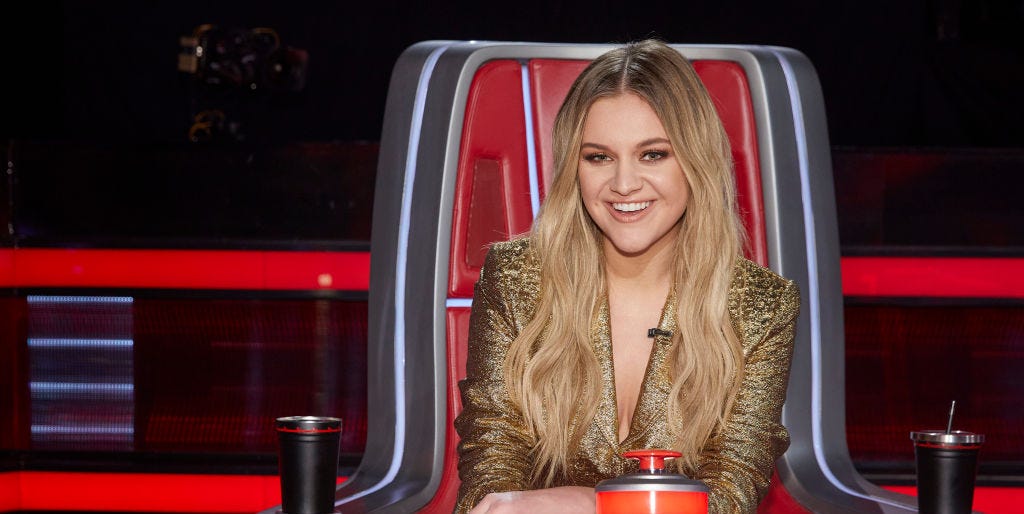
Kelsea Ballerini did not tiptoe into The Voice Season 27. She arrived with country-pop sparkle, a rookie coach smile, a very real competitive streak, and, yes, enough custom cowboy-boot energy to make the red chairs feel like they had been moved to Nashville for the semester. For longtime fans of the NBC singing competition, her arrival as a full-time coach was already major news. But the season quickly turned into something bigger: a test of whether Ballerini could bring her artist-first style, country instincts, and emotional honesty into one of television’s most famous coaching seats.
The “huge news” around Ballerini and Season 27 came in layers. First, she officially joined the coaching panel alongside Adam Levine, John Legend, and Michael Bublé. Then she revealed a memorable Team Kelsea welcome gift: custom Tecovas boots branded with “Team Kelsea” and “S27.” Later, the season delivered a true game-changing twist with the Super Save, allowing each coach to bring back one eliminated artist before the live shows. For Ballerini, that meant reviving Jaelen Johnston’s journey a decision that ultimately helped carry Team Kelsea all the way to the finale.
In other words, Season 27 gave fans exactly what reality TV does best: music, tears, strategy, second chances, and a country coach who looked like she might be sweet until she started playing to win. Bless her heart competitively.
Kelsea Ballerini’s Big Season 27 Moment Explained
Kelsea Ballerini entered The Voice Season 27 as a first-time full-season coach, but she was not new to the show’s universe. Before taking a permanent red chair, she had already appeared as a battle advisor, stepped in for Kelly Clarkson during Season 20, and served as a coach for the show’s digital Comeback Stage. That history mattered because it gave her a working knowledge of the show without making her feel over-rehearsed or predictable.
Season 27 premiered on February 3, 2025, with a refreshed coaching lineup: Ballerini, Adam Levine, John Legend, and Michael Bublé. Levine’s return brought nostalgia, Legend’s comeback added polish, Bublé arrived as a recent champion, and Ballerini brought the wildcard factor. She was the rookie, but not the lightweight. In fact, her role quickly became one of the season’s most interesting storylines because she blended warmth with a sharp ear for emotional performance.
One of her first viral-friendly moves was revealing that Team Kelsea contestants would receive custom cowboy boots. Female team members were gifted Tecovas Annie boots, while male contestants received Doc boots, both personalized with Team Kelsea details. It was part fashion statement, part team-building strategy, and part “I may be new here, but I brought matching footwear.” On a show where coaches often compete with jokes, promises, and dramatic chair-turn speeches, Ballerini found a way to make her team identity visual from day one.
Why Kelsea Ballerini Joining ‘The Voice’ Was a Big Deal
For country fans, Ballerini’s addition gave The Voice another strong Nashville presence after Reba McEntire’s run on the show. Reba even welcomed Ballerini with a handwritten letter and a symbolic crown, encouraging her to “keep country alive” and show the boys who was boss. That was not just a sweet TV moment; it positioned Ballerini as part of the show’s country coaching lineage.
That pressure could have been intimidating. After all, The Voice has a long history with country music, thanks in large part to Blake Shelton’s dominant presence over many seasons. Ballerini was not trying to be Blake, Reba, or anyone else. Her strength was that she came in as herself: conversational, emotionally available, funny, and deeply aware of what it feels like to stand on a stage with everything on the line.
She also brought a modern country-pop perspective. Ballerini’s own career has moved between radio-friendly country, vulnerable songwriting, and pop-leaning production. That gave her a wider lens when evaluating contestants. She could hear the storytelling instincts in a country singer, but she could also understand how a performance might translate to streaming-era audiences who do not live in one genre box.
The Season 27 Coach Lineup Had Built-In Drama
Part of what made Ballerini’s Season 27 news so exciting was the panel around her. Adam Levine returned after several seasons away, bringing back a piece of the show’s original DNA. John Legend came back as one of the show’s most technically gifted coaches, while Michael Bublé entered Season 27 with serious momentum after winning Season 26 with Sofronio Vasquez.
That combination created a fun coaching contrast. Levine had the veteran swagger. Legend had the professor-like musical precision. Bublé had charm, humor, and a winning record. Ballerini had the rookie glow but also the advantage of being underestimated. That is a dangerous combination on a competition show. A underestimated coach can smile sweetly, compliment everyone’s tone, and then quietly build a finale-worthy team.
Fans also got a taste of the panel’s chemistry before the competition fully heated up when the coaches performed Elton John’s “Tiny Dancer.” The group number showed how different their voices were, but also how well they could blend. It was a smart setup for the season: four distinct artists, four coaching styles, one increasingly chaotic race to find the next winner of The Voice.
Team Kelsea: More Than Boots and Big Smiles
The custom boots were a fun headline, but Team Kelsea became more than a branding moment. Ballerini built a team that reflected her taste for singers who could communicate feeling, not just hit notes. That mattered because The Voice often rewards vocal power, but the most memorable contestants usually have something else: point of view.
Contestants like Jaelen Johnston, Iris Herrera, and Alanna Lynise helped define Team Kelsea’s identity. Johnston, in particular, became a key figure in the season’s emotional arc. His country tone, grounded delivery, and natural storytelling made him a fitting match for Ballerini’s coaching style. He had the kind of voice that did not need pyrotechnics to land; it just needed the right song, the right moment, and enough room to breathe.
Ballerini’s coaching approach leaned into that. She often seemed less interested in manufacturing a contestant and more interested in helping them sharpen who they already were. That is a valuable distinction. Some coaches try to stretch artists into surprising new shapes, which can work brilliantly or go sideways faster than a bad karaoke key change. Ballerini’s best moments came when she helped artists become more specific, more connected, and more confident in their lane.
The Super Save Twist Changed Everything
The biggest competitive shock of Season 27 came when host Carson Daly announced the Super Save twist. Instead of moving forward with only the expected Top 8 for the live shows, each coach was allowed to bring back one previously eliminated artist. It was a classic The Voice move: just when fans thought the math was settled, the show threw a glitter cannon into the rulebook.
Ballerini’s reaction captured the mood. She admitted she was overstimulated and embraced the chaos as a good plot twist. Honestly, same. For viewers, the Super Save created a new layer of suspense. For coaches, it created a second chance to correct a painful elimination. For contestants, it meant the door was not fully closed, even after a heartbreaking goodbye.
Ballerini used her Super Save on Jaelen Johnston, bringing him back into the competition after he had been cut during the Playoffs. That decision became one of the defining choices of her rookie season. Johnston did not simply return as a feel-good bonus contestant; he came back and proved he belonged. His performances helped turn Team Kelsea from a solid rookie-coach team into a finale threat.
Why Saving Jaelen Johnston Was a Smart Move
In hindsight, Ballerini’s decision to save Jaelen Johnston looks especially sharp. He had a clear musical identity, a strong connection to country storytelling, and a voice that felt lived-in rather than overly polished. On a show that can sometimes favor vocal fireworks, Johnston offered something quieter and sturdier: emotional believability.
That quality matters in country music. A country performance does not always need to be the loudest moment of the night. Sometimes it needs to feel like someone is telling the truth with a guitar nearby. Johnston’s song choices, including emotionally grounded material like “I Drive Your Truck,” helped him connect with viewers who respond to sincerity over spectacle.
Ballerini seemed to understand that. Her decision to bring him back showed that she was not only listening as a coach but also thinking as a strategist. The Super Save was not just about rewarding someone she liked. It was about identifying which eliminated artist still had the strongest path forward. That kind of decision is where a rookie coach stops being “the new one” and starts becoming a real competitor.
How Far Did Team Kelsea Go in Season 27?
Team Kelsea made it all the way to the finale with Jaelen Johnston, who finished as the runner-up behind Season 27 winner Adam David from Team Michael Bublé. That is a major result for a first-time full-season coach. Ballerini did not win the trophy, but she came close enough to make her debut feel like a warning shot.
Johnston’s finale journey was especially meaningful because he had been eliminated and then revived through the Super Save. That made his runner-up finish feel like one of the season’s best comeback stories. It also gave Ballerini a strong résumé point: in her first official season, she coached a saved artist into the final two.
The finale also gave fans a memorable coach-contestant duet when Ballerini and Johnston performed “Whiskey Lullaby,” the haunting Brad Paisley and Alison Krauss classic. The staging leaned into the song’s emotional weight, and the pairing made sense for both artists. It was not flashy for the sake of flash. It was intimate, sad, and country in the best “please pass the tissues and maybe a porch swing” kind of way.
What Kelsea Ballerini Brought to ‘The Voice’
Ballerini’s biggest contribution to Season 27 was not just country credibility. It was relatability. She knows what it feels like to be judged in public, to sing vulnerable songs, and to manage the strange emotional math of wanting approval while trying not to need it too much. That made her a natural fit for contestants walking into blind auditions, battles, knockouts, playoffs, and live shows.
Her humor also helped. Ballerini did not come across as a coach trying to dominate every room. Instead, she used self-awareness as part of her charm. Whether she was reacting to a twist, teasing another coach, or celebrating her team, she gave Season 27 a lighter tone without lowering the stakes.
At the same time, she was not afraid to make tough calls. That is essential on The Voice, where coaches must repeatedly choose between talented artists. The emotional burden is real. Every decision creates joy for one singer and disappointment for another. Ballerini’s Season 27 arc showed her learning that part of the job in real time, and fans got to watch her become more decisive as the competition narrowed.
Fan Reaction: Why Viewers Connected With Her
Fans seemed to respond to Ballerini because she brought a fresh dynamic to the panel. She was not overly polished in a way that felt distant. She was polished enough to be credible, but still expressive enough to be fun. That balance is valuable on a show where the coaches are not only mentors but also characters in the weekly drama.
Her country background also gave viewers a clear reason to root for her team. Country contestants have historically performed well on The Voice, and Ballerini gave them a coach who could speak their language while still understanding modern pop-country crossover appeal. She knew when a performance needed grit, when it needed softness, and when it needed a tiny bit more “main character walking through a small-town rainstorm” energy.
The Super Save storyline made that connection stronger. Viewers love a second chance, and Johnston’s return gave Team Kelsea a satisfying narrative. Once he made the finale, Ballerini’s decision looked less like a rescue and more like a revelation. It proved she had heard something worth fighting for.
What This Means for Kelsea Ballerini’s Future With the Show
Although Ballerini did not immediately become a permanent fixture across every following season, her Season 27 run left the door open for future appearances. In modern The Voice fashion, coaches rotate often. A coach can leave, tour, release music, act, rest, and then return when the timing is right. Ballerini’s debut gave NBC plenty of reasons to consider bringing her back when schedules and strategy align.
From a casting perspective, she checks several boxes. She appeals to country fans, younger viewers, pop-country listeners, and anyone who enjoys a coach who can be emotionally sincere without making every moment feel like a motivational poster. She also proved she could develop a finalist, which is the most important metric after all the jokes, gifts, hats, and red-chair theatrics are done.
For Ballerini, the show also offered a different kind of visibility. Instead of promoting one album cycle or one single, she spent weeks showing viewers how she thinks about music. That can deepen a fan base in a way traditional promotion cannot. People got to see her taste, her empathy, her humor, and her competitive instincts. That is valuable branding, even if nobody wants to call a heartfelt coaching journey “branding” out loud.
Experience: Watching Kelsea Ballerini’s Season 27 Journey as a Fan
Watching Kelsea Ballerini on The Voice Season 27 felt like watching someone learn a new job in public while somehow already having the right outfit, the right vocabulary, and the right emotional toolkit. There was an appealing awkwardness to her first stretch in the chair not in a bad way, but in the human way. She was clearly aware that she was sitting beside coaches with heavier Voice résumés. Adam Levine had history. John Legend had trophies and technique. Michael Bublé had a fresh winning streak. Ballerini had to prove that she was not just the “new country coach,” but a coach with taste, instincts, and staying power.
One of the most enjoyable parts of her season was how quickly she made Team Kelsea feel like a real team. The custom boots could have been a throwaway gimmick, but they worked because they matched her personality. They were stylish, yes, but they also sent a message: if you join this team, you are stepping into an identity. That may sound dramatic for footwear, but on The Voice, identity matters. Contestants need confidence, and sometimes confidence starts with feeling chosen.
Another memorable experience was watching Ballerini react to pressure. She did not always hide the stress of difficult decisions, and that made her more relatable. Viewers know these shows are edited, shiny, and structured, but the pain of eliminating singers still cuts through. Ballerini’s reactions suggested she understood that she was not just moving pieces on a board. She was dealing with real artists who had placed real hopes in her hands.
The Super Save twist made the viewing experience even better because it gave the season a surprise emotional reset. When Jaelen Johnston came back, it felt like the kind of second-chance story reality competition fans secretly hope for every season. His return added suspense, but it also made Ballerini’s coaching arc more satisfying. She had to make a bold choice, and the choice paid off. Seeing Johnston go from eliminated artist to runner-up gave Team Kelsea a narrative that felt earned rather than manufactured.
The finale duet was the emotional payoff. “Whiskey Lullaby” was a smart choice because it did not require either singer to overperform. It needed restraint, sadness, and trust. Ballerini and Johnston delivered a moment that felt less like a TV stunt and more like two country artists sharing a story. That is where Ballerini’s Season 27 experience landed best: she knew when to let the song do the heavy lifting.
As a viewer, the takeaway was simple. Kelsea Ballerini may have entered Season 27 as the rookie, but she left with credibility. She gave the show style, heart, humor, and a finalist. Not bad for a first trip around the red-chair rodeo.
Conclusion
Kelsea Ballerini’s huge Season 27 news was not limited to one announcement. Her arrival as a full-time coach, her custom Team Kelsea boots, the dramatic Super Save twist, and Jaelen Johnston’s runner-up finish all became part of a bigger story: Ballerini proved she belonged on The Voice. She brought a fresh country-pop perspective, connected with artists in a personal way, and showed enough strategy to turn a second-chance contestant into a finale standout.
Season 27 ultimately belonged to Adam David and Michael Bublé in the winner’s circle, but Ballerini walked away with one of the season’s most compelling arcs. She entered as the new coach and left as a serious contender. If The Voice ever wants more boots, banter, emotional country ballads, and smart rookie energy, Team Kelsea already made its case.