Note: This is an original, rewritten analysis based on real reporting and defense background from reputable sources, with battlefield claims treated carefully where independent verification varies.
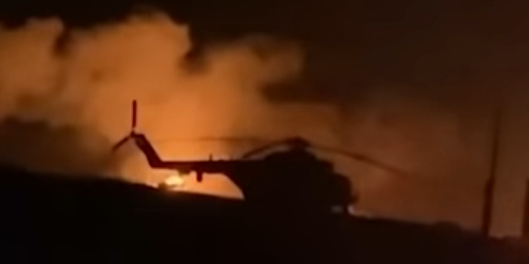
When Ukraine first fired U.S.-supplied ATACMS missiles at Russian-occupied airfields, the message was not subtle. It was less “please move your helicopters” and more “congratulations, your parking lot is now a fireworks display.” The October 17, 2023 strikes on Berdyansk and Luhansk marked Kyiv’s first confirmed use of the Army Tactical Missile System in the war and immediately changed the conversation around Russian attack aviation. Ukraine said the operation destroyed nine Russian helicopters, damaged airfield infrastructure, hit ammunition storage, and struck support equipment deep behind the front line. Associated Press and Reuters both reported the first confirmed use of ATACMS and Ukraine’s claim that Russian helicopters were destroyed at the two occupied airfields.
The most attention-grabbing losses involved Russia’s Ka-52 “Alligator” attack helicopters, a heavily armed rotary-wing platform that had become a serious problem for Ukrainian armor and infantry during the 2023 counteroffensive. The Ka-52 is not just a helicopter with a scary nickname; it is a flying anti-tank office with missiles, sensors, armor, and enough battlefield attitude to make commanders sleep badly. Before ATACMS entered the fight, Russia had been using forward airfields to keep these helicopters close enough to the front to strike Ukrainian vehicles while staying outside many short-range air-defense threats.
What Happened in the ATACMS Strike?
The operation targeted two Russian-controlled airfields: Berdyansk in occupied Zaporizhzhia Oblast and Luhansk in eastern Ukraine. These were not random dots on a map. They were forward operating bases that allowed Russian helicopters to refuel, rearm, receive maintenance, and get back into the fight quickly. By hitting both sites in a coordinated nighttime strike, Ukraine aimed at the aviation ecosystem, not just individual aircraft.
Ukraine’s Special Operations Forces described the attack as Operation Dragonfly. According to Ukrainian claims reported by AP, the strike destroyed nine Russian helicopters and also hit military equipment, an air-defense system, ammunition warehouses, and runways. AP noted that the claims could not be immediately verified in full, which is important because battlefield math often arrives wearing fog-of-war goggles. Still, satellite imagery and later open-source analysis supported the conclusion that the strikes caused substantial damage at the targeted airfields.
Why ATACMS Was Such a Big Deal
ATACMS, short for Army Tactical Missile System, is a U.S.-developed, ground-launched ballistic missile fired from HIMARS or M270 launchers. In simple terms, it lets a launcher that already looks like a truck with a serious personality disorder reach much deeper than standard guided rockets. CSIS describes ATACMS as a road-mobile, solid-propellant, short-range ballistic missile family developed in the United States, with variants carrying either a single warhead or hundreds of submunitions.
The missiles initially supplied to Ukraine were reported to be shorter-range cluster-warhead variants, capable of reaching a little over 100 miles. That was enough to place Russian helicopters, ammunition dumps, and command sites in occupied Ukrainian territory at sudden risk. AP reported that the missiles delivered to Ukraine carried cluster munitions that release hundreds of bomblets over an area, making them especially dangerous against parked aircraft, fuel trucks, radars, ammunition, and other soft targets.
Why Ka-52 Helicopters Mattered So Much
The Ka-52 “Alligator” had earned an ugly reputation on the battlefield. During Ukraine’s counteroffensive, Russian crews used Ka-52s to fire anti-tank guided missiles from standoff distances, threatening advancing Ukrainian armor. ABC News reported that Russian attack helicopters had played an important role in blunting Ukraine’s counteroffensive because they could strike Ukrainian armor while operating beyond the range of some Ukrainian air defenses.
That made the Berdyansk and Luhansk strikes strategically tasty from Ukraine’s perspective. Destroying a Ka-52 in the air is hard. Destroying it while it is parked, fueled, and waiting for its next mission is far more efficient. It is the battlefield equivalent of unplugging the coffee machine before the office opens. A helicopter sitting on an apron cannot maneuver, hide behind terrain, fire missiles, or do any of the dramatic helicopter things that look impressive in defense brochures.
The Cluster Munition Factor
Cluster-warhead ATACMS are especially suited to area targets such as airfields. Instead of one large explosion, the missile releases many smaller bomblets across a wide footprint. Against hardened bunkers, that may not be ideal. Against rows of parked helicopters, support vehicles, radar equipment, exposed ammunition, and maintenance areas, it can be brutally effective.
Reuters reported that M39A1 Block IA ATACMS can carry 300 bomblets and have a range of 70 to 300 kilometers, while other ATACMS versions carry unitary high-explosive warheads. The earlier M39 Block I version is associated with a larger submunition payload. The specific variant used in the October 2023 strikes was widely identified by analysts as a cluster-munition ATACMS, which explains why parked aircraft and airfield equipment were so vulnerable.
Confirmed Losses vs. Estimated Damage
One important detail: numbers vary. Ukraine initially claimed nine helicopters destroyed. Other analyses, based on satellite imagery and intelligence assessments, suggested the number of destroyed, damaged, or rendered inoperable helicopters may have been higher. IISS reported that satellite imagery taken after the strikes suggested at least 17 helicopters were affected, including multiple Kamov Ka-52 attack helicopters. Popular Mechanics later framed the losses as a major blow to Russia’s Ka-52 fleet, while Business Insider described the strike as shaking Russia’s helicopter force and forcing new basing concerns.
That distinction matters. A helicopter can be destroyed, damaged, burned, written off, cannibalized for parts, or technically repairable but operationally useless for weeks. In war, those categories blur quickly. A machine that cannot fly tomorrow may be just as useful as a garden gnome today. For Ukraine, the immediate value was not only the number of helicopters lost but the disruption to Russia’s ability to support ground operations near the front.
How the Strike Changed Russian Helicopter Basing
The larger effect was psychological and logistical. Before ATACMS, Russian planners could treat certain occupied airfields as relatively safe rear areas. After the strikes, that assumption needed a helmet. CSIS later assessed that the twin strikes forced Russia to temporarily relocate surviving helicopters farther from the front, reducing their ability to support troops. That is the quiet power of deep strike: even when it does not destroy everything, it forces the enemy to move, disperse, harden, hide, and spend time solving new problems.
Moving helicopters farther back creates trade-offs. The aircraft must fly longer distances to reach the battlefield, burn more fuel, spend less time on station, and depend on longer logistics chains. Maintenance crews and ammunition stocks must move too. Commanders also lose some flexibility because forward basing is what lets helicopters respond quickly to battlefield developments. In short, Ukraine did not merely blow up helicopters; it stretched Russia’s aviation schedule until it squeaked.
Why Airfields Are Such Valuable Targets
Airfields are not just runways. They are concentrated collections of expensive things that hate being hit: aircraft, fuel, spare parts, weapons, maintenance equipment, radar, air-defense systems, and personnel. When an airfield is functioning well, it turns machines into combat power. When it is burning, it turns into a very expensive lesson in spacing your assets farther apart.
The War Zone reported that satellite imagery after the Berdyansk strike showed scorch marks and wreckage in areas consistent with where Russian helicopters had previously been parked. That kind of visual evidence helped support the conclusion that the operation achieved more than symbolic value. It showed that Ukraine could combine intelligence, timing, launch platforms, and U.S.-supplied ballistic missiles to hit high-value aviation assets behind Russian lines.
ATACMS and the New Deep-Strike Problem for Russia
For Russia, the arrival of ATACMS meant that “behind the front” no longer automatically meant “safe.” Ukraine already had long-range strike options such as Storm Shadow and SCALP cruise missiles from European partners, plus a growing drone arsenal. ATACMS added a fast, ground-launched ballistic option that could be fired from launchers Russia was already hunting but had not been able to eliminate.
The U.S. Army describes ATACMS as a precision fires system capable of engaging point and area high-value targets out to 300 kilometers, while also noting that the missile family is being replaced by newer Precision Strike Missile technology because modern requirements demand more range and volume. That technical background helps explain why even older ATACMS variants can matter enormously in Ukraine: the range is not magical, but it is enough to alter Russian behavior across occupied territory.
Why This Was Bigger Than a One-Night Strike
Operation Dragonfly became a case study in how Ukraine uses limited high-end weapons for maximum operational effect. Kyiv did not fire ATACMS at a random warehouse just to make a big boom for the evening news. It targeted aviation assets that were actively affecting the ground war. Ka-52 helicopters had been part of Russia’s defensive system against Ukrainian advances, and damaging them created immediate tactical and operational benefits.
The strike also showed how modern war rewards target selection. A missile is only as useful as the intelligence behind it. Ukraine needed to know where the helicopters were parked, when they were vulnerable, what defenses protected the airfields, and how to time launches for maximum effect. The missile gets the headline, but the intelligence cycle does the homework. ATACMS may be the punchline, but reconnaissance wrote the joke.
The Ka-52 Problem Did Not Disappear
It would be a mistake to say the strikes ended Russia’s Ka-52 threat. They did not. Russia continued to operate attack helicopters, and Ka-52s remained dangerous when paired with anti-tank guided missiles, reconnaissance drones, and layered defenses. But the October 2023 strikes made the threat harder for Russia to sustain from convenient forward locations.
Business Insider later reported that Western intelligence and experts expected Russia to pull vulnerable aviation assets farther from the front after the October 17 cluster-missile strikes. That is the kind of outcome militaries care about: not only destroyed equipment, but changed enemy behavior. A helicopter forced to operate from a less efficient base is a less responsive helicopter. A less responsive helicopter is one fewer headache for Ukrainian units trying to move, dig in, or survive the day.
The Strategic Message to Moscow
The strike delivered a strategic message: Russian forces could no longer count on occupied airfields as comfortable staging areas. Every helicopter parked in range became a potential target. Every ammunition depot beside an apron became a liability. Every air-defense system guarding the site became part of the target package. That is a miserable memo to receive if your job is keeping expensive aircraft alive.
It also showed that Western-supplied weapons could reshape Russian risk calculations when used against legitimate military targets in occupied Ukraine. For months, debates over ATACMS focused on escalation, range, and whether the missiles would arrive at all. Once they did, Ukraine demonstrated why it had wanted them so badly: they could reach valuable targets that standard rockets could not.
What Readers Should Understand About the Headlines
Headlines saying “Ukraine ATACMS missiles blow up Russian Ka-52 attack helicopters” are punchy, and in this case, they point to a real battlefield event. But the deeper story is not just exploding helicopters. It is about range, basing, adaptation, and logistics. It is about making the enemy’s best tools harder to use. It is about turning a secure rear area into a dangerous workspace where every parked aircraft needs a backup plan.
That is why the strike still matters. A single attack did not win the war, and no serious analyst should pretend otherwise. But it revealed a new Ukrainian capability, imposed costs on Russian aviation, and forced Moscow to rethink where it could safely stage attack helicopters. In a war of attrition, those pressures accumulate. Sometimes victory looks like territory gained. Sometimes it looks like a Ka-52 that never takes off because its airfield just had a very bad morning.
Experience-Based Takeaways: What This Strike Teaches About Modern War
For anyone following the war closely, the ATACMS strike on Russian Ka-52 helicopters offers several practical lessons about how modern combat actually works. The first lesson is that expensive weapons are most powerful when they are used against the right targets. A missile that costs a large sum can still be cost-effective if it destroys multiple aircraft, burns ammunition, damages infrastructure, and forces a major relocation. In business terms, that is an excellent return on investment. In military terms, it is a commander’s dream, assuming the commander still drinks coffee and not pure stress.
The second lesson is that mobility is no longer protection by itself. Russia’s helicopters were mobile once airborne, but they still needed predictable places to land, refuel, rearm, and receive maintenance. That support cycle created vulnerability. Modern sensors, satellite imagery, drones, intercepted communications, and human intelligence can turn routine basing patterns into targeting opportunities. The aircraft may be fast; the fuel truck is not. The missile does not need to chase the helicopter if it can arrive before breakfast.
The third lesson is that air power depends heavily on ground organization. People often imagine helicopters as independent battlefield predators, swooping around like mechanical eagles with rockets. In reality, attack helicopters are tied to maintenance crews, spare parts, fuel, ammunition, command networks, and protected staging areas. Hit those support systems, and the aircraft become less useful even if they are not all destroyed. Ukraine’s strike demonstrated that targeting the ecosystem can be as important as targeting the platform.
The fourth lesson is psychological. After a strike like Berdyansk and Luhansk, every Russian aviation planner has to assume that yesterday’s safe distance may be tomorrow’s crater. That causes dispersion, delays, extra security requirements, and operational caution. None of those effects make dramatic video clips, but they matter. War is often decided by the accumulation of delays, shortages, bad options, and tired crews trying to solve problems under pressure.
The fifth lesson is that adaptation never stops. Russia adjusted after the ATACMS strikes. Ukraine adapted too. Both sides have used drones, missiles, electronic warfare, decoys, camouflage, and rapid targeting cycles to hunt valuable systems. The result is a battlefield where standing still is dangerous, concentrating assets is risky, and assuming safety is a luxury no one can afford. The Ka-52 remains a dangerous aircraft, but the October 2023 strikes proved that even dangerous aircraft can become vulnerable when parked inside a newly expanded strike zone.
Finally, the strike shows why long-range precision weapons attract so much political attention. They do not merely add distance; they add options. For Ukraine, ATACMS created the option to reach airfields that had supported Russian attacks from behind the front. For Russia, that meant more assets had to move farther away or be protected more heavily. That is the central experience of this episode: a weapon does not have to be unlimited to be decisive in a specific moment. It just has to arrive at the right place, at the right time, against the right target. In Berdyansk and Luhansk, Ukraine appears to have done exactly that.
Conclusion
Ukraine’s ATACMS strike against Russian helicopter bases was one of the clearest examples of how deep precision fires can reshape the battlefield without a massive ground breakthrough. By hitting Berdyansk and Luhansk, Ukraine damaged or destroyed valuable aviation assets, including Ka-52 attack helicopters, and forced Russia to reconsider how close it could safely base aircraft to the front. The strike was not a magic wand. Wars do not end because one airfield burns. But it was a sharp demonstration of reach, timing, and target selection.
The real story is not only that Russian helicopters were blown up. It is that Ukraine expanded the danger zone, attacked a critical support system, and made Russia’s battlefield aviation less comfortable. In modern war, comfort is a liability. If your helicopters need to park, refuel, and reload within missile range, the parking fee may be higher than expected.