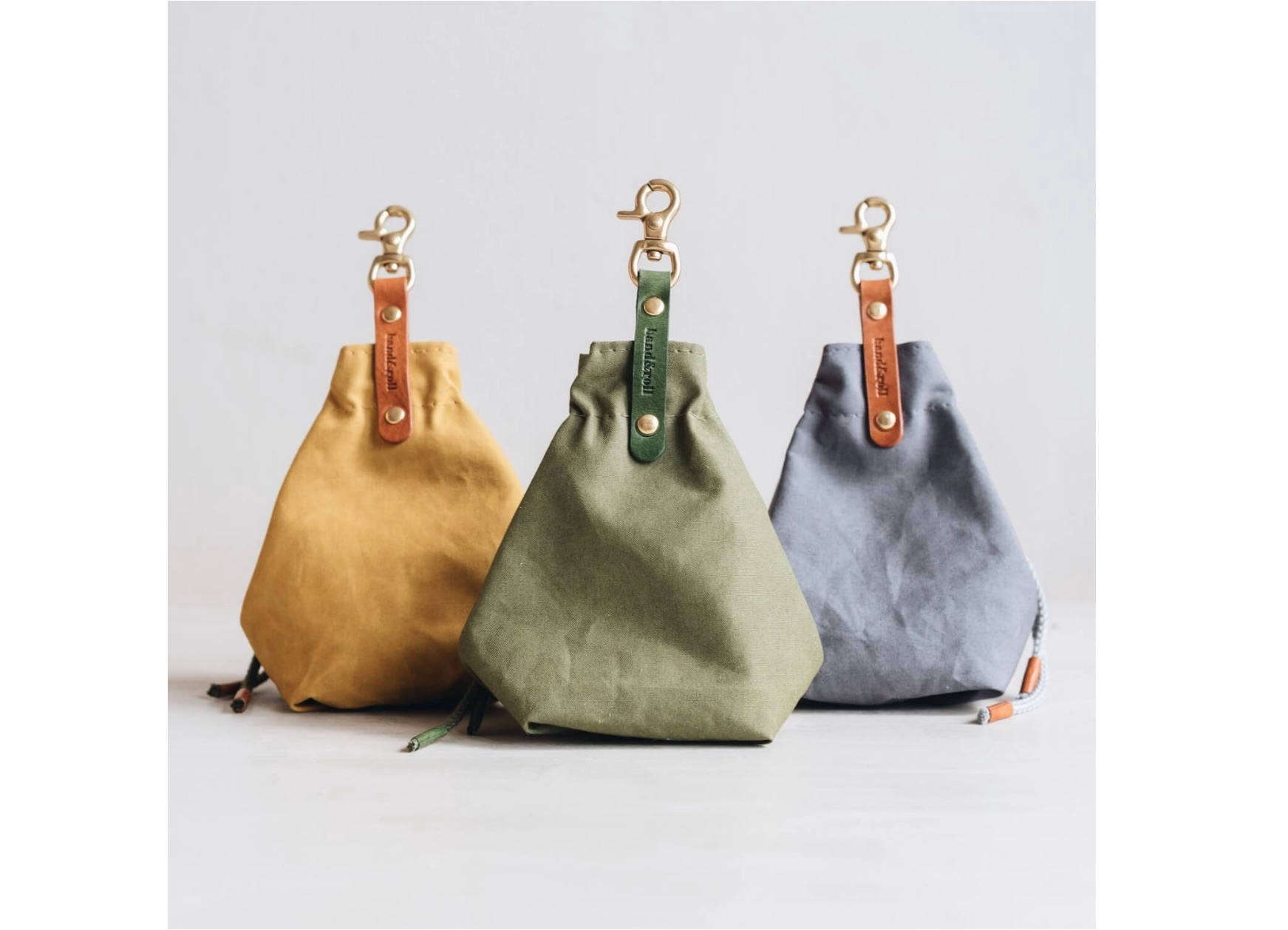
A good dog treat bag sounds like a small thing until you try training a dog with biscuits in one pocket, keys in the other, and one suspiciously sticky piece of cheese hiding somewhere near your phone. Suddenly, a dedicated treat pouch does not feel like an accessory. It feels like civilization.
The treat bag for dogs “York” is designed for exactly that everyday chaos: quick rewards, cleaner walks, easier training sessions, and fewer crumbs migrating into places crumbs should never visit. Whether you are teaching a puppy to sit, helping a rescue dog build confidence, or convincing a tiny Yorkshire Terrier that barking at a leaf is not a full-time career, a compact treat bag can make positive reinforcement smoother and more consistent.
The York-style dog treat bag is especially appealing because it combines a simple, stylish look with practical training features. It is commonly described as a compact waxed-canvas treat pouch with leather and cotton details, a pull-tight closure, a lightweight shape, and an inner lining that helps crumbs shake out more easily. In plain English: it carries snacks without making you look like you are wearing a tactical granola belt.
What Is the “York” Dog Treat Bag?
The York dog treat bag is a small training pouch made to keep dog treats close during walks, obedience practice, city outings, and casual adventures. Unlike bulky waist packs, the York-style pouch leans minimalist. It is usually worn on a belt loop, clipped to a leash setup, tucked into a pocket, or attached to a backpack or pet carrier.
Its design centers on convenience. The opening should be easy enough to access with one hand, yet secure enough that treats do not bounce out every time your dog spots a squirrel and temporarily becomes an Olympic sprinter. Many York treat bag listings describe a pull-tight closure, waxed canvas exterior, leather accents, and an inner lining intended for easy cleaning.
Why the Name “York” Matters
The word “York” can confuse shoppers. Some people search for it as a product name, while others associate it with Yorkies, the affectionate nickname for Yorkshire Terriers. Fortunately, the bag works for both interpretations. As a product, “York” refers to a stylish, compact treat pouch. As a small-dog training accessory, it happens to suit Yorkies beautifully because it holds tiny training rewards without overwhelming the handler.
Yorkshire Terriers may be small, but they are not exactly shy wallflowers. They are alert, clever, lively dogs that often respond well to positive reinforcement. That means a dog treat pouch is more than a cute add-on. It can become a daily tool for reinforcing polite walking, recall, quiet behavior, grooming tolerance, and basic cues.
Why Use a Treat Bag Instead of Your Pocket?
Technically, you can carry dog treats in your pocket. You can also eat soup with a fork. The fact that something is possible does not make it pleasant.
A dedicated dog treat bag keeps rewards easy to reach, separates food from your personal items, and helps you deliver treats at the exact moment your dog earns them. Timing matters in training. When your dog sits politely instead of jumping, you want the reward to arrive immediately, not after a dramatic pocket excavation involving receipts, lint, and a mint from 2022.
Fast Reward Delivery
Positive reinforcement works best when the dog understands which behavior earned the reward. A treat pouch lets you mark and reward quickly. If you are teaching “heel,” “leave it,” or “look at me,” those half-seconds matter. The faster the reward appears, the clearer the lesson becomes.
Cleaner Walks
Training treats can be crumbly, oily, or aromatic enough to make your entire jacket smell like roasted chicken. A lined treat pouch helps contain crumbs and food residue. The York-style shake-out lining is useful because dry treats often leave behind tiny crumbs that collect at the bottom like snack dust confetti.
Better Focus for Dogs
Dogs notice patterns. When treats come from a consistent place, your dog quickly learns that training is happening. That can help create focus before a walk, during a class, or in distracting environments. For small dogs, nervous dogs, and energetic puppies, that predictability can be surprisingly powerful.
Key Features to Look for in a York Dog Treat Bag
Not every treat pouch deserves a place on your daily walk. Some are too stiff, too tiny, too floppy, or so hard to open that you end up wrestling the bag while your dog forgets the cue, files a complaint, and goes back to sniffing the sidewalk. A good training treat bag for dogs should balance style, comfort, and function.
1. Compact Size
The York treat bag is usually compact, which makes it ideal for everyday walks rather than long hiking trips where you need to carry half a pantry. A smaller pouch is easier to clip on, less awkward to wear, and more attractive for urban dog owners who want function without bulk.
2. Secure Closure
A pull-tight closure is useful because it helps keep treats inside while still allowing quick access. This matters if you bend down, jog, train in a park, or have a dog who believes every bag is legally their property.
3. Easy-Clean Interior
A treat pouch should not become a mystery cave of crumbs. Look for an inner lining that can be wiped or shaken clean. For best hygiene, use mostly dry treats and clean the pouch regularly, especially after carrying cheese, meat, or moist rewards.
4. Durable Materials
Waxed canvas is popular because it offers a rugged, classic look and some resistance to everyday wear. Leather accents add style and structure, while cotton details can make the bag feel less plastic-heavy than many standard training pouches.
5. Comfortable Carry Options
A good treat bag should work with your routine. Clip it to a belt loop for training class, attach it to a leash setup for neighborhood walks, or tuck it into a larger walking bag. The easier it is to carry, the more likely you are to actually use it.
Best Uses for the Treat Bag for Dogs “York”
The York dog treat bag is not just for formal obedience training. It can be used throughout the day whenever you want to reward good choices. Think of it as a tiny snack-powered communication device between you and your dog.
Daily Walks
Walks are full of teachable moments. Your dog checks in with you instead of pulling? Reward. Ignores another dog across the street? Reward. Walks past a dropped sandwich without launching a criminal investigation? Definitely reward.
Having a treat bag on your hip makes these moments easier to capture. For dogs who struggle with leash manners, reactivity, or distraction, consistent rewards can help build calmer habits over time.
Puppy Training
Puppies learn constantly, whether you planned a lesson or not. A treat pouch lets you reward behaviors you want to see again: going potty outside, coming when called, sitting before meals, accepting a harness, or choosing a chew toy instead of your favorite shoe.
Small Dog and Yorkie Training
For Yorkshire Terriers and other small breeds, use very tiny treat pieces. A pea-sized reward may be plenty for many dogs, and even smaller pieces are better for toy breeds. Small treats keep training sessions moving without adding too many calories.
This is especially important because tiny dogs have tiny calorie budgets. Treats should be limited and thoughtful, not poured out like confetti at a parade.
City Adventures
The York treat bag is well suited for city exploring because it is compact and easy to wear. Busy sidewalks, elevators, outdoor cafés, and public parks all create training opportunities. A treat bag helps your dog practice calm behavior in real life, not just in the living room where the hardest distraction is a suspicious throw pillow.
How to Choose Treats for the York Treat Bag
A treat bag is only as useful as what you put inside it. For everyday training, choose small, soft, high-value rewards your dog can eat quickly. Crunchy treats are fine for casual walking, but hard biscuits can slow the rhythm of training if your dog needs ten seconds to chew each one like a tiny philosopher.
Good Treat Options
Dry mini training treats are usually the cleanest choice for a waxed-canvas pouch. Small pieces of dog-safe freeze-dried meat, low-calorie training bites, or broken-up soft treats can also work well. If you use cheese or cooked chicken, place it in a small food-safe liner or washable insert first so the pouch does not absorb moisture or odor.
Treats to Avoid
Never fill a dog treat pouch with foods that are unsafe for dogs. Avoid chocolate, xylitol or birch sugar, grapes, raisins, onions, garlic, macadamia nuts, alcohol, caffeine, and overly salty or fatty human snacks. When in doubt, choose treats made for dogs and read the label.
Watch the Calories
Dog treats should generally make up no more than 10 percent of a dog’s daily calories. For small dogs, that allowance can disappear quickly. If you are doing a long training session, use tiny pieces and consider setting aside part of your dog’s regular food as training rewards.
How to Use a Dog Treat Bag Correctly
Using a treat pouch sounds obvious: put treats in bag, give treats to dog, become hero. But a few simple habits can make training cleaner and more effective.
Step 1: Load the Bag Before the Walk
Prepare treats before you put on the leash. Cut larger treats into small pieces, check that the pouch closes securely, and bring only what you need. Overpacking the bag makes it bulky and can lead to stale leftovers.
Step 2: Reward Specific Behaviors
Do not randomly feed treats just because your dog looks cute. That is not training; that is snack-based admiration. Reward clear behaviors such as eye contact, loose-leash walking, sitting, staying calm, or coming when called.
Step 3: Keep Rewards Small
Training is about frequency, not feast size. Your dog does not need a biscuit the size of a coaster for every sit. Tiny rewards let you practice more repetitions without overfeeding.
Step 4: Fade Treats Gradually
Treats are a teaching tool, not a lifelong vending contract. Once your dog understands a behavior, begin mixing in praise, play, life rewards, and occasional treats. For example, reward a polite sit by opening the door for a walk, not only with food.
Cleaning and Care Tips
A treat bag needs regular cleaning because it touches food, hands, leashes, park benches, and sometimes the floor of your car, which is basically an archaeological site. Good hygiene helps keep the bag pleasant and safe.
- Empty the pouch after each walk or training session.
- Shake out crumbs from the inner lining.
- Wipe the inside with a damp cloth when needed.
- Let the pouch dry fully before refilling it.
- Wash your hands before and after handling pet treats.
- Avoid leaving moist treats inside overnight.
If the bag includes leather details, avoid soaking it unless the manufacturer says it is safe. Spot cleaning is usually the smarter move. For wet or oily treats, use a small reusable silicone cup, parchment wrap, or washable food-safe insert inside the pouch.
Pros and Cons of the York Dog Treat Bag
Pros
- Compact and lightweight for daily walks.
- Stylish waxed-canvas look.
- Useful pull-tight closure for secure storage.
- Good for dry treats, biscuits, and small training rewards.
- Easy to clip to a belt loop, leash setup, backpack, or carrier.
- Helpful for positive reinforcement training.
Cons
- May be too small for professional trainers carrying large treat volumes.
- Not ideal for very wet or greasy treats without an insert.
- Leather and waxed canvas may require more careful cleaning than silicone pouches.
- Minimalist design may not include extra pockets for keys, poop bags, or a phone.
Who Should Buy the Treat Bag for Dogs “York”?
The York treat bag is best for dog owners who want a stylish, compact pouch for everyday rewards. It is a strong fit for small-dog owners, city walkers, design-conscious pet parents, puppy families, and anyone who prefers a simple treat holder over a bulky training belt.
It may not be the best choice for someone who needs multiple compartments, room for a clicker, waste bags, a phone, keys, and enough snacks for three Labradors at a group class. In that case, a larger professional treat pouch or waist bag might be more practical.
Smart Training Examples With a York Treat Bag
Example 1: Teaching “Look at Me”
Stand in a quiet place with your dog on leash. Say your dog’s name once. When they glance at you, mark the moment with “yes” and reward from the treat bag. Practice in short bursts. Over time, this simple cue can help redirect your dog from distractions.
Example 2: Polite Door Manners
Before opening the front door, ask your dog to sit. When they sit, reward. Open the door slightly. If they stay calm, reward again. If they rush, close the door gently and reset. The treat bag keeps rewards ready so the lesson stays smooth.
Example 3: Loose-Leash Walking
During a walk, reward your dog whenever the leash is loose and they are near your side. Do not wait until they pull to correct them. Reward the behavior you want before the leash turns into a tug-of-war rope.
Common Mistakes to Avoid
The biggest mistake is using the treat bag as a bribe instead of a reward. If your dog only listens when they see the pouch, hide the bag behind your back, keep it at your side, or vary where rewards come from. The cue should predict the behavior, not the sight of snacks.
Another common mistake is carrying treats that are too large. Large treats slow training and increase calories. Cut them smaller before leaving the house. Your dog will not file a complaint with the Department of Snack Fairness.
Finally, do not forget food safety. Clean the bag, avoid spoiled treats, store pet food properly, and wash your hands. Training should build good habits, not create a portable bacteria festival.
Experience Notes: What It Feels Like to Use a York Treat Bag Every Day
The first thing you notice about a compact York-style treat bag is how much calmer the start of a walk becomes. Instead of stuffing treats into a jacket pocket and immediately regretting your life choices, you clip on the pouch, drop in a handful of rewards, pull the closure, and go. That small ritual makes training feel intentional.
For a small dog, especially a Yorkie, the benefit shows up quickly. Tiny dogs are close to the ground, close to distractions, and often very aware of everything happening around them. A plastic bag blowing across the street? Important. A pigeon minding its own business? Deeply suspicious. A neighbor carrying groceries? Clearly a public event. Having treats ready helps you reward calm check-ins before the dog escalates into full dramatic commentary.
In daily use, the York treat bag works best with dry or semi-dry rewards. Mini biscuits, freeze-dried pieces, and small training treats are easy to grab and do not make the lining unpleasant. Cheese can work for short sessions, but it is better inside a small liner. Otherwise, the pouch may develop what experts call “mystery dairy personality.” Nobody wants that.
The compact size is both a strength and a limitation. On short neighborhood walks, it feels perfect. It holds enough treats for polite leash practice, recall games, and rewarding calm behavior around distractions. During longer outings or puppy classes, you may wish for more room, especially if you are using different reward values. A practical workaround is to carry backup treats in a separate sealed container and refill the pouch as needed.
The pull-tight closure is useful when moving around, bending down, or getting in and out of the car. It keeps treats from spilling, but it still allows fairly quick access. With a little practice, you can open, reward, and close it without making the whole process feel like you are solving a puzzle under pressure.
Style matters more than people admit. Many dog training pouches look like they were designed for a camping trip to the moon. The York bag has a softer, more everyday look, which makes it easier to wear on casual walks, coffee runs, and city outings. It feels like a small lifestyle item rather than obvious training gear.
The best experience comes when the pouch becomes part of a consistent routine. Clip it on before walks. Reward the behaviors you want. Empty it when you get home. Shake out the crumbs. Repeat. Over time, your dog learns that walks are not just random outdoor chaos. They are opportunities to earn rewards, check in, and work with you. That is the real value of a good treat bag: not just carrying snacks, but making communication easier.
Conclusion
The treat bag for dogs “York” is a smart choice for pet parents who want a compact, attractive, and practical way to carry training rewards. Its waxed-canvas style, lightweight shape, pull-tight closure, and easy-clean lining make it especially useful for daily walks, small-dog training, city adventures, and positive reinforcement routines.
For Yorkie owners, puppy parents, and anyone tired of finding biscuit crumbs in their pockets, this little pouch can make a big difference. It keeps rewards close, training timely, and walks more organized. Just remember to choose safe treats, keep portions small, clean the pouch often, and use rewards to teachnot bribeyour dog.
A treat bag will not magically train your dog overnight. But it will make good training easier, cleaner, and more consistent. And honestly, if a tiny bag can save your pockets from chicken dust, that already feels like a victory worth rewarding.