Some houses make a first impression. The TOH 2018 Idea House in Narragansett, Rhode Island makes a whole argument. It argues that a coastal cottage can feel classic without being stuffy, polished without becoming precious, and practical without looking like it was designed by a spreadsheet. And at the center of that argument is cedar.
In this house, cedar is not a background player doing quiet, noble work behind drywall while everyone else gets the applause. It is very much on stage. It appears on the front porch, wraps itself around pergolas, settles into the outdoor shower, climbs overhead in the sunroom, and even shows up in decorative trusses with enough confidence to make lesser materials feel a little underdressed.
That is what makes TOH 2018 Idea House: Custom Cedar Touches such a compelling design story. The home takes a beloved material and uses it in ways that feel both rooted in New England tradition and refreshingly current. The result is a house that understands something many homes forget: texture matters, craftsmanship matters, and a material with soul can change the mood of an entire property.
Why Cedar Was the Smart Choice
Cedar has long been a favorite in American residential design, and not just because it looks good in photographs. Yes, it has warmth. Yes, it has grain. Yes, it smells like nature decided to go into luxury branding. But cedar also earns its keep.
For a coastal home, that matters. A beach-adjacent property has to deal with sun, moisture, temperature swings, and the general attitude problem that comes with outdoor exposure. Cedar is appealing because it offers natural durability, dimensional stability, and a lighter weight than many other wood species. In plain English, that means it tends to behave itself. It is less likely to warp, cup, twist, or crack than homeowners would prefer to deal with on their weekends.
The 2018 Idea House uses those qualities strategically. Rather than treating cedar like a decorative accent that could have been swapped for something synthetic at the last minute, the design leans into its performance and personality. The material works because it belongs there.
The Exterior: Where Cedar Sets the Tone
A Front Porch That Feels Like a Handshake
The first cedar statement happens before you even step inside. At the approach, cedar railings, steps, and brackets warm up the cooler tones of the gray-blue clapboard siding, dark muntins, and stone-faced column piers. It is a smart contrast. The painted surfaces and masonry create structure; the cedar adds hospitality.
That balance is a major reason the exterior feels so inviting. A lot of cottage-inspired homes try to manufacture charm with decorative overload. This one lets materials do the heavy lifting. The porch says, “Come sit for a while,” without resorting to theatrical nostalgia.
Overhead and Underfoot
One of the most memorable details in the house is the full-width front porch tucked beneath the overhanging roof. Here, the designers and builders used knotty cedar for the flooring and ceiling, then paired it with clear vertical grain Western Red Cedar railings. That move is subtle but brilliant.
Knotty cedar brings casual texture and a slightly rustic edge. Clear vertical grain cedar, on the other hand, offers cleaner lines and a more refined look. Together, they create a layered material palette that feels custom rather than generic. The combination is cozy without becoming cabin-themed, and polished without looking too polished to survive sandy feet.
This is one of the article’s biggest design lessons: cedar does not need to be monochromatic in spirit. Different cuts and grades can be mixed to create contrast within the same species, giving the home visual depth while keeping the palette cohesive.
Pergolas That Actually Do Something
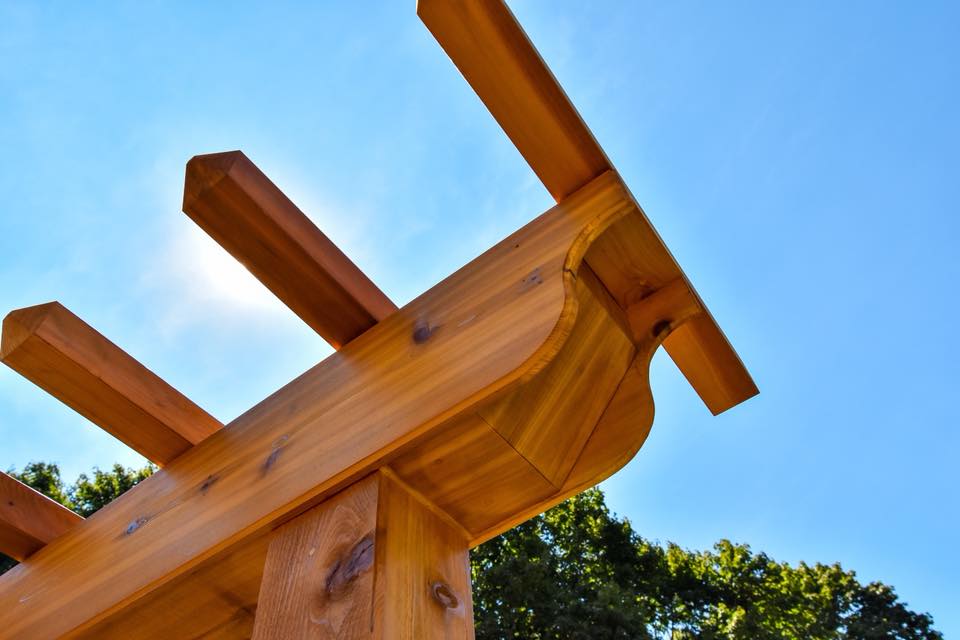
Too many pergolas are all swagger, no substance. They look great in listing photos and then spend the rest of their lives holding exactly three string lights and a mild sense of disappointment. The cedar pergolas at the TOH 2018 Idea House do better.
Sweenor Builders used cedar for a custom lattice driveway pergola that adds architectural presence and announces the home’s craftsmanship from the start. Then they doubled down with a unique circular porthole detail at the center, proving that woodwork can be functional and playful at the same time. This is the kind of move that turns “nice house” into “wait, did you see that?”
In the backyard, cedar appears again in an angled pergola with an Adirondack-style bench swing. It is not just decorative. It creates a destination. It turns open yard into outdoor room. That is the real magic of custom cedar touches: they shape experience, not just appearance.
The Outdoor Shower Gets the Memo
Beach houses live or die by the quality of their transition spaces. Mudrooms matter. Porches matter. Outdoor showers definitely matter. Here, cedar seating and the shower-kit housing were built to withstand the elements, which is exactly the kind of practical luxury a coastal home should deliver.
It also reinforces a broader design theme. The house is not simply using cedar where people will photograph it most. It is using cedar where life actually happens. That is a sign of thoughtful design.
The Interior: Cedar Moves Indoors Without Feeling Heavy
The Sunroom Ceiling Steals the Scene
Inside the home, one of the standout moments is the sunroom. The clear vertical grain Western Red Cedar ceiling stretches overhead while four skylights pull daylight deep into the space. It is dramatic, but not loud. Warm, but not dark. Architectural, but still relaxed.
This is where cedar really shows its range. On the exterior, it reads as durable and grounded. Indoors, especially overhead, it becomes atmospheric. It softens the room, catches light beautifully, and gives the sunroom that elusive “you’ll lose track of time here” quality that good retreat spaces need.
It also demonstrates a lesson many homeowners can use: if you want a room to feel special, stop thinking only about walls and furniture. The ceiling is premium real estate. Treating it as a design surface instead of an afterthought can completely change the emotional temperature of a space.
Decorative Trusses With Real Presence
The house does not stop at ceiling planks. Massive decorative cedar trusses were built and wrapped on site before being hoisted into place. That detail adds drama to the open living spaces and reinforces the home’s Craftsman-inspired character.
But what makes the trusses especially effective is that they do not feel like a theme-park version of craftsmanship. They feel integrated. The house already embraces built-ins, millwork, texture, and proportion. The cedar trusses simply continue that language in a bolder accent.
This is important because custom wood elements can go wrong fast. Done poorly, they feel pasted on. Done well, they feel inevitable. In the TOH 2018 Idea House, the cedar trusses land in the second category.
How Cedar Supports the House’s Coastal Craftsman Identity
The house itself is a roughly 2,700-square-foot Craftsman-style cottage with strong New England influences, generous built-ins, and a layout designed to live larger than its footprint. That “small but luxe” philosophy shows up in the material choices too.
Cedar helps the home bridge two identities that do not always get along: classic coastal charm and updated livability. On one hand, the cedar details nod to regional traditions like shingles, porches, wood ceilings, and handcrafted trim. On the other hand, the execution feels tailored to modern life, with four-season flexibility, guest quarters, outdoor living zones, and refined millwork throughout.
The result is a house that feels historically fluent without becoming trapped in reenactment. It respects Shingle-Style and cottage traditions, but it is not trying to cosplay as 1890. That is a much harder balance to strike than it looks.
Custom Cedar Touches Worth Borrowing for Your Own Home
1. Mix Refined and Rustic Cedar
One of the best takeaways from this house is the mix of knotty cedar with clear vertical grain pieces. That contrast creates richness without requiring more colors or more materials. If your home needs warmth, this approach works beautifully on ceilings, railings, porch details, and even built-ins.
2. Use Cedar to Define Outdoor Rooms
The pergolas, porch zones, and outdoor shower all show how cedar can organize exterior living. It is not just cladding; it is spatial design. A well-placed cedar structure can create shade, privacy, rhythm, and focal points all at once.
3. Put Wood Where People Feel It
Underfoot on the porch. Overhead in the sunroom. At arm’s reach on the railings. Behind you on a bench in the outdoor shower. This house succeeds because cedar is used in tactile places. Design is not only visual. It is physical.
4. Remember Maintenance Is Part of the Story
Cedar is durable, but it is not magic. It rewards care. Homeowners who choose cedar should understand that cleaning, sealing, and refinishing help preserve both performance and appearance over time. In exchange, you get a material that ages with dignity instead of pretending it never changes.
What the TOH 2018 Idea House Gets Exactly Right
The genius of the house is not that it used cedar. Plenty of houses use cedar. The genius is how it used cedar. Every application feels intentional.
The front porch uses cedar to set a welcoming tone. The pergolas use it to build outdoor architecture. The outdoor shower uses it for durability and comfort. The sunroom uses it to heighten warmth and daylight. The decorative trusses use it to reinforce structure and character. Nothing feels random. Nothing feels like filler.
And that is what separates a well-designed home from a merely expensive one. A great home has continuity. It has recurring ideas. It understands that materials are not just finishes; they are narrative devices. In the TOH 2018 Idea House, cedar becomes the thread that ties together curb appeal, craftsmanship, comfort, and coastal identity.
Extended Experience Section: What Living With Custom Cedar Really Feels Like
If you have ever spent time in a home with custom cedar details, you know the experience is bigger than what photographs can capture. Pictures show color, grain, and architecture. They do not show the way cedar changes the pace of a room.
On a porch, cedar makes a house feel friendlier. The texture underfoot is softer than stone, less formal than tile, and warmer than many manufactured alternatives. Even before you sit down, there is a psychological cue: this is a place to linger. A cedar porch does not rush you. It invites the second cup of coffee, the longer conversation, the unnecessary but enjoyable moment of standing there doing absolutely nothing.
Indoors, cedar changes the atmosphere in subtler ways. A cedar ceiling draws the eye upward, but it also softens the whole room. Spaces with a lot of glass, painted drywall, and straight lines can sometimes feel visually cold, even when they are beautifully designed. Cedar takes the edge off. It gives modern rooms a pulse. In a sunroom or vaulted living area, that effect is especially noticeable. Morning light feels warmer. Late-afternoon shadows look richer. The room becomes less like a set and more like a place.
Then there is the sensory side. Cedar has a mild natural aroma that people notice without always realizing they are noticing it. It is not perfumed and it is not loud. It simply makes a space feel fresh, grounded, and quietly alive. In an age of synthetic finishes trying very hard to look authentic, cedar tends to win by not trying so hard at all.
There is also an emotional experience tied to craftsmanship. Custom cedar details signal that somebody cared about the build. A porthole cut into a pergola, a beautifully proportioned railing, a ceiling wrapped in vertical grain boards, or a bench built into an outdoor shower all create the same impression: this home was thought through. That matters to homeowners and guests alike. People may not always have the vocabulary to explain why a house feels special, but they feel the difference immediately.
Of course, living with cedar also means accepting that natural materials are meant to live, not freeze in time. That is part of the appeal. Cedar weathers. It shifts gently in tone. It asks for maintenance now and then. But rather than seeing that as a drawback, many homeowners see it as proof that the material is honest. It is not pretending to be wood. It is wood. It responds to weather, use, sunlight, and age in ways that can actually deepen a home’s character.
That is why the custom cedar touches in the TOH 2018 Idea House resonate so strongly. They are beautiful, yes, but they are also experiential. They shape how the house greets you, how it calms you, how it connects indoors to outdoors, and how it keeps feeling personal long after the novelty of “new construction” fades. In the end, cedar does something rare in residential design: it makes luxury feel human.