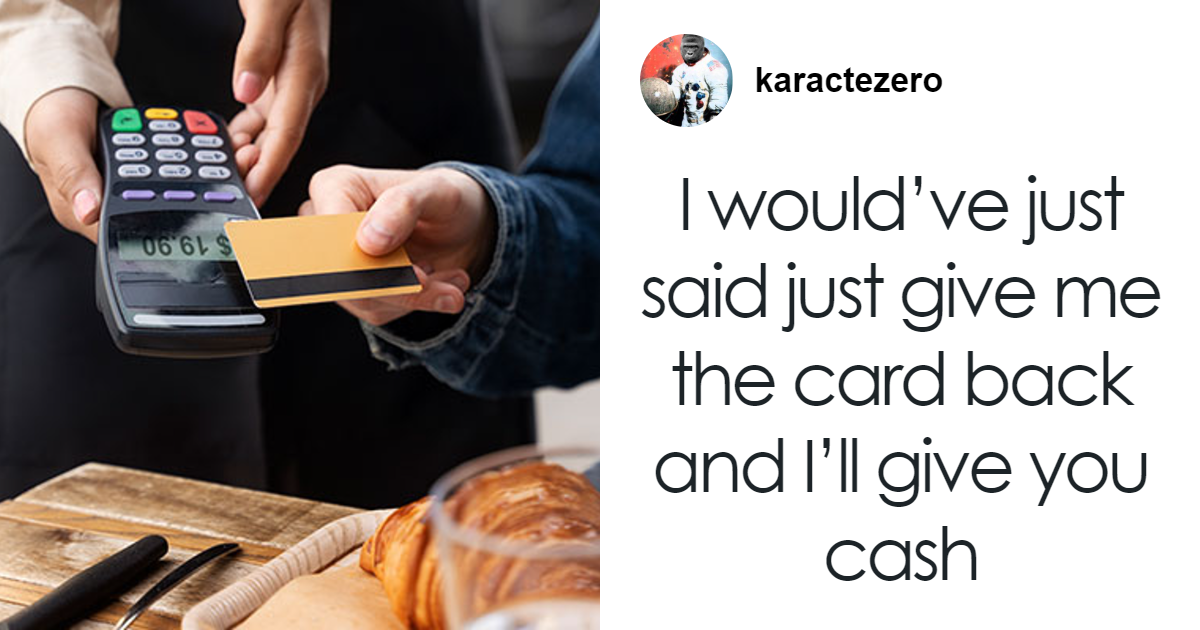
Few things can turn a pleasant breakfast into a social-etiquette pop quiz faster than a disagreement over the tip. One minute, you are enjoying coffee, eggs, and the peaceful illusion that you understand adulthood. The next, a server is telling you that your 35% gift card tip “doesn’t count,” and suddenly everyone at the table is mentally Googling restaurant payment law while pretending not to panic.
That is exactly why the viral story behind “Tipping Is Out Of Control”: Waitress Rejects 35% Gift Card Tip, Leaving Customer Confused struck such a nerve. A diner said she used a prepaid Visa gift card to pay for breakfast and told the server to keep the remaining balance as the tip. The bill was reportedly around $28 to $30, and the card had $40 on it, meaning the leftover amount worked out to roughly a 35% tip. In most American restaurants, that would normally be considered generous. Not “buy the restaurant a yacht” generous, but certainly more than the classic 15% to 20% range.
But according to the customer’s account, the server rejected the gift card tip and asked for cash instead, arguing that a gift card tip did not count. The diner left confused, viewers started arguing, and the internet did what the internet does best: turned one awkward breakfast into a national town hall meeting with worse lighting.
The bigger question is not only whether the customer tipped correctly. It is why tipping in America has become so complicated that even a 35% gratuity can lead to conflict. To understand the drama, we need to look at gift card payment rules, server pay, tipping etiquette, customer fatigue, and why the little tip screen at checkout now feels like it is judging your soul.
What Happened in the 35% Gift Card Tip Story?
The situation was simple on the surface. A customer went to breakfast with a friend and paid using a prepaid Visa gift card. After the meal, she told the server to charge the full balance of the card, leaving whatever remained after the bill as the tip. If the meal cost about $29 and the card contained $40, the server would receive around $11, which is approximately 35% to 38% depending on the exact bill total.
That is not a stingy tip. That is a “please don’t spit in my memory” tip. For a casual breakfast order, it would generally be viewed as more than fair.
Yet the server reportedly told the customer that the tip did not count because it came from a gift card. She allegedly asked for cash and suggested that the customer should tip again because she had worked an early shift. The customer, unsure whether she had misunderstood how prepaid gift cards work, took the issue online and asked whether a gift card tip is real or not.
Online reactions split immediately. Some people sided with the diner, saying a tip is a tip if the server receives it. Others argued that restaurant systems can make gift card tips tricky, especially when prepaid cards, point-of-sale limitations, and end-of-shift payouts are involved. A third group simply declared that tipping culture has become a circus, and honestly, they may have had a folding chair in the ring.
Does a Gift Card Tip Actually Count?
In general, yes, a gift card tip can count as a tip if the restaurant’s payment system processes it correctly and the money reaches the employee through payroll or tip payout procedures. The Internal Revenue Service recognizes tips left through electronic payment methods, including credit cards, debit cards, gift cards, and similar systems, as tips when they meet the basic conditions of being voluntary and customer-determined.
That means the idea that “gift card tips never count” is too broad. They can count. They often do count. Many restaurants allow customers to tip on gift cards or prepaid cards just as they would on a regular credit card. The server later receives the amount as part of their credit card tips, usually through payroll, a nightly payout, or another restaurant-controlled process.
However, there is one important caveat: not every restaurant system handles gift card tips smoothly. Some point-of-sale systems may not allow tips on certain gift card types. A store-branded restaurant gift card may work differently from a prepaid Visa or Mastercard gift card. In some cases, the system may authorize only the meal amount, not the tip. In others, a prepaid card may decline if the balance does not cover the bill plus a temporary hold.
So the customer’s instinct was reasonable. A gift card can function like a payment card. But the server may also have been dealing with a system where the tip was not immediately visible, not immediately payable, or not allowed in the way the customer expected.
The Weird World of “Tip Tolerance”
To make matters more confusing, prepaid gift cards used at restaurants often involve something called tip tolerance. This is a payment-processing practice where the system temporarily authorizes more than the bill total, often around 20%, because restaurants are places where tips are expected.
Here is how it works: suppose your restaurant bill is $30 and you use a prepaid card. The payment system may check whether the card has enough funds for $36, not just $30, because it anticipates that a tip may be added later. If your card only has $30, the transaction may decline even though the bill itself is $30. This is not the server being dramatic. This is the payment processor wearing a tiny accountant hat.
Tip tolerance exists to prevent customers from spending more than the available balance. It also helps businesses avoid a situation where the meal is paid for but the later-added tip pushes the transaction over the card limit. When the charge settles, the final amount should reflect the real total, but the temporary authorization can confuse customers and staff.
In the viral breakfast situation, if the customer told the server to run the full $40 card and keep the rest, the success of that plan depended on the restaurant’s system. Some systems can split the transaction cleanly. Some can add a gift card tip. Some cannot. And some employees may not be trained on the difference.
Was the Customer Wrong?
Based on common U.S. tipping etiquette, the customer was not wrong to believe that a 35% tip was generous. If the payment system successfully processed the remaining balance as a tip, then the customer did tip. Full stop. No courtroom drama required.
The customer also reportedly offered to add more cash if there had been a problem with the card balance. That matters. A diner who says, “Was there an issue? I can fix it,” is not the same as someone sprinting out of a diner like they just robbed the pancake drawer.
Where the customer may have made a small practical mistake was assuming the gift card process would be obvious to everyone involved. With prepaid cards, it is often smarter to ask before paying: “Can I leave the tip on this card, or should I tip separately?” That one sentence can prevent a lot of awkwardness, especially at smaller restaurants, diners, or places with older payment systems.
Still, etiquette-wise, a 35% tip is not rude. It is above the normal restaurant tipping range. If the server received it, the customer did her part.
Was the Waitress Wrong?
The server’s frustration may have had a practical explanation, but her reported response was not ideal. Asking whether there was a misunderstanding is one thing. Telling a customer that a 35% tip “doesn’t count” and demanding cash on top of it is another.
Servers often prefer cash tips because they are immediate. Cash can be taken home at the end of the shift. Card tips may be taxed, pooled, delayed, or distributed through payroll. Some restaurants subtract credit card processing fees where state law allows, though rules vary. In tip-pooling workplaces, the server may also have to share a portion with bussers, bartenders, hosts, runners, or kitchen support staff.
That said, preference is not the same as entitlement. A server can prefer cash without claiming that a valid electronic tip is worthless. The comment about working a morning shift also does not create a new tipping category. There is no official “I woke up early” surcharge in American etiquette, though many of us would be financially dangerous if there were.
Why Tipping Feels More Confusing Than Ever
The viral story landed at the perfect moment because Americans are already exhausted by tipping confusion. Research from Pew has shown that most U.S. adults believe tipping is expected in more places today than it was several years ago. Many people also say they are not very confident about when to tip or how much to tip.
That uncertainty shows up everywhere. Sit-down restaurant? Most people know a tip is expected. Coffee counter? Maybe. Takeout? Depends who you ask. Food truck? Possibly. Self-checkout kiosk asking for 20%? At that point, the machine should at least compliment your outfit.
Digital point-of-sale systems have expanded tipping prompts into places where customers historically did not tip. A screen flips around, the employee watches politely, and suddenly the customer must choose between 20%, 25%, 30%, or the emotionally loaded “custom tip” button. Even when customers want to be generous, the constant prompts can create resentment.
This is where the phrase “tipping is out of control” comes from. It is not always about hating service workers. Often, it is about unclear expectations, rising menu prices, automatic fees, service charges, suggested gratuities, and the feeling that customers are being asked to solve wage problems one receipt at a time.
The Server Pay System Behind the Drama
To be fair to restaurant workers, tipping is not just a bonus in many parts of the United States. It is built into the pay structure. Under federal rules, employers may pay tipped employees a lower direct cash wage if tips bring the worker up to at least the required minimum wage. States can set higher standards, and some states do not allow the traditional tip credit system at all.
This means a server’s income can vary wildly by state, restaurant type, shift, section, weather, tourist traffic, customer mood, and whether the kitchen accidentally sends out a burger well-done enough to qualify as geology. Servers may smile through long hours, rude guests, heavy side work, and unpredictable pay.
That economic reality helps explain why some servers become sensitive about tips. A bad tipping day is not just disappointing; it can affect rent, groceries, gas, childcare, and the ability to keep working in the first place.
But customers also have a point. If tipping is voluntary, diners should not feel ambushed, shamed, or corrected in public after leaving a generous amount. The system creates tension because it asks customers to act as part-time payroll managers while also trying to enjoy breakfast.
What Is a Good Tip at a Sit-Down Restaurant?
In the United States, the commonly recommended tip for sit-down restaurant service is around 15% to 20%. Many diners now view 20% as the modern standard for good service, while 15% is often treated as acceptable for basic service. Tips above 20% are generally considered generous.
A 35% tip is well above normal. That does not mean every server will experience it the same way if the payment method causes complications, but from an etiquette standpoint, it is a strong tip.
The better question is not whether 35% is enough. It is whether the tip was successfully processed and whether the server would actually receive it. That is a payment issue, not a generosity issue.
How Diners Can Avoid Gift Card Tip Confusion
Gift cards are convenient until they become tiny plastic riddles. If you plan to use a prepaid card at a restaurant, a little preparation can save you from a parking-lot ethics debate.
1. Ask before the card is run
Say, “Can I leave the tip on this gift card?” If the answer is no, you can tip in cash or use another payment method.
2. Know the card balance
Do not guess. Prepaid cards can decline if the restaurant authorizes the bill plus an additional percentage for tip tolerance.
3. Avoid using the full card balance on the meal
If the card has $40 and the bill is $39, the transaction may fail because the system expects room for a tip. Use the card for a lower amount and pay the rest another way.
4. Check the receipt
Make sure the tip line, total, and payment amount match what you intended. Receipts are boring until they save you from becoming the main character online.
5. Tip separately when in doubt
Cash is still the simplest way to make sure the server receives the tip immediately. If cash is not available, ask whether a card tip will work.
How Restaurants Can Prevent These Awkward Moments
Restaurants also have a role to play. Customers should not need a finance degree to leave a tip. Staff should be trained on how gift cards, prepaid cards, card tips, tip tolerance, split payments, and cash-out procedures work.
A simple policy can prevent conflict. For example, a restaurant might tell guests: “Tips can be left on restaurant gift cards, but not prepaid Visa cards,” or “Prepaid cards must be authorized for the exact amount, and tips should be left separately.” Clear language turns confusion into a five-second explanation.
Restaurants should also avoid putting servers in the position of confronting guests aggressively. If a payment issue occurs, a manager can step in calmly. A customer who intended to tip generously should not leave feeling accused, and a server should not lose money because no one explained the system.
The Bigger Debate: Is Tipping Out of Control?
The gift card tip story is not really about one diner and one waitress. It is about a national tipping system that has become emotionally loaded, technologically messy, and socially inconsistent.
Customers feel squeezed by higher prices, service fees, delivery charges, convenience fees, and tip prompts everywhere. Workers feel squeezed by low base wages, unstable schedules, difficult customers, and the pressure to perform friendliness like it is an Olympic sport. Businesses feel squeezed by labor costs, food costs, rent, and competition.
Everyone is irritated, and somehow the receipt becomes the battlefield.
The truth is that tipping is both generous and broken. It can reward excellent service, but it can also create uncertainty, bias, income instability, and resentment. It gives customers power, but not always clarity. It gives workers income potential, but not always security. It lets restaurants advertise lower menu prices, but the final bill can feel like a scavenger hunt.
What This Viral Moment Teaches Us
The lesson is not “never tip with a gift card.” The lesson is “make sure the tip can be processed.” A prepaid gift card tip can be valid, but it may not work in every restaurant system. A server can prefer cash, but should not dismiss a legitimate tip without checking. A customer can be generous, but should confirm payment details when using a less common method.
Most importantly, the story shows how fragile restaurant etiquette has become. A customer thought she was being generous. A server thought she was being stiffed. Both may have been reacting to a system that does a terrible job explaining itself.
And that is why people keep saying tipping is out of control. Not because gratitude is bad. Not because servers do not deserve fair pay. But because the rules have become unclear, the technology is inconsistent, and the social pressure is high enough to make a breakfast bill feel like a moral exam.
Related Experiences: What Diners and Servers Know Too Well
Anyone who has worked in a restaurant, eaten in a restaurant, or accidentally stared too long at a payment screen knows that tipping can create strange little social dramas. The gift card story feels believable because it sits right at the intersection of good intentions and bad systems.
Consider the diner who wants to use a prepaid card received during the holidays. They may not know the exact balance. They may assume the card works like any debit card. They may be trying to use the remaining few dollars as a tip because, logically, money is money. Then the card declines, the server looks uncomfortable, the customer feels embarrassed, and suddenly a simple lunch has the energy of a small courtroom.
Servers have their own version of this story. A table says, “Keep the change,” but the payment method does not actually allow it. A guest writes a generous number on the tip line, but the card later fails. A customer leaves a restaurant gift card on the table, assuming the server can redeem it, but the restaurant policy says employees cannot accept gift cards as direct tips. From the server’s side, these situations are not theoretical. They can mean the difference between a profitable shift and a frustrating one.
There is also the issue of timing. Cash feels real because it is immediate. Card tips may be delayed until payroll. Gift card tips may require special processing. Tip pools may spread the amount across several employees. A customer may think, “I left $11,” while the server may think, “I have no idea whether I will see that $11.” Both thoughts can be true in the moment.
Many diners have also experienced tip pressure in places where service feels minimal. You order a muffin, the employee turns the screen around, and the suggested options start at 20%. You have not even tasted the muffin yet. It could be dry enough to absorb local humidity. Still, the machine asks for a tip while the line behind you silently observes your character development.
On the other hand, many servers can tell stories about customers who make jokes about tipping, complain about prices the server did not set, or leave nothing after demanding five refills, three sauces, and emotional support through the dessert menu. That frustration is real, too. Restaurant work is physically demanding, socially draining, and often underappreciated.
The healthiest approach is a little empathy and a lot more clarity. Diners should remember that servers are working in a system where tips often matter. Servers should remember that customers are navigating a confusing payment landscape and may not be trying to cheat anyone. Restaurants should remember that vague policies create conflict between the very people they need most: paying guests and front-line workers.
If you are a customer using a gift card, ask one quick question before paying. If you are a server, explain the policy without shaming the guest. If you are a restaurant owner, train your staff and print clear instructions on receipts. That will not fix America’s entire tipping debate, but it might save breakfast.
Note: This article is based on publicly available information about U.S. tipping norms, prepaid gift card payment practices, restaurant wage structures, and commonly reported customer-service experiences. Restaurant policies, state labor rules, and payment systems may vary.