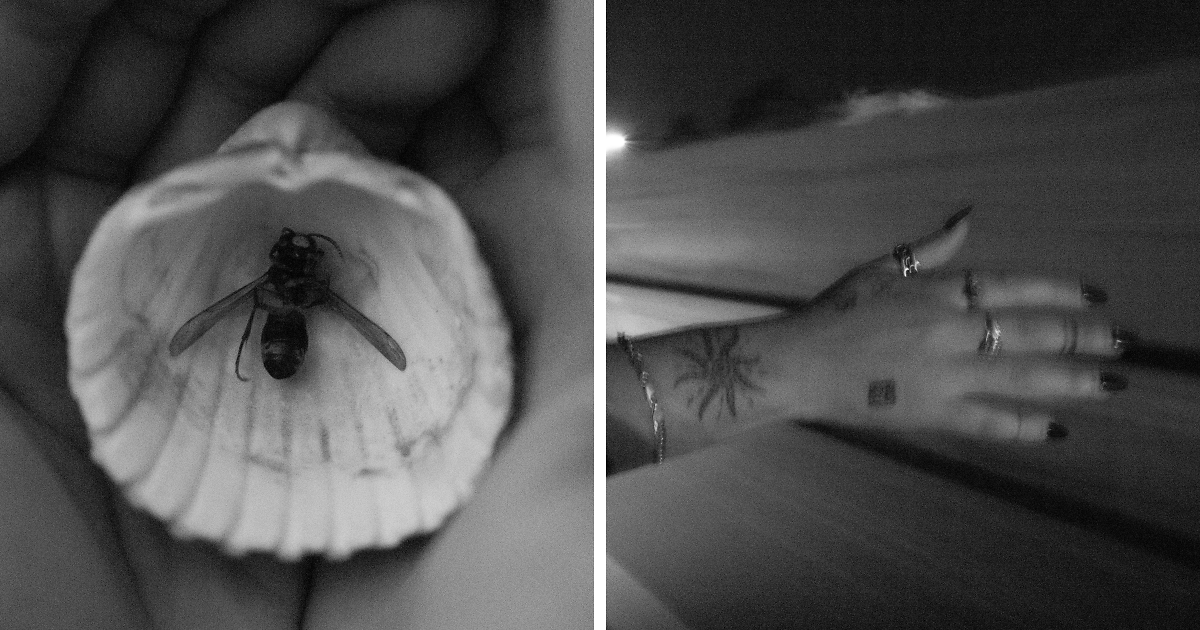
Some photographs are polished until they gleam. Others arrive scratched, grainy, half-swallowed by darknessand somehow tell the truth more honestly.
That is the emotional force behind Residual Noise, a black-and-white photography project by fine art photographer William Josephs Radford. Created after the death of his father from a brain tumor, the series uses extreme ISO settings, visual static, deep shadow, and rough digital grain to reflect memory loss, absence, and the strange emotional interference that follows grief.
It is not the kind of work that asks viewers to admire a perfectly sharp portrait and move along. It asks them to sit in the uncertainty. To stare at the noise. To recognize that sometimes a face can still be visible while the person you love seems to be drifting farther away.
There is something almost cruelly appropriate about using high ISO photography to explore fading memory. In technical terms, raising ISO helps a camera see in low light. In emotional terms, it creates grain, texture, and visual disruption. The image gets louder while the subject seems quieter. That contradiction becomes the heart of the project.
And perhaps that is what grief often feels like: the world becomes unbearably loud just as the person you need most becomes difficult to reach.
When Photography Becomes a Language for Grief
Photography has always been a way to stop time for a second. A birthday candle stays lit. A child remains small. A father keeps laughing in the backyard long after the lawn mower has rusted away.
But grief photography is different. It does not simply preserve a happy moment. It often tries to preserve a relationship while that relationship is changing in real time.
In Radford’s project, the camera does not attempt to make loss look pretty. It does not wrap illness in soft focus and inspirational sunlight, as though every difficult experience must resemble a greeting card written by a motivational toaster. Instead, the visual noise becomes part of the story.
The grain suggests interruption. The blown-out highlights suggest memory slipping out of reach. The darkness suggests the parts of a person’s experience that family members cannot fully enter, no matter how much they love them.
That approach matters because serious illness can alter far more than physical health. Brain tumors, treatment effects, medication changes, fatigue, and other medical factors can affect memory, attention, speech, concentration, and personality. A loved one may still be physically present while their communication, confidence, or sense of orientation changes dramatically.
For families, that can feel like losing someone in small installments. One forgotten name. One abandoned sentence. One familiar story that suddenly ends in the middle because the road back has disappeared.
Photography cannot fix that. It cannot restore a memory, reverse illness, or make a hospital room feel less frightening. But it can bear witness.
Why Max ISO Was the Perfect Creative Choice
In photography, ISO controls how sensitive the camera sensor is to light. A lower ISO usually produces a cleaner image. A higher ISO allows photographers to work in dark environments, but it also introduces digital grain or noise.
Normally, photographers try to avoid that noise. They buy faster lenses, add lighting, steady the camera, and spend a suspicious amount of time discussing sensor performance with the seriousness of people planning a moon landing.
But in Residual Noise, the noise is not a flaw. It is the visual metaphor.
Grain as Memory Loss
The roughness in the images mirrors the imperfect way memory behaves during illness and grief. Memories are rarely stored like neat folders on a hard drive. They are unstable, emotional, selective, and occasionally absurd.
You may forget the exact date of a hospital visit but remember the sound of a vending machine in the hallway. You may not remember what someone said, yet recall the way they held a spoon, adjusted a blanket, or stared at a window for a few seconds too long.
High ISO grain resembles that experience. The image remains visible, but it is interrupted by static. The subject is present, but not fully reachable. The details are there, yet they seem to tremble.
Darkness as Emotional Space
Low-light photography is not only about darkness. It is about what darkness allows the viewer to imagine.
In a brightly lit portrait, every detail can feel certain. In a dark, grainy image, certainty starts to dissolve. Viewers must work harder. They fill in missing information. They wonder what exists beyond the frame.
That is exactly what many families experience while caring for someone whose cognition, language, or personality is changing. They become interpreters. They search expressions for clues. They learn to read pauses, gestures, and silence.
The camera becomes less like a surveillance device and more like a listening device.
A Father Is Not a Symbol
The strongest part of this kind of work is also the most delicate: the subject is not merely “a man with memory loss.” He is a father.
That distinction changes everything.
When illness enters a family, there is a risk that the person at the center of it becomes reduced to symptoms, medications, appointment schedules, or a series of before-and-after comparisons. Families may begin speaking about someone rather than with them. Visitors may look nervous, as though ordinary conversation has become a high-stakes game show with no prize money and terrible lighting.
But people experiencing cognitive changes are still people. They may communicate differently, need more time, or lose certain abilities, yet they remain deserving of dignity, inclusion, humor, affection, and respect.
That is why intimate photography requires restraint. The image should not steal from the subject. It should not turn vulnerability into spectacle. It should ask: “What does this photograph protect?”
In the best family photography, the answer is simple: it protects the personhood of the person in the frame.
A photograph of a father near the end of life should not exist merely because pain is visually powerful. It should exist because love is powerful too.
The Ethics of Photographing Illness and Decline
Photographing a loved one during serious illness is deeply personal. It can be meaningful, healing, difficult, or all three before breakfast.
There is no universal rule that says families should document the experience. Some people find the camera comforting. Others feel that it creates distance. Some want images of the final months. Others would rather remember voices, hands, routines, and stories.
The important question is not whether photography is appropriate in general. The important question is whether it is respectful in that specific moment.
Ask for Consent Whenever Possible
If the person can understand and respond, ask before taking the photograph. Keep the request simple. Explain what you are doing. Respect hesitation.
If communication is limited, families should think carefully about dignity and privacy. A photograph may be meaningful for private remembrance but inappropriate for public sharing. Not every intimate moment needs an audience. Some memories deserve to remain in the family archive, away from algorithms, comments, and strangers who type “sending prayers” between scrolling past cat videos.
Photograph the Life Around the Illness
Sometimes the most powerful photographs are not medical at all.
A pair of shoes by the door. A favorite chair. A half-finished puzzle. A hand resting on a blanket. A forgotten cup of tea cooling on a table. A window at dusk.
These details can hold an entire relationship.
They also avoid reducing a loved one to illness. The point is not to document every difficult moment. The point is to notice the life that still exists inside the difficult moment.
Memory Loss Does Not Always Look the Same
One reason projects like Residual Noise resonate is that memory loss is rarely neat or predictable. It may involve confusion, word-finding trouble, changes in focus, emotional shifts, fatigue, or moments when someone seems completely themselves again.
Those moments can be bittersweet.
A father may suddenly remember a childhood nickname, tell an old joke with perfect timing, or complain about the temperature in a tone so familiar that everyone in the room laughs through tears. Then, minutes later, he may struggle to follow the conversation.
That emotional whiplash is part of caregiving and anticipatory grief. Families often grieve before death because they are already adapting to changes in the person they love. The process is not linear. It can include sadness, anger, guilt, relief, tenderness, exhaustion, and the occasional irrational desire to throw a clipboard across a waiting room.
None of those feelings automatically mean someone is doing caregiving wrong. They often mean they are human and under enormous pressure.
Why Imperfect Images Can Feel More Honest
Modern photography often celebrates technical perfection. Sharp eyes. Smooth skin. Controlled light. Clean backgrounds. The kind of image that makes real life look as though it has been politely asked to leave.
But grief does not arrive in perfect lighting.
It comes during sleepless nights, quiet hallways, dim bedrooms, hospital parking lots, and early mornings when the coffee tastes like cardboard but you drink it anyway because adulthood is apparently an endurance sport.
That is why imperfect photographs can feel more emotionally accurate than flawless ones.
Noise, blur, shadow, and distortion remind viewers that memory itself is imperfect. They suggest that the photographer is not standing outside the experience with complete control. They are inside ituncertain, frightened, loving, and trying to hold on.
In Residual Noise, the visual interference does not weaken the images. It gives them emotional weather.
What This Project Teaches About Love and Loss
The deepest lesson of this work is not about ISO settings. It is about attention.
When someone is fading, the instinct is often to search for the person they used to be. Families look for the old voice, the old habits, the old certainty. That longing is understandable. But sometimes love also means learning to meet the person where they are now.
Maybe they cannot tell the story the same way. Maybe they cannot remember the names of every grandchild. Maybe they cannot explain what they need. But they may still recognize comfort. They may still respond to music, touch, familiar voices, familiar rooms, and simple companionship.
Photography can support that attention when it is used gently. A camera can become a way of noticing rather than controlling. It can remind the photographer to slow down, observe, and honor the ordinary details that would otherwise disappear.
In that sense, the image is not just about death. It is about presence.
It says: you were here. I saw you. I did not look away.
Extended Reflection: What Families Often Experience When a Parent Begins to Fade
There is a peculiar kind of heartbreak that happens when your parent is still alive, still breathing, still sitting across the roomand yet parts of the familiar relationship begin to change.
At first, the signs may look small. A repeated question. A forgotten appointment. A story told twice in one afternoon. You might laugh it off because everyone forgets things, and because denial is often the cheapest form of emotional insurance.
Then the changes become harder to ignore.
A parent who once handled every detail of family life may need help sorting mail. Someone who could fix anything with a screwdriver and a muttered complaint may suddenly struggle with a television remote. A person who once remembered every birthday may look at a calendar as though it is written in an ancient language.
Families often become accidental archivists. They save voicemails. They photograph hands. They keep recipes written in familiar handwriting. They hold onto old jackets because the fabric still smells faintly like home.
These habits are not silly. They are part of how people build continuity when life feels fragmented.
For some, taking photographs becomes a quiet ritual. Not a dramatic documentary project. Not an attempt to make suffering beautiful. Just a way to remember.
A picture of Dad asleep in his chair. A blurry image of him smiling at a grandchild. His favorite mug sitting near the sink. The view from the window where he spent long afternoons watching birds, neighbors, or absolutely nothing in particular.
Years later, those images may matter because they capture what memory cannot preserve perfectly: scale, texture, posture, light, atmosphere.
They show how someone occupied a room.
They remind us that a person’s life was not only the crisis at the end. It was also the chair, the mug, the jokes, the routine, the stubbornness, the terrible taste in television, the way they said your name when they were proud of you.
That is why photography and grief belong together so naturally. Both are attempts to hold what cannot be held.
The photograph will never be the person. It cannot answer back. It cannot laugh at the right moment or complain about the thermostat. But it can become a small doorway.
And sometimes, when grief is especially loud, a small doorway is enough.
Conclusion
Residual Noise shows that high ISO photography can do more than solve a lighting problem. In the hands of a grieving artist, grain becomes memory, darkness becomes distance, and visual static becomes a portrait of a mind slipping beyond easy reach.
Through photographs that refuse perfection, the project captures something more meaningful: the fragile space between remembering and forgetting, presence and absence, father and memory.
It is a reminder that the most powerful images are not always the cleanest ones. Sometimes the noise is exactly where the truth lives.