Some corners of Instagram are built for polished vacations, suspiciously perfect breakfasts, and people pretending they casually woke up beside an infinity pool. Then there are animal photography pagesplaces where a cat becomes a traffic symbol, a fox confidently takes an escalator, and a rhinoceros appears to have personally ordered a rainbow.
TDM Magazine’s Instagram collection celebrates animals without forcing them into one tidy category. Its posts move between wildlife photography, street scenes, affectionate human-animal relationships, visual coincidences, and moments of pure four-legged nonsense. One image may feel like a documentary photograph; the next looks like the opening scene of a sitcom written by dogs.
The appeal is not simply that the animals are cute. These pictures capture personality, timing, atmosphere, and connection. They remind us that animals are not background decorations. They are active participants in the worldwatching, improvising, helping, hiding, traveling, and occasionally ruining a photographer’s carefully planned composition in the most delightful way possible.
Original collection and photo details verified through TDM Magazine coverage and the published selection.
Why Wholesome Animal Photos Are So Hard to Resist
Humans are unusually responsive to faces, especially faces with large eyes, rounded features, and expressions that resemble curiosity or vulnerability. Those characteristics can trigger the affectionate “aww” reaction commonly associated with babies and young animals. A slightly confused puppy or wide-eyed kitten does not need a clever caption; its face has already completed the marketing campaign.
Research on cute animal imagery suggests that viewing it may do more than create a pleasant distraction. Studies have associated cute images with improved attention to detail and more careful behavior. Research on online cat videos has also found increases in positive emotion and energy among viewers. This does not mean scrolling through puppies can replace sleep, exercise, or professional mental health care, but it may explain why a brief animal-photo break feels more refreshing than reading another argument between strangers online.
Research basis for mood, energy, attention, and careful behavior.
Perfect Timing Creates Instant Comedy
Many funny animal photos rely on a fraction of a second. A bird lands on another bird. A dog’s ears catch the wind. A cat aligns with a painted symbol. The photographer does not invent the joke; the photographer simply notices it before reality changes its mind.
We Recognize Familiar Emotions
Animal expressions often appear strikingly human, even when our interpretation is not scientifically precise. A dog behind a rain-covered window looks disappointed. A salon dog appears exhausted by beauty standards. A cat peeking through cardboard seems prepared to reject an unexpected visitor. We naturally create a story around the pose.
However, responsible viewers should avoid assuming every flattened ear, open mouth, or frozen posture means happiness. Dogs and cats communicate stress, curiosity, fear, relaxation, and excitement through combinations of posture, eyes, ears, tails, and movement. A funny caption should never matter more than the animal’s comfort.
Animal body-language guidance synthesized from veterinary and canine behavior resources.
40 Hilarious and Wholesome Animal Photos Worth Celebrating
The following selections highlight the range of the collection, from intimate street photography to spectacular wildlife encounters. No elaborate costumes or talking-animal scripts are required. Nature has apparently maintained its own comedy department for years.
-
1. The Bird Wing That Became a Sunlit Sculpture
Jan Wegener captured a bird’s wing in silhouette against bright sunlight. Every feather becomes visible, transforming an ordinary movement into something architectural and almost celestial.
-
2. A Child Resting Beside a White Reindeer
Hamid Sardar’s tender image shows a child leaning against a reindeer. The scene communicates trust without requiring a single staged smile or sentimental slogan.
-
3. The Cat Who Became Public Transportation
Lee Harris photographed a black cat stretched across a painted bicycle symbol. The cat appears to have interpreted the lane marking as a personalized parking space.
-
4. Giraffes Watching an Extremely Low-Flying Bird
Graeme Guy aligned two giraffes with a small airplane in the background. The result looks like the giraffes are calmly evaluating aviation technology between snacks.
-
5. A Roadside Greeting Between a Driver and a Cat
Akbar Mehrinezhad captured a man reaching from a blue truck toward a standing cat. It feels like a regular appointment between two old neighborhood friends.
-
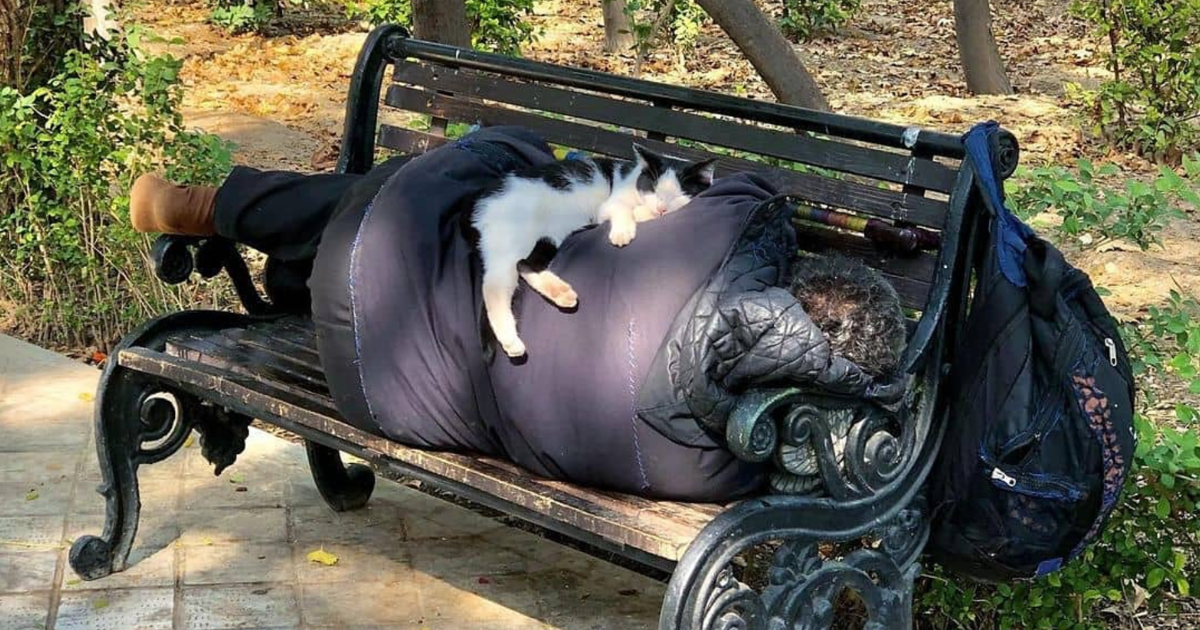
6. The Cat Using a Human as a Heated Mattress
In Kavehali’s photograph, a cat rests on the back of someone lying across a park bench. The human is relaxing; the cat has upgraded the furniture.
-
7. A Rhinoceros Resting Beneath a Rainbow
Ami Vitale photographed a rhino on green grass with a rainbow overhead. The contrast between powerful animal and delicate sky makes the scene feel quietly miraculous.
-
8. Two Cats Sharing a Transparent Umbrella
Richard Lera’s rainy-day scene features two cats sheltered beneath a clear umbrella. It resembles a romantic movie poster, only with fewer misunderstandings and more whiskers.
-
9. The Garden’s Unexpected Cat Crop
A cat’s head emerges through plastic garden covering in an image credited to Doggo Taxi. Apparently, someone planted catnip and received the deluxe harvest.
-
10. A Bird Guarding Classified Information
Scott Sessions photographed a close-up bird whose alert posture suggests it knows something important but has been instructed not to discuss it with the press.
-
11. The Factory Supervisor With Whiskers
Akbar Mehrinezhad’s tabby cat stands confidently in an industrial environment. Its expression suggests production is behind schedule and somebody is about to lose treat privileges.
-
12. A Cow Giving a Goat a Snowy Kiss
At Togawa Farm, a cow gently licks a white goat in a winter landscape. The image is affectionate, funny, and warmer than the surrounding temperature.
-
13. The Puppy Who Refused to Be Left Behind
A small puppy clings to a child’s leg near a scooter. It is the physical embodiment of “Where are we going, and why was I not consulted?”
-
14. A Tiny Kitten Casting a Giant Shadow
Hannie Vanbreda photographed a black kitten whose shadow looks dramatically larger. The kitten may weigh only a few pounds, but its internal self-image is clearly tiger-sized.
-
15. The Cat Behind Distorting Glass
TDM Magazine’s textured-glass portrait stretches a cat’s face into a surreal expression. It looks like a feline video call conducted through extremely unreliable internet.
-
16. A White Cat Melting Into a Blue Mural
Devaraj K. captured a white cat beside a painted blue wall. The colors and positioning make the animal seem to walk between reality and illustration.
-
17. A Camel and a Very Busy Dung Beetle
Sam Rowley photographed a resting camel while a dung beetle rolls its prize nearby. One animal is taking a break; the other has ignored every work-life-balance seminar.
-
18. Three Birds Holding a Branch Meeting
Jacek Stankiewicz captured three small birds arranged like coworkers discussing office gossip. One appears to speak while the others reconsider attending the meeting.
-
19. The Cat Album Cover Nobody Requested
Another Akbar Mehrinezhad portrait features a wide-eyed cat in dramatic composition. It could easily become the cover of an experimental rock album titled “Where Is Dinner?”
-
20. An Elderly Man Sharing Food With a Cat
CS Studio Photo documented a man feeding a cat beside a stone wall. Small acts of kindness often create the strongest photographs because nothing in them needs exaggeration.
-
21. A Dog Waiting Beside a “Free Bones” Sign
John Mary’s black-and-white image places a dog near a butcher shop advertising free bones. Few customers have ever understood a promotional offer more completely.
-
22. The Largest Black-Cat Audition imaginable
Ralph Crane photographed a remarkable 1961 casting call in which rows of black cats waited with their handlers. Hollywood has rarely assembled so much concentrated judgment.
-
23. A Golden Retriever Discovering Aerodynamics
In an image credited to WeRateDogs, a puppy enjoys the breeze with both ears flying. The dog looks joyful, surprised, and briefly capable of commercial aviation.
-
24. The Face-Licking Reunion
Pawsh Magazine shared a warm image of an older man smiling as a small dog licks his face. Personal boundaries have left the room, but happiness remains.
-
25. A Cat Calmly Observing Urban Chaos
Sam Felix photographed a cat on a windowsill with smoke rising over the city. The cat’s stillness gives the scene the mood of a tiny, furry philosopher.
-
26. The Puppy Losing at Hide-and-Seek
Pure Street Photography captured a puppy peeking over a barrier with its paws barely visible. The hiding place is terrible, but the enthusiasm deserves full marks.
-
27. A Fox Taking the Escalator
Sam Rodgers photographed a fox descending through a modern glass building. It looks completely confident, as though it has an appointment upstairs and validated parking.
-
28. The Cardboard Customer-Service Window
Jim Lasouille’s cat peers through a hole in cardboard with a deeply suspicious expression. Visitors are welcome, provided they state their business and present snacks.
-
29. A Dog Surviving a Day at the Salon
John Drysdale photographed a dog wearing hair curlers beneath a dryer between two women. The dog’s side-eye deserves its own lifetime achievement award.
-
30. The Seagull That Chose Premium Air Travel
Markus Varesvuo captured a gull apparently riding on an eagle’s back in flight. Why flap your own wings when an upgraded seat becomes available?
-
31. The Dog Photobombing a Child’s Portrait
Claudia Cabrero Málaga photographed a child near a wall while a dog peeks from behind. The animal contributes exactly the right amount of unexpected comedy.
-
32. Two Beach Dogs Creating an Optical Illusion
Street by Aman photographed two dogs aligned so neatly that one appears to ride on the other. The beach has apparently introduced canine public transit.
-
33. A Rainy Car Window and One Melancholy Dog
Marius Martinaitis captured a small dog behind rain-speckled glass. The scene looks like a music video for a ballad about an empty food bowl.
-
34. A Stray Dog Sitting Alone in the Rain
Roshani Shah’s photograph is more moving than funny. It reminds viewers that compassionate animal photography should encourage awareness, not turn suffering into decorative content.
-
35. A Child Holding a Puppy Close
Gosia Trzaskoś photographed a child cradling a puppy in front of a plain wall. The simple setting keeps every ounce of attention on their connection.
-
36. A Dog Scratching While a Bird Watches
Divyanshu Verma captured a dog tending to an itch beside a perched bird. The bird appears to be observing with the concern of an unqualified medical consultant.
-
37. Two Men Wearing Fish as Questionable Hats
Luis Marden’s image shows two men balancing large fish on their heads. Fashion evolves constantly, although certain trends should remain safely inside a photograph.
-
38. The Orangutan-Human Visual Mix-Up
An image credited to Doggo Taxi uses perspective to align an orangutan’s face with a person’s body. The resulting illusion is confusing in the best possible way.
-
39. A Man Carrying an Enormous Fish Through the Street
Ara Güler photographed a man carrying a fish over his shoulders on a cobblestone road. The scene has the weight and mystery of a forgotten folktale.
-
40. A Bird of Prey Carrying Its Catch
The final image shows a raptor flying with a small animal in its talons. It is not cuddly, but it honestly represents nature, where survival does not follow social-media themes.
Great Animal Photography Must Also Be Ethical
The funniest photograph is not worth frightening, baiting, trapping, chasing, or exhausting an animal. Reputable wildlife photography guidelines consistently place the subject’s welfare above the photographer’s desire for a dramatic frame. Telephoto lenses, patience, quiet movement, and respectful distance allow natural behavior to unfold without interference.
Photographers should be especially cautious around nests, young animals, feeding sites, and resting wildlife. If an animal repeatedly looks toward the camera, retreats, stops eating, changes direction, or becomes agitated, the photographer may already be too close. National parks also maintain specific viewing distances because an apparently calm animal can still be stressed or dangerous.
Ethical photography and wildlife-distance guidance.
Pet photography deserves the same care. Costumes, props, poses, and repeated takes may look harmless to viewers, but the animal should be free to disengage. Ethical creators watch body language, keep sessions short, avoid punishment, and never manufacture fear for a supposedly funny reaction.
Responsible pages should also credit photographers accurately and provide context when an image involves rescue, wildlife conflict, or visible distress. Animal images can influence how audiences think about species and conservation. A powerful photograph may inspire empathy, but misleading captions and staged encounters can promote unsafe or exploitative behavior.
Image ethics, humane portrayal, and the influence of animal imagery.
The Experience of Spending Time With Wholesome Animal Photography
Opening an animal-photo page after a difficult day creates a surprisingly specific experience. At first, the scrolling is almost automatic. You expect a few cute dogs, perhaps a cat sitting inside an object that was clearly not designed for cats. Then a photograph interrupts the routine: an elderly man sharing food with a street cat, a child leaning peacefully against a reindeer, or a rhino resting beneath a rainbow. The feed stops feeling like disposable entertainment and begins to feel like a collection of small encounters.
Humor is usually the doorway. A fox on an escalator is funny because it places a wild animal inside a highly organized human system. The fox does not look confused; it looks more competent than many commuters. A dog beneath a salon dryer is amusing because we recognize the social ritual and project a personality onto the animal’s expression. These visual jokes arrive immediately, without setup, translation, or knowledge of current events.
The wholesome images work more slowly. A person feeding a cat beside an old wall may not produce an instant laugh, but it invites the viewer to imagine everything outside the frame. Is this a daily routine? Does the cat wait there each morning? Does the man bring food specifically for it? The uncertainty becomes part of the photograph. Viewers do not simply observe a relationship; they mentally continue it.
After seeing dozens of pictures, many people begin paying closer attention to animals in their own surroundings. The pigeon outside the office window is no longer just “a pigeon.” It is arranging its feathers, negotiating with another pigeon, or staring through the glass like a building inspector. A neighborhood dog leaning from a car window becomes a possible photograph rather than background scenery. Good animal photography trains attention by showing how much character exists in ordinary moments.
Trying to create similar pictures introduces another lesson: animals do not follow creative direction. A cat will leave when the lighting becomes perfect. A puppy will examine the camera at extremely close range, producing twelve photographs of a wet nose. Birds will remain motionless until the precise second the photographer changes a setting. The experience rewards patience, observation, and the ability to accept that the best image may be completely different from the one originally planned.
It also encourages a healthier relationship with photography. Instead of forcing a pose, the photographer can watch quietly and wait for natural behavior. A dog shaking rain from its coat, two birds facing opposite directions, or a cat occupying a painted bicycle lane may become memorable because nobody tried to make it happen. The moment feels alive rather than manufactured.
Sharing animal photos can create easy social connection as well. People who disagree about movies, politics, sports, and the correct way to load a dishwasher may still unite around a puppy with windblown ears. The comment section becomes a collaborative storytelling space where viewers invent dialogue, compare pets, and share similar experiences. At its best, this interaction is playful rather than competitive.
There is one important limit to the experience: viewers should not confuse emotional impact with proof that every situation is harmless. A frightened animal can look “dramatic,” and a stressed pet can be misread as funny. The most rewarding way to enjoy these pages is to keep both delight and curiosity active. Laugh at the timing, appreciate the photographer, notice the setting, and consider what the animal may actually be communicating.
That balance is what makes a thoughtful animal collection memorable. It offers comfort without pretending nature is always gentle, humor without requiring cruelty, and beauty without removing the animal’s individuality. You arrive for a cat in the wrong place and leave noticing the living world a little more carefully.
Conclusion: The Internet Is Better With More Animals in It
TDM Magazine’s animal-photo collection succeeds because it does not depend on one formula. Some pictures are visually elegant, some are hilarious accidents, and others document quiet relationships between animals and people. Together, they show how photography can transform a second of real life into a story shared by thousands of strangers.
The best wholesome animal photos make us laugh without humiliating their subjects, feel empathy without relying on manipulation, and appreciate wildlife without treating it like a prop. They remind us to look more closely, wait more patiently, and perhaps forgive the cat for lying across the keyboard again. The cat has important editorial responsibilities.