Note: This article is for educational purposes only and should not be treated as personalized investment advice.
The stock market has a personality. Most of the time, it behaves like an ambitious golden retriever chasing a tennis ball uphill: enthusiastic, energetic, and surprisingly persistent. Over long periods, the U.S. stock market has usually gone up. Companies grow. Profits rise. Innovation creates new industries. Retirement accounts quietly compound while everyone is busy arguing about coffee prices, interest rates, and whether artificial intelligence is coming for the office printer.
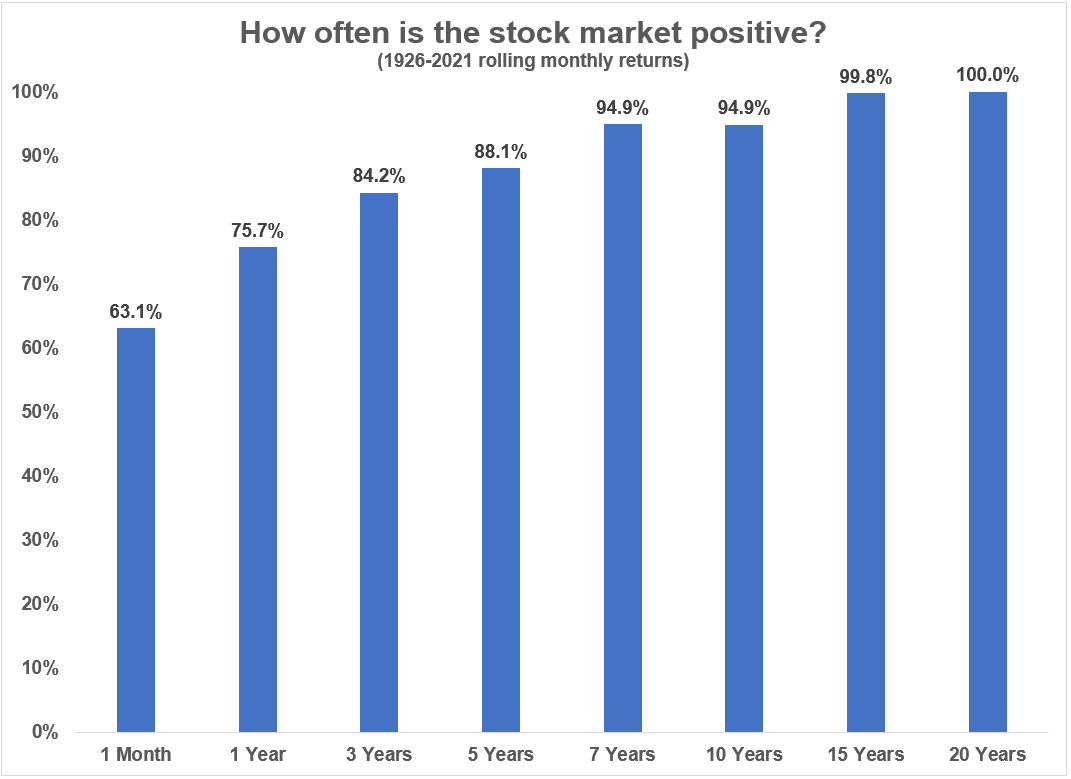
But the market also has moods. Sometimes it trips over its own shoelaces. Sometimes it panics because inflation is hot, interest rates are rising, banks are wobbling, oil prices are jumping, or investors suddenly remember that stocks do not travel in a straight line. That is why the phrase “the stock market usually goes up” needs its equally important twin: “but sometimes it goes down.”
Understanding both sides of that sentence is one of the most useful lessons in long-term investing. It helps investors avoid two classic mistakes: believing every rally will last forever and believing every downturn is the end of civilization with better chart graphics.
Why the Stock Market Usually Goes Up Over Time
The stock market represents ownership in real businesses. When investors buy a broad market fund that tracks an index such as the S&P 500, they are not buying a mysterious glowing number on a screen. They are buying small ownership pieces of companies that sell software, medical devices, hamburgers, cloud storage, insurance, tractors, sneakers, payment networks, and thousands of other products and services.
Over time, successful companies tend to increase revenue, improve productivity, expand into new markets, and return money to shareholders through dividends or share repurchases. Some companies fail, of course. Others shrink into corporate trivia questions. But broad stock indexes naturally refresh themselves. Weaker companies may fall out, stronger companies may enter, and the index evolves with the economy.
This is one reason the long-term stock market trend has historically been upward. The U.S. economy has expanded through wars, recessions, oil shocks, inflation scares, banking crises, technology bubbles, and more “this changes everything” headlines than anyone can count. In the background, businesses kept adapting. Investors who owned diversified portfolios and stayed patient often benefited from that growth.
The Long-Term Average Is ComfortingBut Also Misleading
Many investors have heard that the U.S. stock market has historically returned around 10% per year before inflation, using the S&P 500 as a common reference point. That number is useful, but it can also create unrealistic expectations. The market almost never delivers a neat 10% return in a given year and then politely clocks out.
Actual annual returns are messy. One year may bring a 25% gain. Another may bring a 19% loss. A third may do almost nothing, which somehow feels more annoying than both. The average return is like the average temperature for a whole year: technically true, but not what you should wear outside today.
For example, a long-term investor may see powerful gains during bull markets and sharp losses during bear markets. The average smooths the journey, but real portfolios experience the bumps. That is why successful investing is not just a math problem. It is also a behavior problem.
Markets Go Down More Often Than People Like to Admit
Stock market declines are not rare accidents. They are part of the system. A pullback of 5% can happen for almost any reason. A correction, usually defined as a decline of 10% or more, is also fairly normal. A bear market, typically a drop of 20% or more, is less frequent but still part of investing history.
One of the most helpful pieces of market perspective is that stocks can fall significantly within a year and still finish the year positive. Historical market data show that the S&P 500 has often suffered notable intra-year declines even during years when the final calendar-year return was positive. In plain English: the market can scare you in March, insult you in June, and still send you a nice holiday card in December.
This matters because many investors confuse volatility with failure. A falling market does not automatically mean the long-term case for stocks is broken. Sometimes prices drop because investors are adjusting expectations. Sometimes they are reacting to temporary uncertainty. Sometimes they are simply being dramatic, because markets are run by humans, algorithms built by humans, and humans who swear they are not emotional while checking their brokerage app six times before lunch.
Why the Market Sometimes Goes Down
Stocks go down when investors collectively decide that future profits may be lower, risk may be higher, or the price they were willing to pay yesterday suddenly looks too generous. The trigger can come from many directions.
Interest Rates
Interest rates play a huge role in stock valuation. When rates rise, bonds and cash-like investments may become more attractive. Higher rates can also make borrowing more expensive for companies and consumers. That can pressure profits and slow economic activity. Growth stocks, which depend heavily on future earnings, can be especially sensitive to rate changes.
Inflation
Inflation can squeeze consumers and businesses. If costs rise faster than wages or revenue, profit margins may shrink. Central banks may respond by raising rates, which can add another challenge for stocks. Investors may then lower the prices they are willing to pay for future earnings.
Recessions
During recessions, corporate earnings often decline. Consumers spend less, companies delay investments, and unemployment may rise. Stock prices usually react before the economic data looks truly terrible, which is why markets can feel strangely psychic and occasionally unhinged.
Speculative Excess
Sometimes stocks fall because they previously went up too far, too fast. Bubbles form when investors stop asking, “What is this worth?” and start asking, “How rich will I be by Thursday?” The dot-com bubble and parts of the 2021 speculative boom are reminders that enthusiasm can outrun fundamentals.
Unexpected Shocks
Pandemics, wars, financial crises, geopolitical tensions, supply-chain disruptions, and sudden policy changes can all trigger market declines. Markets dislike uncertainty because uncertainty makes future cash flows harder to estimate. When investors cannot estimate calmly, they often sell first and ask smarter questions later.
The Difference Between Temporary Loss and Permanent Loss
A temporary market decline is painful, but it is not always a permanent loss. If an investor owns a diversified portfolio and does not sell during a downturn, the portfolio may recover when markets improve. A permanent loss is different. It can happen when an investor sells in panic, owns a concentrated position in a company that never recovers, uses too much leverage, or invests money needed in the near future.
This distinction is critical. A broad market index falling 20% is unpleasant. Selling after that decline and missing the recovery can be far worse. The market’s long-term upward trend benefits investors who are still around to capture it. Patience is not glamorous, but neither is panic-selling at the bottom and then explaining it at Thanksgiving.
Why Time Horizon Changes Everything
Stocks are risky in the short run because prices can swing wildly. Over days, weeks, or months, the market is influenced by headlines, sentiment, liquidity, economic reports, and investor positioning. Over decades, business growth, earnings, innovation, and productivity matter more.
This is why time horizon is one of the most important concepts in investing. Money needed next month, next semester, or next year generally should not be heavily exposed to stocks. Money intended for retirement several decades away may have more time to recover from downturns and benefit from compounding.
Compounding is the quiet engine of wealth building. When investments earn returns, and those returns earn returns of their own, growth can become powerful over long periods. But compounding needs time. It also needs investors to avoid interrupting it every time the market coughs.
Diversification: The Boring Superpower
Diversification means spreading investments across different companies, sectors, asset classes, and sometimes regions. It does not guarantee profit or prevent losses, but it can reduce the damage caused by any single investment going wrong.
A diversified investor does not need to correctly guess the next winning stock, sector, or trend. Instead, they accept that the future is uncertain and build a portfolio that can survive many possible outcomes. Technology might lead for a decade. Energy might rebound. Healthcare might become defensive. Small companies might outperform. International markets might surprise everyone. Diversification says, “I do not know exactly what will happen, and I am mature enough to admit it.”
The trade-off is that diversification can feel disappointing during speculative booms. When one hot stock doubles, a diversified portfolio may look boring. But boring is underrated. Seatbelts are boring too, right up until they are not.
The Investor’s Biggest Enemy Is Often the Mirror
Market history is full of recoveries, but investor behavior often turns normal volatility into poor results. People tend to buy after prices have risen and confidence is high. They tend to sell after prices have fallen and fear is loud. That pattern feels natural, but it is often harmful.
Good investing usually requires doing things that feel emotionally uncomfortable. Rebalancing may mean selling a little of what has recently done well and buying what has lagged. Staying invested during a downturn may feel wrong even when it is reasonable. Continuing regular contributions during a bear market may feel like throwing money into a storm, even though lower prices can improve long-term expected returns.
The goal is not to become emotionless. That is unrealistic unless you are a spreadsheet wearing shoes. The goal is to create a plan before emotions are in charge. A written investment policy, automatic contributions, appropriate asset allocation, and a cash reserve can all reduce the chance of making dramatic decisions at exactly the wrong time.
Dollar-Cost Averaging and the Beauty of Not Knowing
Dollar-cost averaging means investing a fixed amount on a regular schedule, regardless of market conditions. This strategy does not guarantee better returns than investing a lump sum, especially when markets rise over time. But it can help investors build discipline and reduce the stress of trying to pick the perfect entry point.
When prices are high, the fixed contribution buys fewer shares. When prices are low, it buys more shares. Over time, this can turn volatility from an enemy into a tool. The investor no longer needs to ask, “Is now the perfect time?” The answer is almost always, “Nobody knows, but the schedule says today.”
This approach is especially useful for retirement accounts, where contributions often happen automatically through payroll. Automation removes drama. The market can have a tantrum, but the contribution still happens. That simple habit may be more valuable than reading 47 market predictions from people wearing expensive watches.
What Long-Term Investors Can Learn From Bear Markets
Bear markets are uncomfortable, but they teach useful lessons. First, risk tolerance is not theoretical. Everyone feels brave in a bull market. The real test arrives when an account balance drops and the financial news starts using words like “chaos,” “meltdown,” and “historic uncertainty.”
Second, cash matters. An emergency fund can prevent investors from selling stocks at a bad time to cover ordinary expenses. For retirees or near-retirees, holding safer assets for short-term spending needs can reduce sequence-of-returns risk, which is the danger of suffering major losses early in retirement.
Third, valuation matters. Buying great companies at any price can still lead to poor future returns if expectations are too high. Long-term investors do not need to predict every market move, but they should understand that starting prices influence future returns.
Finally, bear markets remind investors that optimism must be disciplined. The stock market usually goes up over time, but that does not mean every stock is good, every price is fair, or every trend deserves your money.
Specific Examples: The Market’s Habit of Recovering
The 2008 financial crisis was one of the most frightening market periods in modern history. Major financial institutions failed or nearly failed, credit markets froze, and stocks plunged. Investors who sold near the bottom locked in deep losses. Those who remained diversified and patient eventually saw a major recovery in the years that followed.
The 2020 pandemic crash was different. The market fell with stunning speed as the global economy shut down. Then, supported by monetary policy, fiscal stimulus, and investor expectations of recovery, stocks rebounded much faster than many expected. The lesson was not that every crash recovers quickly. The lesson was that the market can move faster than human confidence.
The 2022 downturn offered another lesson. Inflation surged, interest rates rose rapidly, and many growth stocks declined sharply. Investors who had assumed low rates would last forever discovered that “forever” has a funny way of ending. Yet the broader market later recovered as earnings, economic resilience, and enthusiasm for new technologies helped restore confidence.
How to Think About Risk Without Becoming Afraid of It
Risk is not automatically bad. In investing, risk is the price paid for the possibility of higher returns. Cash feels safe because its price does not bounce around much, but cash faces inflation risk. Bonds can provide income and stability, but they can fall when rates rise. Stocks can be volatile, but they have historically offered stronger long-term growth potential.
The question is not whether risk can be eliminated. It cannot. The better question is whether the risks in a portfolio match the investor’s goals, time horizon, and temperament. A young investor saving for retirement may accept more stock exposure. Someone saving for a house down payment in two years may need more stability. A retiree may want a balanced mix that supports withdrawals while still fighting inflation.
Smart investing is not about being fearless. It is about being prepared.
Practical Habits for Staying Invested
Long-term investors can improve their odds by focusing on habits rather than predictions. A few practical habits stand out.
First, define the purpose of each dollar. Emergency money, short-term savings, and long-term investments should not all live in the same risk bucket. Second, use broad diversification to avoid depending on one company or sector. Third, keep costs low, because fees reduce returns quietly and relentlessly. Fourth, rebalance periodically so the portfolio does not drift into a risk level that no longer fits.
Fifth, ignore most short-term noise. Not all news is actionable. In fact, much of it is entertainment wearing a necktie. A good investor does not need to respond to every market prediction, every scary headline, or every confident stranger on the internet explaining why “this time is different.” Sometimes it is different. Usually, human behavior is the same with faster Wi-Fi.
Experiences and Reflections: Living With a Market That Usually Goes Up but Sometimes Goes Down
Anyone who has followed the stock market for more than a few months learns that the hardest part is not understanding the chart. It is living through the chart. On paper, long-term investing sounds simple: buy diversified assets, keep adding money, stay patient, and let compounding work. In real life, the market makes that plan feel ridiculous at least once a year.
Imagine an investor who starts contributing to a retirement account during a strong bull market. At first, everything feels easy. Each monthly statement looks better than the last. Financial podcasts sound wise. Index funds feel magical. The investor starts mentally spending future gains on a beach house, even though the account balance would currently buy one nice beach chair.
Then the market drops. At first, it is only a small decline. No problem. Long-term mindset. Very mature. Then the decline deepens. Suddenly the same investor who claimed to love lower prices is wondering whether the entire global economy has been assembled with duct tape. The urge to “just wait until things calm down” becomes powerful.
This is where experience matters. Investors who have lived through downturns begin to recognize the emotional pattern. Fear usually arrives with a convincing story. In 2008, the story was the banking system. In 2020, it was a pandemic. In 2022, it was inflation and interest rates. In future downturns, the story will be different, but the feeling will be familiar.
One helpful experience is learning that market declines often look obvious only in hindsight. During the moment, nobody rings a bell at the bottom. The recovery usually begins while the news still looks terrible. By the time everything feels safe again, prices may already be much higher. This is why waiting for emotional comfort can be expensive.
Another useful experience is seeing how automatic investing changes behavior. When contributions happen every month, the investor does not need to negotiate with fear. The plan keeps moving. During downturns, those contributions buy shares at lower prices. During recoveries, the investor already owns them. This does not remove anxiety, but it reduces the need for heroic decision-making.
Experienced investors also learn humility. A person may correctly predict one downturn and then incorrectly predict the next five recoveries. Market timing requires being right twice: when to get out and when to get back in. That sounds simple until emotions, taxes, headlines, and opportunity costs join the meeting.
Perhaps the most valuable lesson is that optimism works best when paired with realism. The stock market usually goes up because businesses, productivity, innovation, and human ambition have powerful long-term force. But it sometimes goes down because expectations become too high, economies slow, credit tightens, or investors panic. Both truths can exist at the same time.
The investor who accepts both truths has an advantage. They are not shocked by volatility. They do not need every year to be positive. They do not treat a bear market as a personal betrayal. They build a portfolio that can survive bad periods and participate in good ones. They understand that wealth is often built not by predicting the future perfectly, but by behaving reasonably while the future unfolds imperfectly.
Conclusion: The Market Rewards Patience, Not Perfection
The stock market usually goes up, but sometimes it goes down. That simple sentence contains almost everything a long-term investor needs to remember. The upward trend reflects business growth, innovation, productivity, and compounding. The downturns reflect uncertainty, changing expectations, recessions, inflation, interest rates, and human emotion.
Successful investors do not need to pretend downturns are fun. They are not. Watching a portfolio fall can feel like seeing a carefully stacked sandwich collapse in slow motion. But downturns are not unusual, and they are not automatically permanent. With diversification, a suitable time horizon, steady contributions, reasonable expectations, and emotional discipline, investors can give themselves a better chance of benefiting from the market’s long-term growth.
The goal is not to avoid every decline. The goal is to build a plan that can survive them.