Outcome-based pricing sounds like the kind of idea that makes everyone in a conference room nod so hard their lanyards swing. Customers only pay when a vendor delivers a measurable result. Vendors get rewarded for real impact instead of selling access, seats, or shiny dashboards that are admired once and then quietly ignored like a treadmill in January. What could possibly go wrong?
Plenty, actually. That is why the real question for outcome-based pricing is not whether it is attractive. It is. The real question is whether it will stick after the pilot programs, investor excitement, procurement enthusiasm, legal review, billing headaches, and “Wait, who decides if this was successful?” meetings have finished chewing on it.
Outcome-based pricing is gaining momentum because artificial intelligence, automation, and data-rich platforms are changing what customers expect from software and services. Businesses no longer want to pay only for access. They want proof. Did the AI agent resolve the ticket? Did the marketing platform generate qualified pipeline? Did the healthcare treatment improve measurable patient outcomes? Did the fraud tool reduce losses? In other words: did the thing do the thing?
That shift could reshape pricing strategy across SaaS, AI products, professional services, healthcare, logistics, cybersecurity, and customer support. But for outcome-based pricing to become more than a fashionable slide in a board deck, it must solve three stubborn problems: defining outcomes clearly, measuring them fairly, and operating the model profitably at scale.
What Is Outcome-Based Pricing?
Outcome-based pricing is a pricing model where the customer pays based on a specific result rather than simple access, usage, or time. Instead of charging per seat, per hour, per license, or per token, the vendor charges when a defined business outcome occurs.
For example, a customer service AI platform might charge only when an AI agent resolves a support issue without human intervention. A sales tool might charge for qualified meetings booked. A recruiting platform might charge when a candidate reaches a certain hiring milestone. A healthcare contract might tie reimbursement to whether a treatment performs as expected in the real world.
This is different from traditional value-based pricing, although the two are cousins who show up to the same family barbecue. Value-based pricing sets price according to the perceived or estimated value a product creates. Outcome-based pricing goes further by tying payment to actual, observable results. Value-based pricing says, “This should be worth a lot to you.” Outcome-based pricing says, “Pay us when it works.”
Why Outcome-Based Pricing Is Having a Moment
The biggest reason outcome-based pricing is suddenly getting attention is simple: AI is making work more measurable. Traditional software helped humans complete tasks. AI agents increasingly complete tasks themselves. That changes the pricing conversation.
AI Turns Software Into Labor-Like Output
For years, SaaS companies loved seat-based subscriptions. More employees using the software meant more seats, more predictable revenue, and happier spreadsheets. But AI complicates that model. If one AI agent can do work that previously required several human users, charging by human seat starts to look awkward. It is like charging admission to an empty theater because the robot already watched the movie for everyone.
AI-native companies are experimenting with usage-based, outcome-based, and hybrid pricing because the value of AI often appears as completed work. A support agent resolves a ticket. A coding assistant generates usable code. A research agent drafts a report. A workflow agent updates records, routes requests, and closes tasks. The more autonomous the tool becomes, the less logical it feels to price it like a passive application.
Buyers Want Proof Before Paying for the Hype
Businesses have spent the last few years being told that AI will change everything, preferably by vendors with very expensive booths and suspiciously comfortable sneakers. Now executives are asking harder questions. Where is the ROI? Which costs went down? Which revenue went up? Which process improved? Can we see the data?
Outcome-based pricing speaks directly to that skepticism. It reduces the fear of paying for unused software or disappointing automation. The customer can say, “Fine, if your product delivers, we will pay.” That makes the model especially appealing in categories where performance is measurable, such as customer support, sales development, advertising, fraud prevention, logistics optimization, and some healthcare treatments.
The Promise: Better Alignment Between Vendor and Customer
At its best, outcome-based pricing aligns incentives beautifully. Customers want results. Vendors get paid for results. Everyone is pulling the rope in the same direction instead of arguing over how many seats, credits, or hours were consumed along the way.
Customers Pay for Wins, Not Attempts
The customer appeal is obvious. Paying for outcomes feels fair. If an AI agent fails to solve a support problem and hands it to a human, the customer should not be charged as if the job was done. If a tool generates a pile of low-quality leads that sales reps avoid like mystery leftovers in the office fridge, the buyer does not want to pay premium rates for “activity.”
Outcome-based pricing offers a cleaner promise: no result, no full payment. That is powerful in markets where buyers are tired of being billed for inputs that may or may not matter.
Vendors Are Rewarded for Real Performance
For vendors, the model can be attractive because it allows them to capture more upside when their product genuinely performs. A strong AI support platform that resolves thousands of tickets can earn more than it might under a flat subscription. A marketing automation company that reliably creates qualified pipeline can command pricing tied to business impact, not just email volume.
It also forces product teams to focus on the outcomes customers actually care about. That can be healthy. When revenue depends on success, vague feature shipping becomes less exciting. Nobody gets a bonus because the dashboard has a new gradient. The product has to deliver.
Real-World Examples Are Already Emerging
Outcome-based pricing is not just a theory floating around LinkedIn wearing a Patagonia vest. It is already visible in several markets, especially AI customer service and healthcare.
Customer Support AI
Customer service is one of the cleanest early examples because outcomes are relatively easy to identify. A customer asks a question. The AI agent answers. The customer does not need more help. The case closes. That is much easier to measure than something fuzzy like “improved brand sentiment,” which sounds important but can quickly become a fog machine with a quarterly invoice.
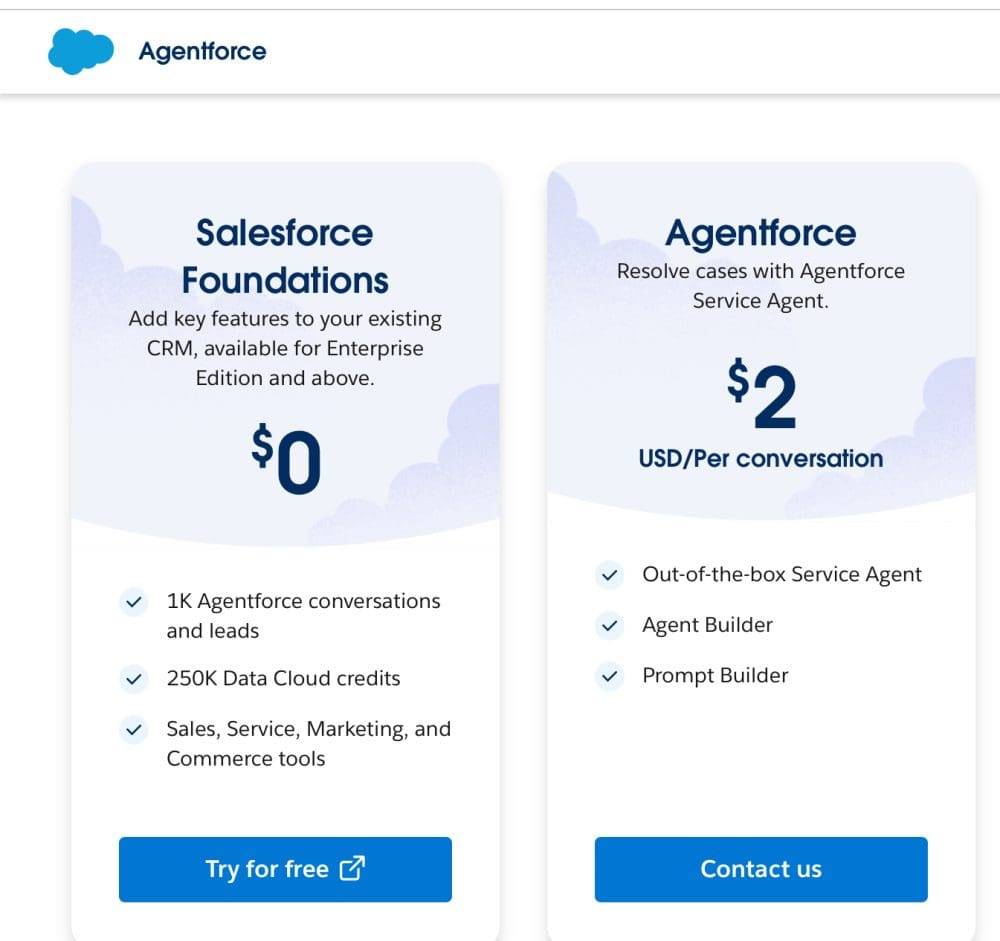
Zendesk has promoted pricing tied to automated resolutions, where customers pay when AI agents resolve interactions autonomously. Intercom’s Fin also uses outcome-oriented pricing, with charges tied to defined successful results such as resolutions or certain completed handoffs. These examples show how outcome-based pricing can work when the task is frequent, digital, and logged in detail.
Agentic AI and Enterprise Software
Enterprise AI platforms are also moving away from pure seat-based models. Some vendors now offer consumption-based pricing through credits, conversations, or action-based units. Not all of these are pure outcome-based pricing, but they point in the same direction: customers want pricing that reflects work performed and value delivered, not just access granted.
This is where hybrid pricing is likely to grow. A vendor may charge a base platform fee plus usage charges, with selected outcome-based fees for high-value automations. That structure gives customers flexibility while helping vendors avoid turning revenue forecasting into a haunted corn maze.
Healthcare and Pharmaceuticals
Healthcare has been experimenting with outcome-linked contracts for years. In pharmaceutical value-based contracts, payment or rebates may be tied to how a drug performs in real-world patient populations. The goal is to reduce uncertainty around high-cost treatments and connect reimbursement more directly to effectiveness.
Healthcare also shows why outcome-based pricing is hard. Clinical outcomes may take months or years to observe. Patient adherence, provider behavior, data quality, insurance design, and differences in population health can all affect results. If a treatment underperforms, is that because the drug failed, the patient stopped taking it, the data was incomplete, or the measurement window was too short? Suddenly, the simple slogan “pay for outcomes” needs a legal appendix the size of a sandwich menu.
Why Outcome-Based Pricing Might Not Stick
The model is promising, but it is not magic. Outcome-based pricing fails when outcomes are vague, attribution is messy, billing is painful, or vendors take on more risk than their margins can survive.
The Definition Problem
The first challenge is defining the outcome. What counts as a resolved support ticket? Is it confirmed by the customer, assumed after inactivity, or verified by a human reviewer? What if the customer returns three days later? What if the AI answered correctly but the customer disliked the policy? What if the issue was solved, but only because a human quietly fixed something in the background?
Every outcome-based model needs a contract-grade definition of success. The definition must be specific enough to bill against, simple enough for customers to understand, and fair enough that neither side feels trapped. That is harder than it sounds.
The Attribution Problem
Outcomes rarely happen in a vacuum. A sales platform may help book meetings, but brand reputation, sales rep follow-up, market conditions, product quality, and pricing all influence whether those meetings turn into revenue. A logistics tool may reduce delivery delays, but weather, warehouse staffing, and carrier performance also matter.
If the vendor cannot control the outcome, taking full pricing risk becomes dangerous. If the customer controls too many variables, the vendor may be punished for problems outside its product. This is why outcome-based pricing works best when the vendor has meaningful control over the result and the measurement path is clean.
The Gaming Problem
Any metric tied to money attracts creative behavior. This is not cynicism; it is business history with a spreadsheet. If vendors are paid per resolved ticket, they may optimize for closing easy tickets or encouraging quick exits. If they are paid per qualified lead, they may stretch the definition of “qualified” until it squeaks. If they are paid for cost savings, they may ignore service quality.
The best outcome-based pricing models include guardrails. Customer satisfaction, quality checks, refund rules, dispute processes, and audit trails matter. Without them, the model can reward shallow wins instead of durable value.
The Revenue Recognition and Billing Problem
Outcome-based pricing can create complex accounting and billing questions. Traditional subscriptions are comparatively simple: the customer pays for access over time. Outcome-based arrangements may involve variable consideration, performance obligations, usage caps, refunds, credits, and delayed confirmation of whether an outcome occurred.
Finance teams must determine when revenue can be recognized, how to forecast it, and how to explain it to investors. Sales teams need quotes customers can understand. Customer success teams need dashboards that prevent billing surprises. Legal teams need contracts that define exceptions. In short, the pricing model may be elegant on stage and sweaty backstage.
The Margin Problem
AI products are not free to deliver. Every query, workflow, model call, data retrieval, evaluation step, and escalation may carry infrastructure costs. If a vendor charges only for successful outcomes but absorbs the cost of all failed attempts, complex customers can become expensive quickly.
This does not mean outcome-based pricing is impossible. It means vendors must model gross margin carefully. They need limits, exclusions, minimum commitments, or hybrid fees that protect the business while preserving customer trust.
Why Outcome-Based Pricing Might Stick Anyway
Despite the headaches, outcome-based pricing has a strong chance of sticking in specific categories because it answers a buyer demand that is not going away: prove the value.
Digital Work Creates Better Measurement
Modern software creates detailed logs. AI agents record actions, conversations, handoffs, timestamps, confidence scores, and resolution paths. That makes it easier to define billable events than it was in older service models. When work happens inside a digital workflow, there is a trail.
That trail can support billing, auditing, quality control, and performance improvement. It also gives customers visibility into what they are paying for. Transparency is the glue that helps outcome-based pricing hold.
Hybrid Models Reduce Risk
The most durable version of outcome-based pricing may not be pure outcome pricing. It may be hybrid pricing. A vendor can charge a platform fee to cover access, implementation, security, and baseline support, then add outcome-based fees for measurable value events.
This structure gives vendors predictable revenue and gives customers value alignment. It also avoids the all-or-nothing problem. A pure outcome model can feel heroic, but heroism is not a revenue plan. Hybrid pricing is less dramatic, which is exactly why it may survive.
Procurement Teams Like Shared Accountability
Outcome-based pricing gives procurement teams a cleaner story. Instead of buying another tool and hoping employees adopt it, the company can tie spend to business impact. That helps justify budgets, renewals, and expansions.
When budgets tighten, vendors that can connect pricing to measurable results may have an advantage. They are not just saying, “Trust us.” They are saying, “Measure us.” That is a stronger position, provided the measurement is credible.
Where Outcome-Based Pricing Works Best
Outcome-based pricing is most likely to stick when five conditions are present.
1. The Outcome Is Frequent
High-frequency outcomes are easier to price and forecast. Customer support resolutions, fraud alerts, qualified conversations, completed workflows, and automated document reviews create enough data for both parties to evaluate performance. Rare outcomes are harder because every event becomes a negotiation.
2. The Outcome Is Easy to Verify
If the result can be confirmed through system logs, customer behavior, transaction data, or agreed performance metrics, the model becomes more practical. If verification requires three departments, two consultants, and a ceremonial spreadsheet, adoption will slow.
3. The Vendor Has Real Control
Vendors should only take outcome risk when they can influence the outcome. If success depends mostly on customer behavior, third-party systems, or unpredictable external factors, a pure outcome model becomes unfair.
4. The Economics Are Predictable
The vendor must understand delivery costs. This is especially important for AI companies because compute costs can vary widely by task complexity. A simple chatbot answer and a multi-step agentic workflow may look similar to a customer but cost very different amounts to deliver.
5. The Contract Has Guardrails
Good outcome-based contracts define what counts, what does not count, how disputes are handled, how caps work, how refunds or credits apply, and how performance is audited. The fewer surprises, the better.
How Businesses Can Make Outcome-Based Pricing Stick
Companies that want to adopt outcome-based pricing should not start with a slogan. They should start with a measurement system.
First, define the outcome in plain English. If a buyer cannot explain the billable event to a CFO in one sentence, the model is not ready. Second, create transparent reporting. Customers need to see which outcomes were counted, why they were counted, and what evidence supports them. Third, separate activity metrics from success metrics. A thousand automated attempts are not the same as a thousand successful outcomes.
Fourth, use pilots before full rollout. A pilot helps both sides discover edge cases before they become invoice disputes. Fifth, build pricing floors and ceilings. Minimums protect vendors from unpredictable adoption, while caps protect customers from surprise bills. Sixth, keep humans in the loop for disputed or high-value outcomes. Automation can measure a lot, but trust still enjoys adult supervision.
Finally, be honest about where outcome-based pricing does not fit. Some products create broad strategic value that is difficult to reduce to a single event. Some services depend heavily on client execution. Some outcomes take too long to measure. For those cases, value-based, subscription, usage-based, or milestone pricing may work better.
Experience Notes: What Outcome-Based Pricing Feels Like in Practice
In practice, outcome-based pricing usually starts with excitement and then immediately runs into definitions. A vendor says, “You only pay for success.” The buyer smiles. Procurement smiles. Finance smiles, but cautiously, because finance has seen things. Then someone asks, “What exactly is success?” That is when the room changes temperature.
Consider a company testing an AI support agent. The vendor wants to charge per resolved conversation. At first, this feels wonderfully clean. But the customer support director asks whether a resolution still counts if the customer leaves without saying thank you. The operations manager asks what happens when a customer returns next week with the same issue. The legal team asks whether billing data can be audited. The CFO asks for a monthly cap. The customer success team asks whether the AI will avoid hard cases. Suddenly, the simple model needs a rulebook.
This is not a failure. It is the real work. Outcome-based pricing forces both sides to discuss what they actually value. That conversation can be uncomfortable, but it is also useful. Many companies discover that they have been buying software without clearly defining success. They tracked logins, seats, impressions, or tickets touched, but not the business result they cared about. Outcome pricing exposes that gap like turning on the kitchen light and seeing the crumbs.
From the vendor side, the experience can be equally educational. Product teams become much more interested in customer data quality, implementation details, and workflow design because those factors affect payment. Sales teams must stop overselling vague transformation and start selling measurable value. Finance teams must learn to forecast revenue that may depend on customer behavior. Customer success becomes central because adoption is no longer just a renewal issue; it is a revenue trigger.
The best implementations tend to feel collaborative rather than adversarial. Both sides agree on the measurable event, review performance regularly, and refine exclusions as they learn. For example, a support AI contract might exclude greetings, spam, duplicate tickets, and cases where the knowledge base lacks approved content. It might count a resolution only after customer confirmation or a defined inactivity period. It might include a dashboard showing billable and non-billable interactions. That level of transparency keeps the invoice from feeling like a magic trick.
The worst implementations feel like a casino with enterprise software branding. The customer does not know what will be billed. The vendor cannot predict costs. The success metric is easy to manipulate. Disputes pile up. Everyone starts forwarding contract language at 11:47 p.m. This is how good pricing ideas become cautionary tales.
The lesson is simple: outcome-based pricing works best when it is treated as an operating model, not a marketing phrase. It requires clean data, aligned incentives, careful governance, and a shared definition of value. When those pieces are in place, it can build trust. When they are missing, it creates confusion with a prettier name.
Conclusion: Will Outcome-Based Pricing Stick?
Outcome-based pricing will stick, but not everywhere and not in its purest form. It will thrive in markets where outcomes are frequent, measurable, controllable, auditable, and economically sustainable. AI customer support is a strong early example. Some sales, marketing, cybersecurity, logistics, and healthcare use cases may also fit well.
However, the most common long-term model will probably be hybrid. Companies will combine base platform fees, usage charges, and outcome-based components. That may sound less revolutionary, but durable business models are often less flashy than the keynote version. They have to survive procurement, accounting, customer success, audits, renewals, and the occasional angry email about an invoice.
The promise of outcome-based pricing is not that it makes pricing simple. It does not. The promise is that it makes pricing more honest. Customers want to pay for real value. Vendors want to be rewarded when they deliver it. If both sides can define success clearly and measure it fairly, outcome-based pricing will not just stick. It may become one of the most important pricing shifts of the AI era.