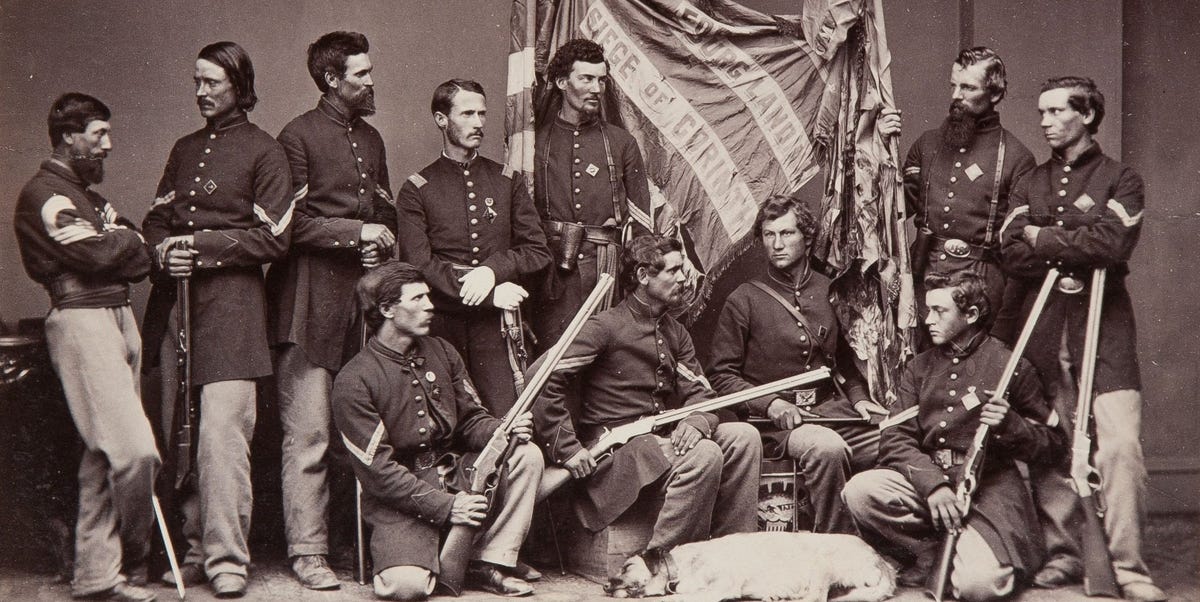
Note: This article is written for historical, cultural, and educational purposes. It explores the Winchester rifle as an American industrial artifact, a frontier symbol, and a lasting influence on popular memory.
Introduction: When a Rifle Becomes a Legend
The Winchester rifle is one of those rare inventions that escaped the workshop and galloped straight into folklore. It was not merely a firearm; it became a character in the American story. It rode in saddlebags, appeared in dime novels, starred in Western films, hung over fireplaces, and eventually took up residence in museums where visitors stare at it as if it might start narrating the 19th century by itself.
Known most famously through the phrase “the gun that won the West,” the Winchester rifle occupies a complicated place in American history. It represents innovation, industrial ambition, frontier survival, commercial genius, and the mythology of expansion. It also sits inside a broader and more serious history involving conflict, displacement, hunting, law enforcement, and changing ideas about technology and power. In other words, the Winchester is not a simple relic. It is a polished brass-and-steel reminder that history rarely comes with clean edges.
To understand the history and legacy of the Winchester rifle, we need to travel from New England workshops to Civil War battlefields, from New Haven factories to Western cattle towns, from John Browning’s drafting table to the glass cases of modern museums. Along the way, we meet inventors, entrepreneurs, soldiers, hunters, collectors, and a rifle found mysteriously leaning against a tree more than a century after it was made. If that sounds like the opening scene of a historical detective movie, well, the Winchester has always had a flair for drama.
The Roots of the Winchester Rifle
Before Winchester: The Search for a Practical Repeater
The Winchester story did not begin with Oliver Winchester holding a perfect rifle and saying, “Yes, this will look excellent in Western movies someday.” The road to the Winchester rifle was long, experimental, and occasionally awkward. Early inventors spent decades trying to solve one major problem: how to create a firearm that could fire multiple shots without the slow process of reloading after each one.
One important ancestor was the Volcanic repeating firearm, developed from earlier concepts by inventors including Walter Hunt, Horace Smith, Daniel Wesson, and Benjamin Tyler Henry. The Volcanic design had an exciting idea but disappointing ammunition. Its “rocket ball” cartridge was clever on paper, but in practice it lacked the power and reliability needed for broad success. It was the historical equivalent of a flashy new gadget that looks great in advertisements but makes everyone sigh after using it twice.
Oliver Fisher Winchester, originally a clothing manufacturer, saw potential where others saw trouble. He invested in the Volcanic Repeating Arms Company and eventually reorganized the business into the New Haven Arms Company. His strength was not that he personally invented every mechanism. His genius was entrepreneurial: he recognized promising technology, backed talented designers, and turned mechanical ideas into a scalable industrial brand.
The Henry Rifle: The Immediate Forerunner
The Henry rifle, patented by Benjamin Tyler Henry in 1860, became the direct forerunner of the Winchester. It used a lever-action system and a tubular magazine, allowing a shooter to fire repeated rounds much faster than with many single-shot firearms of the period. During the Civil War, the Henry gained attention for its rate of fire, though it was not adopted in overwhelming numbers by the Union Army.
The Henry had limitations. Its magazine was exposed, loading could be inconvenient, and the lack of a wooden forearm meant the barrel area could become uncomfortable during extended firing. Still, it proved that a practical repeating rifle could work. It gave Oliver Winchester the foundation for something bigger, and in 1866, that “something bigger” arrived.
The Birth of Winchester Repeating Arms
Oliver Winchester and the 1866 Reorganization
In 1866, Oliver Winchester reorganized New Haven Arms as the Winchester Repeating Arms Company. That year marked the official birth of one of the most recognizable firearm brands in American history. The first rifle to bear the Winchester name was the Model 1866, often called the “Yellow Boy” because of its distinctive brass-colored receiver.
The Model 1866 improved on the Henry design in important ways. A key innovation was the side loading gate, associated with Nelson King’s improvements, which made loading more convenient. The rifle also added a wooden forearm, making it more practical in real-world use. Chambered for the .44 Henry rimfire cartridge, the Model 1866 was not the most powerful rifle of its age, but it was reliable, fast, and far more user-friendly than many earlier repeaters.
The “Yellow Boy” quickly became associated with the American frontier. It was used by settlers, scouts, Indigenous fighters, foreign armies, and civilians who valued repeat fire in a compact lever-action design. Its brass receiver also gave it visual personality. Some rifles whisper. The Model 1866 practically entered the room wearing a gold vest.
Why Repeating Fire Changed Everything
The significance of the Winchester rifle was not just that it fired bullets. Plenty of firearms did that. Its importance came from repetition. A lever-action rifle with a tubular magazine gave users several shots before reloading. In hunting, conflict, and frontier travel, that changed calculations. It compressed time. It gave one person more immediate firepower than earlier single-shot arms allowed.
This technological shift influenced both practical life and imagination. A repeating rifle suggested confidence, independence, and mechanical modernity. It fit the pace of a country expanding westward and industrializing rapidly. The Winchester was not just a frontier tool; it was a symbol of the 19th century’s belief that machines could make individuals more capable, for better or worse.
The Model 1873: “The Gun That Won the West”
A Steel-Framed Icon
The Winchester Model 1873 is the rifle most closely tied to the company’s legend. Introduced in 1873, it featured a stronger steel frame and was originally chambered for the .44-40 Winchester Center Fire cartridge. That cartridge became especially important because it could also be used in certain revolvers, allowing some users to carry one type of ammunition for both rifle and sidearm. For anyone who has ever packed for a trip and forgotten a phone charger, the appeal of simplifying supplies is easy to understand.
The Model 1873 was produced in rifle, carbine, and musket configurations, and hundreds of thousands were manufactured over its production life. It became popular among ranchers, lawmen, hunters, travelers, and others who needed a dependable repeating rifle. Its balance of manageable power, speed, and reliability made it one of the most famous firearms of the late 19th century.
The Marketing Magic Behind the Myth
The phrase “the gun that won the West” is powerful marketing, not neutral history. The American West was shaped by railroads, federal policy, cattle ranching, mining, migration, treaties, violence, agriculture, Indigenous resistance, and many other forces. No single rifle “won” it. Still, the slogan worked because it condensed a huge and messy story into a dramatic image: a person on horseback, a lever-action rifle, and a horizon full of dust and destiny.
The Winchester Model 1873 became a symbol because it was present at the right time, in the right places, and in large enough numbers to enter public memory. Dime novels, Wild West shows, later Hollywood Westerns, and collector culture amplified that image. The real rifle became a legend; the legend then reshaped how people remembered the rifle.
The Forgotten Winchester
One of the most fascinating modern Winchester stories began in 2014, when National Park Service archaeologists discovered a weathered Winchester Model 1873 leaning against a tree in Great Basin National Park in Nevada. Records identified it as a rifle manufactured and shipped in 1882. Nobody knows who left it there or why it was never recovered. The rifle became known as the “Forgotten Winchester,” and it captured public imagination because it looked like history had paused mid-sentence.
The Forgotten Winchester matters because it shows how objects can become storytellers. A museum label can list date, model, caliber, and condition, but the unanswered questions are what make people lean closer. Who carried it? Was it abandoned in panic? Misplaced during travel? Left by someone who expected to return? The rifle offers no confession. It simply stands as a reminder that history often survives as mystery.
Beyond 1873: Bigger, Stronger, and Smarter Designs
The Model 1876 and the Need for More Power
Winchester continued to refine its lever-action line. The Model 1876, introduced during America’s centennial era, was designed for larger, more powerful cartridges than the Model 1866 or Model 1873 could handle. Sometimes called the Centennial Rifle, it appealed to hunters and users who wanted greater power for larger game.
The Model 1876 did not replace the 1873 in popular memory, but it showed Winchester’s willingness to adapt. The company understood that the market was not one thing. A rancher, hunter, military buyer, and sportsman might all want a lever-action rifle, but not necessarily the same lever-action rifle. Winchester’s success came from building a family of firearms around a strong brand identity.
John Moses Browning and the Winchester Renaissance
In the 1880s and 1890s, Winchester’s story became closely linked with one of the greatest firearm designers in history: John Moses Browning. Browning’s partnership with Winchester produced major designs, including the Model 1886, Model 1892, Model 1894, and Model 1895. These rifles expanded the technical possibilities of the Winchester line.
The Model 1886 offered a stronger action capable of handling more powerful cartridges. The Model 1892 provided a refined, compact lever-action design that became beloved in its own right. The Model 1894, perhaps Browning’s most famous Winchester lever action, became one of the most successful sporting rifles in American history. It was especially associated with the .30-30 Winchester cartridge, a classic choice for deer hunting in wooded country.
The Browning-era rifles helped carry Winchester from frontier icon into modern sporting culture. By then, the West of open-range mythology was changing. Barbed wire, railroads, towns, law codes, and industrial agriculture were replacing the older frontier image. Winchester adapted by becoming not only a frontier rifle but also a hunting rifle, a sporting rifle, and a collector’s prize.
The Winchester Rifle in American Culture
From Working Tool to Western Symbol
The Winchester rifle became famous partly because it was useful and partly because it looked right. Its lever loop, tubular magazine, walnut stock, and compact profile created an instantly recognizable silhouette. In visual culture, that matters. A Winchester in a film scene can communicate “frontier” before a character says a word.
Western novels, radio dramas, television shows, and movies turned the Winchester into shorthand for courage, danger, justice, and sometimes lawlessness. It appeared in the hands of sheriffs and outlaws, ranchers and rustlers, heroes and villains. Like the cowboy hat, it became a prop that carried meaning beyond its practical function.
But the cultural Winchester is not the same as the historical Winchester. The real rifle was used by many kinds of people for many reasons. Its legacy includes hunting, sport shooting, collecting, military use, law enforcement, personal defense, and violence connected to westward expansion. A serious history has to hold both truths at once: the Winchester is an engineering landmark and a cultural myth, but it is also part of a complicated past.
Industry, Labor, and New Haven
The Winchester rifle was also a product of American industrial labor. The company’s New Haven factory became a major manufacturing center, employing skilled workers and helping define the city’s industrial identity. Winchester was not built by legends alone. It was built by machinists, polishers, stock makers, inspectors, clerks, engineers, and factory hands whose names rarely appear in heroic stories.
This industrial side of the Winchester legacy is essential. The rifle’s success depended on precision manufacturing, interchangeable parts, marketing networks, ammunition production, and distribution. It was as much a triumph of industrial organization as of mechanical design. The American frontier may have made the Winchester famous, but New Haven made the Winchester possible.
Collecting, Museums, and Modern Legacy
Why Collectors Still Care
Winchester rifles remain highly collectible because they combine mechanical interest, historical significance, and aesthetic appeal. Collectors study serial numbers, factory records, barrel markings, special-order features, engraving, condition, and provenance. A plain working rifle may tell one kind of story; a deluxe engraved rifle tells another. Both matter.
Factory records preserved by institutions such as the Cody Firearms Museum help researchers trace manufacture dates and configurations for many Winchester models. That documentary trail adds depth to surviving rifles. A Winchester is not just “old.” It can often be placed within a manufacturing timeline, tied to a model variation, and understood within a larger pattern of production.
Museums and Public Memory
Museums play a major role in interpreting the Winchester rifle responsibly. A rifle in a glass case is not there simply to impress visitors with polished metal and fine wood. It is there to invite questions: Who made it? Who used it? What problem did it solve? What new problems did it create? How did it affect daily life, conflict, commerce, and imagination?
The Winchester’s museum legacy is especially strong because the object is visually compelling. Even people with little interest in firearms often recognize the shape. That familiarity gives historians an opening. They can use the rifle to discuss industrialization, westward expansion, branding, technology, and mythmaking. In that sense, the Winchester is less a final answer than a starting point for better questions.
Experiences and Reflections: Encountering the Winchester Rifle Today
Seeing a Winchester rifle in person is different from reading about one. In photographs, it can look neat, compact, and almost decorative. In a museum or historic collection, the first impression is often more human. The wood may show wear. The metal may carry scratches, fading, or patina. The object feels less like a movie prop and more like something that passed through real weather, real hands, and real uncertainty.
One meaningful experience related to the Winchester rifle is the act of slowing down in front of it. Modern visitors are used to screens, speed, and endless scrolling. A 19th-century rifle asks for the opposite. You notice the curve of the lever, the fit of metal to wood, the practical shape of the stock, and the compact confidence of the design. It is easy to imagine why such a tool impressed people in an era when reliability could matter deeply.
Another experience comes from comparing the myth to the object. The phrase “the gun that won the West” sounds enormous, almost cinematic. Yet the rifle itself is a manageable, physical thing. It does not explain history by itself. It does not tell you about railroad companies, Indigenous nations, buffalo hunting, homesteading laws, cattle drives, or territorial courts unless a good interpreter helps connect those dots. That gap between object and legend is where historical understanding begins.
For many people, the Winchester also creates a family-history moment. Someone may remember a grandfather’s hunting rifle, an old photograph, a story from a rural community, or a Western movie watched on a Saturday afternoon. These memories are not academic footnotes, but they are part of cultural legacy. Objects survive partly because people attach stories to them. Sometimes the stories are accurate. Sometimes they are polished by time until they shine a little too brightly. Either way, they reveal how history becomes personal.
Collectors often describe Winchester rifles with a mix of technical vocabulary and affection. They notice whether a rifle is a Model 1866, 1873, 1892, or 1894. They care about chamberings, barrel lengths, special-order details, and condition. But beneath the details is usually a broader fascination: the feeling that each rifle is a small archive. A well-used Winchester may have spent decades in barns, saddle scabbards, camps, ranch houses, or closets before arriving at an auction table or museum display.
Educationally, the Winchester rifle is most valuable when it is treated honestly. It should not be reduced to a romantic symbol, nor should it be discussed only as a tool of violence. It was an industrial product, a sporting arm, a frontier companion, a commercial success, a military object in some contexts, and a cultural icon. Its legacy is powerful because it contains all these meanings at once. Like many American artifacts, it asks us to admire the craftsmanship while thinking carefully about the world that craftsmanship helped shape.
Perhaps the best way to experience the Winchester rifle today is with curiosity rather than certainty. Ask why it was designed the way it was. Ask who benefited from it. Ask who feared it. Ask why advertisers loved it, why filmmakers reused it, why collectors preserve it, and why a forgotten rifle leaning against a Nevada tree could still capture national attention in the 21st century. When an object can raise that many questions more than 150 years after its debut, it has clearly earned its place in history.
Conclusion: The Rifle That Outgrew Its Own Era
The history and legacy of the Winchester rifle are bigger than a single model, slogan, or frontier scene. The Winchester began as part of a long search for practical repeating firearms, matured through the Model 1866 and Model 1873, expanded through Browning-designed classics, and endured as a symbol in American memory. Its story includes invention, marketing, manufacturing, hunting, collecting, preservation, and myth.
To call it “the gun that won the West” is catchy, but incomplete. The Winchester did not act alone, and the West was not “won” in any simple or harmless sense. Still, the rifle became one of the defining artifacts of that era because it matched the speed, ambition, and tension of 19th-century America. It was a machine built for repetition, and history has repeated its image ever since.
Today, the Winchester rifle remains important not because it belongs only to the past, but because it helps us examine how technology becomes legend. It shows how a practical tool can become a brand, how a brand can become a myth, and how a myth can shape national memory. That is the true Winchester legacy: not just steel, brass, and walnut, but the lasting power of an object to make Americans argue, remember, admire, question, and keep looking closer.